
Why Kiskunság National Park stands out
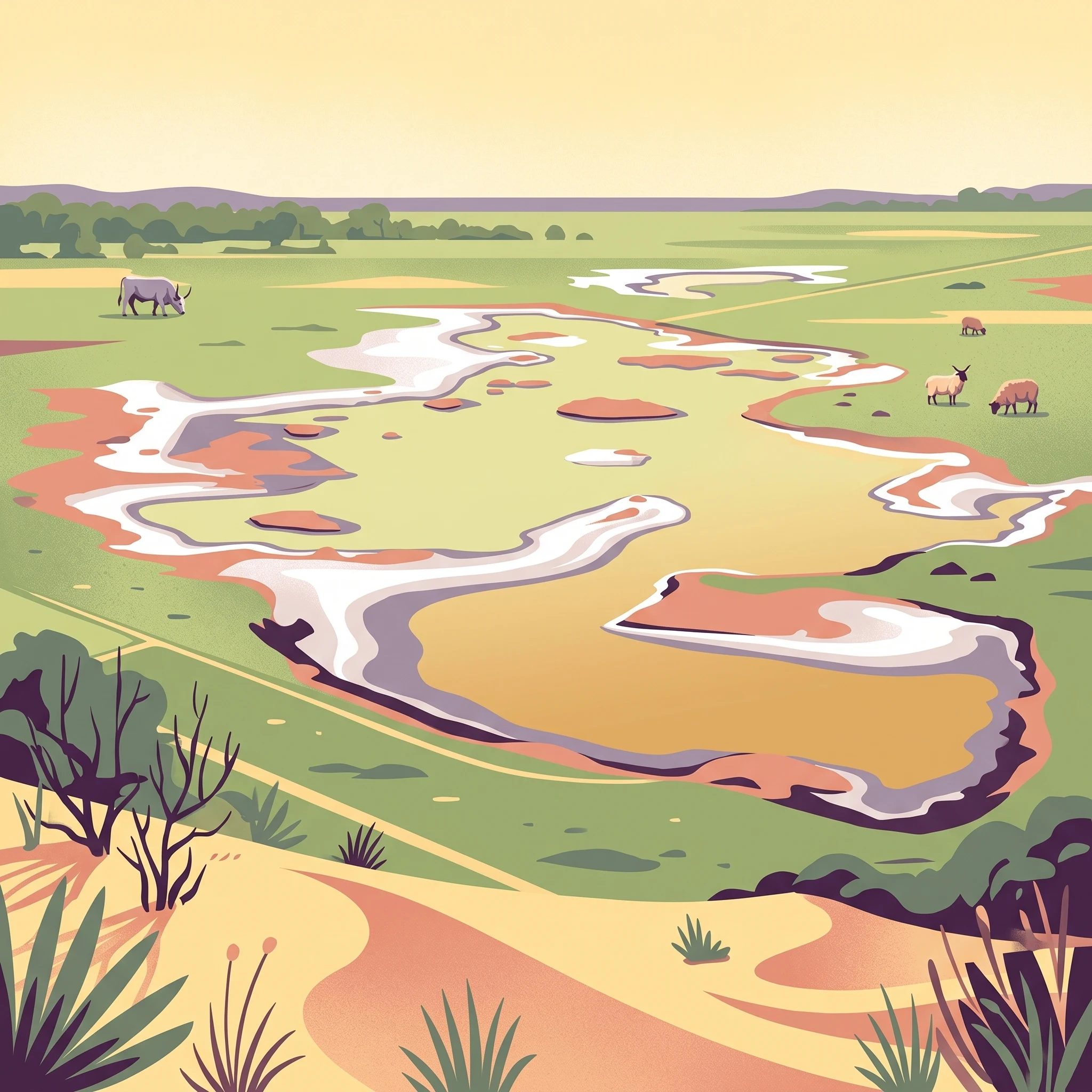
Kiskunság National Park is best known for its exceptional puszta landscape, a rare surviving example of the open grassland steppe ecosystem that once covered much of the Great Hungarian Plain. The park preserves one of Europe's most significant wetland complexes in this lowland setting, with a chain of alkaline lakes that serve as crucial staging grounds for migratory waterbirds. The moving sand dunes near Fülöpháza represent a geological phenomenon unique in Hungary, while the diverse birdlife, including great bustards, European rollers, black-winged stilts, and white-tailed eagles, makes the park a destination of particular importance for ornithologists. The park also maintains traditional Hungarian livestock breeds including Hungarian Grey cattle, Racka sheep, and Mangalica pigs, preserving the pastoral heritage of the region.
Kiskunság National Park history and protected-area timeline
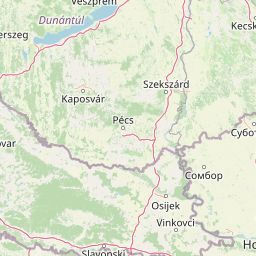
Kiskunság National Park was established on January 1, 1975, becoming Hungary's second national park following the creation of Hortobágy National Park in 1973. The establishment reflected a growing recognition of the ecological and cultural value of Hungary's puszta landscapes, which had been under increasing pressure from agricultural intensification throughout the twentieth century. The park was created to preserve the distinctive Great Hungarian Plain ecosystem and the traditional pastoral way of life that had shaped the landscape over centuries. In 1979, the park achieved international recognition when two-thirds of its territory was designated a UNESCO biosphere reserve under the Man and the Biosphere Programme, acknowledging both the area's ecological significance and its potential as a model for sustainable human-nature relationships. The designation under the Ramsar Convention followed, providing additional protection to the park's wetlands. The park administration, known as the Kiskunsági Nemzeti Park Igazgatóság, maintains its headquarters in Kecskemét and oversees the management of the seven disjoint territorial units that comprise the protected area.
Kiskunság National Park landscape and geographic character
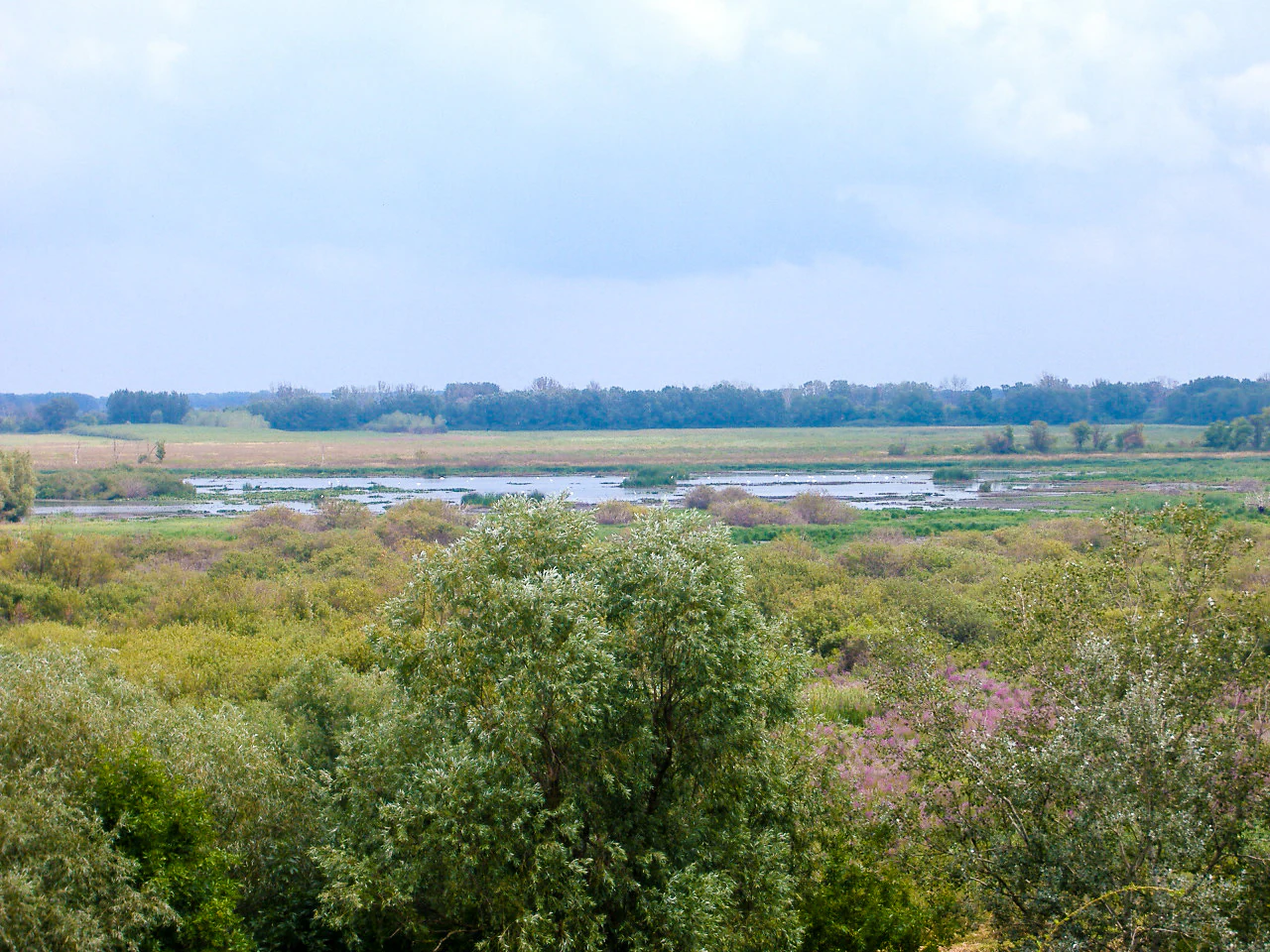
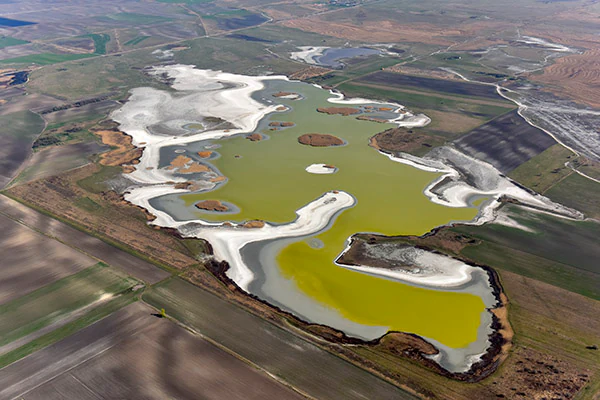
The landscape of Kiskunság National Park represents one of the most distinctive terrain types in Hungary—a flat, open lowland dominated by grassland, wetland, and sand dune ecosystems. The park lies in the Danube–Tisza Interfluve, a broad corridor of relatively low-lying land between the Danube and Tisza rivers on the Great Hungarian Plain. The terrain is predominantly flat with only subtle elevation changes, punctuated by distinct landscape features including the moving sand dunes near Fülöpháza, a rare geological phenomenon in Hungary where wind-blown sand creates actively shifting dune formations. Alkaline lakes scattered throughout the park, particularly near Fülöpszállás and Szabadszállás, create seasonal wetland habitats that fill with water during periods of high groundwater or spring flooding. The park also preserves sections of the dead Tisza river channel, known as Holt-Tisza, with their associated floodplain forests and marshes. The puszta landscape—open grassland with minimal tree cover—remains the defining visual character of much of the park, reflecting both the natural vegetation of the region and centuries of pastoral land use that prevented forest encroachment.
Kiskunság National Park ecosystems, habitats, and plant life
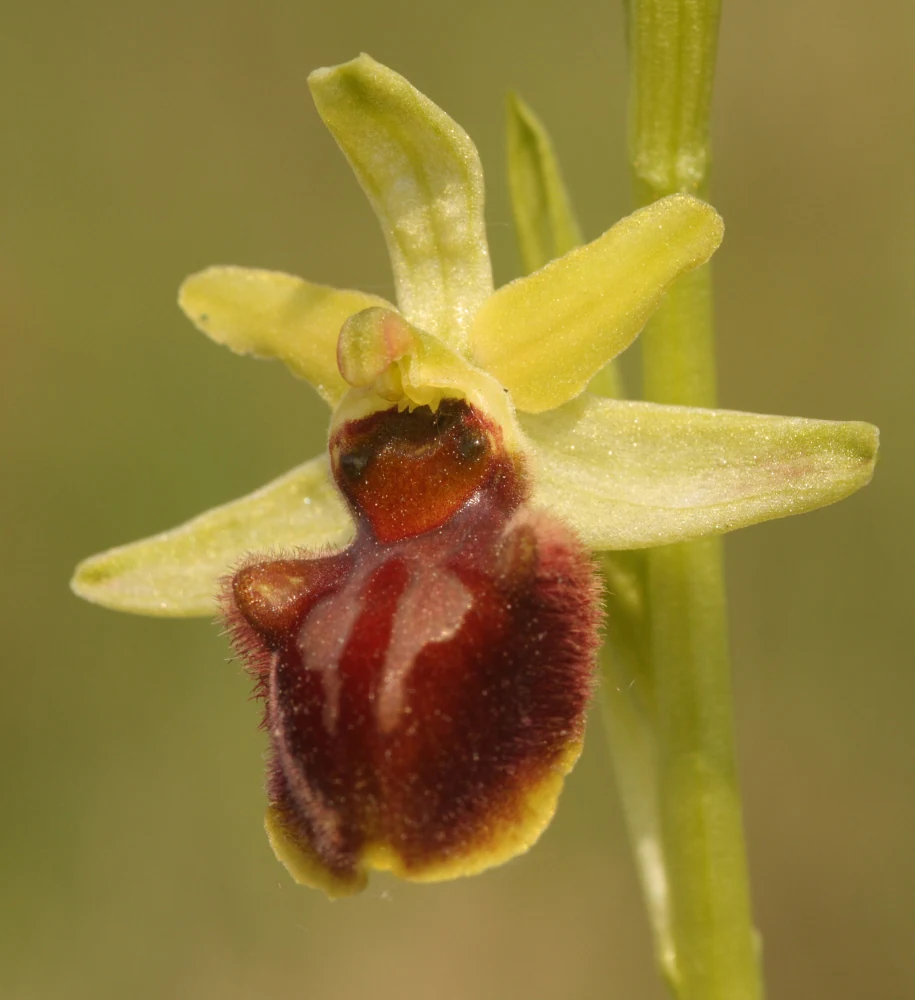
The ecological character of Kiskunság National Park centers on a complex mosaic of wetland and grassland habitats that support remarkable biodiversity in a lowland European context. The alkaline lakes of the Little Cumania, including Lake Szelid near Kalocsa, Lake Vadkert, Lake Fehér, and Lake Sós near Kiskunhalas, form a chain of interconnected wetlands that provide critical habitat for waterbirds and aquatic species. The moving sand dunes near Fülöpháza support specialized psammophilous (sand-loving) vegetation adapted to the unstable substrate, including species such as the kései szegfű (Dianthus giganteus) and sand-adapted insects. The marshland around Izsáki Kolon-tö has developed into extensive reed beds, willow carr, and fen vegetation supporting diverse communities of plants and birds. The alkaline grasslands, known locally as szikes puszta, feature salt-tolerant plant communities including red fescue, Hungarian saltwort, and wormwood species adapted to the high mineral content of the soil. Orchids occur in several locations, with nine species recorded in the vicinity of Lake Kolon, representing one of the most orchid-rich areas in Hungary's lowland regions.
Kiskunság National Park wildlife and species highlights
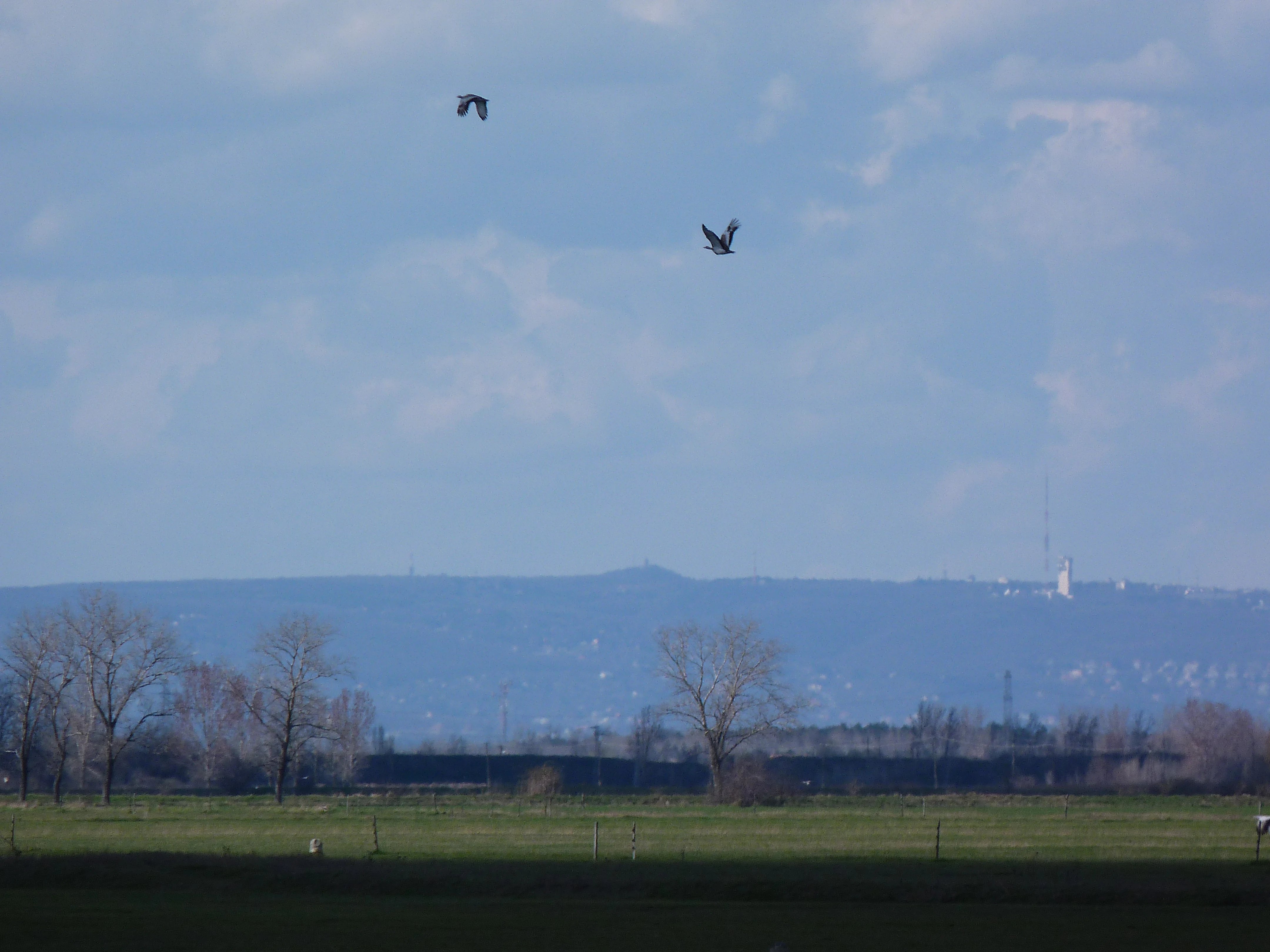
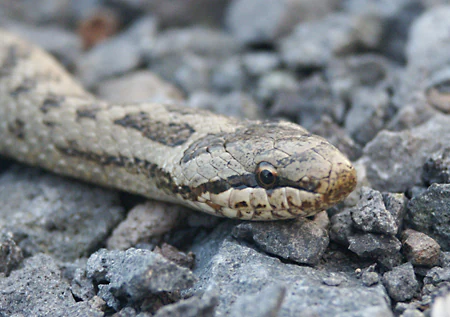
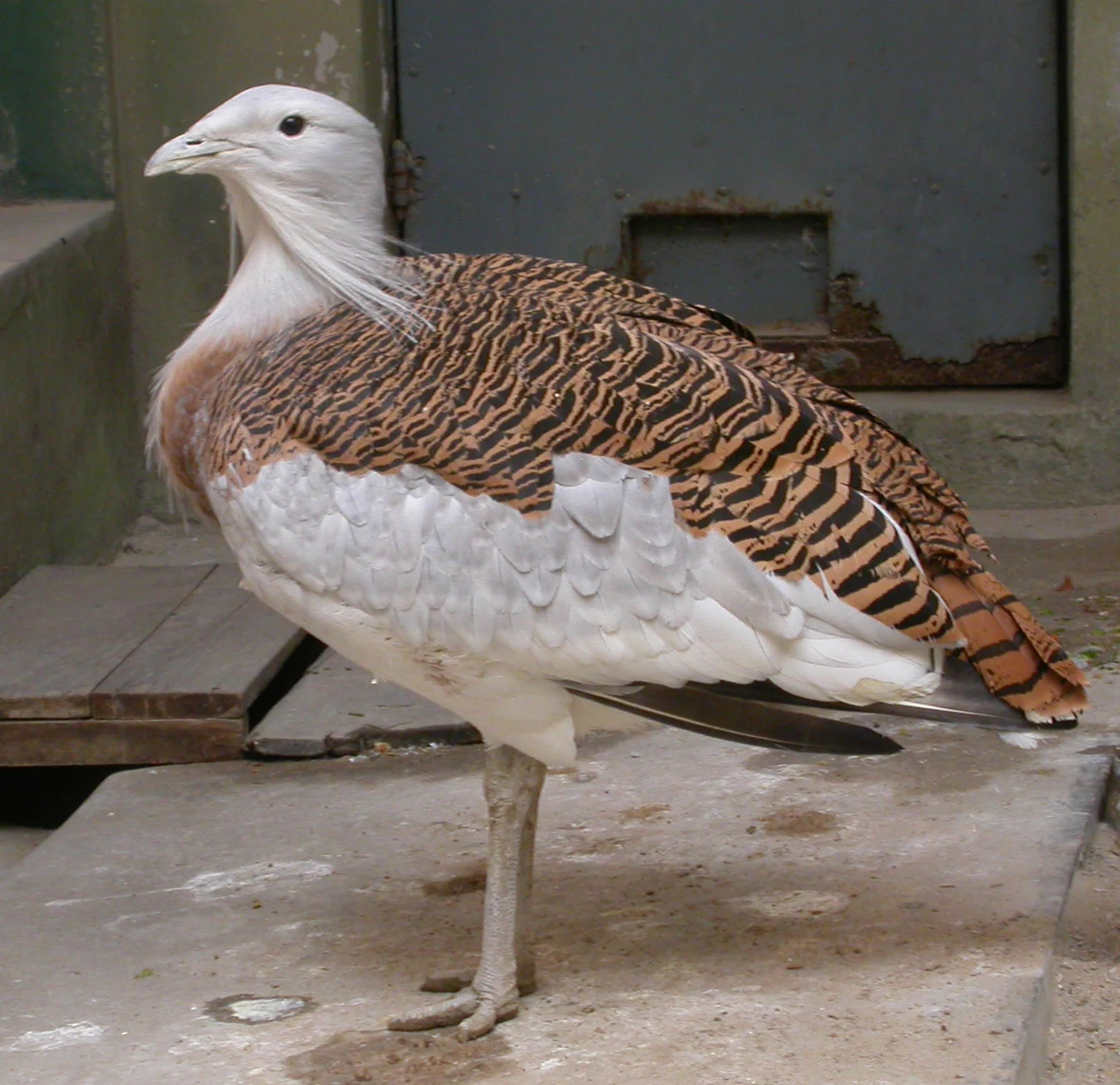
Kiskunság National Park supports exceptional bird populations that make it one of Hungary's most important ornithological sites. The alkaline lakes and marshes provide nesting habitat for significant populations of avocets, black-winged stilts, and various heron species including grey heron, purple heron, little egret, and great white egret. The park supports important breeding populations of great bustard, the heaviest flying bird in Europe, which nests in the open puszta grasslands. Birds of prey are well represented, with white-tailed eagle, saker falcon, and lesser spotted eagle among the notable raptor species. The grasslands support colonial nesting birds including the European roller, bee-eater, and various plover species. During migration, the wetland complexes host tens of thousands of migratory birds, providing crucial staging and feeding grounds for waterfowl moving between northern European breeding areas and southern wintering grounds. Among the reptile and amphibian populations, the marsh tortoise represents a species of particular conservation concern, while the smooth snake and various lizard species occupy the sandy and grassland habitats.
Kiskunság National Park conservation status and protection priorities
Kiskunság National Park serves as a critical conservation area for lowland ecosystems that have become increasingly rare across Central Europe. The park's designation as a UNESCO biosphere reserve reflects international recognition of its ecological significance and its successful integration of conservation with traditional land-use practices. The Ramsar Convention provides additional protection to the wetland habitats, ensuring that these crucial waterbird staging areas receive legal recognition at the international level. The conservation approach within the park reflects the unique character of the puszta landscape, where traditional pastoral practices—including the maintenance of Hungarian Grey cattle, Racka sheep, and Mangalica pig breeds—have shaped the ecosystem over centuries and remain compatible with habitat preservation objectives. Reintroduction of water buffalo at Nagyszéksós-tó in 2008 demonstrated innovative approaches to wetland management, with the animals' grazing and wallowing activities helping to maintain open water habitats and prevent succession to reedbed. The park also supports conservation programs for rare species including the Rákosi vipera (Vipera ursinii), one of Europe's rarest snakes, and various orchid species.
Kiskunság National Park cultural meaning and human context
Kiskunság National Park preserves a landscape where human communities and the natural environment have developed together over many centuries. The puszta ecosystem that defines much of the park's character is not merely a natural landscape but a cultural landscape shaped by generations of pastoral activity, cattle breeding, and traditional agriculture. The annual events held in the Kiskunság puszta revive the old pastoral life and cattle-breeding customs, maintaining living traditions that connect contemporary visitors to the historical relationship between local communities and their environment. The open-air museum at Ópusztaszer, located within the broader region served by the park, provides additional cultural context for understanding the human history of the Great Hungarian Plain. The landscape also holds significance in Hungarian history and legend, with the Pusztaszer area associated with traditions of the Hungarian conquest of the Carpathian Basin. The local communities of the Little Cumania region, centered on towns such as Kecskemét, Kiskunhalas, and Kalocsa, maintain cultural traditions distinct from other parts of Hungary, with the park playing a role in preserving both natural and cultural heritage.
Top sights and standout views in Kiskunság National Park
Kiskunság National Park offers a distinctive Central European protected area experience centered on lowland grassland, wetland, and sand dune ecosystems rarely found elsewhere on the continent. The moving sand dunes near Fülöpháza provide a unique geological spectacle in Hungary, where visitors can observe the gradual migration of dunes shaped by wind action. The chain of alkaline lakes, particularly Lake Kolon near Izsák, supports remarkable concentrations of waterbirds and contains one of Hungary's richest orchid flora with nine species recorded in the vicinity. The great bustard population represents a conservation success story, with this impressive ground-nesting bird finding sanctuary in the open puszta grasslands. The park's seven territorial units each offer distinct experiences, from the floodplain forests of the Szikra area to the sand dune systems of the Fülöpháza region. The visitor center in Kecskemét provides an introduction to the park's ecology and cultural history, while marked trails and observation points throughout the park enable independent exploration of this distinctive lowland landscape.
Best time to visit Kiskunság National Park
Kiskunság National Park can be visited throughout the year, though different seasons offer distinctly different experiences of the landscape. Spring, particularly April and May, brings migratory birds to the wetlands in large numbers, making this an excellent time for ornithological observation as waterfowl stage at the alkaline lakes before continuing their journeys. The summer months of June through August offer the fullest development of the park's vegetation, with flowering meadows and fully developed reed beds providing habitat for breeding birds and dragonflies. Autumn brings the departure of many migratory species and offers the opportunity to observe large flocks of waterbirds gathering before migration. Winter reveals a different character of the park, with the bare puszta landscape offering long sightlines across the open terrain and the possibility of observing roosting flocks of cranes and geese. The traditional pastoral events celebrating old cattle-breeding customs are typically held during the summer months, providing opportunities to experience living cultural traditions within the park landscape.