Mori Atlas logo
National parkLand of the Leopard National Park

Mapping the unique terrain and critical habitat for Amur leopards and Siberian tigers.

Land of the Leopard National Park: A Vital Protected Landscape in Primorsky Krai

Land of the Leopard National Park represents a crucial protected area within Primorsky Krai, Russia, dedicated to safeguarding the world's rarest big cats. Established to protect the Amur leopard and Siberian tiger, this national park encompasses approximately 2,799 square kilometers of varied forested slopes, river valleys, and mountainous terrain west of the Razdolnaya River. Its landscape is defined by the Manchurian mixed forest ecosystem, creating a vital habitat mosaic that supports multiple apex predators and offers a unique focus for atlas-based geographic discovery.

Amur leopard conservationRussian Far East national parksSiberian tiger habitatCritically endangered species protectionManchurian mixed forestsTemperate forest ecosystems
Stylized illustration of a mountain landscape with forested hills, geometric fields, and a winding river under a partly cloudy sky

Land of the Leopard National Park

National park

Park overview

Structured park overview, official facts, and landscape profile for Land of the Leopard National Park

Land of the Leopard National Park park facts, protected area profile, and essential visitor context
Review the core facts for Land of the Leopard National Park, including designation, size, terrain, visitor scale, habitats, and operating context in one park-focused overview.

About Land of the Leopard National Park

Land of the Leopard National Park represents one of the most significant conservation achievements in modern Russian wildlife protection. Established in 2012 through the merger of the historic Kedrovaya Pad Nature Reserve with additional territories, the park was created in response to the critical status of the Amur leopard, which had been driven to the brink of extinction by poaching and habitat loss. The park's creation was personally championed by senior Russian officials, reflecting the national importance placed on preserving this iconic species. The protected area now encompasses the vast majority of the remaining Amur leopard habitat in southwestern Primorsky Krai, creating a contiguous corridor that connects fragmented populations and allows for genetic exchange between leopard groups. The park's location along the border with China also positions it as a critical link in transboundary conservation efforts for the Amur leopard's range, which spans both countries.

Quick facts and research context for Land of the Leopard National Park

Land of the Leopard National Park occupies a strategic position in the southwest of Primorsky Krai, spanning parts of Khasansky and Nadezhdinsky Districts along with the Ussuriysky Urban District and a small portion of Vladivostok city. The park sits within the Manchurian mixed forests ecoregion, characterized by a humid continental climate with warm summers and cold winters. This region represents the northernmost extent of the Amur leopard's historic range and serves as the only place on Earth where wild Amur leopards persist. The park also supports a remarkable assemblage of other large predators including the Siberian tiger and Eurasian lynx.

Park context

Deeper park guide and search-rich context for Land of the Leopard National Park

Land of the Leopard National Park history, landscape, wildlife, and travel context
Explore Land of the Leopard National Park through its history, landscape character, ecosystems, wildlife, conservation priorities, cultural context, and seasonal travel timing in a structured park guide built for atlas discovery and search intent.

Why Land of the Leopard National Park stands out

Land of the Leopard is world-renowned as the sole refuge of the Amur leopard, a critically endangered subspecies that once teetered on the edge of extinction. The park harbors the only wild population of these spotted cats remaining on the planet, making it the global center for Amur leopard conservation. Beyond leopards, the park protects one of the few remaining populations of the Siberian tiger, creating an extraordinary concentration of apex predators within a single protected area. The park's camera trap network, spanning over 362,000 hectares with more than 400 units, represents one of the most extensive wildlife monitoring systems in the world.
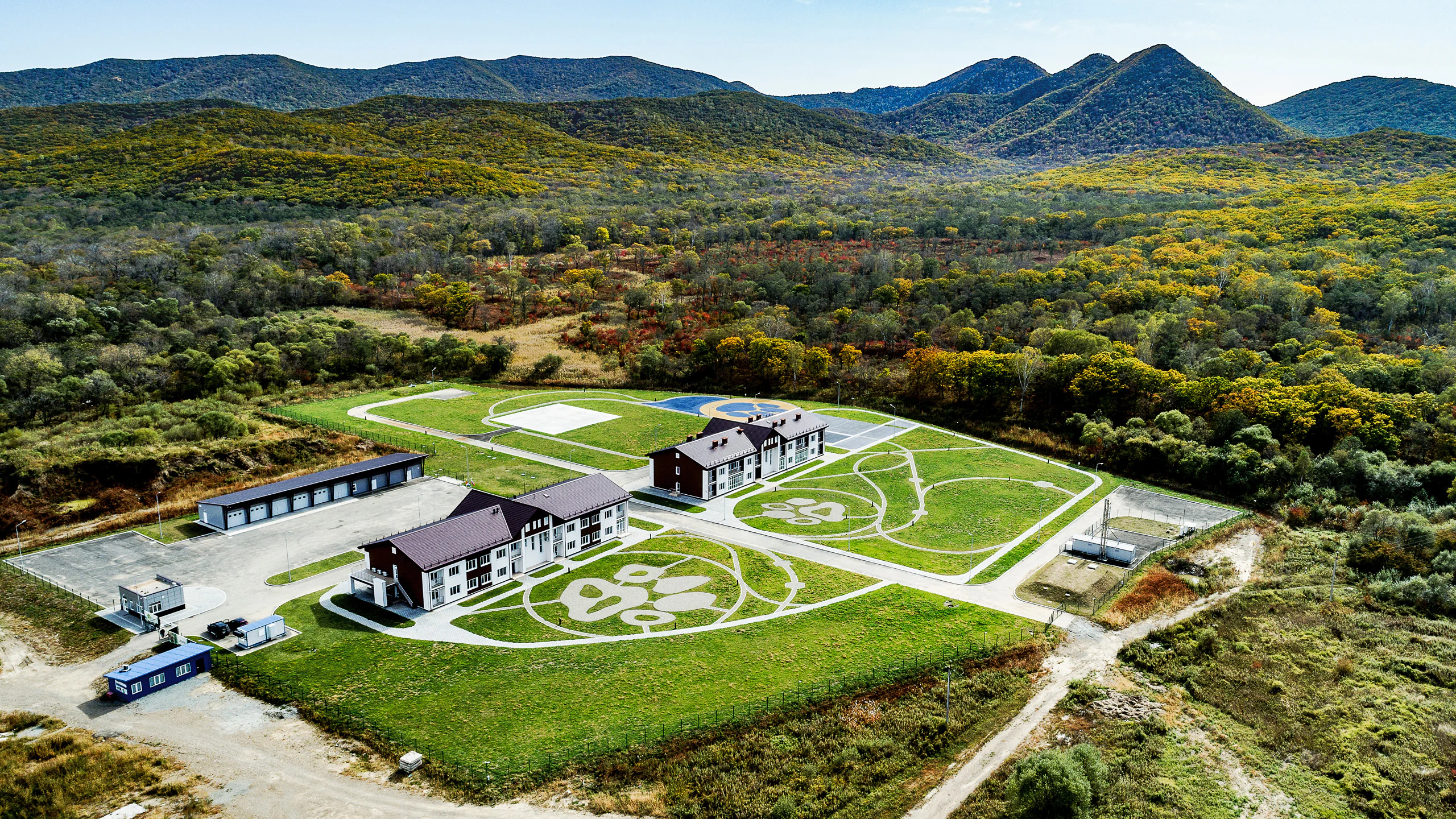
Aerial view of a visitor center complex with circular lawn patterns, surrounded by forested hills and mountains
Aerial view of a visitor center complex within Land of the Leopard National Park, featuring manicured lawns and mountainous backdrop

Land of the Leopard National Park history and protected-area timeline

The establishment of Land of the Leopard National Park in April 2012 marked the culmination of decades of concern about the fate of the Amur leopard in the wild. By the beginning of the 21st century, the Amur leopard population had been decimated by poaching and catastrophic wildfires that destroyed vast tracts of its forest habitat. The leopard's range had contracted to a narrow strip in southwestern Primorsky Krai, with just a few dozen individuals remaining in scattered pockets. While the Kedrovaya Pad Nature Reserve and several breeding grounds provided some protection, conservationists recognized that these isolated areas were insufficient to ensure the species' survival. The creation of Land of the Leopard expanded the protected territory to approximately 262,000 hectares, incorporating the core leopard habitats across Khasansky and Nadezhdinsky Districts along with the Ussuriysky Urban District. The park's founding was driven by the efforts of ecologists and received high-level political support, demonstrating Russia's commitment to preventing the extinction of one of its most endangered endemic species.

Land of the Leopard National Park landscape and geographic character

The park occupies a varied landscape of forested slopes, river valleys, and mountainous terrain in the foothills of the Sikhote-Alin mountain range. The terrain west of the Razdolnaya River features a mixture of broadleaf and mixed forests that blanket the hills and valleys, creating a dense and ecologically complex environment. The landscape reflects the transition between the temperate Manchurian forest ecosystem and more northern Siberian influences, producing a mosaic of habitat types that support diverse wildlife. The region's topography includes plateaus and rolling hills interspersed with stream corridors that provide movement corridors for wildlife throughout the protected area.

Land of the Leopard National Park ecosystems, habitats, and plant life

Land of the Leopard sits within the Manchurian mixed forests ecoregion, one of the most biologically diverse temperate forest regions in the world. The climate is classified as humid continental with a warm summer subtype, characterized by relatively short summers with only one to three months above 10°C and cold, dry winters. This climate regime supports a unique assemblage of species that bridge the divide between northern and southern Asia. The forest composition includes Korean pine, mixed coniferous-deciduous species, and areas of broadleaf forest that provide the structural complexity necessary for leopard and tiger habitat. The ecosystem has evolved to support multiple large carnivore species, making this one of the few places on Earth where Amur leopards and Siberian tigers coexist in the wild.

Land of the Leopard National Park wildlife and species highlights

The wildlife of Land of the Leopard is extraordinary, centered on a remarkable concentration of apex predators. The Amur leopard remains the park's flagship species and its primary conservation focus, with population numbers having grown from approximately 30 individuals at the park's founding to 84 adults and 14 kittens by 2017, representing a remarkable recovery for this critically endangered subspecies. The park also supports a significant population of Siberian tigers, the largest cat in the world, which share the leopards' habitat and benefit from the same protection measures. Eurasian lynx are also present, creating an exceptional assemblage of three large cat species within a single protected area. The park records 54 mammal species and 184 bird species, including the black vulture among the notable avian inhabitants.

Land of the Leopard National Park conservation status and protection priorities

Land of the Leopard represents the global center of Amur leopard conservation and serves as the last refuge for one of the world's most endangered big cats. The park was specifically designed to protect the only remaining wild population of Amur leopards, making its success directly tied to the survival of this subspecies. The intensive anti-poaching efforts, habitat management, and scientific monitoring programs have produced tangible results, with the leopard population more than doubling since the park's establishment. The park's camera trap network is among the most extensive in the world, allowing scientists to individually identify and monitor every leopard and tiger based on their unique spot and stripe patterns. This research provides crucial data for understanding population dynamics, diet, and health, informing conservation strategies that have broader applications for big cat protection globally.

Land of the Leopard National Park cultural meaning and human context

The park occupies territory within the traditional lands of indigenous peoples of the Russian Far East, though the protected area was established primarily to address the conservation needs of the Amur leopard rather than to preserve specific cultural heritage sites. The region has a complex history of human settlement and resource use, with the establishment of the park requiring coordination with local communities in Khasansky and Nadezhdinsky Districts. The park's visitor center in the village of Barabash serves as the gateway for public engagement with the park's conservation mission, offering opportunities for ecotourism that provide economic benefits to surrounding communities while raising awareness about the leopard's precarious status.

Top sights and standout views in Land of the Leopard National Park

The Land of the Leopard National Park stands as the world's last refuge for the Amur leopard, a creature that was teetering on the brink of extinction just a decade ago. The park's successful recovery of the leopard population represents one of the most inspiring conservation stories of the 21st century, demonstrating what focused protection and dedicated management can achieve. The coexistence of Amur leopards, Siberian tigers, and Eurasian lynx within the same protected landscape is unparalleled anywhere else on Earth, creating an exceptional ecosystem where multiple threatened apex predators thrive. The park's sophisticated camera trap monitoring system has produced hundreds of thousands of individual wildlife images, enabling scientists to track each leopard and tiger as distinct individuals with their own territories and behaviors.

Best time to visit Land of the Leopard National Park

The park can be visited throughout the year, though each season offers a distinctly different experience of the landscape. Summer months bring warm conditions and lush forest coverage, making this the most popular time for visitors interested in exploring the park's trails and visiting the Barabash visitor center. Winter offers a dramatically different perspective, with snow-covered forests and the opportunity to follow leopard and tiger tracks during the winter route census, though access to some areas may be limited. The shoulder seasons of spring and autumn provide moderate temperatures and fewer visitors, making them ideal for those seeking a more tranquil experience. Regardless of season, the park's primary focus remains on conservation, with visitor activities designed to minimize disturbance to wildlife while providing meaningful educational experiences about the Amur leopard and its habitat.
Park location guide

Geography guide, regional context, and park location map for Land of the Leopard National Park

Land of the Leopard National Park park geography, regions, and map view in Russia
Understand where Land of the Leopard National Park sits in Russia through a broader geographic reading of the surrounding landscape, nearby location context, and its mapped position within the national park landscape.

How Land of the Leopard National Park fits into Russia

Russia is a transcontinental nation spanning eleven time zones, bordered by fourteen countries. It is the world's largest country by area, covering 17,098,246 km². Moscow is the capital and largest city, while Saint Petersburg is the second-largest and a major cultural centre.

Wider geography shaping Land of the Leopard National Park in Russia

Russia spans Eastern Europe and North Asia, covering 17,098,246 km². It shares land borders with fourteen countries, more than any other nation, and spans eleven time zones. The landscape includes vast plains, mountain ranges such as the Urals and Caucasus, and extensive coastlines along the Arctic Ocean, Pacific Ocean, Baltic Sea, Black Sea, and Caspian Sea.

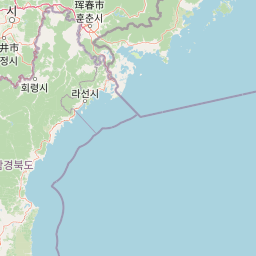
Map view of Land of the Leopard National Park

Use this park location map to pinpoint Land of the Leopard National Park in Russia, understand its exact geographic position, and read its mapped placement within the surrounding landscape more clearly.

Pigeon | © OpenStreetMap contributors

Location context for Land of the Leopard National Park

Primorsky Krai

Explore the diverse forested terrain, river valleys, and critical habitats defining this Amur leopard sanctuary in the Russian Far East.

Land of the Leopard National Park Photos, Landscapes, and Protected-Area Scenery
Browse imagery of Land of the Leopard National Park to visually understand its unique forested landscapes, varied terrain, and rich conservation environments. These visual resources offer direct insight into the park's critical role in safeguarding the Amur leopard and Siberian tiger through its distinct protected-area character.

Aerial view of a visitor center complex with circular lawn patterns, surrounded by forested hills and mountains

Park atlas

Trace the geographic spread of protected areas and compare conservation landscapes across the Russian Far East.

Explore Other National Parks and Protected Areas Near Land of the Leopard National Park
After exploring Land of the Leopard National Park, continue your discovery of other significant protected areas and national parks within the Russian Far East and its adjacent territories. Compare the varied conservation landscapes, unique ecosystems, and regional park geography to understand the broader network of protected lands.
National parkPrimorsky Krai

Zov Tigra National Park: National Park Protected Area and Mapped Landscape

Explore the protected lands and regional geography of Primorsky Krai.

Zov Tigra National Park represents a vital protected area within Russia's Primorsky Krai region. This detailed atlas entry provides specific insights into its mapped boundaries, geographic setting, and status as a national park. Understand the park's landscape context and its role within the broader regional geography, facilitating structured discovery for geographers and park explorers alike.

Area
834 km²
Established
2007
IUCN
II
Relief
Mountain
Watercolor painting of a landscape featuring green forests, distant mountains, and a body of water in the foreground
National parkPrimorsky Krai

Udegeyskaya Legenda National Park: National Park with Mapped Protected Boundaries

Explore Protected Landscape Geography in Primorsky Krai

Gain an atlas-level understanding of Udegeyskaya Legenda National Park, a designated national park situated in Russia's Primorsky Krai. This resource provides insights into the park's geographic setting and the extent of its protected landscape. It is designed for users interested in the mapped features and regional context of protected natural areas, offering a clear view of the park's role within its geographic domain.

Area
1,037 km²
Established
2007
IUCN
II
Relief
Mountain
National parkPrimorsky Krai

Bikin National Park: A Vast Protected Landscape in Primorsky Krai's Sikhote-Alin Mountains

Explore Russia's largest old-growth forest and Amur tiger stronghold.

Bikin National Park is a monumental protected area safeguarding the largest remaining tract of old-growth temperate rainforest in the Northern Hemisphere. Situated within Primorsky Krai, it serves as a vital refuge for an estimated 10% of the world's wild Amur tigers, making its mapped boundaries essential for conservation. Recognized as a World Heritage Site, the park's extensive forests and complex terrain offer a unique glimpse into one of Asia's last great wilderness areas, supporting unparalleled biodiversity and crucial ecological processes.

Area
11,600 km²
Established
2015
IUCN
II
Relief
Mountain
Watercolor painting of a river flowing through green hills with pink flowering trees and distant mountains under a light sky
National parkKhabarovsk Krai

Anyuysky National Park: Mapped Protected Landscape and Geographic Setting in Khabarovsk Krai

Explore its unique terrain and ecological corridor status.

Delve into Anyuysky National Park, a crucial protected area in Khabarovsk Krai known for its role as an ecological corridor linking the Amur River floodplain to the Sikhote-Alin mountains. This page provides detailed insight into the park's mapped landscape, from its western alluvial plains to its eastern mountain canyons, highlighting its distinct geographic features and the diverse habitats it safeguards. Understand its significance as a protected zone and its place within the regional geography for atlas-based discovery.

Area
4,294 km²
Established
1999
IUCN
II
Relief
Mixed relief
National parkKhabarovsk Krai

Shantar Islands National Park: Remote Archipelago Atlas with Rugged Terrain

Mapping protected marine and island geography in Khabarovsk Krai.

Shantar Islands National Park represents a significant protected landscape within Khabarovsk Krai, notable for its dramatic coastal geography, mountainous terrain, and rich marine ecosystems. This national park, encompassing a chain of islands in the Sea of Okhotsk, is a vital habitat for marine mammals and seabird colonies. Explore its mapped boundaries and unique regional atlas context, understanding its role as a protected coastal area in the Russian Far East.

Area
5,155 km²
Established
2013
IUCN
II
Relief
Mountain
National parkAmur Oblast

Tokinsko-Stanovoy National Park: Protected Landscape Geography and Atlas Context

National Park in Amur Oblast, Russia

Delve into the specifics of Tokinsko-Stanovoy National Park, a designated national park within Amur Oblast. This entry provides essential context on its protected landscape characteristics and its place in the regional geography. Understand the park's mapped boundaries and discover its natural terrain as part of a larger atlas-driven exploration of protected areas in the Russian Far East.

Area
2,430 km²
Established
2019
IUCN
II
Watercolor illustration depicting layered mountains, green hills, and forested areas with purple and pink tones
National parkZabaykalsky Krai

Alkhanay National Park

Sacred Mountain & Forest Steppe

Alkhanay National Park in Russia protects a landscape where Siberian taiga meets Mongolian steppe. Explore its sacred Mount Alkhanai, diverse terrain, and protected natural features within a unique geographic setting.

Area
1,382 km²
Established
1999
IUCN
II
National parkZabaykalsky Krai

Chikoy National Park: Protected National Park with Highland Landscape and River Basin Geography

Explore its protected boundaries and unique taiga-steppe transition in Zabaykalsky Krai.

Chikoy National Park, a protected area in Russia's Zabaykalsky Krai, showcases the rugged geography of the Khentei-Daur Highlands. As a national park, it preserves the upper Chikoy River basin and represents a significant ecological borderland, marking the transition from Siberian taiga to Mongolian steppe. This page facilitates a structured understanding of the park's mapped landscape, its prominent natural monument Bystrinsky Golets, and its role within the broader atlas of protected natural areas.

Area
6,665 km²
Established
2014
IUCN
II
Relief
Mountain

Common questions about visiting, size, designation, and location context for Land of the Leopard National Park

Land of the Leopard National Park FAQs for park facts, access, geography, and protected area context
Find quick answers about Land of the Leopard National Park, including protected-area facts, park geography, trail and visitor context, and how the park fits into its surrounding country and regional landscape.
MoriAtlas Explorer

Continue Your Protected Areas Search Across the Global Atlas

Deepen your exploration by continuing the structured search for national parks and protected areas worldwide. Utilize the comprehensive filtering capabilities to compare different conservation landscapes and refine your understanding of global park geography. Discover more about the distribution and characteristics of protected natural areas.

Global natural geography