Why Mammoth Cave National Park stands out
Mammoth Cave National Park is best known for protecting the world's longest known cave system, a vast underground network of passages, chambers, and rivers carved into Mississippian limestone. The cave's extraordinary length, with over 426 miles surveyed and new passages discovered annually, represents an unparalleled achievement in speleology. Beyond the cave's scale, the park is notable for its well-preserved archaeological evidence of Native American use spanning millennia, including mummies, artifacts, and evidence of early mining and exploration. The surface landscape features forested karst terrain, the Green River, and the Cedar Sink sinkhole. The combination of geological significance, biological diversity, archaeological importance, and historical depth makes this park unique among protected areas.
Mammoth Cave National Park history and protected-area timeline
Human history at Mammoth Cave spans at least 5,000 years, beginning with Native American exploration and use of the caves. Archaeological research led by Patty Jo Watson from Washington University in St. Louis beginning in the late 1950s illuminated the lives of Archaic and Woodland peoples who explored and exploited the caves. Well-preserved remains, including mummies representing intentional burial practices, have been recovered from the caves. Ancient artifacts such as cane torches, drawings, gourd fragments, and woven grass moccasins provide evidence of Native American presence. European discovery is attributed to the Houchin brothers around 1797, with the cave's entrance found while hunting. The cave gained economic significance during the early 19th century when saltpeter was mined for gunpowder production, utilizing enslaved labor. After the saltpeter market declined, the cave became a tourist attraction. The famous enslaved guide Stephen Bishop made significant contributions to cave mapping and exploration during the 1840s and 1850s. The early 20th century saw intense commercial competition known as the Kentucky Cave Wars, with private cave owners competing for tourist money through deceptive practices. Advocacy for a national park began in the 1920s, leading to authorization in 1926. The park was established July 1, 1941, after contentious eminent domain proceedings displaced thousands of residents. The historic 1972 connection between Mammoth Cave and the Flint Ridge Cave System created the world's longest known cave.
Mammoth Cave National Park landscape and geographic character
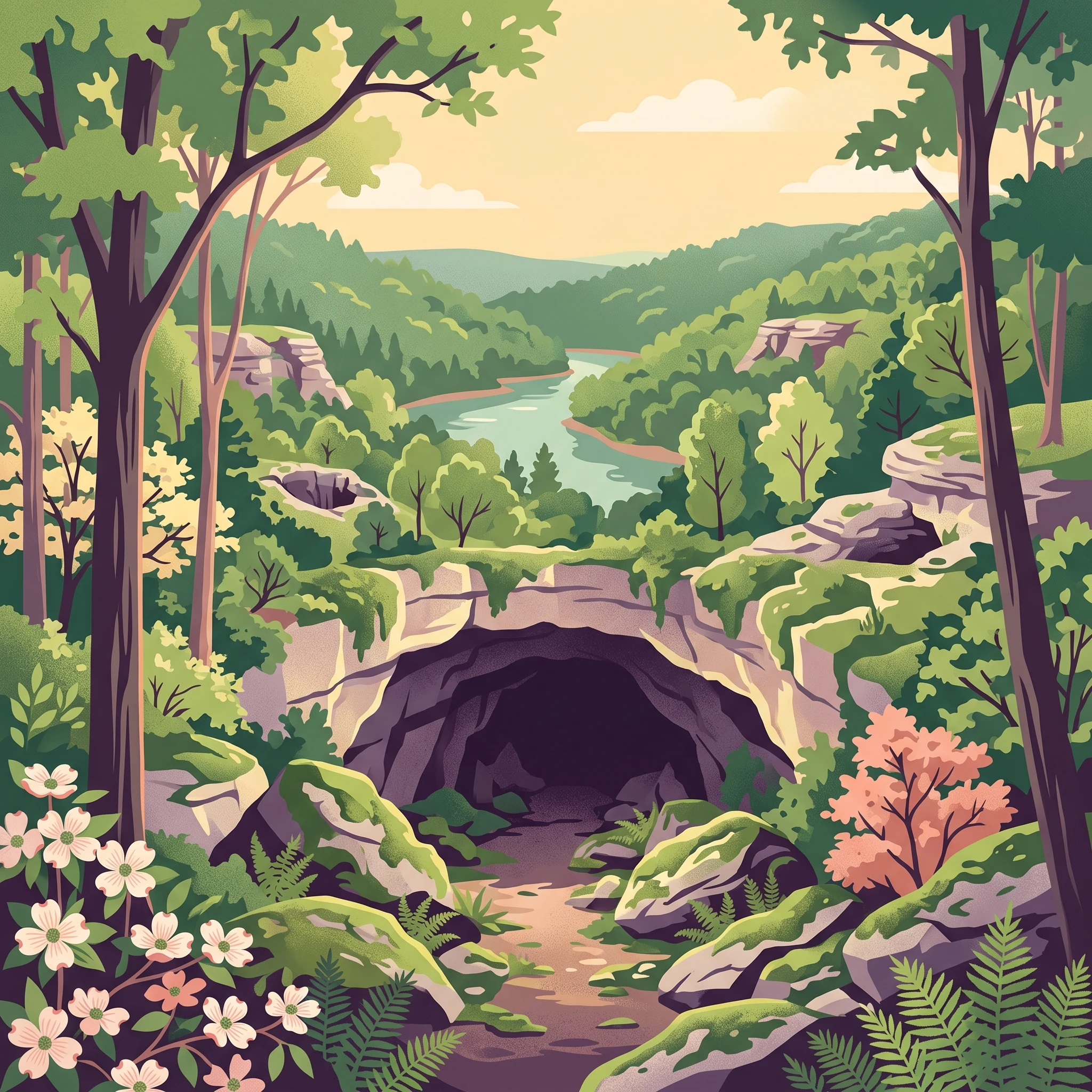
The Mammoth Cave landscape represents a classic karst terrain formed in thick Mississippian-aged limestone, with accompanying dolomite, siltstone, and shale, capped by the Big Clifty Sandstone. This protective sandstone caprock has made the cave system remarkably stable and preserved many older, upper passages that remain dry. The contact between limestone and sandstone can be observed by hiking from valley bottoms to ridge tops, where exposed rock changes composition at a well-defined elevation. The epikarstic zone, where tiny dissolved conduits concentrate groundwater flow, feeds springs at ridge edges. Surface features include Cedar Sink, a massive sinkhole in the southern region where a small river enters and disappears underground. The Green River flows through the park, with its tributary the Nolin River feeding into it at the park boundary. The landscape supports forested ridges, valleys, and the river corridor, creating a diverse surface environment above the extensive underground cave system.
Mammoth Cave National Park ecosystems, habitats, and plant life
Mammoth Cave National Park encompasses both extraordinary underground ecosystems and diverse surface habitats. The cave environment supports a remarkable array of troglobitic species that have evolved in complete darkness, including the Kentucky cave shrimp, cavefish, cave crayfish, cave salamanders, and numerous cave crickets. These species are endemic to the cave system, having adapted to the stable, dark conditions over evolutionary time. The surface forest supports oak-hickory vegetation typical of Eastern Temperate broadleaf and mixed forests. The Green River corridor provides aquatic habitat, with the river designated as a Kentucky Wild River. The park's position in south-central Kentucky places it within a region of extensive karst geology, where the interaction between surface and underground systems creates unique ecological connections. The Mississippian limestone itself contains significant paleontological resources, including fossils of more than a dozen shark species and recent discoveries of cartilaginous fish remains.
Mammoth Cave National Park wildlife and species highlights
The Mammoth Cave ecosystem supports both cave-dwelling and surface species. The caves are home to several bat species including the Indiana bat, gray bat, little brown bat, big brown bat, and tricolored bat, with historical populations estimated at 9-12 million individuals in the Historic Section, though numbers have declined significantly. Troglobitic species endemic to the cave system include the Kentucky cave shrimp, northern cavefish, cave crayfish, and cave salamanders. The cave cricket species Hadenoecus subterraneus is common throughout the system. Surface wildlife includes the red bat, which rarely ventures underground. The Green River supports aquatic species, and the forested surface areas provide habitat for typical eastern woodland wildlife. The park's location along migratory pathways and its diverse habitats support both resident and seasonal species populations.
Mammoth Cave National Park conservation status and protection priorities
Mammoth Cave National Park serves as a critical protected area for both geological and biological resources. The UNESCO World Heritage Site designation recognizes the cave system's global significance as the world's longest known cave. The International Biosphere Reserve status acknowledges the park's role in preserving biodiversity. The cave ecosystem has faced challenges, particularly with bat populations declining from historical highs, prompting ongoing ecological restoration efforts. The section of the Green River flowing through the park is legally designated as a Kentucky Wild River, providing protection for aquatic resources. Archaeological resources within the caves are protected by federal and state laws, with specific protocols in place to preserve artifacts and human remains. The Cave Research Foundation continues exploration and mapping, contributing to scientific understanding while working with the National Park Service to protect sensitive cave environments.
Mammoth Cave National Park cultural meaning and human context
Mammoth Cave has a rich human history spanning thousands of years. Native American peoples used the caves for burial, exploration, and resources, leaving behind artifacts and remains that provide valuable archaeological insight. The cave's 19th-century history includes the saltpeter mining industry that relied on enslaved labor, and subsequent tourism development where enslaved guides like Stephen Bishop made significant contributions to exploration and mapping. The national park movement of the 1920s and 1930s led to the park's establishment in 1941, though eminent domain proceedings displaced many residents and created lasting community impacts. The park's cultural resources also include references in literature and popular culture, from Herman Melville's Moby-Dick to modern video games. The park continues to interpret this complex history, balancing preservation of archaeological sites with public education about the human stories connected to this landscape.
Top sights and standout views in Mammoth Cave National Park
The extraordinary scale of Mammoth Cave, with over 426 miles of surveyed passages, remains the park's defining feature. The Rotunda Room just inside the historic entrance showcases the cave's namesake grandeur. Visitors can explore formations like Frozen Niagara, a cascade of flowstone mimicking a frozen waterfall, and traverse passages such as Grand Avenue and Fat Man's Misery. The Echo River, once offering boat tours through the underground river, represents the cave's hydrological dimension. Surface highlights include Cedar Sink, where a river vanishes underground, and the Green River corridor. The park protects significant archaeological resources including Native American artifacts and remains. The connection between Mammoth Cave and Flint Ridge in 1972 created the world's longest cave system, a landmark achievement in speleology.
Best time to visit Mammoth Cave National Park
Mammoth Cave National Park offers year-round visitation opportunities, though seasonal conditions affect both surface and underground experiences. The cave environment remains at a constant temperature year-round, making underground tours comfortable in any season. Summer months bring warmer surface temperatures and longer days for surface hiking and exploration. Spring and fall offer moderate temperatures ideal for outdoor activities along the forest trails and river areas. Winter provides a quieter experience with fewer visitors, though some tours may have modified schedules. The park's humid subtropical climate means precipitation is possible in any season. Visitors seeking to avoid peak crowds might consider weekdays or the winter months. The visitor center provides information on available tours, which vary in length and physical demands.