A cross-border UNESCO reserve protecting the Mono river delta between Benin and Togo.
Mono Transboundary Biosphere Reserve
The Mono Transboundary Biosphere Reserve is a cross-border protected area that follows the lower Mono river and its estuary on the boundary between Benin and Togo. Designated by UNESCO in 2017, it covers roughly 346,285 hectares of coastal and wetland landscapes, blending mangroves, lagoons, floodplains, savanna and sacred forest patches. The reserve is notable for combining a large freshwater river system with a coastal delta ecosystem and for integrating the management needs of two neighboring countries.
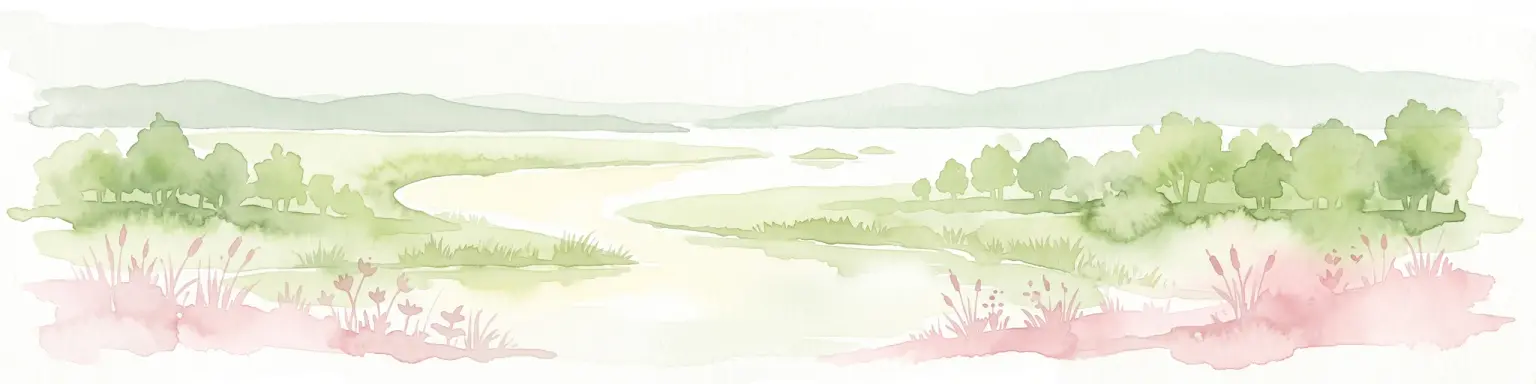
The reserve sits at one of West Africa's most ecologically dynamic interfaces, where freshwater from the Mono river meets the Atlantic Ocean through a complex network of channels, islands, lagoons and sandy beaches. This transitional environment supports a rich mix of habitats across a relatively compact geographic footprint. The protected-area designation also extends inland to include savanna and forest communities, giving the reserve a layered landscape profile rather than a purely coastal focus.
Beyond its ecological value, the reserve addresses the human dimension of a shared landscape, encompassing a population of around two million people whose livelihoods depend on small-scale agriculture, palm and coconut cultivation, livestock grazing, forestry, and especially fishing in the river and lagoon system.