Why Nordvest-Spitsbergen National Park stands out
Nordvest-Spitsbergen National Park is uniquely distinguished by hosting the Troll and Jotun hot springs, which represent the northernmost documented terrestrial hot springs on the planet, with water temperatures reaching nearly 28°C at almost exactly 80° north latitude. This extraordinary geothermal phenomenon occurs in an environment where surface temperatures remain frigid year-round, creating a remarkable biological oasis in the frozen Arctic. Beyond the hot springs, the park is renowned for its well-preserved historical sites related to early Arctic exploration, most notably the remains at Virgohamna and Danes Island where Swedish engineer S.A. Andrée launched his 1897 attempt to reach the North Pole by hydrogen balloon, a mission that ended in tragedy and remains one of the most famous stories in polar exploration history. The park also protects extensive seabird cliff colonies along its coastline and serves as critical habitat for polar bears that use the area for seasonal hibernation.
Nordvest-Spitsbergen National Park history and protected-area timeline
Nordvest-Spitsbergen National Park has a rich historical legacy extending back centuries of human activity in the high Arctic. The park contains tangible evidence of the whaling era that defined much of Svalbard's economic history, with remains of whaling stations and associated graves dating from the 17th century still visible in the landscape. These operations, primarily conducted by British and Dutch fleets, established temporary settlements around the archipelago's coasts as they processed whale oil from the abundant marine resources. The archaeological remnants within the park provide valuable insight into this formative period of polar exploitation and the human presence in extreme environments.
The park is perhaps most famously associated with the age of heroic Arctic exploration, particularly the pioneering attempts to reach the North Pole that characterized the late 19th century. The site of Virgohamna on Danes Island served as the launching point for Salomon August Andrée's ambitious 1897 expedition, in which the Swedish engineer attempted to reach the North Pole aboard a hydrogen balloon. This expedition, one of the earliest serious attempts at polar aerial exploration, ended in tragedy when the balloon crashed on the Arctic ice and both Andrée and his companions perished. Their remains and camp were discovered years later, and the story remains one of the most poignant in exploration history. The park preserves the launch site and associated structures from this expedition.
Nordvest-Spitsbergen National Park was formally established through royal resolution on 1 June 1973, recognizing both the outstanding natural values of the northwestern Spitsbergen landscape and the need to protect its significant historical and cultural resources. The establishment reflected growing post-war awareness of the importance of preserving representative Arctic ecosystems and unique geological features, including the extraordinary hot springs that represent phenomena of international scientific interest. The park's management falls under the Norwegian Directorate for Nature Management, which oversees conservation efforts while accommodating the traditional uses that have characterized Svalbard for generations.
Nordvest-Spitsbergen National Park landscape and geographic character
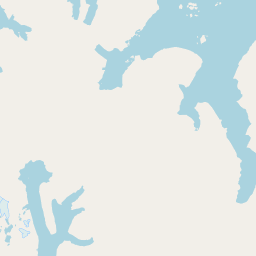
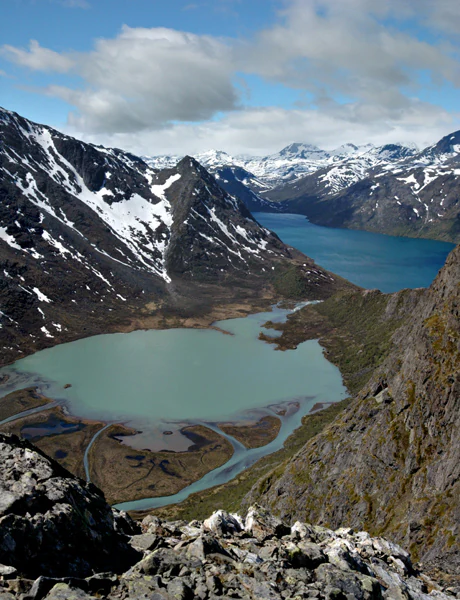
The landscape of Nordvest-Spitsbergen National Park exemplifies the dramatic character of high-Arctic terrain in its most spectacular form. The park encompasses portions of two distinct land areas on northwestern Spitsbergen—Albert I Land and Haakon VII Land—along with numerous offshore islands scattered across the surrounding Arctic Sea. The terrain is dominated by rugged mountain ranges that rise sharply from the sea, their peaks and ridges carved by ancient glacial processes into dramatic尖峰 and steep-walled valleys that descend toward the fjords and coastline.
The coastal landscape is particularly striking, characterized by towering sea cliffs that rise hundreds of meters above the ocean, creating perfect nesting habitat for colonies of seabirds. These cliffs, interspersed with rocky islands and skerries, define much of the park's western and northern boundaries and create one of its most visually commanding features. Between the mountainous headlands, glacial valleys extend inland, their floors often filled with moraine deposits, meltwater streams, and areas of tundra vegetation where conditions permit. The Bockfjorden area, where the famous hot springs are located, represents a particularly interesting geological zone where volcanic activity has created warm groundwater outlets in an otherwise frozen landscape.
The islands within the park, including Danes Island and Moffen, add further diversity to the landscape. Danes Island features the historical sites associated with Andrée's expedition while providing important coastal habitat. Moffen, a low-lying island to the north, serves as a significant haul-out site for walrus. Throughout the park, evidence of past glaciation is visible in the form of terminal moraines, glacial striations on bedrock, and the U-shaped valleys that characterize glacial carving. The absence of trees and the sparse vegetation cover allow the underlying geology and landforms to remain clearly visible, creating a landscape of stark beauty and minimal concealment.
Nordvest-Spitsbergen National Park ecosystems, habitats, and plant life
The nature of Nordvest-Spitsbergen National Park reflects the extreme conditions of high-Arctic ecosystems and the remarkable adaptations that allow life to thrive in this frozen environment. The park's terrestrial environments are dominated by polar desert and tundra, with vegetation limited to low-growing plants including mosses, lichens, and specialized flowering plants that complete their life cycles in the brief summer growing season. The exceptional presence of the Troll and Jotun hot springs creates a unique ecological anomaly within this otherwise frozen landscape, where warmer temperatures support more lush vegetation and provide insight into how geothermal energy can shape Arctic ecosystems.
The marine environment surrounding the park's islands and coastline supports remarkable biodiversity despite the cold waters of the Arctic Ocean. The nutrient-rich upwelling zones and productive feeding grounds attract numerous marine mammals and seabirds that depend on these waters for survival. The park's designation of approximately one-third of its area as an Important Bird Area by BirdLife International reflects the global significance of its coastal habitats for breeding seabird populations. These coastal cliffs provide secure nesting sites for species including barnacle geese, brent geese, common eiders, and black guillemots, whose populations represent significant proportions of their total numbers in Svalbard.
The terrestrial wildlife community includes species specifically adapted to Arctic conditions, with Svalbard reindeer representing a distinct subspecies that has evolved in isolation on the archipelago. These animals are smaller than their southern relatives and have developed specialized behaviors for surviving the long winters. Arctic fox, the only native terrestrial predator, patrols the landscape in search of bird eggs, small mammals, and carrion. Perhaps most famously, polar bears use the park's sea ice and coastal areas as part of their seasonal movements across Svalbard, with the park serving as important hibernation habitat for females with cubs.
Nordvest-Spitsbergen National Park wildlife and species highlights
Wildlife in Nordvest-Spitsbergen National Park is concentrated in the coastal zones and marine environments where productivity is highest and conditions most favorable for supporting substantial animal populations. The park's sea cliffs and islands host numerous seabird colonies that represent some of the most significant breeding populations in the Svalbard archipelago. Barnacle geese and brent geese nest in the coastal areas, their breeding success tied to the brief but productive Arctic summer when vegetation becomes available for feeding. Common eiders nest on the islands and coastal cliffs, while black guillemots favor the rocky shoreline habitats where they can access fish in the nearshore waters.
The park provides critical habitat for Svalbard's famous polar bears, which use the area for various activities throughout the year. The sea ice that forms in the waters around the park provides hunting grounds for seals, the primary prey of polar bears, while the coastal areas serve as denning sites where pregnant females excavate snow dens in which to give birth and nurse their cubs during the winter months. The park is specifically noted as a hibernating area for polar bears, making its protection particularly important for the species' survival in this region.
Terrestrial mammals in the park include Svalbard reindeer, which graze on the tundra vegetation during the summer months and survive the winter by foraging on whatever plant material remains exposed above the snow. Arctic fox, the only native land predator, are present throughout the park and play an important role in the ecosystem as scavengers and predators. Walrus are found in the waters around the park's islands, where they haul out onto beaches to rest and can often be observed in substantial groups, particularly on Moffen Island. The combination of marine mammals, nesting seabirds, and terrestrial species creates a wildlife community of remarkable diversity for such a northern location.
Nordvest-Spitsbergen National Park conservation status and protection priorities
Nordvest-Spitsbergen National Park holds significant conservation value as one of the most northerly protected areas in Europe and one of the few national parks that encompass true high-Arctic ecosystems. The park's IUCN Category II designation reflects its primary mandate to protect outstanding natural landscapes and the ecological processes they support. The extraordinary hot springs at Troll and Jotun represent a phenomenon of international scientific importance, and their inclusion within the protected area ensures ongoing protection of these unique geological and biological features.
The park's conservation significance is further enhanced by its role in protecting habitat for species of global conservation concern. The identification of approximately one-third of the park's area as an Important Bird Area acknowledges the global importance of its seabird colonies for species whose populations are vulnerable to environmental change. Polar bear conservation is particularly relevant, as the species faces significant challenges from climate change affecting sea ice habitat throughout its range. Protecting areas where polar bears den and hunt, such as those found in Nordvest-Spitsbergen, contributes to broader conservation strategies for this iconic species.
The protection of the park's historical and cultural resources also contributes to its conservation value, as these elements represent irreplaceable evidence of human interaction with the Arctic environment over centuries. The remains of whaling stations and exploration sites provide important connections to the historical understanding of how humans have utilized and explored high-latitude environments. The Norwegian management framework, overseen by the Directorate for Nature Management, balances conservation objectives with the traditional uses that have characterized Svalbard while ensuring the long-term protection of the park's outstanding natural and cultural values.
Nordvest-Spitsbergen National Park cultural meaning and human context
The cultural context of Nordvest-Spitsbergen National Park reflects centuries of human engagement with the high Arctic, spanning from early economic exploitation through the heroic age of exploration to modern conservation management. The remains of 17th-century whaling stations within the park provide tangible evidence of the economic activities that drew European vessels to Svalbard in substantial numbers during the early modern period. These operations, while primarily focused on extracting valuable whale oil, also resulted in the establishment of temporary settlements and the burial of individuals who died during these hazardous enterprises, creating historical sites of archaeological and cultural significance.
The park's connection to Arctic exploration represents perhaps its most famous cultural dimension. The site at Virgohamna on Danes Island served as the departure point for Salomon August Andrée's ill-fated 1897 polar expedition, an attempt to reach the North Pole by hydrogen balloon that became one of the most tragic episodes in exploration history. The Andrée expedition, with its combination of scientific ambition and technological innovation, captured the imagination of the era and remains a subject of historical interest today. The preserved launch sites and associated structures provide a direct physical connection to this pivotal moment in the history of human exploration of the extreme north.
Contemporary Svalbard operates under the Svalbard Treaty of 1920, which established Norwegian sovereignty while granting certain rights to signatory nations. This unique legal framework influences how protected areas like Nordvest-Spitsbergen are managed, balancing conservation objectives with access provisions that reflect the archipelago's international character. The park exists within this broader context of Arctic governance and represents Norway's commitment to preserving outstanding natural and cultural heritage in one of the planet's most remote and distinctive regions.
Top sights and standout views in Nordvest-Spitsbergen National Park
Nordvest-Spitsbergen National Park offers visitors one of the most distinctive Arctic wilderness experiences available anywhere in the world. The opportunity to observe the northernmost terrestrial hot springs on Earth at Troll and Jotun, where geothermally heated water reaches nearly 28°C in an environment of permanent Arctic cold, represents a remarkable natural phenomenon found nowhere else on the planet. The park's seabird cliffs, particularly those identified as part of the Important Bird Area network, provide spectacular opportunities for observing nesting colonies of barnacle geese, brent geese, common eiders, and black guillemots during the brief summer breeding season. The historical sites associated with S.A. Andrée's 1897 expedition offer a unique connection to the history of polar exploration, with the launch point at Virgohamna preserving the tangible remains of one of exploration's most famous tragedies. The chance to encounter polar bears, walrus, and other Arctic wildlife in their natural environment, while exploring a landscape of dramatic mountain peaks, glacial valleys, and remote islands, makes this park an exceptional destination for those seeking to experience the true character of high-Arctic nature.
Best time to visit Nordvest-Spitsbergen National Park
The optimal time to experience Nordvest-Spitsbergen National Park aligns with the Arctic summer months, typically from June through August, when temperatures rise enough to make outdoor exploration feasible and the midnight sun illuminates the landscape around the clock. This period coincides with the breeding season for seabirds, offering the best opportunities to observe nesting colonies in full activity, while polar bears are more frequently visible along the coast as they move across the sea ice. The relatively mild temperatures of summer, though still cold by most standards, allow access to areas that would be inaccessible during the polar winter. Visitors should note that the extreme latitude means that even during summer, conditions can change rapidly, and the short summer season means that wildlife viewing opportunities are concentrated into a relatively brief window. Winter visits, while possible for specialized expeditions, present extreme challenges due to the complete darkness, severe cold, and limited accessibility that characterize the polar night period.