Mori Atlas logo
National parkPico Basilé National Park

Discover the volcanic terrain and unique ecosystems of this critical island national park.

Pico Basilé National Park: Equatorial Guinea's Highest Peak and Protected Landscape

Pico Basilé National Park represents a significant protected landscape on Bioko Island, Equatorial Guinea, centered around the nation's highest volcanic peak. As a National Park, it safeguards crucial montane forests and unique biodiversity, including several threatened primate species and a remarkable array of birds within the Bioko Norte region. This atlas entry provides essential geographic context and helps understand the park's protected boundaries and ecological importance in Central Africa.

national parkisland protected areamontane forestvolcanic landscapeprimate habitatbird conservation area

Pico Basilé National Park

National park

Park overview

Structured park overview, official facts, and landscape profile for Pico Basilé National Park

Pico Basilé National Park park facts, protected area profile, and essential visitor context
Review the core facts for Pico Basilé National Park, including designation, size, terrain, visitor scale, habitats, and operating context in one park-focused overview.

About Pico Basilé National Park

Pico Basilé National Park represents Equatorial Guinea's principal protected area for highland forest conservation on the island of Bioko. The park's establishment in 2000 reflected the country's commitment to preserving its unique natural heritage, particularly the montane ecosystems associated with Pico Basilé, the island's volcanic centerpiece. The park covers an extensive area of 30,000 hectares, creating a substantial conservation zone that encompasses multiple ecological habitats from lower slopes to summit areas. The island of Bioko sits in the Gulf of Guinea, and its isolation has allowed for the evolution of distinct species assemblages, making the park particularly valuable from a biogeographical perspective. The protected area provides ecosystem services including watershed protection and climate regulation while serving as a living laboratory for scientific research on tropical montane ecosystems. Conservation efforts in the park face challenges from poaching activities that threaten primate populations, prompting government intervention and sustainable development initiatives.

Quick facts and research context for Pico Basilé National Park

Pico Basilé National Park occupies the highlands of Bioko, an island in the Gulf of Guinea that forms part of Equatorial Guinea. The park was formally established in 2000 and covers 30,000 hectares of mountainous terrain centered on Pico Basilé, the nation's tallest mountain at 3,011 meters above sea level. The area is classified as an IUCN Category II protected area, reflecting its national park status. Bioko island sits in the Atlantic Ocean off the African mainland and represents a biodiversity hotspot due to its isolated montane environment. The park contains diverse vegetation zones ranging from lowland forests to montane habitats, supporting populations of several primate species and numerous bird species. The protected area is designated as an Important Bird Area by BirdLife International.

Park context

Deeper park guide and search-rich context for Pico Basilé National Park

Pico Basilé National Park history, landscape, wildlife, and travel context
Explore Pico Basilé National Park through its history, landscape character, ecosystems, wildlife, conservation priorities, cultural context, and seasonal travel timing in a structured park guide built for atlas discovery and search intent.

Why Pico Basilé National Park stands out

Pico Basilé National Park is best known for its exceptional primate populations and avifauna. The park shelters five primate species including Preuss's monkey, red-eared guenon, black colobus, western red colobus, and drill, all of which face conservation threats from poaching. The avifauna is particularly notable, with the park supporting significant populations of species such as Cameroon olive-pigeons, Bioko speirops, Cameroon sunbirds, and several other endemic and restricted-range bird species. The park's defining feature is Pico Basilé itself, the volcanic peak that dominates the island's landscape and represents Equatorial Guinea's highest point. The combination of highland volcanic terrain, diverse forest habitats, and significant biodiversity makes this park a key conservation area in Central Africa.

Pico Basilé National Park history and protected-area timeline

Pico Basilé National Park was officially established in the year 2000, creating a formal protected status for the montane forests surrounding Equatorial Guinea's highest mountain. In 2007, the government of Equatorial Guinea took significant regulatory action by prohibiting the hunting of diverse species within the park and wider territory, recognizing the pressure that poaching posed to wildlife populations. International conservation organizations have expressed concern regarding the enforcement and compliance with this hunting prohibition. In response, the government has been working to promote sustainable hunting practices within the park framework, with the dual goal of protecting wildlife populations while supporting the economic development of local rural communities that depend on natural resources. This approach reflects a recognition that effective conservation must consider the livelihoods of people living in and around protected areas.

Pico Basilé National Park landscape and geographic character

The landscape of Pico Basilé National Park is defined by the volcanic origins of Bioko Island and the prominent peak that gives the park its name. Pico Basilé rises dramatically to 3,011 meters, making it the highest mountain in Equatorial Guinea and one of the prominent peaks in the Gulf of Guinea region. The park's terrain encompasses steep mountain slopes, forested ridges, and elevational gradients that support diverse vegetation communities. The volcanic geology provides fertile soils and creates varied topography including cliffs, valleys, and ridgelines characteristic of montane island landscapes. The park's location on an island in the Atlantic Ocean adds a coastal and marine dimension to its setting, though the protected area itself focuses on the terrestrial highland environments.

Pico Basilé National Park ecosystems, habitats, and plant life

The ecological character of Pico Basilé National Park centers on its diverse vegetation zones that change with elevation, creating a spectrum of habitats from lowland tropical forests through montane forest to higher elevation communities. The island's isolation in the Gulf of Guinea has fostered endemism, with several species restricted to Bioko's montane environments. The park's designation as an Important Bird Area by BirdLife International recognizes its significance for avian biodiversity, supporting populations of numerous bird species that depend on the forest habitats. The diverse landscapes and vegetation within the park provide the foundation for the rich primate communities that represent one of the park's most notable ecological features.

Pico Basilé National Park wildlife and species highlights

Pico Basilé National Park supports remarkable primate diversity, hosting five monkey species that represent some of Africa's most threatened primates. Preuss's monkey, red-eared guenon, black colobus, western red colobus, and drill all occur within the park boundaries, each occupying different ecological niches within the forest environment. Ogilby's duiker represents an additional mammalian species of conservation interest. The park's avifauna is exceptionally diverse, with BirdLife International documenting significant populations of twelve bird species that meet Important Bird Area criteria: Cameroon olive-pigeon, green longtail, white-tailed warbler, mountain saw-wing, western mountain greenbul, Cameroon olive greenbul, black-capped woodland-warbler, Bioko speirops, Cameroon sunbird, Ursula's sunbird, and Shelley's oliveback. Many of these species are associated with montane forest habitats and represent both the ecological importance and conservation vulnerability of the park's wildlife communities.

Pico Basilé National Park conservation status and protection priorities

The conservation significance of Pico Basilé National Park derives from its role as a protected area for threatened primate populations and its designation as an Important Bird Area supporting significant bird populations. The park's primate community faces considerable pressure from poaching, which represents the primary threat to species survival. The 2007 hunting prohibition by the Equatorial Guinean government acknowledged this threat and sought to provide legal protection, though enforcement remains challenging. Conservation efforts increasingly emphasize sustainable approaches that balance wildlife protection with the needs of local communities. The park's establishment in 2000 reflected a formal commitment to biodiversity conservation, and its IUCN Category II status provides international recognition of its protected area value. The combination of endemic species, threatened populations, and diverse habitats makes the park a key conservation priority in Central Africa.

Pico Basilé National Park cultural meaning and human context

The park exists within the context of Bioko Island, which has been inhabited by human communities for centuries. The local populations have traditional relationships with the island's natural resources, and sustainable hunting initiatives have been developed to support community livelihoods while promoting conservation. However, the source material provides limited detail on specific cultural heritage or indigenous context within the park boundaries, so this field is not well-supported by available information.

Top sights and standout views in Pico Basilé National Park

The defining highlights of Pico Basilé National Park include its status as the conservation area protecting Equatorial Guinea's highest mountain and the associated montane ecosystems. The park's primate populations represent a major conservation asset, with five species including several that are threatened by poaching pressures. The avian diversity is equally notable, with the park supporting significant populations of species such as Bioko speirops, Cameroon sunbirds, and other restricted-range birds that depend on the island's forest habitats. The dramatic volcanic landscape centered on Pico Basilé provides both scenic value and ecological significance, while the park's Important Bird Area designation underscores its international conservation importance.

Best time to visit Pico Basilé National Park

The source material does not provide sufficient information to offer specific seasonal guidance for visiting Pico Basilé National Park. As a tropical island protected area, the park likely experiences typical Central African climate patterns with wet and dry seasons, but detailed visitor guidance regarding optimal travel times would require information not available in the source material.
Park location guide

Geography guide, regional context, and park location map for Pico Basilé National Park

Pico Basilé National Park park geography, regions, and map view in Equatorial Guinea
Understand where Pico Basilé National Park sits in Equatorial Guinea through a broader geographic reading of the surrounding landscape, nearby location context, and its mapped position within the national park landscape.

How Pico Basilé National Park fits into Equatorial Guinea

Equatorial Guinea is a Central African country spanning both mainland territory and islands in the Gulf of Guinea. Formerly the Spanish colony of Spanish Guinea, it gained independence in 1968. The country is characterized by its unique position near the Equator and its significant oil reserves.

Wider geography shaping Pico Basilé National Park in Equatorial Guinea

Equatorial Guinea occupies a territory of 28,050 km² on the west coast of Central Africa. The mainland region Río Muni borders Cameroon to the north and Gabon to the south and east. The country includes several islands in the Gulf of Guinea: Bioko Island (the northernmost and site of former capital Malabo), Annobón Island in the south, and smaller islands including Corisco, Elobey Grande, and Elobey Chico. The country lies near the Equator, giving it its name.

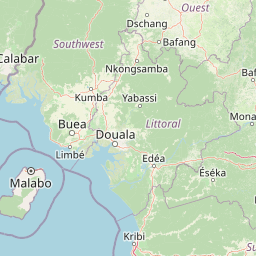
Map view of Pico Basilé National Park

Use this park location map to pinpoint Pico Basilé National Park in Equatorial Guinea, understand its exact geographic position, and read its mapped placement within the surrounding landscape more clearly.

Pigeon | © OpenStreetMap contributors

Location context for Pico Basilé National Park

Bioko Norte
Park atlas

Compare the unique montane forests and volcanic landscapes across Bioko Island and its regional geography

Explore Other National Parks and Protected Areas Near Pico Basilé National Park
After exploring Pico Basilé National Park, browse other protected areas within Equatorial Guinea and the broader Gulf of Guinea region to compare their unique montane and forest ecosystems. This geographic context helps trace shared volcanic landscapes, diverse primate habitats, and critical bird conservation zones across the West African coast.
National park

Douala-Edéa National Park: Coastal Mangrove and Tropical Forest Protected Landscape

Explore Cameroon's vital protected national park geography.

Douala-Edéa National Park is a protected national park in Cameroon's Littoral Region, defined by its extensive coastal geography where tropical lowland equatorial forests merge with significant Atlantic mangrove ecosystems. This area, encompassing roughly 2,715 square kilometers along the Bight of Biafra and the Sanaga River estuary, offers rich context for understanding Central Africa's coastal protected lands and diverse natural landscapes.

Area
2,715.12 km²
Established
2018
IUCN
II
Relief
Lowland
Watercolor illustration of a forested landscape with pink flowering plants, a winding river, and mountain ranges in the background
National park

Korup National Park: Cameroon's Ancient Tropical Rainforest Protected Area Exploration

Explore its rich biodiversity and unique geographic landscape.

Korup National Park is a significant protected area in Cameroon, covering 1,260 square kilometers of what is considered one of Africa's oldest and most biodiverse tropical rainforests. Established in 1986, this national park is renowned for its exceptional primate populations, extensive plant species, and its role as a critical conservation landscape. The park's terrain transitions from lowlands to hilly areas, with a dense network of streams, offering a rich subject for geographic and protected-area study.

Area
1,260 km²
Established
1986
IUCN
II
Relief
Mixed relief
National parkCameroon

Bakossi National Park: Detailed Protected Area Map and Geographic Identity in Cameroon

Explore the mapped landscape and regional context of this Cameroonian national park.

Bakossi National Park is an important protected area situated within Cameroon, functioning as a national park dedicated to conservation and geographic study. This page provides essential details on its mapped boundaries, regional setting, and the natural landscape it represents. It serves as a foundational element for understanding protected areas in Central Africa and their broader geographical significance.

Area
293.2 km²
Established
2008
Relief
Mountain
Climate
Tropical
National parkCameroon

Campo Ma'an National Park: Essential Protected Landscape in Cameroon's Atlantic Biafran Forest

Mapped evergreen canopy and vital great ape habitat in a key conservation area.

Campo Ma'an National Park is a crucial protected area in Cameroon, spanning 2,680 square kilometers of dense Atlantic Biafran forest. Established for environmental compensation, it safeguards critical habitat for western lowland gorillas and central chimpanzees, alongside forest elephants and diverse birdlife. The park's landscape is defined by a persistent evergreen canopy ecosystem, offering a unique context for understanding Central African rainforest geography and protected land status.

Area
2,680 km²
Established
2000
IUCN
II
Climate
Tropical
National parkEquatorial Guinea

Monte Alén National Park National Park: Mapped Protected Landscape in Equatorial Guinea

Explore regional geography and park boundaries.

Monte Alén National Park, a designated national park in Equatorial Guinea, offers a unique focal point for understanding protected landscapes. This entry provides detailed geographic context, highlighting the park's mapped boundaries and its significance within the atlas of Central African natural terrain. Investigate the terrain and regional setting of Monte Alén National Park for structured geographic discovery.

Area
2,000 km²
Established
1990
IUCN
II
Relief
Mountain
National parkWoleu-Ntem Province

Crystal Mountains National Park: National Park Protected Area and Geographic Context in Woleu-Ntem Province

Explore its mapped boundaries and regional landscape.

Crystal Mountains National Park is a designated national park offering critical insights into its protected landscape and geographic setting. Users can explore the mapped boundaries of this protected area, understand its regional terrain, and gain context within Woleu-Ntem Province through structured geographic data. This page provides the foundational atlas information for comprehending the park's conservation significance and natural features.

Area
1,200 km²
Established
2002
IUCN
II
Relief
Mountain
National parkCentre Region

Mpem and Djim National Park: Protected Landscape and Regional Geographic Atlas

Explore the mapped terrain and protected boundaries of this national park.

Mpem and Djim National Park is a protected natural area situated within Cameroon's Centre Region. This detail entry provides an atlas-focused view, emphasizing the park's protected landscape characteristics and its position within the regional geography. Understand the mapped context and discover the identity of Mpem and Djim National Park as a key protected area.

Area
974.8 km²
Established
2004
IUCN
II
Relief
Upland
National parkEquatorial Guinea

Altos de Nsork National Park: Equatorial Guinea's Protected Landscape and Map Context

Explore the mapped boundaries of this national park.

Altos de Nsork National Park stands as a designated national park within Equatorial Guinea, offering a distinct protected landscape. This entry provides essential atlas-driven details, emphasizing its geographic setting and mapped park boundaries. Understand its regional context and its significance as part of the conservation network in Central Africa, contributing to a richer understanding of mapped natural terrains.

Area
700 km²
Established
2000
IUCN
II
Relief
Highland

Common questions about visiting, size, designation, and location context for Pico Basilé National Park

Pico Basilé National Park FAQs for park facts, access, geography, and protected area context
Find quick answers about Pico Basilé National Park, including protected-area facts, park geography, trail and visitor context, and how the park fits into its surrounding country and regional landscape.
MoriAtlas Explorer

Continue Your Protected Areas Search Across the Global Atlas

Deepen your exploration by continuing the structured search for national parks and protected areas worldwide. Utilize the comprehensive filtering capabilities to compare different conservation landscapes and refine your understanding of global park geography. Discover more about the distribution and characteristics of protected natural areas.

Global natural geography