
Mori Atlas logo
National parkPshav-Khevsureti National Park

Discover rugged mountain terrain, river valleys, and alpine zones within Georgia's Caucasus protected areas.

Pshav-Khevsureti National Park: Protected Landscape and Geographic Atlas of Mtskheta-Mtianeti

Pshav-Khevsureti National Park represents a significant protected landscape situated within the mountainous Mtskheta-Mtianeti region of Georgia. This national park, established in 2014, safeguards a dramatic geographic territory characterized by deep river valleys, rugged terrain, and expansive alpine zones in the historic Khevsureti region. Its protected boundaries encompass the watersheds of the Asa, Aragvi, and Pshavi Aragvi rivers, forming a contiguous wilderness corridor vital for regional biodiversity and offering a rich context for map-based geographic exploration.

mountain parks Caucasusleopard habitatEast Caucasian turcultural heritage villagesalpine ecosystems
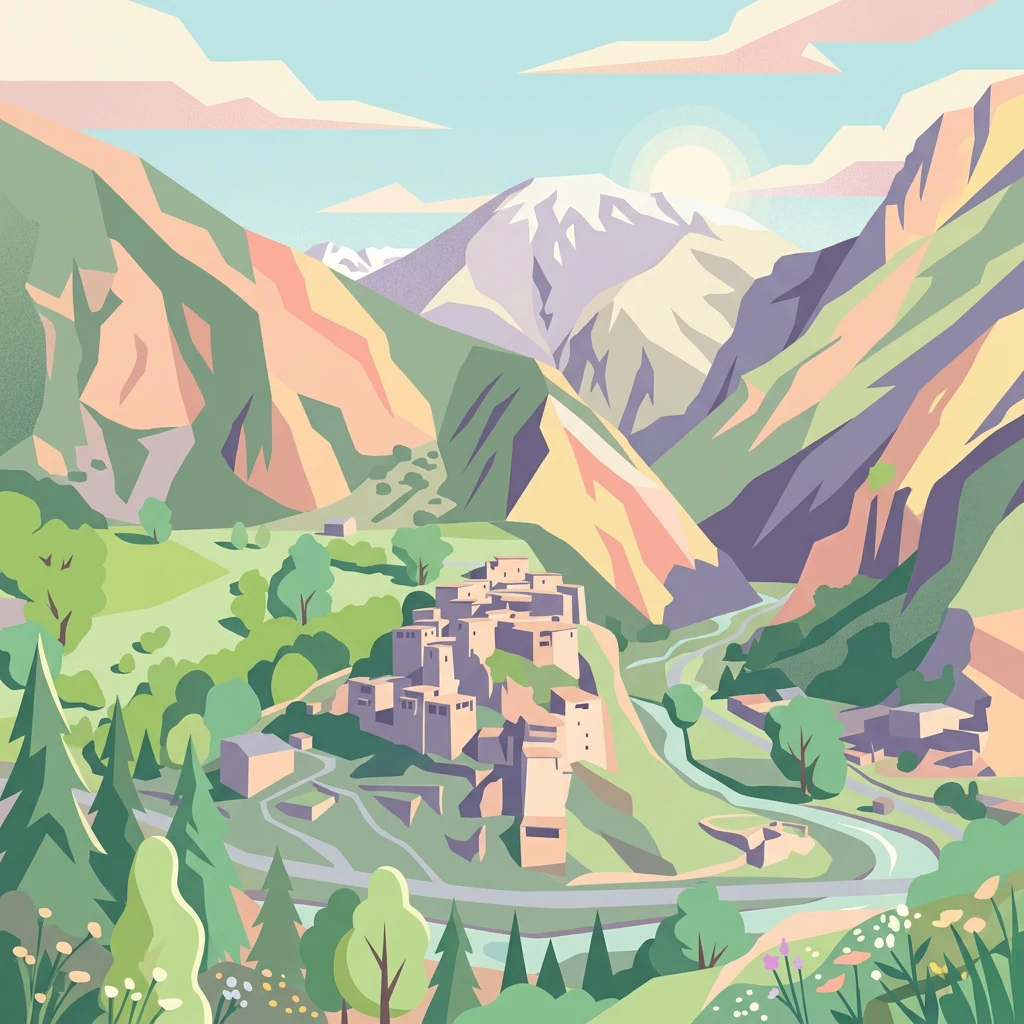
Stylized illustration of mountain valley with traditional stone village surrounded by colorful mountains and greenery

Pshav-Khevsureti National Park

National park

Park overview

Structured park overview, official facts, and landscape profile for Pshav-Khevsureti National Park

Pshav-Khevsureti National Park park facts, protected area profile, and essential visitor context
Review the core facts for Pshav-Khevsureti National Park, including designation, size, terrain, visitor scale, habitats, and operating context in one park-focused overview.

About Pshav-Khevsureti National Park

Pshav-Khevsureti National Park represents one of Georgia's most significant recent additions to its protected area network, established in 2014 through collaboration between the Georgian government and the World Wide Fund for Nature. The park occupies the mountainous territory of the historic Khevsureti region, a landscape of exceptional natural and cultural value in the Greater Caucasus mountains. The territory encompasses the watersheds of major river systems including the Asa, Aragvi, Andakistskali, and Pshavi Aragvi, creating a coherent ecological corridor that connects different elevation zones from valley floors to alpine summits. The park is administered by the Agency of Protected Areas of Georgia and operates under IUCN Category II designation, reflecting its primary purpose of ecosystem conservation while allowing for sustainable tourism and traditional land use in designated zones. The protected area is divided into distinct management zones, including a strict nature protection zone covering the most ecologically sensitive areas and a traditional use zone that accommodates ongoing sustainable practices by local communities.

Quick facts and research context for Pshav-Khevsureti National Park

Pshav-Khevsureti National Park is located in the Mtskheta-Mtianeti region of Georgia, approximately 120 kilometers north of Tbilisi. The park covers an extensive mountainous territory spanning the historic Khevsureti region, characterized by steep river valleys, forested slopes, and alpine meadows. It was established in 2014 with conservation of the Caucasus leopard as a primary objective. The area is notable for its traditional highland villages including Shatili, a medieval defensive settlement that represents the distinctive architectural heritage of the Khevsureti people.

Park context

Deeper park guide and search-rich context for Pshav-Khevsureti National Park

Pshav-Khevsureti National Park history, landscape, wildlife, and travel context
Explore Pshav-Khevsureti National Park through its history, landscape character, ecosystems, wildlife, conservation priorities, cultural context, and seasonal travel timing in a structured park guide built for atlas discovery and search intent.

Why Pshav-Khevsureti National Park stands out

Pshav-Khevsureti National Park is best known as a critical stronghold for the Persian leopard in the Caucasus region. The park protects significant populations of East Caucasian tur, a mountain ungulate endemic to the Greater Caucasus, as well as Bezoar goat, chamois, brown bear, and European lynx. The park also encompasses the cultural landscape of Khevsureti, with its chain of historic tower villages that once defended this strategically important mountain corridor between the northern Caucasus and the valleys of central Georgia.
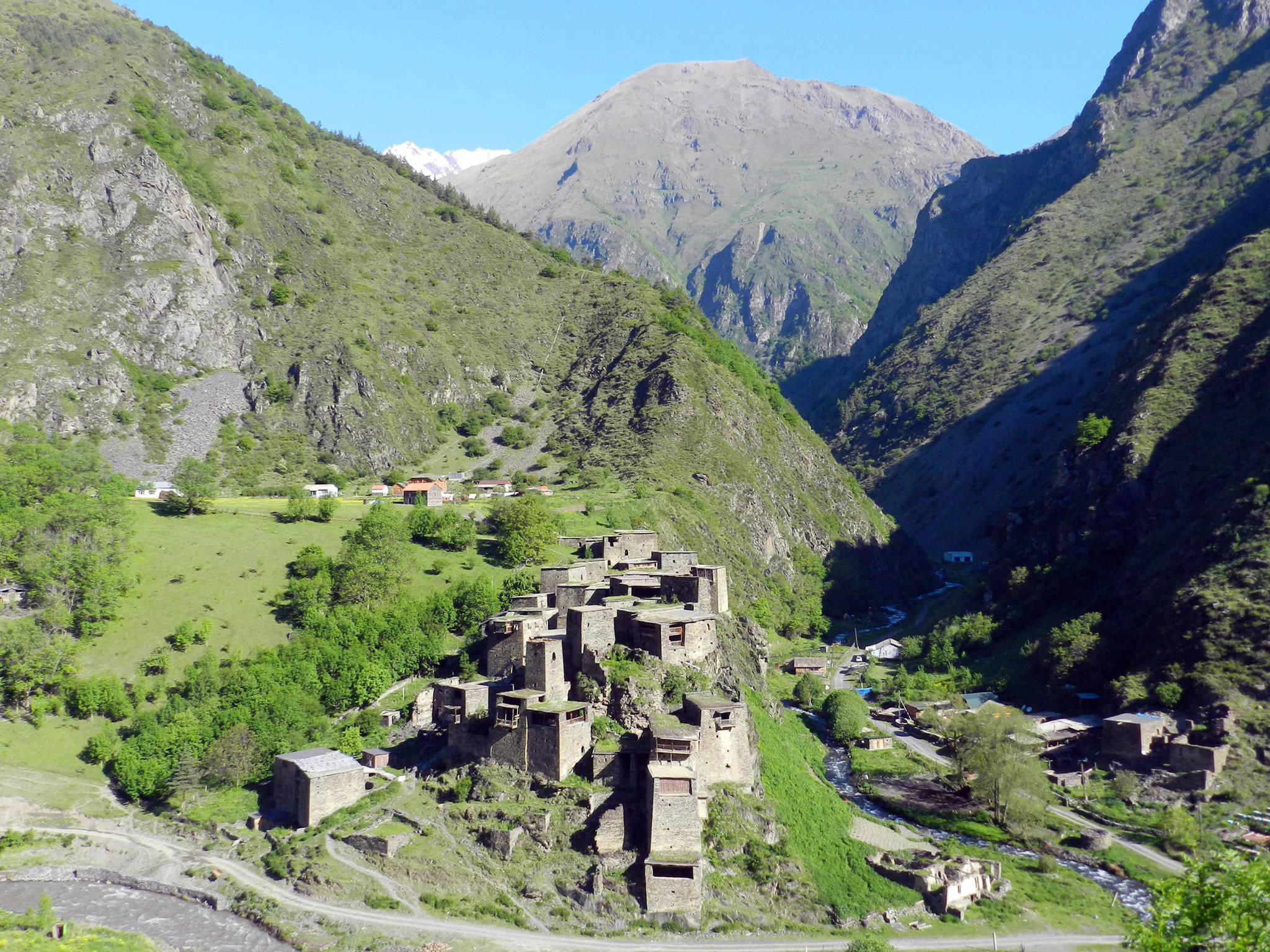
Stone buildings of Shatili village in a mountain valley with green slopes and distant mountains
Stone village nestled in a mountain valley with green slopes and distant peaks

Pshav-Khevsureti National Park history and protected-area timeline

Pshav-Khevsureti National Park was established in 2014 as part of Georgia's expanding network of protected areas. The creation of the park was directly supported by the World Wide Fund for Nature, reflecting international recognition of the area's conservation significance, particularly for populations of Persian leopard and other threatened species. The establishment came during a period of systematic expansion of Georgia's protected area network, which has sought to protect the country's remarkable biodiversity while promoting sustainable development in mountain communities. The park encompasses the traditional territory of the Khevsureti people, a highland community with a distinctive cultural identity shaped by centuries of mountain living, defensive architecture, and transhumance practices.

Pshav-Khevsureti National Park landscape and geographic character

The landscape of Pshav-Khevsureti National Park is characterized by dramatic mountain terrain typical of the Greater Caucasus. Deep river valleys carve through the protected area, with the Asa, Aragvi, and Pshavi Aragvi rivers creating corridors of forested slopes and meadowlands between steep ridgelines. The terrain rises from approximately 1,300 meters above sea level in the valley bottoms to exceed 3,000 meters in the alpine zones, encompassing a range of habitats from deciduous and mixed forests through subalpine meadows to rocky alpine terrain. The Khevsureti region is known for its distinctive landscape character, shaped by both natural processes and centuries of human presence through village settlements, agricultural terraces, and the famous tower architecture that dots the mountain slopes.

Pshav-Khevsureti National Park ecosystems, habitats, and plant life

The natural environment of Pshav-Khevsureti National Park supports remarkable biodiversity within the Caucasus biodiversity hotspot. The protected area spans multiple ecological zones, creating diverse habitats that support both widespread species and regional endemics. The forests of the lower slopes feature deciduous species typical of the eastern Caucasus, transitioning through subalpine zones to alpine meadows at higher elevations. The river systems provide aquatic habitats and create riparian corridors through the mountainous terrain. The park's elevation range and variety of aspect positions create microclimatic conditions that support diverse plant communities across the protected territory.

Pshav-Khevsureti National Park wildlife and species highlights

Pshav-Khevsureti National Park is home to an impressive array of large mammals, several of which are of particular conservation concern. The park serves as a crucial area for conservation of the Persian leopard, one of the rarest large cats in the region and listed as endangered across its range. The East Caucasian tur, a mountain goat-antelope endemic to the Greater Caucasus, inhabits the rocky alpine zones in significant numbers. The Bezoar goat, another mountain ungulate, is found throughout the park's steep terrain. Additional species include brown bear, European lynx, Caspian red deer, and chamois, making this one of the most wildlife-rich protected areas in the Caucasus region.

Pshav-Khevsureti National Park conservation status and protection priorities

Pshav-Khevsureti National Park plays a vital role in conservation of the Caucasus region's most threatened species and ecosystems. The protection of leopard habitat is particularly significant, as the park forms part of a network of protected areas that support the remnant population of this iconic big cat in the region. Conservation of East Caucasian tur and Bezoar goat populations protects endemic species with ranges limited to the Greater Caucasus. The park's management approach divides the territory into strict protection and traditional use zones, balancing conservation objectives with sustainable practices that have shaped the landscape over generations.

Pshav-Khevsureti National Park cultural meaning and human context

The park encompasses the cultural landscape of Khevsureti, a historic highland region of eastern Georgia known for its distinctive medieval tower villages. The village of Shatili represents the most famous example of this architectural tradition, with its cluster of defensive towers and stone houses built into the steep mountainside. The Khevsureti region was historically important as a mountain corridor connecting the northern Caucasus plains to the valleys of central Georgia, and the tower villages served defensive purposes against incursions from the north. Traditional practices including seasonal transhumance between village settlements and highland pastures continue to shape the cultural landscape within and adjacent to the protected area.

Top sights and standout views in Pshav-Khevsureti National Park

Pshav-Khevsureti National Park combines exceptional wildlife conservation significance with outstanding mountain scenery and cultural heritage. The presence of Persian leopard and East Caucasian tur makes this one of the most important protected areas in the Caucasus for large mammal conservation. The historic Khevsureti tower villages, particularly Shatili, represent a unique cultural landscape rarely found elsewhere in the region. The park offers a wilderness experience in relatively untouched mountain terrain, with opportunities to explore river valleys, forested slopes, and alpine zones within a single protected area.

Best time to visit Pshav-Khevsureti National Park

The summer months from June through September offer the most accessible period for visiting Pshav-Khevsureti National Park, when mountain trails are open and weather conditions are generally favorable for exploration. Spring and early summer bring lush vegetation to the valley floors and lower slopes, while autumn offers golden colors in the forests and generally stable weather. Winter access is limited due to snow and cold conditions in the high terrain, though the park's higher elevation areas experience significant snowfall that shapes the local ecology and traditional land-use patterns.
Park location guide

Geography guide, regional context, and park location map for Pshav-Khevsureti National Park

Pshav-Khevsureti National Park park geography, regions, and map view in Georgia
Understand where Pshav-Khevsureti National Park sits in Georgia through a broader geographic reading of the surrounding landscape, nearby location context, and its mapped position within the national park landscape.

How Pshav-Khevsureti National Park fits into Georgia

Georgia is a transcontinental country spanning Eastern Europe and West Asia, situated in the Caucasus region along the Black Sea. It declared independence from the Soviet Union in 1991 and today functions as a unitary parliamentary republic with Tbilisi as its capital. The nation is notable for its distinctive Georgian language, Orthodox Christian traditions dating to the 4th century, and archaeological evidence of the world's earliest winemaking sites.

Wider geography shaping Pshav-Khevsureti National Park in Georgia

Georgia occupies a strategic position at the crossroads of Eastern Europe and West Asia, bordered by Russia to the north and northeast, the Black Sea to the west, Turkey and Armenia to the south, and Azerbaijan to the southeast. The terrain is predominantly mountainous in the north with the Greater Caucasus range, transitioning to plains and valleys in the east. The country spans approximately 69,700 square kilometres.

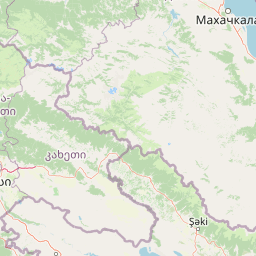
Map view of Pshav-Khevsureti National Park

Use this park location map to pinpoint Pshav-Khevsureti National Park in Georgia, understand its exact geographic position, and read its mapped placement within the surrounding landscape more clearly.

Pigeon | © OpenStreetMap contributors

Location context for Pshav-Khevsureti National Park

Mtskheta-Mtianeti

Visual Atlas of Georgia's Caucasus: Discover Rugged Terrain, River Valleys, and Alpine Habitats

Pshav-Khevsureti National Park Photos: Explore Mountain Landscapes and Protected Area Scenery
Explore a curated visual gallery of Pshav-Khevsureti National Park images to understand its dramatic mountain terrain, deep river valleys, and unique protected-area character. This photography collection reveals the park's diverse landscapes, showcasing critical habitats, alpine ecosystems, and the cultural heritage of the Khevsureti region.

Stone buildings of Shatili village in a mountain valley with green slopes and distant mountains

Park atlas

Trace the regional spread of mountain parks and conservation landscapes across the Greater Caucasus.

Explore Other National Parks and Protected Areas Near Pshav-Khevsureti National Park
After exploring Pshav-Khevsureti National Park's dramatic mountain terrain and critical conservation efforts, browse other national parks and protected areas across the surrounding Greater Caucasus region. Compare diverse landscapes, unique biodiversity, and cultural heritage sites within a wider network of protected natural areas, deepening your geographic understanding from a single park.
National parkGeorgia

Tusheti National Park National Park: Geographic Exploration of Caucasus Protected Landscapes

Mapped protected area boundaries and alpine terrain in Georgia.

Tusheti National Park offers a deep dive into the rugged geography of the Greater Caucasus. This national park, situated in a remote corner of Georgia, protects a dramatic landscape characterized by high mountain ridges, glacial valleys, and diverse ecosystems. The park's mapped boundaries encompass significant alpine terrain, providing essential habitat and serving as a critical area for understanding regional protected land distribution and landscape context. Explore the unique geographic identity of Tusheti National Park.

Area
1,276.43 km²
Established
2003
IUCN
II
Relief
Mountain
National parkMtskheta-Mtianeti

Kazbegi National Park: Georgia's Alpine Protected Landscape & Regional Geography

Explore its dramatic terrain and protected area boundaries.

Kazbegi National Park offers a unique glimpse into the dramatic alpine geography of the Greater Caucasus. As a protected national park in the Mtskheta-Mtianeti region, it showcases rugged terrain, high-altitude ecosystems, and significant natural features. MoriAtlas provides a structured way to understand the park's physical characteristics, its mapped presence, and its place within the broader regional atlas, highlighting the distinct landscape of this Georgian protected area.

Area
1,446.17 km²
Established
1976
IUCN
II
Relief
Mountain
Watercolor illustration of a landscape with mountains, a river, trees, and grassy fields
National parkMtskheta Municipality

Tbilisi National Park: Oldest Protected Landscape in Mtskheta Municipality

Explore Georgia's oldest national park and its mapped forest terrain.

Tbilisi National Park represents Georgia's oldest protected area, nestled in the Saguramo Range within Mtskheta Municipality. This page provides an atlas-focused view of its geographic features, including mountainous terrain and deciduous forest ecosystems. Users can explore the park's mapped boundaries and understand its significance as a crucial natural landscape close to Tbilisi, contributing to the region's protected areas network.

Area
380.02 km²
Established
1973
IUCN
II
Relief
Highland
National parkNorth Ossetia-Alania

Alaniya National Park: Protected Glacial Mountain Landscape in North Ossetia-Alania, Russia

Explore dramatic terrain and ancient heritage.

Alaniya National Park, situated in the rugged Central Caucasus Mountains of North Ossetia-Alania, Russia, is a premier example of a protected landscape defined by its dramatic glacial formations and high alpine environments. The park's geography features extensive glaciated peaks, deep valleys, and unique biodiversity. It preserves critical habitats and showcases significant archaeological sites, providing a rich context for understanding the natural and cultural history of the region through a structured atlas perspective.

Area
549 km²
Established
1998
IUCN
II
Relief
Mountain
Watercolor illustration of a mountainous landscape with green forests, rolling hills, and distant mountains under a light sky
National parkGeorgia

Algeti National Park: Explore Georgia's Protected Coniferous Forest Landscape

Mountain terrain, protected forests, and regional geography.

Algeti National Park, located in Georgia's Kvemo Kartli region, serves as a critical protected area preserving the easternmost populations of Caucasian Spruce and Nordmann Fir. This national park features a dramatic mountainous landscape within the Trialeti Range, characterized by deeply incised valleys, flowing rivers, and extensive old-growth forest ecosystems. Users can explore the park's geographic context, mapped boundaries, and the ecological significance of its unique coniferous and mixed forests, contributing to a broader understanding of protected lands in the Caucasus.

Area
68.22 km²
Established
2007
IUCN
II
Visitors
8K annual
National parkGeorgia

Borjomi-Kharagauli National Park: Protected Landscape Atlas of Georgia's Lesser Caucasus

Explore its unique forests, wildlife, and mountain terrain.

Delve into Borjomi-Kharagauli National Park, a significant protected area in Georgia's Lesser Caucasus region. This national park is renowned for its extensive old-growth forests, including rare Colchian fragments, and a remarkable concentration of endemic species. The park's dramatic mountainous terrain, spanning over 1,000 square kilometers, offers a rich tapestry of landscapes from deep valleys to alpine meadows, providing critical habitat for large mammals and contributing significantly to the region's biodiversity. Explore its mapped boundaries and geographic context for a deeper understanding of this vital conservation landscape.

Area
1,093 km²
Established
1995
IUCN
II
Relief
Mountain
Watercolor painting showing green hills, a river, and distant purple and orange mountains
National parkDedoplistsqaro Municipality

Vashlovani National Park: Georgia's Unique Lowland Desert and Badland Protected Landscape

Discover distinct semi-arid terrain and rare forest ecosystems.

Vashlovani National Park in Dedoplistsqaro Municipality represents a significant protected area preserving Georgia's rare lowland desert and semi-arid steppe ecosystems. This national park is characterized by its striking badland topography, known as the "Sharp Walls," wild pistachio forests, and riparian habitats along the Alazani River. Its unique geographic setting, far removed from Georgia's typical mountainous landscapes, makes Vashlovani a crucial site for understanding regional biodiversity and conservation within the Caucasus.

Area
442.51 km²
Established
1935
IUCN
II
Relief
Lowland
National parkShirak Province

Lake Arpi National Park: High-Altitude Wetland Protected Landscape in Shirak Province

Mapped boundaries of an important South Caucasus conservation area.

Lake Arpi National Park offers a unique window into high-altitude wetland ecosystems on the Shirak and Javakheti plateau, located at roughly 2000 meters above sea level. Established as a national park in 2009, it protects critical habitats, including the central Lake Arpi, and serves as a vital sanctuary for numerous bird species. This protected area is distinguished by its alpine meadows, significant bird populations, and its distinct geographic setting within Armenia's northwestern region, providing rich context for atlas-based exploration of protected lands.

Area
250 km²
Established
2009
IUCN
II
Relief
Mountain

Common questions about visiting, size, designation, and location context for Pshav-Khevsureti National Park

Pshav-Khevsureti National Park FAQs for park facts, access, geography, and protected area context
Find quick answers about Pshav-Khevsureti National Park, including protected-area facts, park geography, trail and visitor context, and how the park fits into its surrounding country and regional landscape.
MoriAtlas Explorer

Continue Your Protected Areas Search Across the Global Atlas

Deepen your exploration by continuing the structured search for national parks and protected areas worldwide. Utilize the comprehensive filtering capabilities to compare different conservation landscapes and refine your understanding of global park geography. Discover more about the distribution and characteristics of protected natural areas.

Global natural geography