Mori Atlas logo
National parkRouge National Urban Park

Mapping the geography and protected natural landscapes of this significant Canadian National Park.

Rouge National Urban Park: Ontario National Park Atlas and Protected Landscape Boundaries

Rouge National Urban Park stands as a vital protected area within Ontario, Canada, offering a unique lens for geographic exploration and atlas-based understanding. This national park provides mapped insights into its landscape context, allowing for detailed study of protected boundaries and regional natural features. Discover the geographic identity of Rouge National Urban Park and its significance within Canada's network of conservation lands.

urban parkwetlandsriver valleyprotected areaGreater Toronto Area biodiversity hotspot

Rouge National Urban Park

National park

Park overview

Structured park overview, official facts, and landscape profile for Rouge National Urban Park

Rouge National Urban Park park facts, protected area profile, and essential visitor context
Review the core facts for Rouge National Urban Park, including designation, size, terrain, visitor scale, habitats, and operating context in one park-focused overview.

About Rouge National Urban Park

Rouge National Urban Park represents a pioneering approach to urban conservation, demonstrating how large-scale protected areas can coexist with dense metropolitan development. The park encompasses a remarkable diversity of ecosystems within its boundaries, from river marshes and wetlands at its southern extent near Lake Ontario to forested uplands and agricultural lands extending northward toward the Oak Ridges Moraine. This ecological gradient creates varied habitats supporting hundreds of species, many of which would be difficult to find in such proximity to a major city. The Rouge River, the park's central geographical feature, flows through a network of ravines that form part of the larger Toronto ravine system, providing critical wildlife corridors within the urban matrix. Parks Canada has undertaken ambitious plans to expand the trail network from the current 12 kilometres to create a contiguous pathway linking Lake Ontario to the Oak Ridges Moraine, enabling visitors to traverse the full ecological range of the park. The park also maintains active agricultural operations, preserving farmland that represents some of Canada's most fertile soil while offering visitors opportunities to experience working farms and seasonal markets.

Quick facts and research context for Rouge National Urban Park

Rouge National Urban Park occupies roughly 79 square kilometres in the Greater Toronto Area, making it North America's largest urban protected area. The park follows the Rouge River watershed from Lake Ontario northward to the Oak Ridges Moraine, a post-glacial landform that serves as an important groundwater recharge area. Parks Canada manages the majority of the parkland, with land transfers completed in stages beginning in 2015. The park contains Class 1 farmland, the rarest and most fertile soil classification in Canada, and maintains over 12 kilometres of hiking trails with plans for significant expansion.

Park context

Deeper park guide and search-rich context for Rouge National Urban Park

Rouge National Urban Park history, landscape, wildlife, and travel context
Explore Rouge National Urban Park through its history, landscape character, ecosystems, wildlife, conservation priorities, cultural context, and seasonal travel timing in a structured park guide built for atlas discovery and search intent.

Why Rouge National Urban Park stands out

Rouge National Urban Park is best known as North America's largest urban protected area, providing a rare interface between a major metropolitan city and preserved natural landscapes. The park is renowned for its exceptional biodiversity, hosting over 1,700 species of plants, animals and fungi within an urban context, making it one of Canada's most ecologically diverse locations. It encompasses the Rouge River, one of the healthiest rivers flowing through the City of Toronto, and protects significant archaeological sites including Bead Hill, a 17th-century Seneca village designated as a National Historic Site. The park also preserves the historic Toronto Carrying-Place Trail, an Indigenous portage route linking Lake Ontario to Lake Simcoe that was designated a National Historic Event.

Rouge National Urban Park history and protected-area timeline

The human history of Rouge National Urban Park extends back over 10,000 years, with archaeological evidence showing continuous Indigenous presence through the Palaeolithic period, Iroquoian farming communities, and early European exploration. The Toronto Carrying-Place Trail, a historic portage route along the Rouge River to the Holland River connecting Lake Ontario to Lake Simcoe, was created by Indigenous Peoples and later used by European traders and settlers. This route was designated a National Historic Event in 1969. Bead Hill, an archaeological site containing the remains of an intact 17th-century Seneca village and an Archaic campsite dating approximately 3,000 years old, was designated a National Historic Site in 1991. The original Rouge Park was established in 1995 by the Province of Ontario in partnership with local municipalities and the Toronto and Region Conservation Authority, covering approximately 40 square kilometres. Parks Canada committed to creating a national urban park in 2011, and after extensive consultation with over 20,000 Canadians and 200 organizations, the Rouge National Urban Park Act came into force on May 15, 2015, formally establishing the park. Land transfers have occurred progressively, with Transport Canada transferring the final portion of the Pickering Airport Lands in January 2025.

Rouge National Urban Park landscape and geographic character

The park's landscape encompasses a varied terrain shaped by glacial processes during the last Ice Age, approximately 12,000 years ago. Glacial meltwaters formed ancestral Lake Ontario, which covered this entire region before eventually draining to form the Great Lakes as known today. Visible rock outcrops and bluffs throughout the park date from this glacial period and remain important for geologists studying seismic activity in the Greater Toronto Area. The landscape transitions from low-lying wetlands and river marshes near Lake Ontario northward through the Rouge River valley system, which forms part of the larger Toronto ravine network. The northern reaches of the park approach the Oak Ridges Moraine, a significant post-glacial landform that serves as a watershed divide and groundwater recharge zone. The park also includes the former Beare Road Landfill site, which has been partly reforested and converted to wetland, with plans to develop it as Beare Hill Park with public access. Agricultural fields, particularly in the northern sections, feature Class 1 farmland representing some of Canada's most productive soil.

Rouge National Urban Park ecosystems, habitats, and plant life

Rouge National Urban Park protects a remarkable diversity of habitats within an urban setting, supporting ecosystems that range from wetlands and marshes to forests and agricultural lands. The Rouge River watershed forms the ecological backbone of the park, with the river itself remaining the healthiest urban river in Toronto. Wetlands within the park provide critical ecological services including flood reduction, nutrient filtering, and habitat for semi-aquatic species. The park's forests include interior forest habitat significant for area-sensitive bird species, while hedgerows and riparian zones provide wildlife corridors connecting larger natural areas. Since 2015, Parks Canada has completed 31 conservation and agricultural enhancement projects, restoring over 32 hectares of wetland and riparian habitat and 20 hectares of forest, alongside planting more than 38,000 native trees and shrubs. The park's ecological significance is further enhanced by its position along the Oak Ridges Moraine, which influences groundwater flow and creates unique site conditions supporting specialized plant communities.

Rouge National Urban Park wildlife and species highlights

The park hosts exceptional biodiversity for an urban protected area, with over 1,700 species of plants, animals and fungi documented through BioBlitz surveys in 2012 and 2013. The mammal population includes white-tailed deer, coyotes, red foxes, river otters, beavers, raccoons, opossums, and smaller species including various shrews, moles, and bats. Bird diversity is particularly notable, with 261 species recorded including five nationally rare breeding birds and four breeding birds of special concern. Raptors such as bald eagles, golden eagles, hawks, and kestrels hunt throughout the park, while waterfowl including ducks and swans frequent wetland areas. The park supports significant reptile and amphibian populations, including Blanding's turtles, a threatened species in Ontario that Parks Canada has been rearing and releasing since 2014, with 113 turtles released into the park. Fish diversity includes 65 species, two of which are nationally vulnerable, while the 1,006 plant species documented include six nationally rare and 92 regionally rare varieties.

Rouge National Urban Park conservation status and protection priorities

Rouge National Urban Park holds significant conservation importance as North America's largest urban protected area and as a model for integrating conservation with urban development. The Rouge National Urban Park Act (Bill C-40) provides tailored federal protection for the park's ecosystems, cultural artifacts, and wildlife, complementing Ontario's Greenbelt Act and obligating the Canadian government to protect these values. The park faces notable conservation challenges given its location within a major metropolitan area, including urban pollution from highways, golf courses, and historic land use, as well as pressure from surrounding development. Conservation programs include wetland and habitat restoration, species recovery initiatives such as the Blanding's turtle breeding program conducted in partnership with the Toronto Zoo, and invasive species management. The park's farmland preservation program maintains agricultural operations while enhancing ecological connectivity, and Parks Canada works collaboratively with ten First Nations through the Rouge National Urban Park First Nations Advisory Circle on restoration, monitoring, and cultural programming.

Rouge National Urban Park cultural meaning and human context

The park encompasses a rich cultural landscape reflecting thousands of years of human habitation and land use. Indigenous peoples, including various Iroquoian nations, historically lived in the area, with the Seneca establishing villages such as the one at Bead Hill. The Toronto Carrying-Place Trail represents an Indigenous-created route of significant historical importance, serving as a vital transportation corridor linking Lake Ontario to the interior of what is now Ontario. European settlement brought farming to the Rouge Valley, with agricultural use continuing for centuries and Class 1 farmland still actively cultivated within the park today. The artist F.H. Varley of the Group of Seven painted the banks of the Rouge River in Markham during the 1950s, capturing the landscape's scenic value. The park's establishment involved extensive consultation with Indigenous communities, and Parks Canada's Indigenous partners contribute to all aspects of park operations including ecosystem restoration, traditional programming, and archaeological monitoring.

Top sights and standout views in Rouge National Urban Park

The park offers visitors a unique combination of natural exploration, historical discovery, and agricultural experiences within a major metropolitan setting. The Rouge River trail system provides access to diverse landscapes, from wetland boardwalks at Rouge Beach to forested ravines and agricultural fields in the north. The Bead Hill archaeological site represents a significant First Nations heritage location, while the Toronto Carrying-Place Trail connects visitors to centuries of travel and trade history. Wildlife viewing opportunities are exceptional for an urban park, with documented sightings of bald eagles, deer, beavers, and seasonal migrations. The park's farmers markets at Reesor's Farm Market and the former Whittamore's Farm provide direct connections to local agriculture, while educational programming includes Learn-to-Camp, guided walks, and seasonal festivals. The Rouge App, developed in partnership with University of Toronto Scarborough, offers an interactive guide available in English, French, and Simplified Chinese.

Best time to visit Rouge National Urban Park

The park is accessible year-round with free admission, offering distinct seasonal experiences throughout the year. Spring and fall migration periods provide excellent birdwatching opportunities as species move through the corridor. Summer months offer the warmest conditions for hiking and wetland exploration, though the park's ponds and shaded ravines provide relief from urban heat. Fall brings spectacular foliage colour changes throughout the valley and forest areas, while winter trails offer peaceful exploration of the dormant landscape, though some areas may have limited maintenance. The park's location within the Greater Toronto Area means it can experience high visitation on weekends and holidays, particularly during peak summer months. Early mornings on weekdays generally offer the quietest conditions for wildlife viewing and trail exploration.
Park location guide

Geography guide, regional context, and park location map for Rouge National Urban Park

Rouge National Urban Park park geography, regions, and map view in Canada
Understand where Rouge National Urban Park sits in Canada through a broader geographic reading of the surrounding landscape, nearby location context, and its mapped position within the national park landscape.

How Rouge National Urban Park fits into Canada

Canada is a federal parliamentary constitutional monarchy spanning North America from the Atlantic to the Pacific and Arctic Oceans. With a population of over 41 million, it is officially bilingual in English and French at the federal level. The country gained independence from the United Kingdom through a gradual process culminating in 1982.

Wider geography shaping Rouge National Urban Park in Canada

Canada occupies the northern portion of North America, sharing its longest international border with the United States. The country extends from the Atlantic Ocean to the Pacific Ocean and northward into the Arctic Ocean, giving it the longest coastline of any nation.

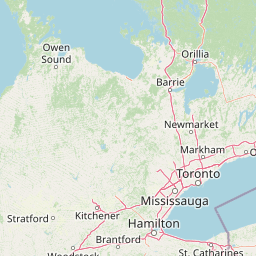
Map view of Rouge National Urban Park

Use this park location map to pinpoint Rouge National Urban Park in Canada, understand its exact geographic position, and read its mapped placement within the surrounding landscape more clearly.

Pigeon | © OpenStreetMap contributors

Location context for Rouge National Urban Park

Ontario
Park atlas

Explore connected protected landscapes and regional park geography around Canada's largest urban park.

Discover Other National Parks and Protected Areas Near Rouge National Urban Park in the Greater Toronto Region
Explore additional national parks and protected areas in the surrounding Ontario region, tracing diverse landscapes from urban green spaces to glacial landforms and river valleys. Compare different conservation landscapes and their geographic spread within the Greater Toronto Area, offering valuable context for regional park discovery.
National parkOntario

Georgian Bay Islands National Park: Ontario National Park Protected Landscape Atlas

Explore mapped boundaries and regional geographic context.

Gain a comprehensive understanding of Georgian Bay Islands National Park as a distinct protected area within Ontario. This entry provides detailed geographic context, focusing on the park's mapped landscape, its protected status as a national park, and its position within the regional geography of Canada. It is designed for users seeking structured information about protected lands and their atlas-level significance.

Area
13.5 km²
Established
1929
IUCN
II
Visitors
27.5K annual
National parkOntario

Bruce Peninsula National Park: National Park Protected Landscape and Geographic Context in Ontario

Discover its mapped boundaries and regional landscape identity.

Bruce Peninsula National Park stands as a protected national park entity within Ontario, offering a distinct geographic profile. Its mapped boundaries and position within the regional atlas are crucial for understanding its landscape character. MoriAtlas facilitates exploration of the park's protected status and its contribution to the conservation landscape of Ontario.

Area
154 km²
Established
1987
IUCN
II
Visitors
460.4K annual
Watercolor painting of green hills, islands, and a body of water under a pale yellow sky
National parkOntario

Thousand Islands National Park: Exploring Ontario's Protected Landscape Geography

Discover the mapped terrain and regional context of this national park.

Uncover the protected landscape identity of Thousand Islands National Park, a key national park located in Ontario. This resource focuses on its geographic setting, mapped boundaries, and overall atlas context, providing a clear understanding of its role as a protected area. Explore how its unique terrain contributes to the regional geography and the broader national park network, offering valuable insight for landscape-focused discovery.

Area
24.4 km²
Established
1904
IUCN
II
Visitors
109.3K annual
National parkOntario

Point Pelee National Park: Ontario's National Park Atlas and Protected Landscape Explorer

Mapped geography and protected area context within Ontario.

Point Pelee National Park is a designated national park in Ontario, Canada, offering a unique focus for geographic discovery. This entry details its protected landscape and mapped boundaries, essential for understanding its place within regional park atlases. Explore the core geographic identity of Point Pelee National Park and its significance as a protected natural area.

Area
15 km²
Established
1918
IUCN
II
Visitors
491.1K annual
National parkOhio

Cuyahoga Valley National Park: Detailed Atlas and Protected Landscape Information

Explore the mapped geography and natural terrain of Ohio's National Park.

Access detailed atlas information for Cuyahoga Valley National Park, a vital protected landscape in Ohio. Understand its geographic scope, mapped boundaries, and the surrounding natural terrain. This entry provides essential context for exploring the park's identity as a National Park and its significance within the broader mapped geography of the United States.

Area
132.7 km²
Established
2000
IUCN
II
Visitors
2.9M annual
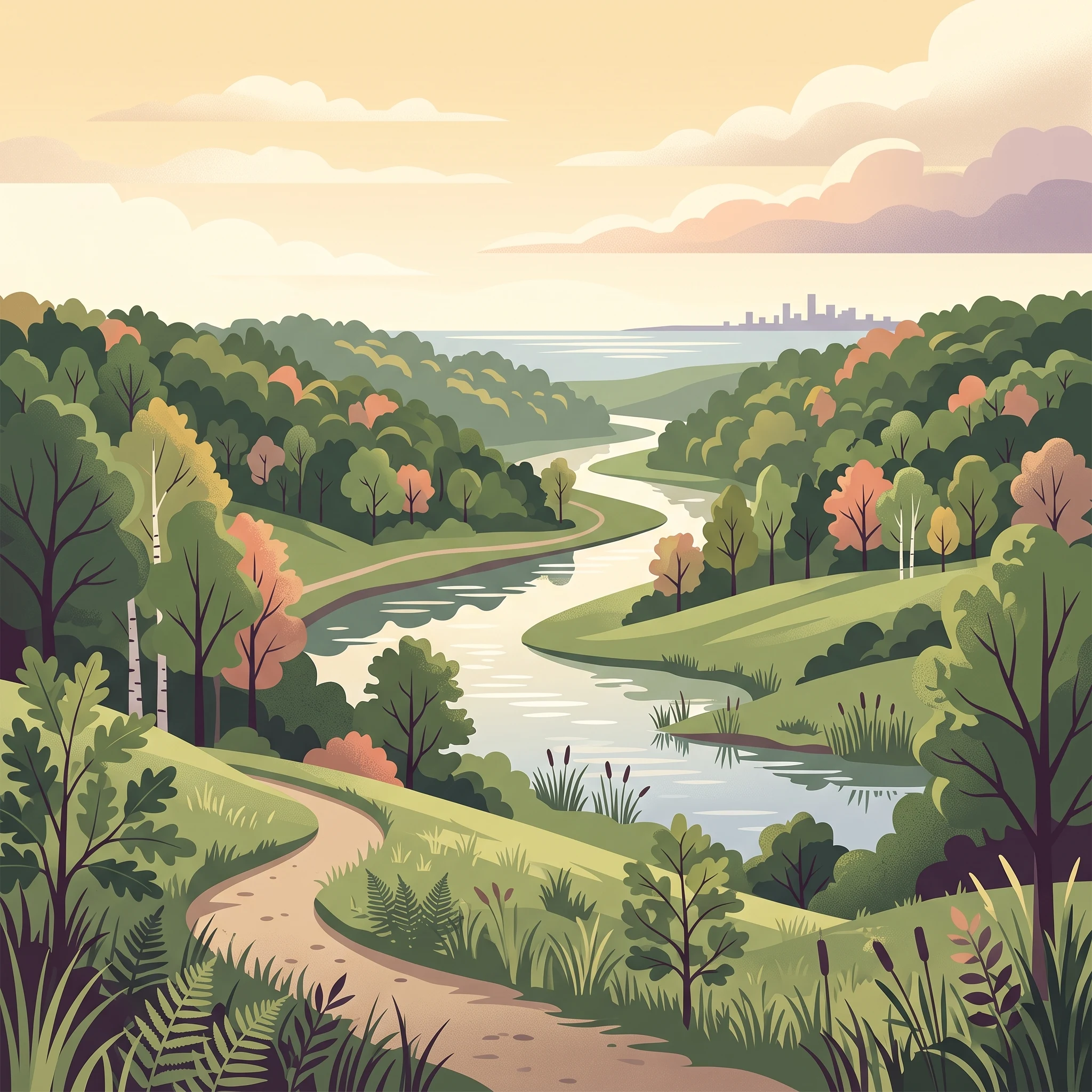
Watercolor painting of rolling hills, trees, and a river in a scenic landscape
National parkVirginia

Shenandoah National Park: National Park Protected Landscape and Geography

Mapped terrain and protected area context in Virginia.

Shenandoah National Park is a designated national park in Virginia, offering a rich exploration of its protected landscape and geographic features. This page provides detailed atlas-oriented information, focusing on the park's mapped boundaries and its role within the regional geography. Discover the natural terrain and spatial identity of this important US protected area, ideal for understanding park landscapes.

Area
811.176 km²
Established
1935
IUCN
II
Visitors
1.7M annual
National parkWest Virginia

New River Gorge National Park and Preserve: Appalachian River Gorge Protected Landscape Atlas

Mapped terrain and geographic context within West Virginia.

Delve into the protected landscape identity of New River Gorge National Park and Preserve, a significant national park in West Virginia. This page details its role as a protected area, highlighting the dramatic river gorge geography, mapped terrain, and its place within the Appalachian Mountains. Understand the park's boundaries and the natural context that makes it a key destination for geographic discovery and conservation appreciation.

Area
294.64 km²
Established
2020
IUCN
V
Visitors
1.6M annual
National parkUnited States of America

Indiana Dunes National Park: Protected Landscape Geography and Map Exploration

Explore the National Park's geographic boundaries and regional context.

Indiana Dunes National Park represents a distinct protected area within the United States of America, characterized by its unique landscape setting. This entry provides a detailed atlas-style view, highlighting the park's mapped boundaries and its contribution to the regional geography. Understanding this National Park means appreciating its specific natural terrain and its place within the conservation landscape of North America.

Area
62.12 km²
Established
1966
IUCN
II
Visitors
2.8M annual

Common questions about visiting, size, designation, and location context for Rouge National Urban Park

Rouge National Urban Park FAQs for park facts, access, geography, and protected area context
Find quick answers about Rouge National Urban Park, including protected-area facts, park geography, trail and visitor context, and how the park fits into its surrounding country and regional landscape.
MoriAtlas Explorer

Continue Your Protected Areas Search Across the Global Atlas

Deepen your exploration by continuing the structured search for national parks and protected areas worldwide. Utilize the comprehensive filtering capabilities to compare different conservation landscapes and refine your understanding of global park geography. Discover more about the distribution and characteristics of protected natural areas.

Global natural geography