Why Samarskaya Luka National Park stands out
Samarskaya Luka is best known for the dramatic geological setting where limestone and dolomite cliffs of the Zhiguli Mountains meet the looping Volga. The park protects relict stone steppes and pine forests on steep southern slopes, karst landscapes with sinkholes and disappearing rivers, and broadleaf woodlands that intermingle with patches of true steppe. The park is also recognized for its unusually high concentration of endemic and relict plant species around the Zhiguli hills, the survival of mountain-pine and broadleaf forests at the limits of their ranges, and the presence of Volga floodplain ecosystems below the mountains. Together with its companion Zhiguli Reserve, the park anchors the Middle Volga Biosphere Reserve and has become a focal point for Volga-region conservation.
Samarskaya Luka National Park history and protected-area timeline
The idea of giving the Zhiguli hills special protected status goes back to the early twentieth century. Professor V. N. Sukachev first proposed establishing a protected area in the Zhiguli Mountains, and in 1927 Professor I. I. Sprygin succeeded in creating a reserve on the site, an institution that was twice closed during its earlier history.
In the 1970s, an initiative group from the natural protection society proposed creating a nature park across the broader Samara Bend outside the existing strict reserve, but the project was shelved for fifteen years amid controversies over proposed coastal hotel development and road construction. By the time park planning resumed in the 1980s, the area had lost large stretches of steppe to dacha development, quarrying, and a poultry facility, and some species had already disappeared locally.
The park itself was established by decree of the Council of Ministers of the RSFSR on 28 April 1984 on the basis of the Zhiguli and Rozhdestveno forest enterprises. The park formally opened on 26 July 1985 under its first director, E. G. Tikhonov. In the late 1980s and early 1990s the park expanded its focus on recreation, environmental education, and tourism, launching long-running routes to landmarks such as the village of Shiryaevo, Mount Verblyud, Molodetsky Kurgan, and Kamennaya Chasha.
In 1995, Russia's federal law on specially protected natural territories raised the park's formal status, and the combined park and reserve were designated as the Middle Volga Complex Biosphere Reserve under UNESCO auspices in 2006. The park has since been the center of ongoing debates over industrial activity within its boundaries, including quarrying, a cement plant, and oil operations, debates that have included large public protests and led to partial adjustments of the park's outer limits in 2015 and subsequent years.
Samarskaya Luka National Park landscape and geographic character
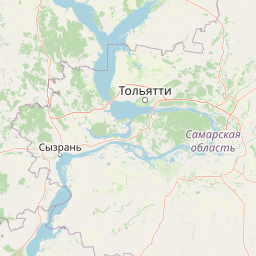
Samarskaya Luka sits at the boundary of two major geomorphological regions: the Privolzhskaya Upland to the north and the Low Trans-Volga region to the south. The northern third of the territory is taken up by the Zhiguli Mountains, whose highest summits reach around 380 meters. South of this hilly zone the land steps down through a forested and ravine-cut highland before descending into Volga floodplains.
The deep geology is dominated by thick Carboniferous and Permian limestones and dolomites, often blanketed by loams and weathered debris. Almost the entire bedrock mass is karstified, producing more than 500 recorded sinkholes and depressions in the eastern part of the park alone, ranging from small hollows to features more than 100 meters wide. On sunny southern slopes these limestone foundations support the park's distinctive open pine forests and stone steppes, while shaded valleys hold mixed and broadleaf woodlands.
Below the hills the landscape softens into rolling erosional terrain cut by ravines and gullies, then opens onto the Volga floodplain and the shores of the Kuibyshev Reservoir, whose water level and seasonal flooding control much of the river-side scenery. Together, these features create a compact sequence of mountain, forest, steppe, floodplain, and aquatic landscapes, the defining visual identity of Samarskaya Luka.
Samarskaya Luka National Park ecosystems, habitats, and plant life
Samarskaya Luka lies at the meeting point of the forest zone and the forest-steppe zone, a position that has shaped both its soils and vegetation. Black earths of various subtypes share the territory with sod-carbonate soils and patches of gray forest soils, while steeper slopes host thin rendzina-like soils developed directly on limestone. The result is a patchwork of habitats unusually compressed into a single protected area.
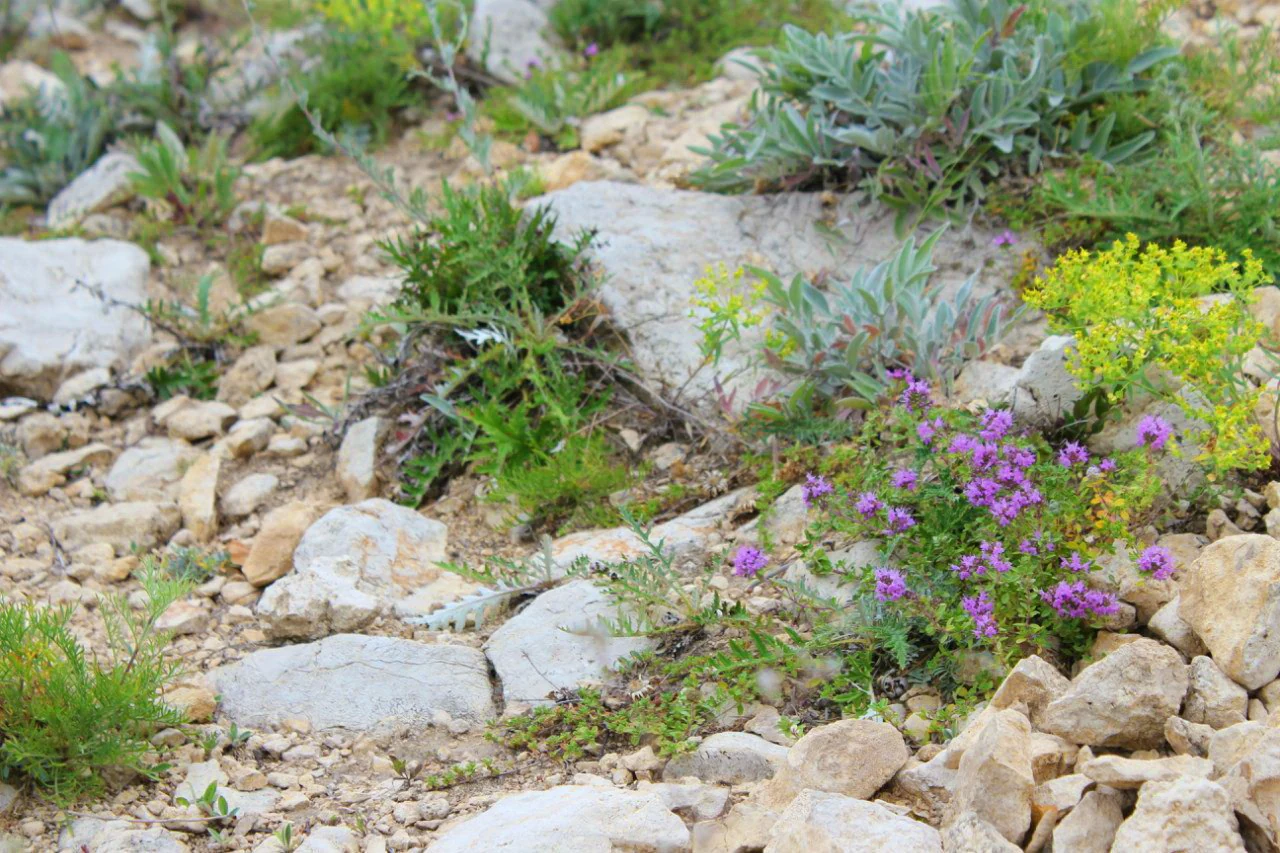
The flora includes both broadleaf forest formations, dominated by lime, oak, and aspen, and pine-broadleaf forests on slopes and ridges of the Zhiguli Mountains. Steep southern slopes carry open pine woodlands with stunted trees, dry grassland species, and shrubs such as Tatar maple and blackthorn, a landscape distinct from the mesic forests of valleys and northern slopes. The Volga floodplain contributes willow, poplar, elm, and oak stands along with extensive meadows of canary grass, smooth brome, and couch grass.
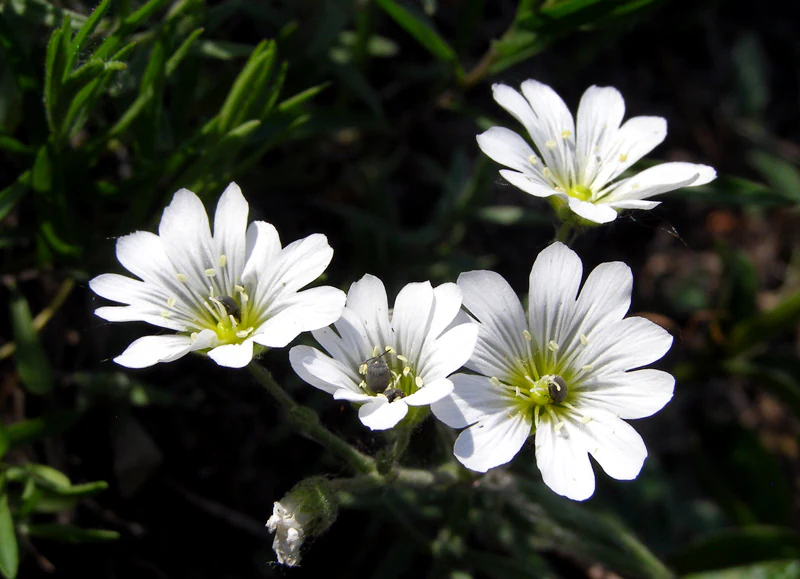
Ecological richness is especially visible in the flora's age and biogeography. The plant list includes Pliocene relicts like common juniper and Jovibarba sobolifera and glacial-period survivors such as bearberry and Siberian diplazium. Endemic Zhiguli species, including Zhiguli spurge, Zhiguki chickweed, and Zhiguli thyme, occur especially on stone-steppe habitats, while broader Eastern European endemics extend further across the highlands. Around 200 species are considered rare, with 18 protected at the Russian federal level. Small peat bogs, unusual for a forest-steppe region, still survive in the Rozhdestveno lowland.
Samarskaya Luka National Park wildlife and species highlights
Samarskaya Luka supports 291 species of terrestrial vertebrates, including about 61 mammal species, more than 200 bird species, and smaller numbers of reptiles and amphibians; the river and reservoir add 61 fish species and subspecies. A defining feature of the fauna is that more than 30 percent of vertebrate species live here at the edges of their ranges, where forest, taiga, and steppe faunas meet.
Forest species such as the edible dormouse, forest dormouse, yellow-necked mouse, red vole, grey owl, stock dove, and green woodpecker occur alongside taiga species like moose, mountain hare, root vole, long-eared owl, Tengmalm's owl, capercaillie, and greenish warbler. Open-country and steppe species, including the lesser blind mole-rat, little ground squirrel, steppe mouse-like hamster, ruddy shelduck, Mediterranean gull relative, little owl, tawny pipit, marsh tortoise, and European grass snake, occupy sunny slopes and floodplain openings.
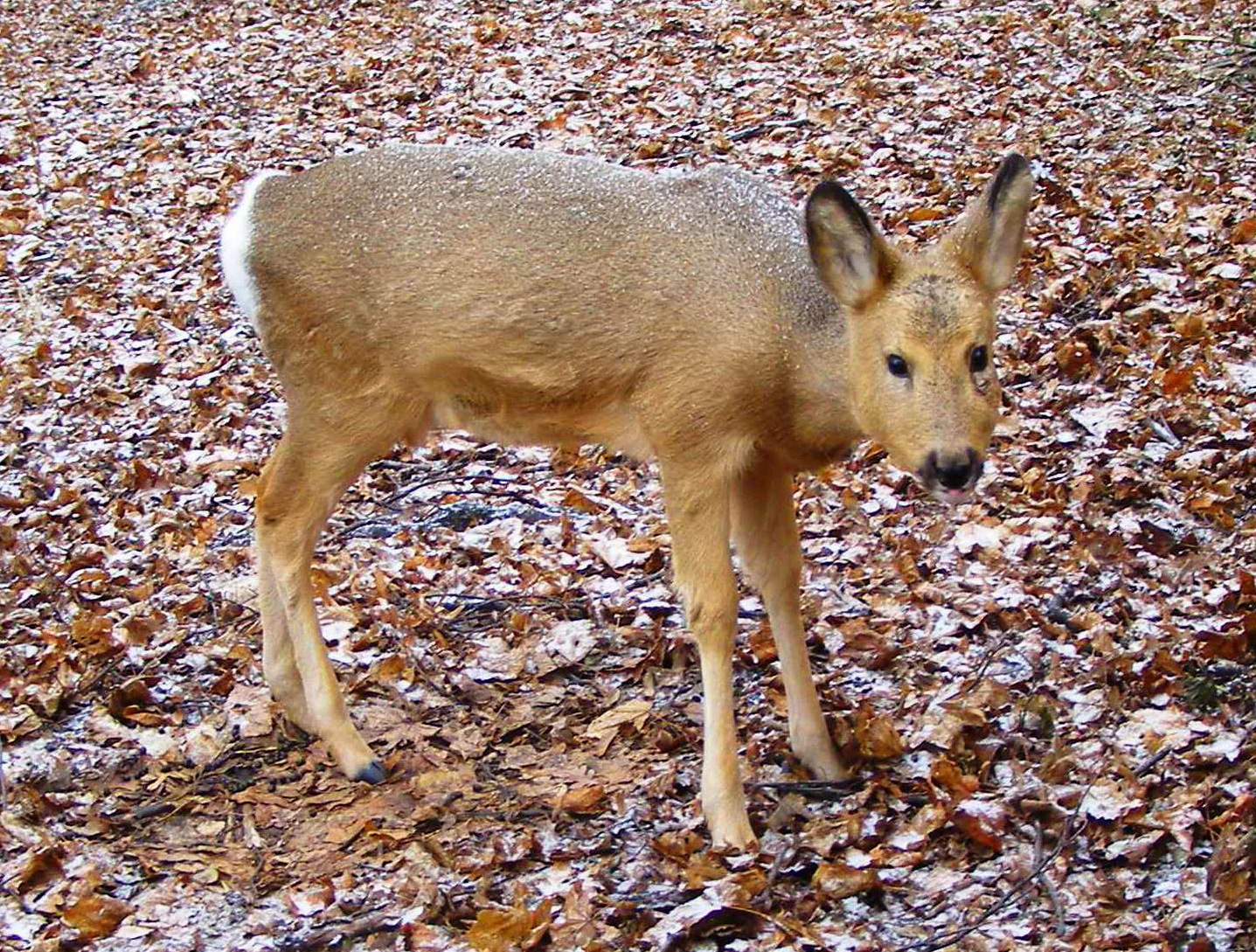
Large ungulates such as moose, wild boar, and Siberian roe deer are the most prominent mammals, while major predators include wolves, foxes, and occasional lynx and raccoon dogs; smaller carnivores include stoat, least weasel, and pine marten. Among birds, grouse species, especially capercaillie and black grouse, once abundant on the Zhiguli, are now rare, while the white-tailed eagle has shifted from a migratory to a resident species since the regulation of the Volga kept sections of the river ice-free in winter. The park's combination of mountains, forests, caves, and floodplains is also exceptional for bats: old mining galleries in the Shiryaevo area host hibernating colonies of noctule, pipistrelle, and parti-colored bats that may rank among the largest in Europe.
Samarskaya Luka National Park conservation status and protection priorities
Samarskaya Luka holds conservation importance because it concentrates forest, steppe, karst, floodplain, and aquatic ecosystems within a single protected area, an unusual situation in the generally cleared Volga region. The territory preserves both relict and endemic plant communities, especially on stone-steppe slopes, and provides habitat for species living at the limits of their geographical ranges. Combined with the adjacent Zhiguli State Reserve, the park forms the Middle Volga Complex Biosphere Reserve under UNESCO, an international recognition of its role as a refuge for Volga-region biodiversity.
The park's conservation agenda includes preserving old-growth forests, karst landforms, and Volga floodplain habitats, as well as maintaining refuges for cave-dwelling bat colonies whose winter roosts are protected by grates to limit disturbance. Active management has allowed formerly rare species such as golden eagle, mute swan, and Eurasian beaver to re-establish populations within the park boundaries.
These conservation efforts exist alongside continuing pressure on the landscape from quarrying, cement production, oil operations, and historical dacha development. Public campaigns and protests against industrial activity on Mogutova Mountain and elsewhere in the area have shaped park management decisions over decades. The park's ecological significance, combined with its long-running tensions between conservation and local economic interests, makes Samarskaya Luka an important case study in Russian protected-area governance along the Volga.
Samarskaya Luka National Park cultural meaning and human context
Samarskaya Luka is deeply woven into the cultural memory of the Volga region. The dramatic Zhiguli scenery and the caves and villages along the river have long been associated with legends of Stepan Razin, Yermak, and Yemelyan Pugachev, figures who loom large in Russian folk history. Within the park and along its edges lie traces of Volga Bulgaria, including the major archaeological site Muromsky Gorodok, a federal-level monument from the 9th through 13th centuries, as well as earlier hillforts and Bronze Age settlements.
Later layers include industrial and cultural landmarks: lime kilns, tunnels, merchant houses, and estates such as the Orlov-Davydov estate at Zhiguli village, the stone house of the merchant Chukin at Askuly, and the Lyupov chapel near Ermakovo. Artists and writers, among them Ilya Repin, the Chernetsov brothers, Maxim Gorky, and the poet Shiryaevets, drew inspiration from the Zhiguli hills. The park today hosts six small museums, including a Repin house-museum in Shiryaevo, a museum of local history at Bolshaya Ryazan, an ufology-themed museum at Zhiguli village, and a Fox House museum at the park administration.
Top sights and standout views in Samarskaya Luka National Park
The Zhiguli Mountains, the Volga Bend, kilometers of Volga shoreline and Kuibyshev Reservoir, stone-steppe slopes with endemic Zhiguli plants, karst sinkholes and caves, and the cultural landmarks of Shiryaevo, Molodetsky Kurgan, Kamennaya Chasha, the Stepka Razin cave, and Mount Verblyud form the core highlights of Samarskaya Luka. Old mining galleries shelter one of Europe's largest bat hibernation colonies, while the Volga floodplain adds wildlife-rich meadows and aquatic habitats along the river.
Best time to visit Samarskaya Luka National Park
Samarskaya Luka can be visited year-round, with each season offering a different character. Late spring and early summer bring the freshest broadleaf greens and active birdlife across the forests and floodplain, while midsummer offers warm conditions for river and trail exploration on the Volga shoreline.
Autumn is often considered a particularly rewarding season, with colorful broadleaf forests on the Zhiguli slopes and milder weather for hiking routes such as those around Molodetsky Kurgan and Mount Verblyud. Winter reveals quieter views of the snow-covered mountains and frozen floodplain, although the park's hiking infrastructure and full route network are typically associated with the warmer months.