Mori Atlas logo
National parkShatsk National Natural Park

Discover the mapped extent and ecological significance of Ukraine's premier wetland national park.

Shatsk National Natural Park: Protected Landscape and Deep Lake Geography in Ukraine

Shatsk National Natural Park represents a critical protected landscape in northwestern Ukraine, celebrated for its extensive network of over thirty glacial and karst lakes. At its heart lies Svitiaz Lake, Ukraine's deepest natural body of water, showcasing the park's unique hydrogeography and pristine wetland ecosystems. This national park offers a profound opportunity for atlas-based exploration of its mapped boundaries, diverse terrain, and its vital role as a migratory bird corridor within the broader European geography.

Lake DistrictWetland Protected AreaBiosphere ReserveRamsar SitePine ForestsMigratory Birds
Stylized illustration of a waterfall flowing from cliffs into a winding river valley with forested mountains and trees

Shatsk National Natural Park

National park

Park overview

Structured park overview, official facts, and landscape profile for Shatsk National Natural Park

Shatsk National Natural Park park facts, protected area profile, and essential visitor context
Review the core facts for Shatsk National Natural Park, including designation, size, terrain, visitor scale, habitats, and operating context in one park-focused overview.

About Shatsk National Natural Park

Shatsk National Natural Park is situated in the Kovel Raion of Volyn Oblast in northwestern Ukraine, approximately 30 kilometers from the city of Kovel. The park was established in December 1983 through a decree of the Ukrainian Soviet government, initially covering 32,515 hectares, and was expanded in 1999 to its current area of approximately 48,977 hectares. The protected area encompasses the Shatskyi Lakes group, one of the most extensive lake systems in Europe, with 23 lakes of varying sizes and origins within the park boundaries. The park's territory was formed on the basis of several earlier nature reserves, including state landscape reserves established in 1974 and nature monuments designated in 1975. Today, the park operates under the State Forest Resources Service of Ukraine and serves multiple functions including nature conservation, ecological research, environmental education, and sustainable recreation. The Lesya Ukrainka Volyn National University serves as the park's scientific curator, supporting ongoing ecological research and monitoring programs.

Quick facts and research context for Shatsk National Natural Park

Shatsk National Natural Park occupies the Shatskyi Lakes region in Volyn Oblast, northwestern Ukraine. The park protects 23 lakes within its boundaries covering approximately 6,338 hectares, making this one of the largest lake systems in Europe. Svitiaz Lake alone covers 2,622 hectares and reaches a maximum depth of 58.4 meters, making it Ukraine's deepest natural lake. The park sits at the crossroads of the Baltic and Black Sea river basins along the Main European Watershed. Forests cover about 56% of the park, while wetlands constitute roughly 3% and water bodies about 14%. The area is part of the Polissia biogeographic region and contains representatives of forest, wetland, and synanthropic faunal complexes.

Park context

Deeper park guide and search-rich context for Shatsk National Natural Park

Shatsk National Natural Park history, landscape, wildlife, and travel context
Explore Shatsk National Natural Park through its history, landscape character, ecosystems, wildlife, conservation priorities, cultural context, and seasonal travel timing in a structured park guide built for atlas discovery and search intent.

Why Shatsk National Natural Park stands out

Shatsk National Natural Park is best known for its exceptional lake system, particularly Svitiaz Lake, the deepest and largest lake in Ukraine. The park protects one of Europe's most significant groupings of glacial and karst-origin lakes within a forested Polissia landscape. It serves as a major staging area for migratory birds traveling between northern Europe and warmer southern regions, with the wetland complex providing crucial breeding, feeding, and resting habitat. The park's designation as a Ramsar site and UNESCO Biosphere Reserve underscores its international conservation significance, while its designation as one of the Seven Natural Wonders of Ukraine highlights its outstanding natural beauty.
Shatsky National Natural Park

Shatsk National Natural Park history and protected-area timeline

The Shatsk National Natural Park was established by decree of the Council of Ministers of the Ukrainian SSR on 28 December 1983, with an initial area of 32,515 hectares. The park was created to protect and restore the unique natural complexes of the Shatskyi lake district and to ensure the sustainable use of its resources. In March 1986, the park was granted permanent use of 6,761.8 hectares of land. A significant expansion occurred in August 1999 under a presidential decree, increasing the park's total area to 48,977 hectares, with 22,882.6 hectares now under the park's permanent management. The park was originally established on the basis of several state landscape reserves created in 1974, including the Lake Krymne, Lake Pisochne, Lake Pulemetske, and Lake Svitiaz reserves, as well as the Lake Klymivske zoological monument and several hydrological monuments designated in 1975. These earlier protected areas now form the core of the park's conservation zones.

Shatsk National Natural Park landscape and geographic character

The landscape of Shatsk National Natural Park is characterized by a flat, nearly level terrain typical of the Polissia lowland region, with subtle elevation changes across the territory. The park lies at the edge of the Dnieper Glacier's terminal zone, resulting in a mix of fluvioglacial and glacial moraine deposits beneath the surface. The most distinctive geomorphological features are the numerous lake basins, many formed through karst processes as well as glacial activity. The southern and southeastern portions of the park feature fluvioglacial sandy eskers, while the landscape alternates between higher sandy ridges and marshy depressions. The park occupies a transition zone between the Pripyat and Western Bug river basins along the Main European Watershed, meaning that water from the park can flow toward either the Baltic Sea or the Black Sea depending on the specific drainage system. Surface elevations range from 160 to 180 meters above sea level, with a general轻微 northward slope.
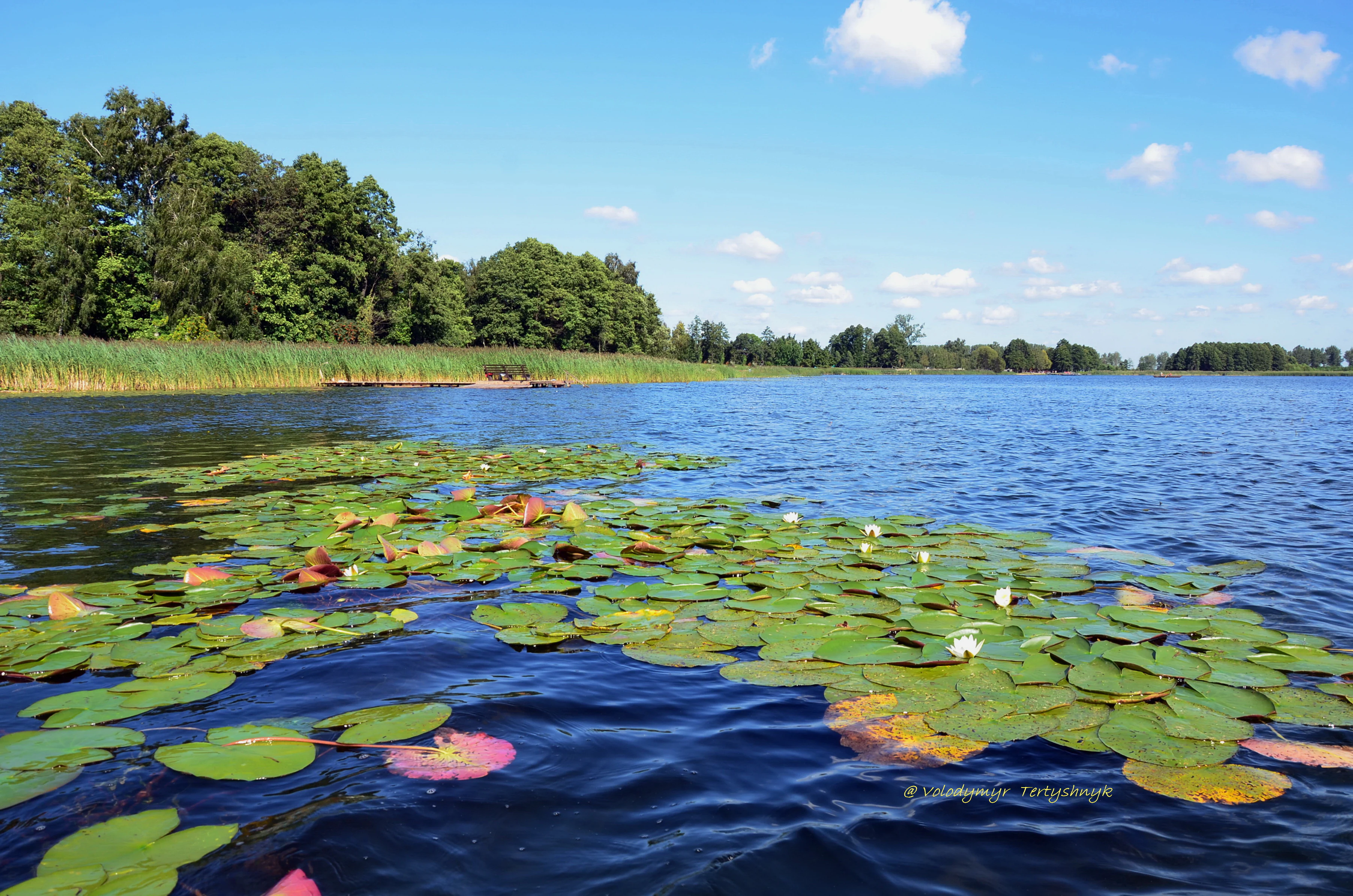
Water lilies with pink and white flowers floating on a blue lake, surrounded by green reeds and trees under a clear blue sky
Water lilies floating on a lake in Shatsk National Natural Park

Shatsk National Natural Park ecosystems, habitats, and plant life

The nature of Shatsk National Natural Park reflects the diverse ecosystems of the Polissia region, encompassing lake, forest, bog, and meadow habitats. Pine and blueberry forests dominate the woodland areas, representing the most characteristic forest type within the park. These pine forests feature a well-developed understory and are particularly valued for berry harvesting. Alder and birch forests occupy the lower-lying wetland areas, while small areas of oak-pine and hornbeam-oak forests occur on soils with better nutrient status. The lake system includes lakes of different origins, with the largest ones such as Svitiaz, Pulemetske, and Pisochne having karst origins, while smaller lakes are primarily fluvioglacial in nature. Wetlands include eutrophic and mesotrophic sedge marshes in lake depressions, with rare oligotrophic bogs also present. The vegetation includes significant populations of rare plant communities documented in Ukraine's Green Book, including pine forest with juniper understory, bearberry pine forests, and rare bog formations.
Grassy field with wildflowers leading to a calm lake, surrounded by scattered trees and a clear blue sky
Lyutsymer Lake shoreline with grassy field and scattered trees under clear blue sky

Shatsk National Natural Park wildlife and species highlights

The wildlife of Shatsk National Natural Park includes representatives of three major faunal complexes: forest, wetland, and synanthropic. Forest-dwelling mammals include elk, wild boar, roe deer, European hare, red squirrel, and various small mammals. Predators include red fox, European polecat, European pine marten, and stoat, while Eurasian lynx and European otter occur more rarely. The park supports significant bird populations, particularly waterfowl and migratory species. Notable birds include the mute swan, grey heron, great crested grebe, and various ducks and waders. The lakes provide important spawning habitat for fish, with approximately 30 species recorded including common roach, bream, northern pike, carp, and the European eel. The park is particularly important for migratory birds, serving as a major rest stop along the East Atlantic and Polissia migration flyways, with over 10,000 birds stopping during spring and autumn migrations. Rare species protected under Ukraine's Red Book include the black stork, white-tailed eagle, and northern wheatear.
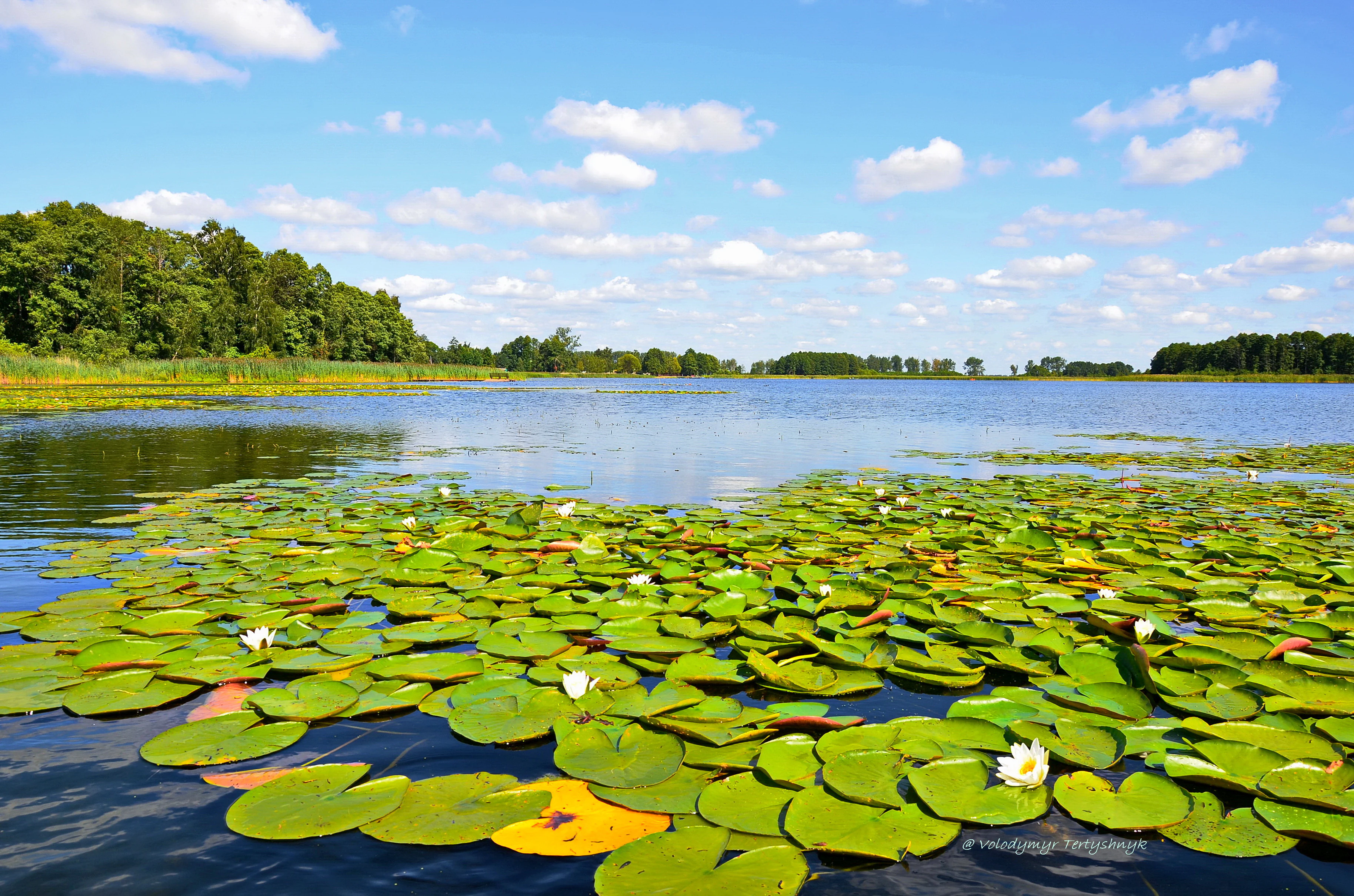
Green water lily pads and white flowers floating on calm lake water with forest and blue sky background
Water lilies covering a lake in Shatsk National Natural Park

Shatsk National Natural Park conservation status and protection priorities

Shatsk National Natural Park holds significant conservation importance at both national and international levels. The park was designated a Ramsar Wetland of International Importance in 1995, recognizing its critical role as waterbird habitat. In 2002, the park became part of the West Polesie Transboundary Biosphere Reserve, a cross-border protected area shared with Poland and Belarus, under UNESCO's Man and the Biosphere Programme. The park contains 27 plant species and 33 vertebrate species protected under Ukraine's Red Book. Fourteen plant communities are protected in Ukraine's Green Book. The park's functional zoning includes a strict nature reserve zone covering 10.5% of the territory, a regulated recreation zone at 26.5%, a stationary recreation zone at 2%, and an economic zone at 61%. Wetland restoration projects conducted between 1999 and 2003 around several lakes have improved water retention and habitat conditions for waterbirds. The park collaborates with Ukrainian universities on scientific research and maintains several research stations.

Shatsk National Natural Park cultural meaning and human context

The Shatsk region has a long human history tied to its lake-rich landscape. The settlement of Shatsk gave its name to both the park and the lake group. Local communities have traditionally used the lakes for fishing and the surrounding forests for timber, berry and mushroom gathering, and beekeeping. The region's Polissia cultural identity is reflected in traditional architecture, folk customs, and the local economy historically based on fishing, forestry, and small-scale agriculture. The park contains several historic settlements within its boundaries, and the local community continues to participate in sustainable resource use activities compatible with conservation goals. In summer, the region's population swells significantly as visitors arrive for recreation, with the permanent population of around 6,300 increasing to over 40,000 during peak season.
Ducks swimming in calm water with tall reeds and a distant tree line
Lake Svitiaz in Shatsk National Natural Park with ducks swimming and reeds along the shoreline

Top sights and standout views in Shatsk National Natural Park

The Shatskyi Lakes represent one of Ukraine's most important natural treasures, forming the largest lake grouping in the country and one of the largest in Europe. Svitiaz Lake stands as the jewel of the park, Ukraine's deepest and largest natural lake, with remarkably clear water that maintains visibility to 8 meters depth in sunny conditions. The park protects critical wetland habitat for migratory birds, serving as a vital rest stop on major European flyways. The diversity of lake types, from deep karst basins to shallow eutrophic bodies, creates a complex ecological mosaic. The pine forests are particularly important for berry harvesting, with blueberries and cranberries historically gathered by local communities. The park's inclusion in the UNESCO World Network of Biosphere Reserves recognizes its role in maintaining ecological processes while supporting sustainable human use of the landscape.
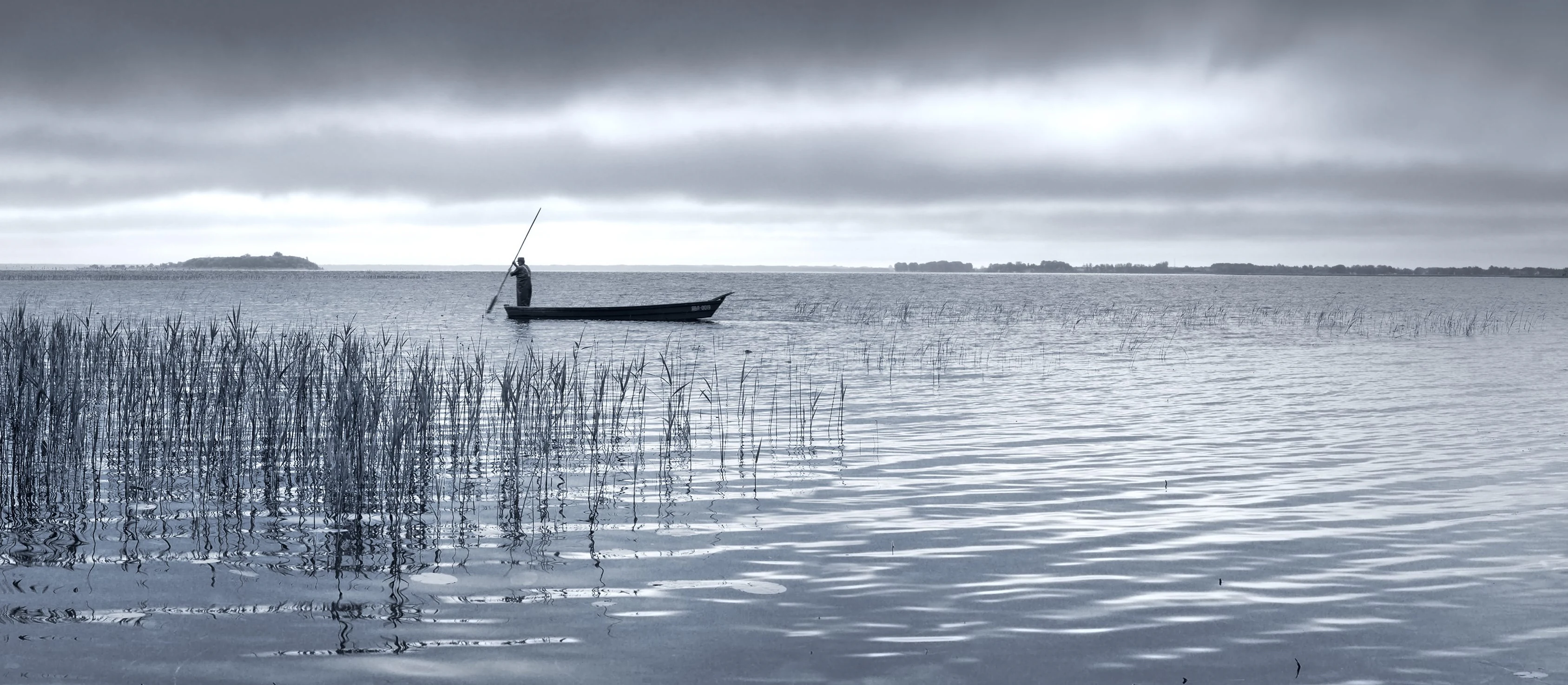
Single person rowing a small boat on a calm lake with tall reeds in the foreground under an overcast sky
A person rowing a small boat on Lake Svityaz at dawn in Shatsk National Natural Park

Best time to visit Shatsk National Natural Park

The park can be visited throughout the year, with each season offering distinct experiences. Summer brings the warmest weather and highest visitor numbers, with the lake beaches and swimming areas popular from June through August. This is also the best time for observing aquatic birds and fishing. Autumn offers excellent conditions for mushroom and berry picking in the forests, with September and October providing colorful foliage. Winter transforms the landscape, and while ice fishing occurs on the lakes, access is more limited. Spring, particularly May and June, brings high water levels, bird migrations, and the blooming of wetland vegetation. The shoulder seasons of May and September typically offer fewer crowds while maintaining good conditions for outdoor activities and wildlife observation.
Park location guide

Geography guide, regional context, and park location map for Shatsk National Natural Park

Shatsk National Natural Park park geography, regions, and map view in Ukraine
Understand where Shatsk National Natural Park sits in Ukraine through a broader geographic reading of the surrounding landscape, nearby location context, and its mapped position within the national park landscape.

How Shatsk National Natural Park fits into Ukraine

Ukraine is a sovereign nation in Eastern Europe, bordered by Russia, Belarus, Poland, Slovakia, Hungary, Romania, Moldova, and the Black Sea. It is the second-largest country in Europe by area. Kyiv is the capital and largest city, followed by Kharkiv, Odesa, and Dnipro. The official language is Ukrainian. Ukraine has a population of approximately 32.9 million and operates as a unitary semi-presidential republic.

Wider geography shaping Shatsk National Natural Park in Ukraine

Ukraine occupies 603,628 km² in Eastern Europe, making it the second-largest country in Europe. It shares borders with Russia, Belarus, Poland, Slovakia, Hungary, Romania, and Moldova. The country has a southern coastline along the Black Sea and Sea of Azov. The terrain includes plains, steppes, and the Carpathian Mountains in the west.

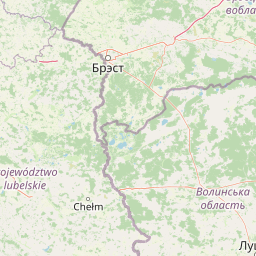
Map view of Shatsk National Natural Park

Use this park location map to pinpoint Shatsk National Natural Park in Ukraine, understand its exact geographic position, and read its mapped placement within the surrounding landscape more clearly.

Pigeon | © OpenStreetMap contributors

Location context for Shatsk National Natural Park

Kovel RaionVolyn Oblast

Visualizing Ukraine's Unique Polissia Lake District and Critical Protected Wetland Habitats

Shatsk National Natural Park Photos: Explore Landscapes, Wetland Scenery, and Svitiaz Lake Views
Browse an extensive collection of imagery capturing the distinctive landscapes of Shatsk National Natural Park, showcasing the vast Shatskyi Lakes, ancient pine forests, and critical wetland ecosystems. Visual exploration helps users understand the park's unique protected area character, including its flat Polissia terrain, deep karst lakes like Svitiaz, and vital migratory bird habitats.

Shatsky National Natural Park

Sunlight filtering through trees in a grassy forest area with dappled shadows

Water lilies with pink and white flowers floating on a blue lake, surrounded by green reeds and trees under a clear blue sky

Grassy field with wildflowers leading to a calm lake, surrounded by scattered trees and a clear blue sky

Green water lily pads and white flowers floating on calm lake water with forest and blue sky background

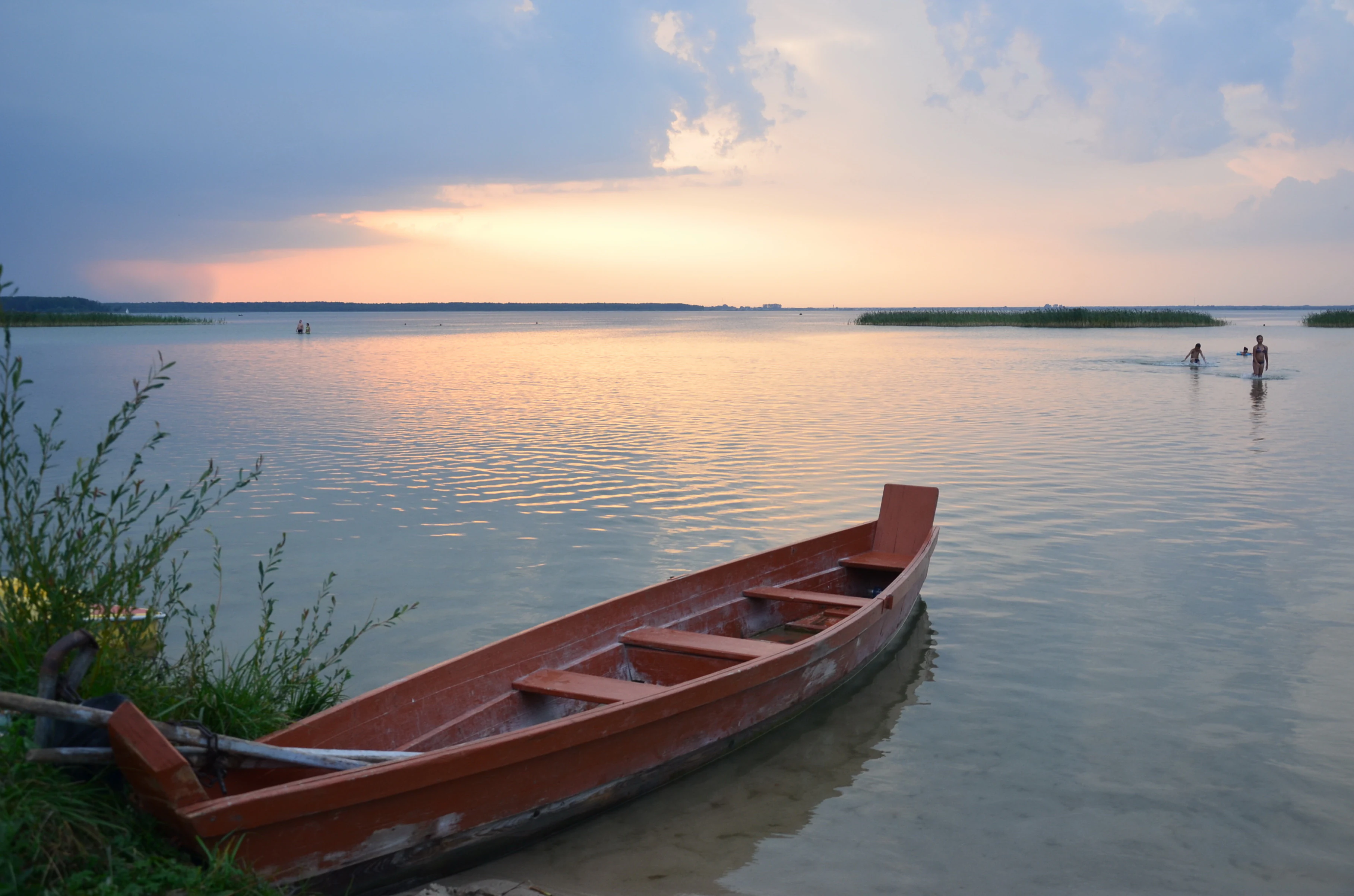
A wooden boat beached on the shore of a lake at sunset with two people wading in the water.

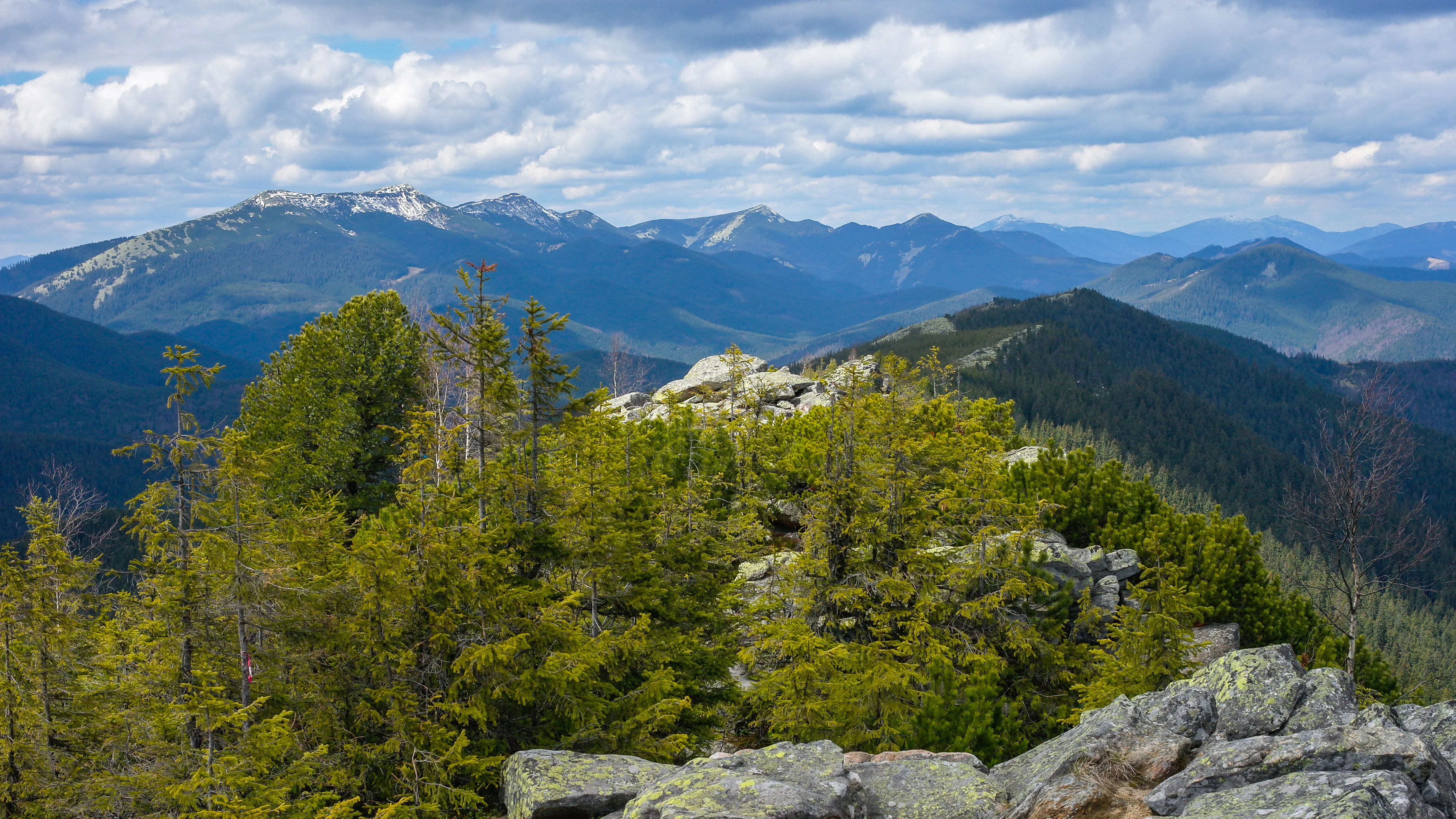
Ducks swimming in calm water with tall reeds and a distant tree line

Single person rowing a small boat on a calm lake with tall reeds in the foreground under an overcast sky

Sunrise over a calm lake with the sun low on the horizon reflecting on the water, distant tree line, and partly cloudy sky

Calm lake surface reflecting colorful sunrise sky with pink, orange, and blue clouds

Lake with swans, ducks, and tall reeds in calm water reflecting vegetation

Snow-capped mountain peaks in the distance with forested ridges and rocky outcrops in the foreground under a partly cloudy sky

Panoramic view of a large lake with a small forested island under a partly cloudy sky

Wooden boat tied to a post on a grassy lake shore under cloudy sky

Park atlas

Browse protected wetland and forest landscapes across Ukraine's Volyn Polissia region and adjacent territories.

Discover More National Parks and Protected Areas Near Shatsk National Natural Park
After exploring Shatsk National Natural Park's unique lake systems and wetlands, trace other national parks and protected areas situated across the broader Polissia region of Ukraine. Compare diverse protected landscapes, mapped geography, and conservation efforts to deepen your understanding of Eastern European park networks.
National park

Polesie National Park: Protected National Park in Poland's Eastern Lowlands

Explore its mapped wetland geography and unique glacial terrain.

Polesie National Park represents a key protected landscape within eastern Poland, notable for its vast wetland complexes, including extensive peat bogs and marshes interspersed with pine forests on sandy dunes. This national park showcases a distinct geography shaped by glacial processes, offering a unique perspective on lowland ecosystems and their conservation. MoriAtlas allows for a structured discovery of its protected boundaries and the surrounding regional context, providing an atlas-driven understanding of this vital natural territory.

Area
97.52 km²
Established
1979
IUCN
II
National parkUkraine

Prypiat, Stokhid National Nature Park: National Park Geography & Protected Landscape

Mapped boundaries and regional natural context in Ukraine.

Gain structured insight into Prypiat, Stokhid National Nature Park, a protected national park in Ukraine. This entry details its geographic footprint and landscape features, offering a foundation for understanding its role within the broader atlas of protected areas. Explore the mapped terrain and regional context that defines this significant natural landscape.

Area
393.155 km²
Established
2007
IUCN
II
Relief
Lowland
Watercolor painting showing a river flowing through a forested landscape with green hills, distant mountains, and a pink and yellow sky
National park

Belavezhskaya Pushcha National Park: Ancient Primeval Forest & European Bison Sanctuary

Explore mapped protected areas and regional geography.

Belavezhskaya Pushcha National Park stands as a testament to Europe's ancient woodland heritage, a protected landscape of immense ecological value. This primeval forest, a sanctuary for the European bison, offers a unique glimpse into an ecosystem preserved for millennia. The park's mapped boundaries and geographic context provide essential detail for understanding its role as a critical natural monument and a cornerstone of regional protected areas.

Area
1,500.69 km²
Established
1932
IUCN
II
Visitors
300K annual
Watercolor illustration of a river flowing through grassy terrain with rolling hills in the background
National parkPodlaskie Voivodeship

Białowieża National Park: Europe's Last Unmodified Primeval Forest and Bison Habitat

Mapped protected landscape and regional geography in Podlaskie Voivodeship.

As Poland's most vital natural heritage site, Białowieża National Park protects an exceptionally rare example of an ancient temperate primeval forest. This national park, located within the Podlaskie Voivodeship, serves as a living ecological laboratory, showcasing natural processes in unmodified woodland habitats. Its significance extends to being a critical sanctuary for the European bison, housing the world's largest free-ranging population. MoriAtlas provides detailed map context and geographic insights into this globally important protected area and its unique landscape.

Area
105.17 km²
Established
1932
IUCN
II
Visitors
140K annual
National parkLublin Voivodeship

Roztocze National Park: Ancient Forested Landscape and Protected Area Geography

Discover its role in Lublin Voivodeship's natural atlas.

Roztocze National Park stands as a remarkable example of a heavily forested protected area, showcasing some of Poland's largest fir trees and ancient forest ecosystems. Located in Lublin Voivodeship, this national park offers a distinct upland landscape characterized by rolling hills and river valleys. Explore its mapped boundaries, ecological significance, and geographic context as a key component of the regional natural atlas, providing deep insights into its protected terrain.

Area
84.83 km²
Established
1974
IUCN
II
Visitors
134K annual
National parkVolyn Oblast

Tsumanska Pushcha National Nature Park: Protected Landscape and Regional Geography in Volyn Oblast

UA National Park with Mapped Boundaries and Terrain Context

Delve into Tsumanska Pushcha National Nature Park, a designated national park in Volyn Oblast, Ukraine. This entry provides detailed atlas-style information on the park's protected landscape identity, its mapped geographic setting, and its significance within the regional geography of Northwestern Ukraine. Understand the park's boundaries and its place in the natural terrain.

Area
334.75 km²
Established
2010
IUCN
II
Relief
Lowland
National parkLviv Oblast

Yavoriv National Nature Park: Protected Landscape and Regional Geography in Lviv Oblast

Mapped protected area boundaries and natural terrain context.

Yavoriv National Nature Park is a designated national park within Lviv Oblast, Ukraine. This page provides detailed geographic information, focusing on the park's protected landscape identity and its mapped terrain. Understanding its location in Western Ukraine, near the Carpathian gateway, offers valuable context for atlas-based exploration of protected areas and natural features within the region.

Area
71.08 km²
Established
1998
IUCN
II
Relief
Highland
Watercolor painting showing a winding river through marshy fields with distant hills
National parkPodlaskie Voivodeship

Narew National Park: Discover Poland's Premier Wetland National Park with Unique River Geography

Explore its mapped boundaries and rich protected landscape.

Narew National Park represents a significant protected area within the Podlaskie Voivodeship, distinguished by its one-of-a-kind anastomosing river system where the Narew River splits into numerous interconnected channels. This dynamic wetland environment provides critical habitat and showcases a complex interplay of water, land, and diverse ecosystems. Users can explore the park's geographic features, understand its protected landscape status, and appreciate its vital role within the regional atlas through detailed mapping and factual context.

Area
73.5 km²
Established
1996
IUCN
II
Relief
Lowland

Common questions about visiting, size, designation, and location context for Shatsk National Natural Park

Shatsk National Natural Park FAQs for park facts, access, geography, and protected area context
Find quick answers about Shatsk National Natural Park, including protected-area facts, park geography, trail and visitor context, and how the park fits into its surrounding country and regional landscape.
MoriAtlas Explorer

Continue Your Protected Areas Search Across the Global Atlas

Deepen your exploration by continuing the structured search for national parks and protected areas worldwide. Utilize the comprehensive filtering capabilities to compare different conservation landscapes and refine your understanding of global park geography. Discover more about the distribution and characteristics of protected natural areas.

Global natural geography