Mori Atlas logo
National parkThy National Park

Explore the unique dune heaths, coastal terrain, and protected natural areas of Northwest Jutland.

Thy National Park: Denmark's Premier National Park for Mapped Landscape Discovery

(Nationalpark Thy)

Thy National Park represents a cornerstone of Denmark's protected landscapes, offering a vast canvas of dynamic dune systems, rare heathlands, and strategic conifer plantations along the North Sea coast. Established as the nation's first national park, this approximately 244-square-kilometer area in Northwest Jutland provides a unique opportunity for atlas-based exploration of coastal geography and protected natural terrain. Users can delve into the park's mapped boundaries, understand its ecological significance as a critical habitat, and appreciate its role within the broader regional landscape context for structured discovery.

National ParkDenmarkDune LandscapeHeathlandCoastalNorth Sea
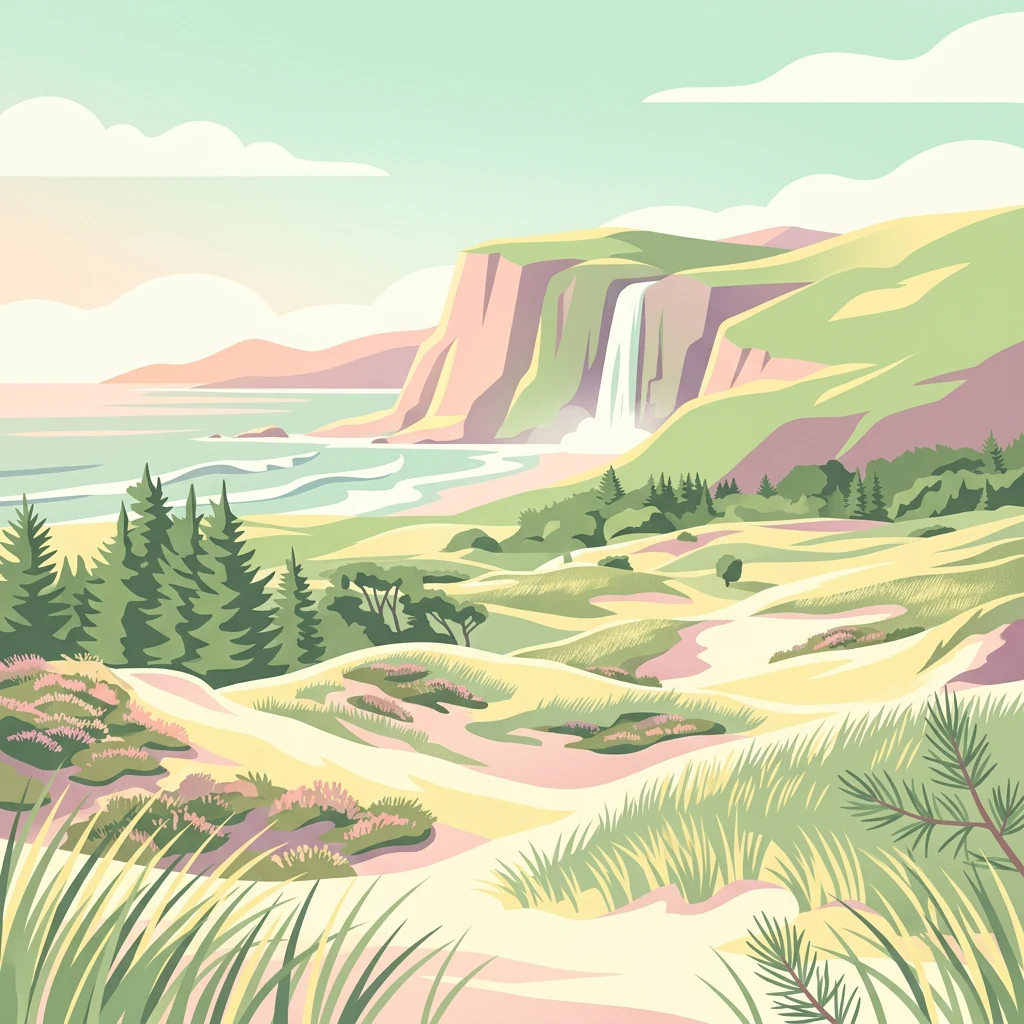
Illustrated coastal landscape featuring sandy dunes, pine trees, cliffs with a waterfall, and a beach with waves

Thy National Park

National park

Park overview

Structured park overview, official facts, and landscape profile for Thy National Park

Thy National Park park facts, protected area profile, and essential visitor context
Review the core facts for Thy National Park, including designation, size, terrain, visitor scale, habitats, and operating context in one park-focused overview.

About Thy National Park

Thy National Park represents Denmark's pioneering effort to protect and showcase the nation's most characteristic coastal landscapes. The park encompasses a windswept corridor along the North Sea in Northwest Jutland, where the interplay between sea, wind, and sand has shaped a distinctive environment over millennia. The landscape tells a story of human struggle against natural forces, as centuries of sand drift once threatened local communities before organized reforestation efforts began around 1800 and ultimately succeeded in stabilizing the terrain.

The park's significance extends beyond its natural beauty to include substantial cultural heritage. Stone Age settlers left traces in the form of dolmens, burial mounds, and kitchen middens, while Bronze Age barrows remain visible throughout the area. The landscape bears witness to periods of environmental collapse when over-exploitation led to sand encroachment, followed by centuries of adaptation to harsh North Sea conditions. World War II added another layer to this cultural tapestry, as the German Wehrmacht constructed extensive fortifications as part of the Atlantic Wall, with several bunkers and batteries now preserved as museums.

The park is managed under the principle that Danish national parks should contain the most unique and characteristic natural environments in the country, with the dual goals of improving nature quality and providing visitors with meaningful opportunities to experience and understand the landscape, its ecology, and its civilizational history.

Quick facts and research context for Thy National Park

Thy National Park occupies a coastal strip along Denmark's North Sea shore in the Thy district of Northwest Jutland, stretching roughly 55 kilometers north to south and 5 to 12 kilometers inland. The landscape is characterized by dynamic dune systems, heathlands, and plantation forests that were established to combat the historical problem of drifting sands. The park includes the Hanstholm Vildtreservat, one of Denmark's largest contiguous sandy heaths, and contains several notable lakes including Vandet Sø and Nors Sø, which are classified as rare lobeliesø lakes. The park was designated as Denmark's first national park in 2007 and is administered by the Danish Ministry of the Environment.

Park context

Deeper park guide and search-rich context for Thy National Park

Thy National Park history, landscape, wildlife, and travel context
Explore Thy National Park through its history, landscape character, ecosystems, wildlife, conservation priorities, cultural context, and seasonal travel timing in a structured park guide built for atlas discovery and search intent.

Why Thy National Park stands out

Thy National Park is best known for its extensive dune heaths, a rare habitat in European context, along with the successful century-long effort to stabilize drifting sands through strategic planting of marram grass and conifers. The park protects the Hanstholm Vildtreservat, Denmark's largest connected sandy heath, which serves as breeding ground for rare bird species including the European golden plover, crane, and wood sandpiper. The clear lobeliesø lakes with their distinctive aquatic flora, including the slender water lobelia, represent another defining feature, while the presence of wolves, reportedly returning to Denmark since 2009, adds to the park's ecological significance.
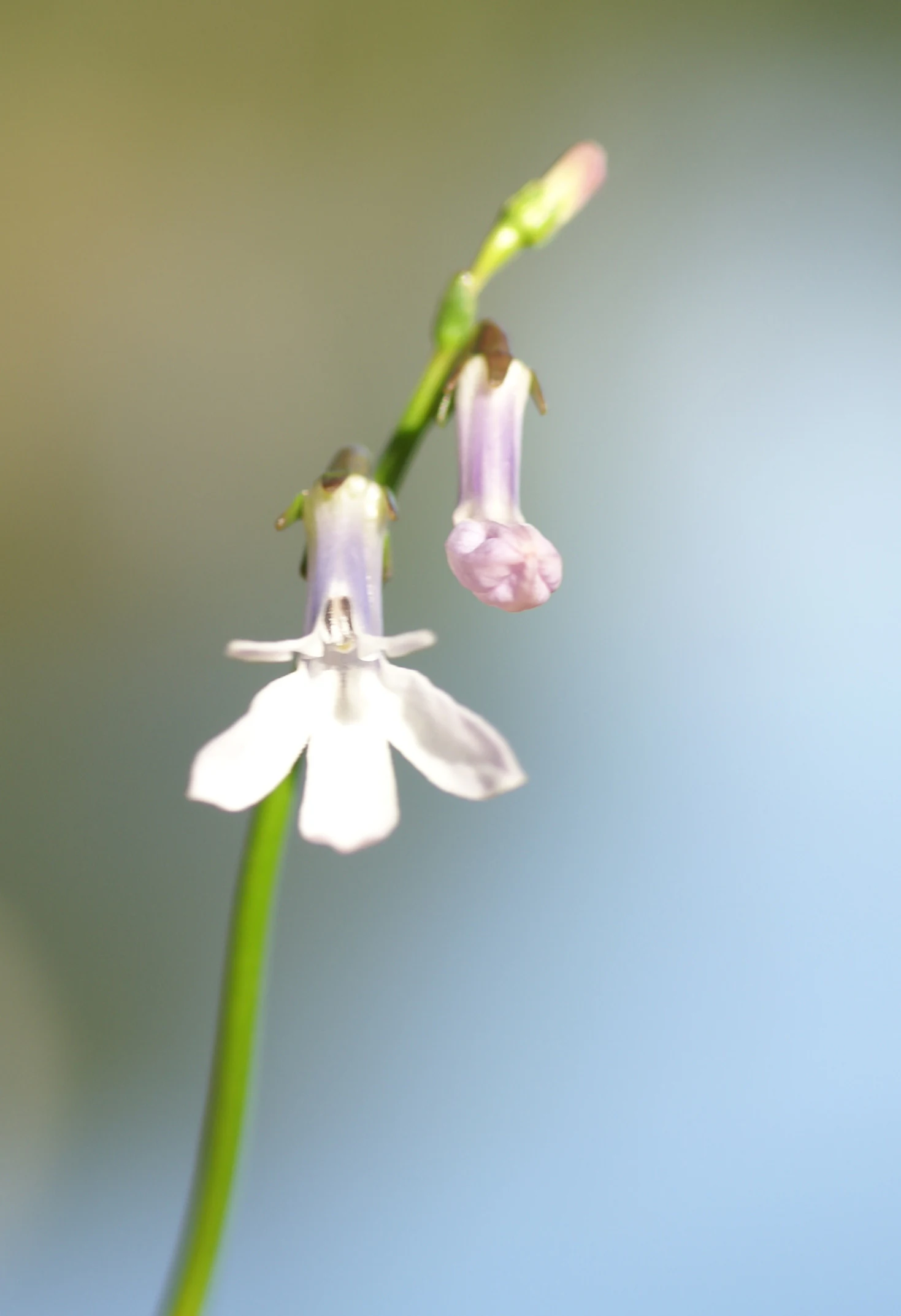
Close-up of a white and purple Lobelia dortmanna flower on a green stem against a blurred background
Close-up of Lobelia dortmanna flower with white petals and purple buds

Thy National Park history and protected-area timeline

Thy National Park was officially established on 29 June 2007 as Denmark's first national park in the country proper, following the creation of Northeast Greenland National Park in 1974. The park was opened to the public on 22 August 2008, marking a significant milestone in Danish conservation policy. The establishment followed decades of protection efforts that began with the creation of the Hanstholm Vildtreservat in the 1930s, which remains one of the largest protected heaths in Denmark.

The history of human interaction with the Thy landscape spans thousands of years, beginning with Stone Age cultures that settled the area as the post-glacial rebound lifted the land above sea level. Archaeological evidence from the Nordic Bronze Age is particularly abundant, with numerous barrows still visible, especially near Hanstholm. However, human activity eventually contributed to environmental degradation as excessive grazing and tree cutting led to the collapse of the formerly lush ecosystem, allowing drifting sands to dominate for several centuries.

The struggle against sand drift began around 1800 and required more than a century of sustained effort to ultimately succeed. Early attempts at planting various grasses and trees failed, but around the mid-1800s, effective methods were developed using marram grass and conifers. These dune plantations now stand as living witnesses to this hard-won battle against nature's forces, providing not only sand stabilization but also timber, firewood, and new habitats for wildlife including red deer and roe deer.

The park's more recent history includes World War II, when the German occupying forces constructed extensive fortifications along the coast as part of the Atlantic Wall due to Thy Strategic importance in controlling the North Sea. The Hanstholm Fortress now serves as a museum documenting this period.

Thy National Park landscape and geographic character

The landscape of Thy National Park is defined by the dynamic interaction between the North Sea and the Jutland coast, creating a diverse terrain of dunes, heaths, and inland areas. The coastal zone features wind-shaped dune systems that range from active white dunes still subject to sand movement to more stable gray dunes and green dunes with richer vegetation. These dunes stretch along the 55-kilometer coastline, with the most recent formations nearest the sea and older, more stabilized dunes found further inland within the plantations.

The park encompasses several distinct landscape zones. The western coastal area consists of beaches and active dunes, while the central zone features the park's signature sandy heaths—rare habitats in Denmark and throughout Europe. The eastern portions contain the conifer plantations established to halt sand drift, along with numerous small lakes and ponds. In the northern part, the Hanstholm Vildtreservat dominates with its extensive heathland, while the southern reaches feature Agger Tange, where tidal flats, lagoons, and reed beds create a different environmental character.

The underlying geology contributes to the landscape's complexity. Remains from the Stone Age Littorina Sea are visible as limestone cliffs along the coast and further inland. The post-glacial rebound that continues to lift the land has exposed ancient coastlines as inland cliffs, particularly around Nors Sø and Vandet Sø, and along the eastern edge of Hanstholm Vildtreservat. The Blegsøskrænten particularly marks a sharp division between the high chalk plateau and the sandy lowland.
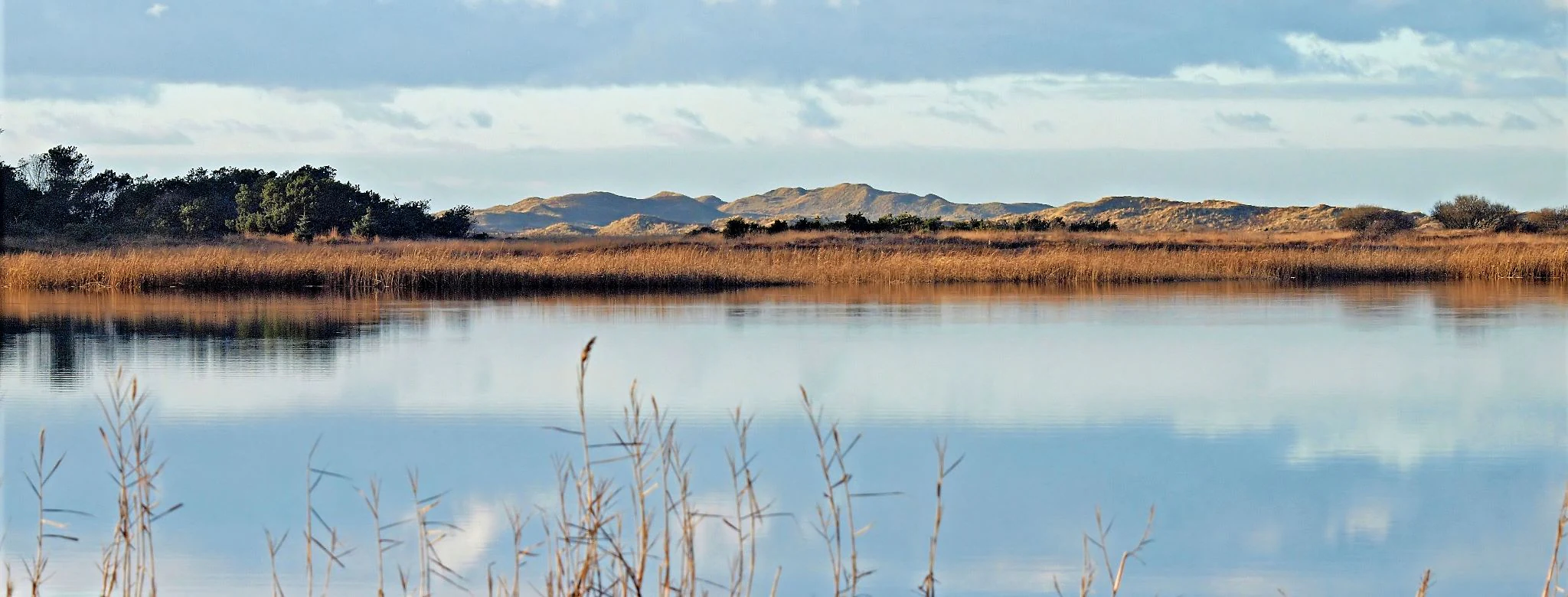
A calm lake reflecting the sky and distant hills with tall reeds in the foreground
Tormål Lake within Thy National Park, Denmark

Thy National Park ecosystems, habitats, and plant life

The nature of Thy National Park is characterized by remarkable diversity within a relatively small coastal area, ranging from salty strand beaches and bare sand dunes in the west to more fertile agricultural land in the east. The park protects several rare and internationally significant habitat types that are now legally protected due to their ecological value.

The dune heaths represent one of the park's most important habitats—a rare ecosystem in European context that supports specialized plant and animal communities. These heaths are maintained through ongoing conservation work including controlled burning, tree removal, and grazing by larger animals to prevent succession to forest. The heath vegetation, while appearing simple to untrained observers, is actually quite varied, dominated by common heather, sand sedge, marram grass, black crowberry, bell heather, and various lichens.

The park contains a notable collection of clear lobeliesø lakes—soft water lakes characterized by their distinctive aquatic vegetation including water lobelia, quillwort, and various charophyte algae. These lakes are indicator species of exceptionally clean water. Nors Sø near Hanstholm is classified as a kransnålalge-sø, an especially rare subtype. The park also protects wet hollows with quite different plant communities including bog bilberry, marsh gentian, cranberry, and various sundew species.

The coastal dunes support specialized species including beach morning glory and Scots lovage, both very rare in Denmark and found primarily along this stretch of coast. The plantations, though created for sand stabilization, now harbor significant biodiversity, including the large Hercules ant which is either rare or absent from the rest of Denmark.
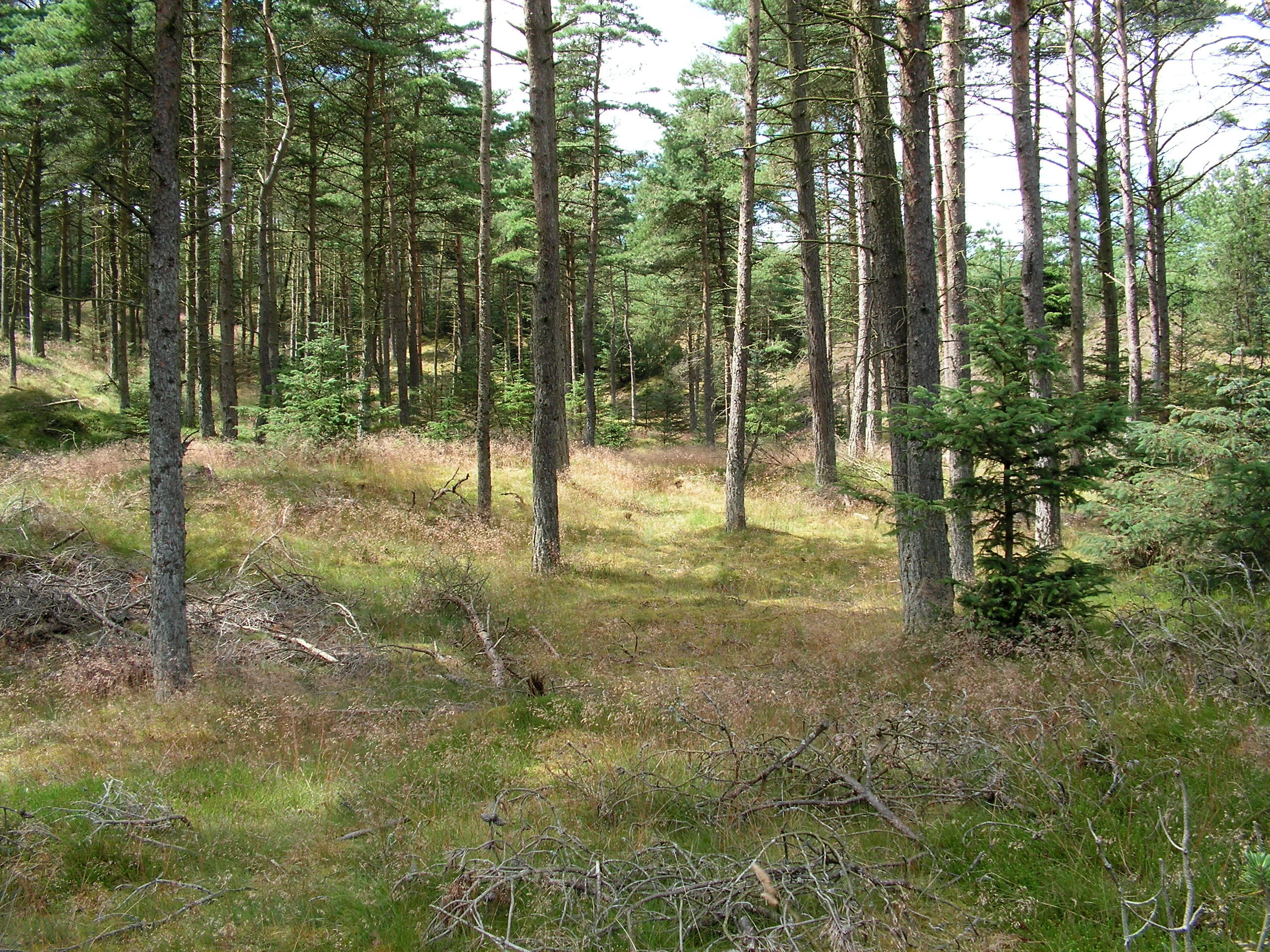
Pine forest with tall trees, grassy areas, and fallen branches
Tved Klitplantage in Thy National Park, Denmark

Thy National Park wildlife and species highlights

Thy National Park supports a rich diversity of wildlife, with particular significance for birdlife and rare species. The sandy heaths provide crucial breeding habitat for species that are rare or endangered in Denmark, including the European golden plover—which breeds nowhere else in the country—the common crane, and the wood sandpiper. The park is also home to the globally near-threatened black-tailed godwit.

The larger mammals in the park include red deer and roe deer, which have established populations in the plantation areas. Of particular note is the return of wolves to Thy, with several sightings reported since 2009. Wolves had been extirpated from Denmark since 1813, and a dead wolf found in autumn 2012 was believed to have migrated from the Lausitz region of Saxony, Germany. It is possible that a small pack now inhabits the area.

The park's smaller fauna includes the natterjack toad, a species associated with the sandy heath habitats. Many insect species thrive in the heath environments, while the lakes and ponds support diverse aquatic communities. The clear lakes with their pristine water conditions provide habitat for rare aquatic plants including the slender naiad, which is considered near-threatened on a global scale. The waters also host populations of water lobelia and various charophyte algae species.
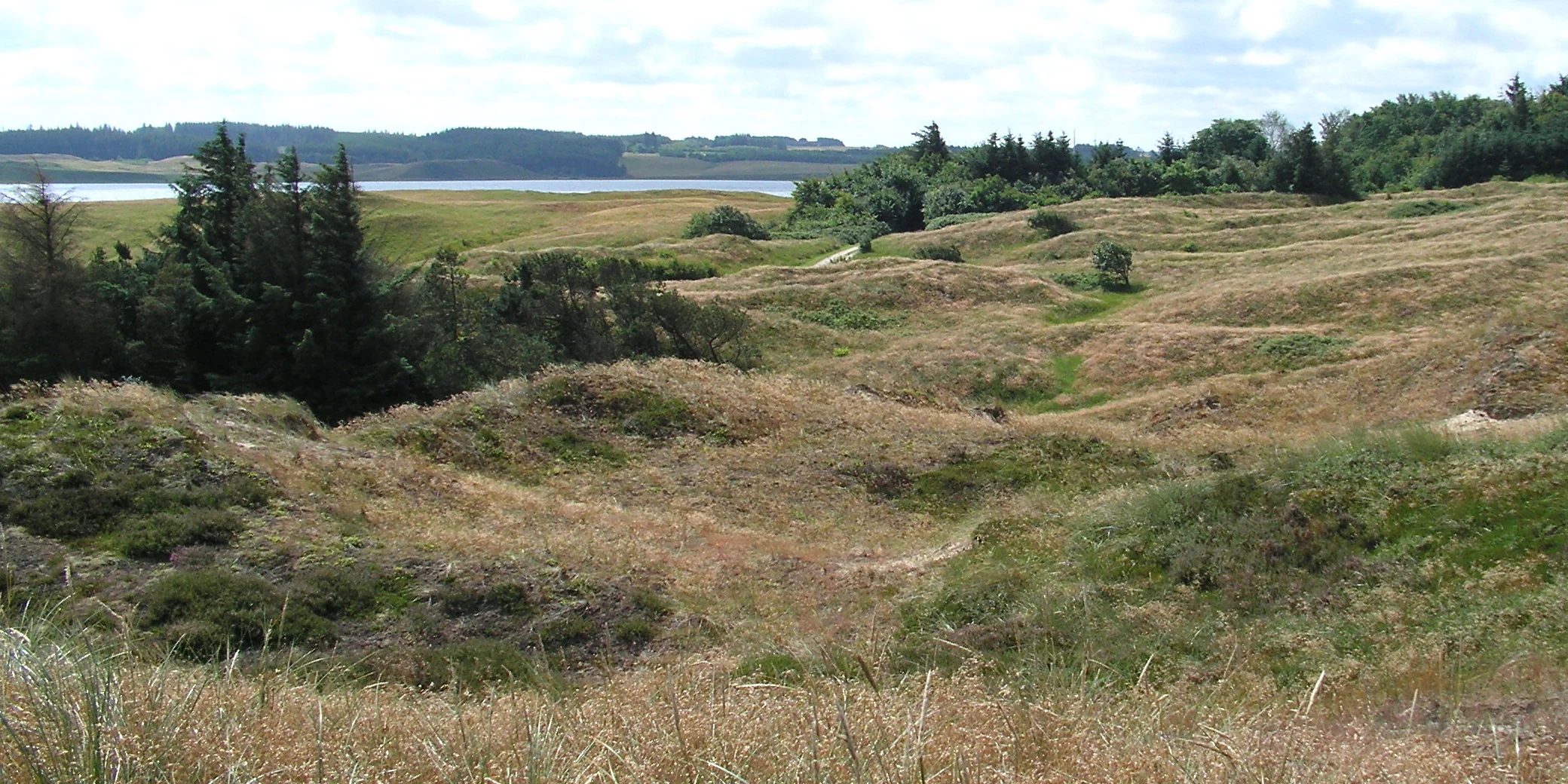
Wide view of sand dunes covered with heath vegetation and grasses, with a body of water and distant land visible in the background under a partly cloudy sky.
Rolling sand dunes and heathland in Thy National Park, Denmark.

Thy National Park conservation status and protection priorities

Thy National Park serves as a cornerstone of Danish nature conservation, protecting some of Denmark's most ecologically significant coastal habitats. The park's designation as a national park reflects its importance for preserving rare habitat types, particularly the sandy dune heaths which are legally protected as a rare habitat in European context. Parts of the park have been designated as bird protection areas and as Ramsar wetland sites, recognizing their international importance for waterfowl and migratory birds.

The park is included in the Natura 2000 network, which connects protected areas across Europe to ensure the conservation of biodiversity. Nissum Bredning with Harboøre and Agger Tange has been designated as a Ramsar site since 1977, providing international recognition for the wetland habitats in the southern part of the park. The 2025 agreement to establish Denmark's largest contiguous natural area on land, spanning over 400 square kilometers from southern Thy to eastern Han Herred, further enhances the conservation framework surrounding the park.

Conservation within the park requires active management to maintain the open heath habitats, which would otherwise succeed to forest without intervention. This includes grazing by large animals, occasional controlled burning, and removal of encroaching trees. The ongoing replacement of exotic tree species with native species in the plantations represents another conservation priority, creating more natural and ecologically valuable woodland habitats.

Thy National Park cultural meaning and human context

The cultural history of Thy National Park is deeply intertwined with the harsh North Sea environment and the ongoing struggle between human settlement and natural forces. Archaeological evidence demonstrates human presence from the end of the last Ice Age, when Stone Age cultures established settlements and left lasting marks on the landscape through dolmens, burial mounds, kitchen middens, and organized flint production.

The Bronze Age left particularly visible traces, with many barrows still standing in the northern areas near Hanstholm, though an unknown number have been buried by drifting sands over the centuries. Human activity continued through the Iron Age and Viking Age, with cultural remains often reflecting strong connections to the North Sea. It was during these later periods that the previously lush environment began to collapse under the pressure of excessive grazing and tree cutting, eventually allowing drifting sands to dominate the landscape for centuries.

The modern era brought dramatic changes including the establishment of the dune plantations beginning around 1800, which ultimately succeeded in stabilizing the sand. World War II left an indelible mark on the landscape when German forces constructed extensive fortifications as part of the Atlantic Wall, recognizing Thy strategic importance for controlling the North Sea. The Hanstholm Fortress, with its restored bunkers and batteries, now serves as a museum documenting this period of occupation and the broader context of World War II in Denmark.

Top sights and standout views in Thy National Park

Thy National Park stands as Denmark's first national park and protects one of the country's most significant coastal natural areas. The park's extensive dune heaths represent a rare habitat in European context, supporting specialized biodiversity and rare breeding birds including the European golden plover and crane. The successful century-long effort to stabilize drifting sands through strategic planting has created a landscape that serves as both a conservation model and a living testament to human-nature interaction. The park encompasses the Hanstholm Vildtreservat, Denmark's largest connected sandy heath, as well as rare lobeliesø lakes with exceptionally clean water and distinctive aquatic flora. The return of wolves to the area since 2009 adds ecological significance, representing the recovery of a species that had been absent from Denmark for nearly two centuries. The cultural layer includes prehistoric burial mounds, Bronze Age barrows, and World War II fortifications that now function as museums.

Best time to visit Thy National Park

Thy National Park can be enjoyed throughout the year, though each season offers a different experience of the landscape. The summer months bring the heathlands into bloom with purple heather covering the dunes, creating particularly striking scenery. However, the park's strong winds are a year-round feature, so visitors should come prepared for changeable weather regardless of season. The spring and autumn migrations bring large numbers of birds through the area, making these seasons particularly rewarding for birdwatchers. The Hanstholm Vildtreservat has restricted access from 1 April to 15 July to protect breeding birds, so visitors planning to explore this area should be aware of these seasonal closures. Winter offers a different character, with empty landscapes and the stark beauty of the dunes against gray skies, though shorter daylight hours limit exploration time.
Park location guide

Geography guide, regional context, and park location map for Thy National Park

Thy National Park park geography, regions, and map view in Denmark
Understand where Thy National Park sits in Denmark through a broader geographic reading of the surrounding landscape, nearby location context, and its mapped position within the national park landscape.

How Thy National Park fits into Denmark

Denmark is a constitutional monarchy and Nordic country in Northern Europe. It is the southernmost of the Scandinavian countries, bordering Germany to the south, Norway to the north, and Sweden to the southwest. The country consists of the Jutland peninsula and an archipelago of islands, with Copenhagen as its capital and largest city. Denmark has a population of over 6 million and is characterized by flat, arable land, sandy coasts, and a temperate climate.

Wider geography shaping Thy National Park in Denmark

Denmark occupies the Jutland peninsula and roughly 406 islands in Northern Europe. It is situated between the North Sea to the west and the Baltic Sea to the east. The country borders Germany to the south and is connected to Sweden via the Øresund Bridge. Denmark is predominantly flat terrain with low elevation, the highest point being Møllehøj at 170.86 meters.

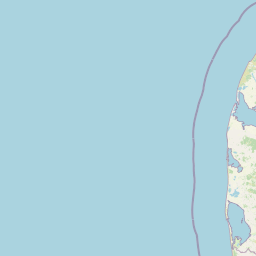
Map view of Thy National Park

Use this park location map to pinpoint Thy National Park in Denmark, understand its exact geographic position, and read its mapped placement within the surrounding landscape more clearly.

Pigeon | © OpenStreetMap contributors

Location context for Thy National Park

Thy

Discover the unique protected area through its windswept heaths, dynamic North Sea dunes, and serene lake environments

Explore Thy National Park Photos: Visual Guide to Denmark's Coastal Dune Landscapes
Browse a curated collection of Thy National Park photos to visually grasp the distinct terrain, including its vast dune heaths, coastal formations, and historic conifer plantations. These images provide crucial geographic context, helping you understand the diverse landscapes, unique habitats, and the characteristic visual identity of Denmark's first national park.

Close-up of a white and purple Lobelia dortmanna flower on a green stem against a blurred background

Coastal landscape featuring sandy dunes, grassy vegetation, and ocean waves under a partly cloudy sky

A calm lake reflecting the sky and distant hills with tall reeds in the foreground

Pine forest with tall trees, grassy areas, and fallen branches

Wide view of sand dunes covered with heath vegetation and grasses, with a body of water and distant land visible in the background under a partly cloudy sky.

Park atlas

Trace other protected areas around Thy National Park, comparing coastal dune, heathland, and conservation landscapes across Denmark's Jutland region.

Discover Other National Parks and Protected Areas near Thy National Park in Denmark
Browse other national parks and protected areas across Denmark's Jutland, extending beyond Thy National Park's coastal dunes, heaths, and managed conservation landscapes. Comparing these mapped entities provides a deeper understanding of regional protected-area geography, diverse conservation strategies, and unique ecological features.
Watercolor illustration showing rolling hills, a lake, pink flowering trees, and distant mountains
National park

Mols Bjerge National Park: Protected Landscape and Geographic Atlas

Explore Denmark's second national park, a mosaic of glacial terrain and coast.

Mols Bjerge National Park offers a unique exploration of Denmark's glacial past through its mapped protected landscape. This 180 square kilometre national park on the Djursland peninsula is characterized by the prominent Mols Hills, rising to 137 metres, and diverse coastal environments along the Kattegat. The park preserves a rich mosaic of heath, woodlands, pastures, bogs, meadows, and coastal habitats, alongside significant prehistoric human heritage. Understanding Mols Bjerge National Park's protected boundaries and its place within the regional geography is key to appreciating its atlas value.

Area
180 km²
Established
2009
IUCN
II
Relief
Upland
Watercolor painting of coastal waters, islands, rocky shore, and distant hills
National parkAgder

Raet National Park: A Coastal National Park Defined by Glacial Moraine Landscape in Agder

Explore Norway's southern coast geography and protected marine area.

Raet National Park offers a profound exploration of Norway's post-glacial landscape, anchored by its namesake 12,000-year-old glacial moraine. This unique protected area, predominantly marine, reveals a striking combination of terrestrial moraine features, extensive pebble beaches, and submerged geological formations. Understanding its mapped boundaries within Agder provides critical context for appreciating this significant coastal protected landscape, its marine ecosystems, and its role in the regional geography.

Area
607 km²
Established
2016
IUCN
II
Relief
Lowland
National park

Wadden Sea National Park: Denmark's Premier Tidal Wetland and Migratory Bird Sanctuary

Mapped boundaries and unique protected landscape exploration.

Wadden Sea National Park is a vast national park encompassing the Danish portion of the Wadden Sea, a globally significant tidal wetland. Recognized for its critical role in bird migration, hosting millions of birds annually, it features a distinctive landscape of tidal flats, salt marshes, coastal dunes, and barrier islands. This protected area offers a unique lens through which to explore dynamic coastal geography, intertidal ecosystems, and the conservation of a World Heritage Site.

Area
1,466 km²
Established
2010
Relief
Lowland
Climate
Temperate
National parkTelemark

Jomfruland National Park: Coastal Archipelago and Skagerrak Marine Atlas

Norway's unique marine-focused national park landscape.

Jomfruland National Park is a significant protected landscape in Telemark, Norway, renowned for its coastal island geography and a landscape predominantly composed of marine waters. Covering 117 square kilometers, this national park emphasizes the conservation of both terrestrial island habitats and the surrounding Skagerrak coastal ecosystem. Explore the park's mapped boundaries and discover its regional geographic context, offering a unique perspective on Norway's protected areas and maritime natural heritage through MoriAtlas.

Area
117 km²
Established
2016
IUCN
II
Scope
Mixed
National park

Kongernes Nordsjælland National Park: Protected Landscape Geography and Map Context

Explore North Zealand's protected natural terrain.

Delve into the protected landscape of Kongernes Nordsjælland National Park, a significant national park in Denmark's North Zealand region. This section provides a structured overview of its mapped boundaries and geographic setting, allowing for a detailed atlas-style discovery of its natural terrain. Understand how this protected area contributes to the region's conservation landscape and mapped geography.

National parkVästra Götaland County

Kosterhavet National Park: A Marine National Park Exploring Unique Archipelago Geography

Discover its mapped underwater terrain and rich marine biodiversity.

Kosterhavet National Park, located in Västra Götaland County, is Sweden's first marine national park, dedicated to protecting the unique aquatic environment of the Koster Islands. This protected area is renowned for its exceptional marine biodiversity, including rare cold-water coral reefs and the country's largest seal colony, all situated within a dramatic underwater geography characterized by deep fjords. Use MoriAtlas to explore the mapped extent of this vital marine protected landscape and understand its significant place in regional and national conservation efforts.

Area
388.78 km²
Established
2009
IUCN
II
Visitors
90K annual
Watercolor illustration of a coastal landscape with reeds in shallow water and distant green hills under a pale yellow sky
National parkFærder Municipality

Færder National Park: Norway's Coastal Archipelago & Marine Protected Area Atlas

Explore mapped landscapes and regional geography.

Færder National Park represents a significant protected landscape in Norway, characterized by its extensive marine environment and scattered archipelago. Situated east of Færder Municipality, the park's geography is defined by a mosaic of granite islands, coastal waters, and the iconic Færder Lighthouse. This entry provides atlas-level insight into the park's mapped boundaries, its role as a protected coastal ecosystem, and its contribution to the broader regional geography of Norway's southern coast.

Area
340 km²
Established
2013
IUCN
II
Relief
Lowland
National parkØstfold

Ytre Hvaler National Park: Norway's Coastal Marine Protected Landscape Atlas

Explore protected archipelago geography and unique cold water coral reefs.

Discover Ytre Hvaler National Park, a pivotal marine protected area on Norway's Østfold coast. This atlas entry provides detailed insight into its defining skerry landscape, the significant Tisler cold water coral reef, and its role as a protected marine ecosystem. Understand the mapped boundaries and geographic context of this unique Norwegian coastal wilderness, crucial for understanding the region's natural and maritime heritage.

Area
354 km²
Established
2009
IUCN
II

Common questions about visiting, size, designation, and location context for Thy National Park

Thy National Park FAQs for park facts, access, geography, and protected area context
Find quick answers about Thy National Park, including protected-area facts, park geography, trail and visitor context, and how the park fits into its surrounding country and regional landscape.
MoriAtlas Explorer

Continue Your Protected Areas Search Across the Global Atlas

Deepen your exploration by continuing the structured search for national parks and protected areas worldwide. Utilize the comprehensive filtering capabilities to compare different conservation landscapes and refine your understanding of global park geography. Discover more about the distribution and characteristics of protected natural areas.

Global natural geography