Why Vyzhnytsia National Nature Park stands out
Vyzhnytsia National Nature Park is best known for its extensive beech and fir forests that dominate over 60 percent of its wooded area, creating a characteristic Carpathian lowland forest ecosystem. The park is particularly notable for its population of rare orchids, including Nadborodnyk bezlystyi (nerveless feather moss), one of the rarest orchids in Ukraine with only two known Carpathian locations, both within this park. The western Cheremosh River section features the park's most dramatic landscapes, with steep slopes, scenic cliffs, numerous waterfalls, and gorges. The area is also renowned for its mineral water sources, including the unique "Lawns" springs one of only three such sources in Europe, historically used to treat digestive system disorders and hemophilia.
Vyzhnytsia National Nature Park history and protected-area timeline
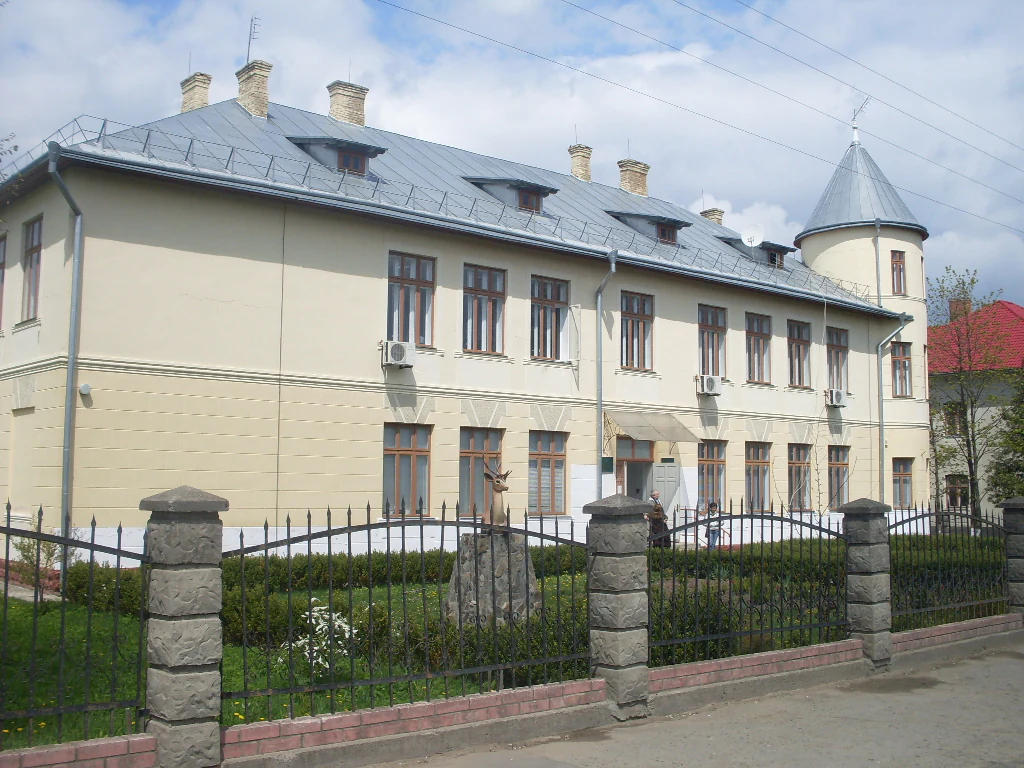
Vyzhnytsia National Nature Park was established on August 30, 1995, as part of Ukraine's expanding network of protected areas following independence. The park was created specifically for the conservation, restoration, and sustainable use of the natural landscapes of the Bukovinian Carpathians, recognizing the region's unique combination of ecological and cultural significance. The park was named after the surrounding Vyzhnytsia region, reflecting the administrative district in which it is situated. The town of Vyžnytsia itself has much older roots, first mentioned in Moldavian chronicles in 1501, when it was already noted for its traditional fairground. The park's administration is headquartered in the town of Berehomet, which contains additional historic churches and cultural monuments. The creation of the park also acknowledged the need to preserve the numerous historical and cultural complexes scattered throughout the Bukovinian landscape, including churches, traditional architecture, and sites connected to prominent Ukrainian cultural figures.
Vyzhnytsia National Nature Park landscape and geographic character
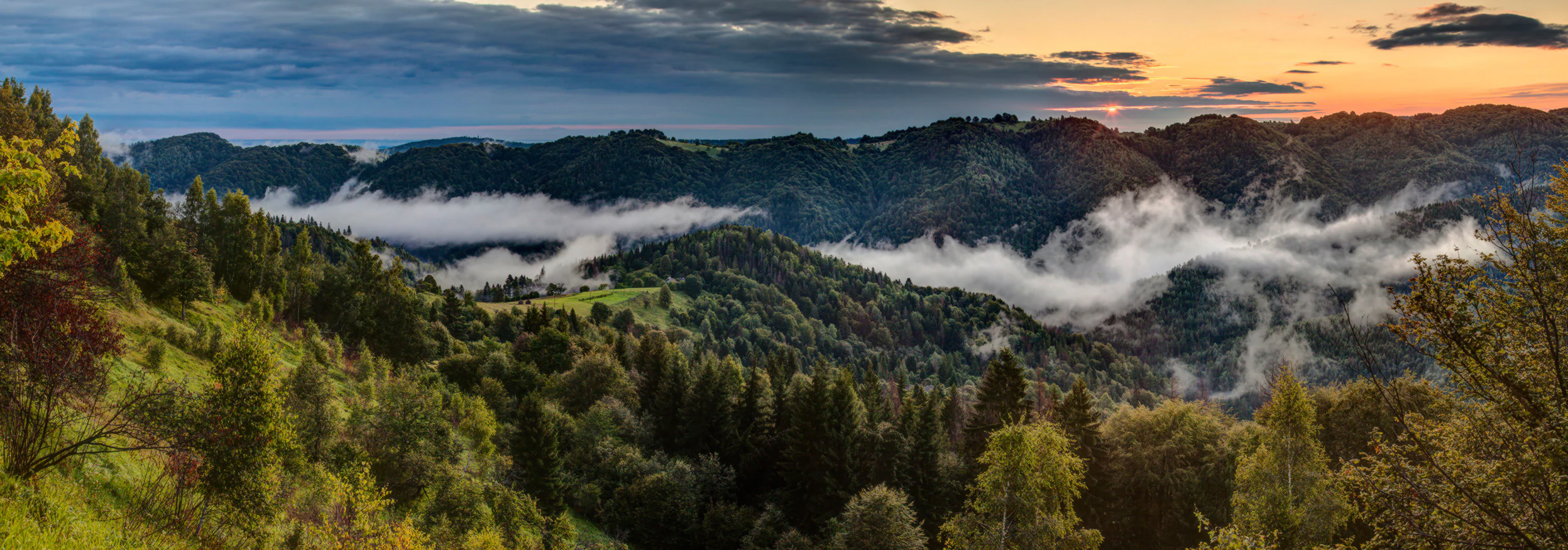
The park's landscape reflects its position at the boundary between the Outer Carpathians and the Precarpathian region, presenting a characteristically lowland Carpathian terrain. The mountain ranges within the park are low with smoothed, rounded peak crests, the result of erosion on easily weathered flysch rock formations. Only the Smydovatyi ridge in the southern portion rises above 1000 meters, qualifying as a middle-elevation mountain. The terrain varies significantly between the two main river basins: the eastern portion where the Siret River flows features broader valleys, more gently contoured ridges, and fewer geological exposures. The western Cheremosh River portion displays much greater topographic dissection, with steep slopes exceeding 45 to 50 degrees in places where sandstone outcrops occur, along with erosional river valleys, occasional landslides, and small scree fields. This western section contains the park's most scenic terrain, including dramatic cliffs, numerous waterfalls, and narrow gorge passages. The landscape diversity is further enhanced by the network of tributaries feeding both major river systems.
Vyzhnytsia National Nature Park ecosystems, habitats, and plant life
The ecological character of Vyzhnytsia National Nature Park is defined by its location at the intersection of two geobotanical districts and two floristic regions, creating a zone of exceptional botanical diversity. The Sheshorsko-Krasnoyilske district features mountain spruce-fir-beech and beech-spruce-fir forests, while the Bolehivsko-Berehomet district contains piedmont fir-beech communities. Forest coverage exceeds 95 percent of the park, with fir-beech forests representing the dominant community and occupying approximately 60 percent of wooded areas. In some locations, beech and fir trees reach heights of 40 meters with trunk diameters of 70 to 90 centimeters. The park supports 960 vascular plant species, including 40 listed in Ukraine's Red Book, and 236 bryophyte species. The orchid family is particularly significant, with the park containing one of only two known locations in the Carpathians for Nadborodnyk bezlystyi, considered one of the rarest orchids in Ukraine. Grasslands occupy relatively small areas on ridge slopes and crests.
Vyzhnytsia National Nature Park wildlife and species highlights
The vertebrate fauna of Vyzhnytsia National Nature Park includes one cyclostomata species, 20 fish species, 12 amphibian species, 7 reptile species, 141 bird species, and 52 mammal species. Of these, 62 species appear in Ukraine's Red Book and 11 are listed on the European Red List, reflecting the park's conservation significance. The mammalian fauna includes typical European forest species such as the edible dormouse, forest dormouse, hazel dormouse, and wildcat, along with typical mountain and boreal species including lynx, brown bear, western capercaillie, boreal owl, and Ural owl. The bird community features white stork and lesser spotted eagle among notable species. Mediterranean-origin species are less common but include fire salamander, European tree frog, and Aesculapian snake. Typical mountain species present include yellow-bellied toad, European rock pipit, and grey wagtail, while boreal elements include western capercaillie and several owl species.
Vyzhnytsia National Nature Park conservation status and protection priorities
Vyzhnytsia National Nature Park serves as an important conservation area within the Ukrainian Carpathians, protecting a distinctive lowland mountain forest ecosystem that faces pressure from surrounding agricultural and developed lands. The park's significance is underscored by the presence of 62 species listed in Ukraine's Red Book and 11 species on the European Red List, demonstrating its role in preserving biodiversity. The rare orchid populations, particularly Nadborodnyk bezlystyi, represent a conservation priority given that only two locations in the entire Carpathian region support this species, both within this park. The forest communities, dominated by beech and fir, represent thermophilic Carpathian forest types that are characteristic of the region's ecological identity. The park's location at the intersection of multiple floristic and geobotanical zones further enhances its conservation value, protecting transitional ecosystems that support species from multiple biogeographic influences.
Vyzhnytsia National Nature Park cultural meaning and human context
The park lies within Bukovina, a historic and ethnographic region renowned for its rich cultural heritage and diverse population traditions. The town of Vyzhnytsia, first documented in Moldavian chronicles of 1501, was historically famous for its traditional fairground and served as a market center for the region. The area is closely associated with major figures of Ukrainian literature and culture, including Yuriy Fedkovych, Lesya Ukrayinka, Ivan Franko, Marko Vovchok, Olga Kobylianska, and Mykhaylo Kotsyubinskyi. The park contains numerous cultural and architectural monuments, including the Dmytrivska and Mykolayivska churches in Vyzhnytsia, a former synagogue that serves as one of the important Hasidic shrines in Ukraine, and the Vyzhnytsia College of Applied Arts (formerly a carving school). Additional monuments include churches with belfries in Berehomet and the village of Vyzhenka, reflecting the region's diverse religious heritage and traditional wooden architecture.
Top sights and standout views in Vyzhnytsia National Nature Park
Vyzhnytsia National Nature Park offers visitors a combination of natural beauty and cultural heritage within the Carpathian lowlands. The western Cheremosh River section provides the most dramatic scenery with steep forested slopes, visible sandstone cliffs, and several waterfalls accessible via restored hiking trails. The park's exceptional botanical value, particularly for rare orchids, makes it significant for nature enthusiasts and researchers. The mineral water resources, especially the unique "Lawns" springs with over 20 therapeutically active trace elements, represent a distinctive resource with historical treatment applications. The environmental education center in Berehomet and the Nature Museum in Zeleniv provide interpretive opportunities. The historic town of Vyzhnytsia itself, with its cultural monuments and connections to Ukrainian literary figures, extends the park's appeal beyond purely ecological tourism.
Best time to visit Vyzhnytsia National Nature Park
The park can be visited throughout the year, with each season offering distinct experiences. Summer and early autumn typically provide the most comfortable conditions for hiking, with warm temperatures and the park's trail network fully accessible. The summer months allow visitors to experience the forest in full leaf and observe wildlife activity. Autumn brings warm, mild weather and offers excellent conditions for viewing the forest as foliage changes color. Winter visits are possible but the park's mountainous character means snow cover varies significantly between northern and southern slopes, with northern slopes retaining thicker snow while southern exposures may be snow-free. The significant microclimatic differences between the western Cheremosh section and eastern Siret section mean that weather conditions can vary noticeably within the park itself, with the Cheremosh portion generally experiencing warmer temperatures.