Mori Atlas logo
National parkBiogradska Gora National Park

Discover the unique geography and protected landscape of one of Europe's last primeval forests.

Biogradska Gora National Park: Montenegro's Premier National Park and Ancient Forest Atlas

Biogradska Gora National Park in Montenegro stands as a testament to ecological preservation, protecting one of Europe's last remaining primeval forest ecosystems. This national park offers a unique opportunity to explore a heterogeneous terrain of gentle slopes, river valleys, and ancient beech woodlands, serving as a vital sanctuary for biodiversity and a cornerstone of regional geographic context. Within MoriAtlas, users can delve into the mapped boundaries and landscape character of this significant protected area, understanding its place within the broader atlas of natural landscapes.

old-growth forestbeech forestprimeval forestprotected forestBalkans naturenorthern Montenegro

Biogradska Gora National Park

National park

Park overview

Structured park overview, official facts, and landscape profile for Biogradska Gora National Park

Biogradska Gora National Park park facts, protected area profile, and essential visitor context
Review the core facts for Biogradska Gora National Park, including designation, size, terrain, visitor scale, habitats, and operating context in one park-focused overview.

About Biogradska Gora National Park

Biogradska Gora National Park occupies a special place in Montenegro's system of protected areas as a remnant of the extensive forests that once covered the Bjelopavlici plain. The park's establishment in 1967 reflected growing recognition of the need to preserve representative examples of the region's natural heritage. The terrain within the park boundaries consists of gentle hills and valley areas that slope gradually toward the Ljeska river, which flows through the protected area providing water and habitat diversity. The beech forest that forms the park's ecological core has developed over centuries without significant interruption, creating a complex structure of old trees, fallen wood, and diverse understory vegetation. This forest ecosystem supports a range of species adapted to mature woodland conditions, from invertebrates and fungi to birds and mammals. The park provides accessible opportunities for visitors to experience this forest environment through marked trails and interpretive pathways, while the surrounding agricultural landscape of the Bjelopavlici plain offers contrast between protected and managed land.

Quick facts and research context for Biogradska Gora National Park

Biogradska Gora National Park is situated in northern Montenegro within the Bjelopavlici plain, a region characterized by rolling agricultural land and forested uplands. The park was established in 1967 and covers approximately 5,400 hectares of protected territory. Its central feature is a well-preserved beech forest that has been protected for decades, representing one of the few remaining old-growth forest areas in the Balkans. The Ljeska river flows through the park, contributing to the site's ecological diversity. The park is accessible from Berane, making it a destination for both scientific study and nature appreciation in Montenegro's mountainous north.

Park context

Deeper park guide and search-rich context for Biogradska Gora National Park

Biogradska Gora National Park history, landscape, wildlife, and travel context
Explore Biogradska Gora National Park through its history, landscape character, ecosystems, wildlife, conservation priorities, cultural context, and seasonal travel timing in a structured park guide built for atlas discovery and search intent.

Why Biogradska Gora National Park stands out

Biogradska Gora is best known for its exceptional ancient beech forest, which stands as one of the last remaining primeval forest ecosystems in Europe. The old-growth forest features mature beech trees of considerable age and size, creating a atmospheric woodland environment that contrasts sharply with the more heavily modified agricultural landscape surrounding the Bjelopavlici plain. This forest reserve represents a rare opportunity to experience a nearly untouched forest ecosystem in a region where most woodlands have been altered by human activity over centuries.
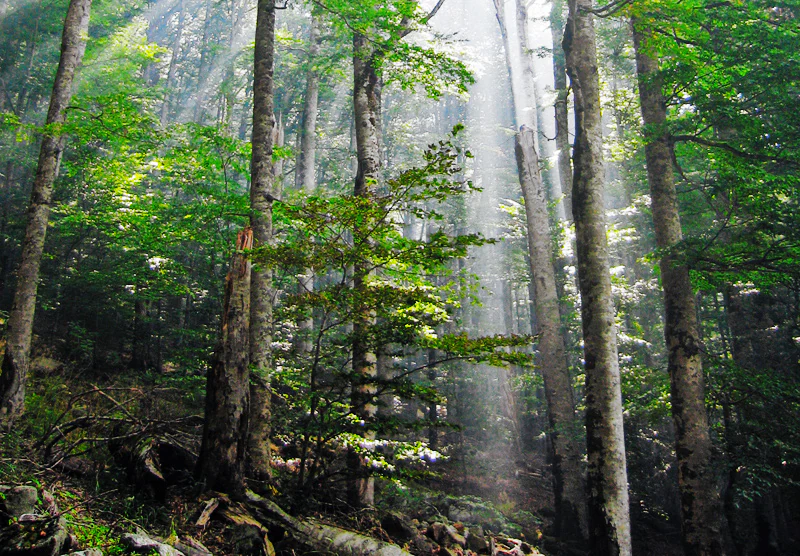
Tall trees with green foliage, sunlight beams through the forest canopy, forest floor with fallen logs and underbrush
Sunlight filtering through the ancient forest canopy

Biogradska Gora National Park history and protected-area timeline

Biogradska Gora was designated as a national park in 1967 during a period when Montenegro was expanding its network of protected areas to preserve natural heritage. The selection of this site reflected the ecological significance of its remaining forest cover in a region where agricultural expansion had reduced woodland extent. The park was created to ensure ongoing protection of the old-growth beech forest and to maintain the ecological processes that depend on these ancient trees. Management of the park has focused on maintaining the forest's natural character while allowing for public access and environmental education. The designation also served conservation goals by protecting watershed functions provided by the forest cover.

Biogradska Gora National Park landscape and geographic character

The landscape of Biogradska Gora National Park presents a terrain of gentle relief characteristic of the Bjelopavlici plain region. The protected area encompasses rolling hills and shallow valleys that descend toward the Ljeska river, which drains the surrounding watershed. The forest dominates the higher ground and valley slopes, while the river corridor adds wet meadow and riparian habitats to the ecological mix. The overall impression is of a harmonious landscape where forest and water elements combine with the agricultural plain visible beyond the park boundaries. The beech trees reach considerable heights, creating a canopy that shades the forest floor and produces a distinctive woodland atmosphere. Gentle slopes and accessible terrain make the park suitable for walking and nature observation.
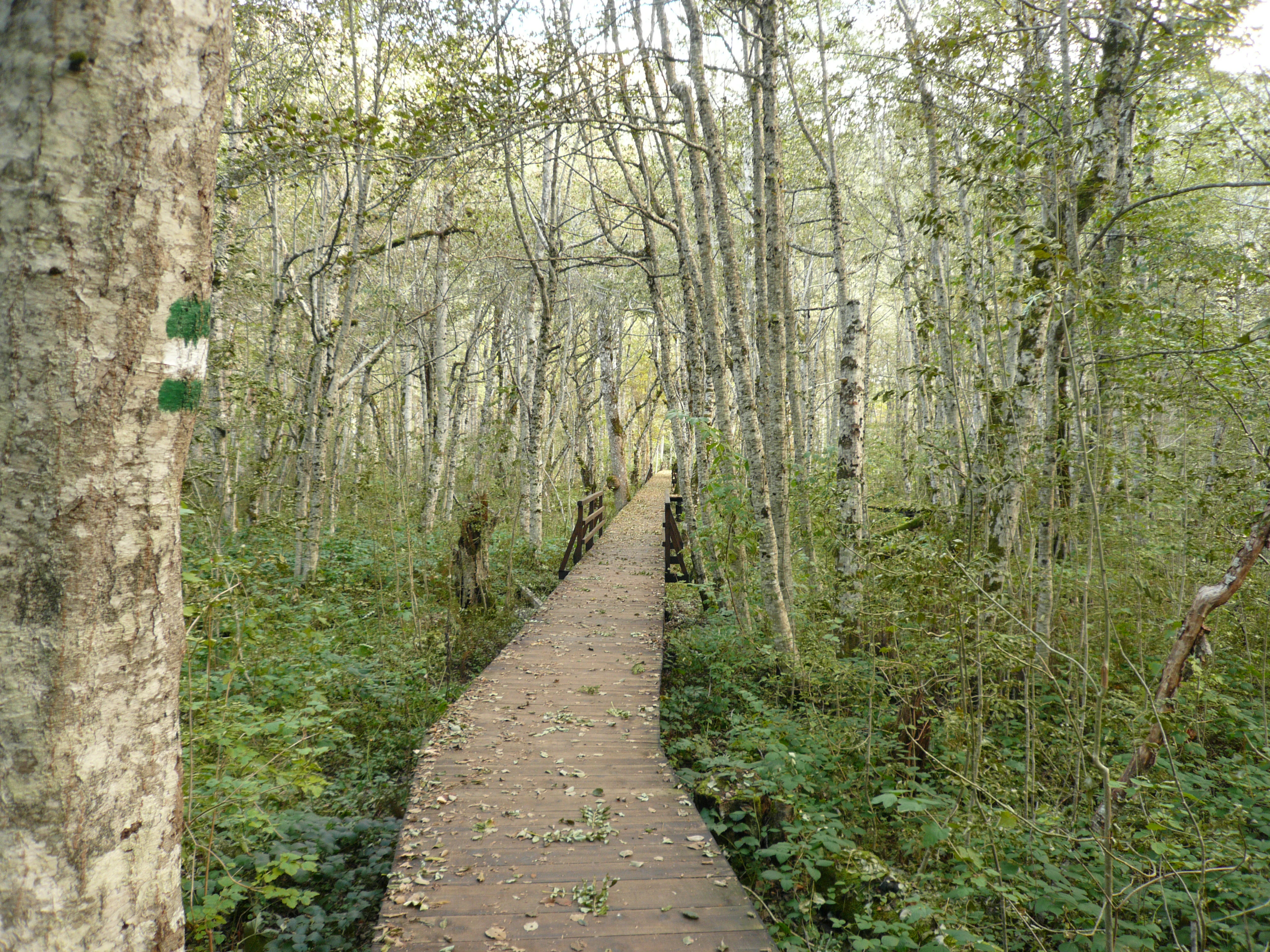
Wooden boardwalk trail through forest with green and white trail marker on tree trunk
Wooden boardwalk trail through dense forest with green and white trail marker on tree

Biogradska Gora National Park ecosystems, habitats, and plant life

The ecological heart of Biogradska Gora lies in its mature beech forest, which represents a forest type once widespread across the Balkans but now largely confined to protected reserves. The old-growth character means the forest contains trees of various ages, standing dead wood, and fallen logs that together create diverse microhabitats. The beech canopy allows limited light to reach the forest floor, resulting in a relatively sparse understory of shade-tolerant plants. This forest structure supports complex ecological relationships including epiphytic organisms, forest floor invertebrates, and vertebrate species that require mature woodland conditions. The presence of the Ljeska river adds aquatic and riparian habitats that increase the overall diversity of the protected area.
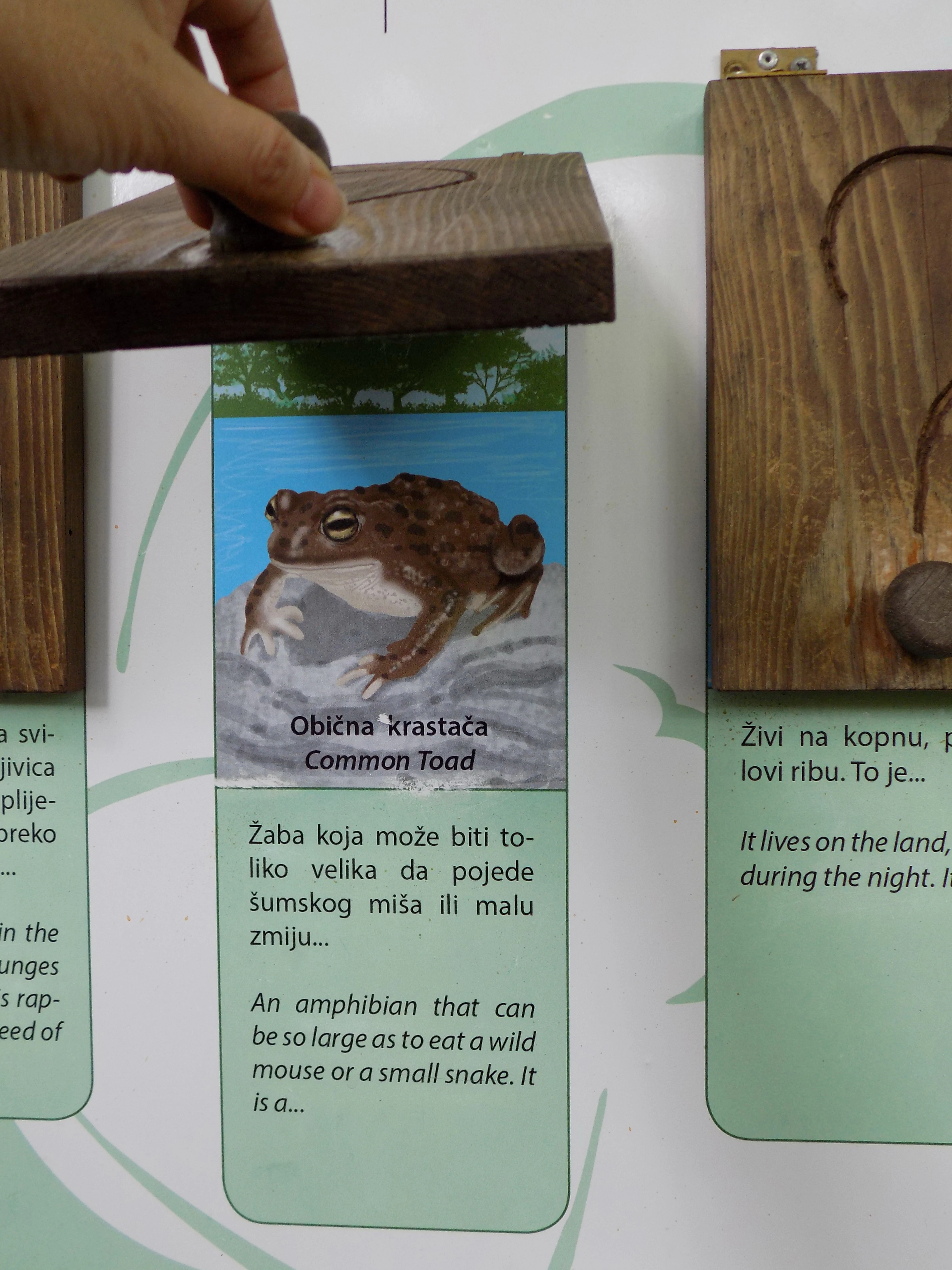
Educational display card showing an illustration of a Common Toad with descriptive text in English and another language
Educational display about the Common Toad at Biogradska Gora National Park

Biogradska Gora National Park wildlife and species highlights

Biogradska Gora's old-growth beech forest provides habitat for species adapted to mature woodland environments. The forest supports populations of forest birds including various tit species, flycatchers, and woodpeckers that require tree cavities and dead wood for nesting. Mammals present in the park include several species of bats that roost in old trees, as well as smaller mammals such as squirrels and dormice that find food and shelter in the complex forest structure. The riparian areas along the Ljeska river support different species including waterfowl and riparian birds. The forest floor supports invertebrate communities that play important roles in decomposition and soil formation processes.

Biogradska Gora National Park conservation status and protection priorities

Biogradska Gora National Park represents a conservation commitment to preserving one of Europe's remaining examples of old-growth beech forest. The protected status ensures that the forest ecosystem can continue functioning without significant human interference, allowing natural processes of growth, death, and regeneration to proceed. This protection benefits not only the trees themselves but the entire community of species that depend on the complex structure of mature forest. The park also serves watershed protection functions, with the forest cover helping to regulate water flow and maintain water quality in the Ljeska river system. As one of the older national parks in Montenegro, Biogradska Gora demonstrates the country's recognition of the ecological and aesthetic value of its forest heritage.

Biogradska Gora National Park cultural meaning and human context

The Bjelopavlici plain has historically been an agricultural region, and the forest preserved within Biogradska Gora exists in the context of a landscape shaped by farming communities over generations. The park area sits within territory associated with the Bjelopavlici people, a regional community whose name is reflected in the geographic name of the plain. The forest likely had traditional uses by local communities over centuries, though the protected status now limits such activities. The town of Berane, nearby to the park, serves as the main access point and regional center for this part of northern Montenegro.

Top sights and standout views in Biogradska Gora National Park

Biogradska Gora offers visitors the rare opportunity to walk through a centuries-old beech forest in the heart of the Balkans. The park's well-maintained trails allow exploration of this ancient woodland, where massive beech trees create an atmospheric environment quite different from typical managed forests. The combination of forest, river, and gentle terrain creates a peaceful setting for nature observation. The park represents an important conservation area for regional biodiversity and serves as an educational resource for understanding forest ecosystem dynamics.

Best time to visit Biogradska Gora National Park

Biogradska Gora can be visited throughout the year, with each season offering a different forest experience. The forest is particularly atmospheric in autumn when beech leaves turn golden, and in winter when the bare branches create stark silhouettes against the sky. Spring brings new growth and bird activity, while summer offers full canopy cover and shade from the beech trees. The accessible terrain makes the park suitable for visits in any season, though winter conditions may affect trail usability.
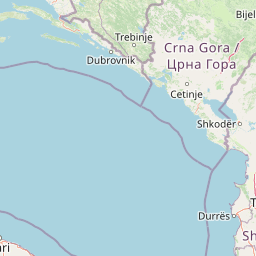
Park location guide

Geography guide, regional context, and park location map for Biogradska Gora National Park

Biogradska Gora National Park park geography, regions, and map view in Montenegro
Understand where Biogradska Gora National Park sits in Montenegro through a broader geographic reading of the surrounding landscape, nearby location context, and its mapped position within the national park landscape.

How Biogradska Gora National Park fits into Montenegro

Montenegro is a unitary parliamentary republic in Southeast Europe on the Balkan Peninsula. With a population of approximately 623,000 and an area of 13,883 km², it borders five countries and has a coastline on the Adriatic Sea. The capital and largest city is Podgorica, while Cetinje serves as the old royal capital. The country declared independence in 2006 following the breakup of Serbia and Montenegro.

Wider geography shaping Biogradska Gora National Park in Montenegro

Montenegro is located on the Balkan Peninsula in Southeast Europe. It is bordered by Serbia to the northeast, Bosnia and Herzegovina to the northwest, Kosovo to the east, Albania to the southeast, and Croatia to the west. The country has a coastline along the Adriatic Sea to the southwest. The terrain is predominantly mountainous, with the Dinaric Alps running through the country.

Map view of Biogradska Gora National Park

Use this park location map to pinpoint Biogradska Gora National Park in Montenegro, understand its exact geographic position, and read its mapped placement within the surrounding landscape more clearly.

Pigeon | © OpenStreetMap contributors

Visualizing Ancient Beech Forests, River Valleys, and Protected Balkan Habitats

Biogradska Gora National Park Photos: Explore Primeval Forest Landscapes
Explore photos of Biogradska Gora National Park to visually understand its ancient beech forests, diverse river valleys, and characteristic mountain landscapes in northern Montenegro. Viewing these images reveals the park's distinct old-growth woodlands and pristine habitats, deepening geographic comprehension of this significant protected area's natural environment.

Tall trees with green foliage, sunlight beams through the forest canopy, forest floor with fallen logs and underbrush

Wooden dock extending into a calm lake with orange rowboats, surrounded by lush green forested mountains under overcast sky

Wooden boardwalk trail through forest with green and white trail marker on tree trunk

Educational display card showing an illustration of a Common Toad with descriptive text in English and another language

Park atlas

Map the regional context of protected areas and compare diverse landscapes geographically connected to Biogradska Gora National Park.

Explore Nearby National Parks and Protected Areas Surrounding Biogradska Gora National Park
After exploring Biogradska Gora National Park, browse a curated list of other national parks and protected areas, extending your discovery into surrounding Montenegrin landscapes and the broader Balkans region. Comparing these adjacent conservation areas offers valuable geographic context, tracing patterns in protected forest ecosystems, river valleys, and diverse mountain terrain across the region.
Watercolor painting of green mountains, forests, and fields under a light sky
National parkKosovo

Bjeshkët e Nemuna National Park: Kosovo's Largest Alpine Protected Landscape

Explore dramatic mountains, glacial lakes, and diverse ecosystems.

Delve into the protected geography of Bjeshkët e Nemuna National Park, Kosovo's expansive national park located in the Accursed Mountains. This atlas entry details its significant alpine terrain, from dense forests to high-altitude meadows, and highlights the presence of glacial lakes like Liqenat. Understand its role as a vital conservation corridor and a key component of the Balkan's natural heritage.

Area
630.28 km²
Established
2012
IUCN
II
Relief
Mountain
Watercolor illustration showing mountains, a winding river, and forested areas
National park

Durmitor National Park: Dramatic Balkan Alpine Landscape & Protected Area

Explore its rugged terrain and glacial geography.

Durmitor National Park, a protected area in Montenegro, offers a spectacular alpine landscape defined by sharp limestone peaks, deep glacial valleys, and pristine mountain lakes. This national park preserves extensive old-growth forests and unique karst features, showcasing one of the Balkans' most significant wilderness areas. Its dramatic terrain and geological diversity make it a key destination for understanding regional protected lands and mountain geography.

IUCN
II
Relief
Mountain
Climate
Alpine
Scope
Terrestrial
Watercolor painting showing a mountainous landscape with a lake, green hills, and pink flowers
National park

Alps of Albania National Park: Explore Albania's Largest Protected Alpine Wilderness

Dramatic karst, glacial valleys, and high-altitude ecosystems await.

The Alps of Albania National Park offers an expansive view into one of the Balkans' most significant mountain protected areas. This national park encompasses a spectacular landscape characterized by towering limestone peaks, deep glacial valleys carved over millennia, and intricate karst formations like Grunas Canyon. Its pristine wilderness protects diverse high-altitude ecosystems and unique geological features, serving as a key destination for understanding regional geography and protected landscapes.

Area
828.447 km²
Established
2022
IUCN
II
Relief
Mountain
Watercolor illustration showing rolling hills, a river, trees, and distant mountains
Protected landscape

Zlatibor Protected Landscape: Explore its Mapped Geography and Unique Alpine Meadows

Discover Dinaric Alps protected terrain and landscape context.

Zlatibor Protected Landscape offers a distinct exploration of mountainous terrain and protected natural areas in Serbia. Situated in the Dinaric Alps, its landscape is defined by rolling upland plateaus, dense coniferous forests, and open alpine meadows, creating a visually rich environment. The park's geography includes notable karst features and extensive cave systems, complemented by the natural boundaries of significant rivers. Delve into the mapped protected area to understand its landscape character, from the highest peak at Tornik to the unique geological formations and the rare endemic pine subspecies, providing a concrete geographic perspective for atlas-based discovery.

Area
0.419 km²
Established
2017
IUCN
VI
Relief
Mixed relief
National park

Lovćen National Park: Protected National Park Landscape & Geographic Context

Mapped protected area with unique regional geography.

Dive into the detailed geography of Lovćen National Park, a designated national park in Montenegro. This protected landscape is mapped for structured exploration, revealing its specific natural terrain and its significance within the regional atlas. Understand the park's precise boundaries and its contribution to the diverse geographic tapestry of the area, providing context for further map-based discovery.

IUCN
II
Scope
Terrestrial
Water
No major water
Watercolor illustration of mountain ranges, a lake, and forested hills in soft pastel colors
National park

Sutjeska National Park: Bosnia and Herzegovina's Oldest National Park and Primeval Forest Reserve

Explore the mapped geography and protected landscape of this vital Balkan natural area.

Sutjeska National Park, Bosnia and Herzegovina's inaugural national park, protects a dramatic mountainous region defined by primeval forests and its highest peak, Maglić. As a strict nature reserve, Perućica's ancient trees represent a rare ecological treasure within the Balkan landscape. This page offers a detailed look at the park's protected boundaries, its diverse natural terrain, and its significant geographic setting for atlas exploration.

Area
160.52 km²
Established
1962
IUCN
II
Relief
Mountain
Watercolor painting depicting a river flowing through a valley with mountains in the background and trees on both sides
National park

Tara National Park: Endemic Flora and Dramatic Dinaric Alps Geography

Discover Serbia's iconic protected mountain landscape and its unique botanical heritage.

Tara National Park is a significant protected area in Serbia, celebrated for its exceptional botanical value and dramatic mountainous terrain. It is the last refuge for Pančić's spruce, a living fossil conifer, and hosts a remarkable diversity of Balkan flora. The park's landscape is defined by steep limestone cliffs, deep river valleys like the Drina canyon, and expansive forest ecosystems, offering a unique geographic study of protected lands. Explore its mapped features and discover a vital conservation area within the Dinaric Alps.

Area
249.92 km²
Established
1981
IUCN
II
Relief
Mountain
Watercolor illustration of mountainous landscape with forests and distant hills
National park

Kopaonik National Park: Serbia's Premier Protected Mountain Landscape

Explore Balkan biodiversity and unique geographic terrain.

MoriAtlas presents Kopaonik National Park, a key protected area celebrated for its extraordinary endemic plant species and its distinctive mountainous geography. This national park safeguards a significant biodiversity hotspot within the Balkans, characterized by a prominent mountain plateau and peaks exceeding 2,000 meters. Discover the park's varied terrain, from forested slopes to subalpine meadows, and understand its role in regional natural landscapes. Utilize our map-based exploration tools to grasp Kopaonik National Park's protected boundaries and its unique place in geographic context.

Area
118.1 km²
Established
1981
IUCN
II
Relief
Mountain

Common questions about visiting, size, designation, and location context for Biogradska Gora National Park

Biogradska Gora National Park FAQs for park facts, access, geography, and protected area context
Find quick answers about Biogradska Gora National Park, including protected-area facts, park geography, trail and visitor context, and how the park fits into its surrounding country and regional landscape.
MoriAtlas Explorer

Continue Your Protected Areas Search Across the Global Atlas

Deepen your exploration by continuing the structured search for national parks and protected areas worldwide. Utilize the comprehensive filtering capabilities to compare different conservation landscapes and refine your understanding of global park geography. Discover more about the distribution and characteristics of protected natural areas.

Global natural geography