Mori Atlas logo
National parkBothnian Sea National Park

Discover the national park's unique coastal geography and island landscape context.

Bothnian Sea National Park: Mapping Protected Boundaries in Southwest Finland's Archipelago

(Selkämeren kansallispuisto)

Bothnian Sea National Park represents a significant protected area within the unique geographic context of Southwest Finland's Archipelago Sea. This national park entry on MoriAtlas offers detailed insights into its mapped boundaries, regional setting, and the distinctive coastal landscapes of this Finnish region. Explore how this protected land contributes to the broader atlas of Finland's natural heritage and offers a valuable point of discovery for understanding its unique island geography.

marine protected areaarchipelagocoastal landscapeBaltic Seaseabird habitatlighthouse islands

Bothnian Sea National Park

National park

Park overview

Structured park overview, official facts, and landscape profile for Bothnian Sea National Park

Bothnian Sea National Park park facts, protected area profile, and essential visitor context
Review the core facts for Bothnian Sea National Park, including designation, size, terrain, visitor scale, habitats, and operating context in one park-focused overview.

About Bothnian Sea National Park

Bothnian Sea National Park represents Finland's commitment to protecting its Baltic Sea coastal environments and archipelago landscapes. The park was established in 2011 following a governmental principle decision in October 2009 and legislative proposal in April 2010, though the original proposal faced opposition leading to a reduced boundary. The park encompasses a remarkable diversity of marine and island habitats, from exposed outer archipelago waters to sheltered inner archipelago bays. The protected area extends across approximately 160 kilometers of coastline, creating a meaningful conservation corridor along Finland's western coast. The park's management under Metsähallitus balances conservation objectives with sustainable recreation, allowing visitors to experience this distinctive coastal wilderness while preserving its ecological integrity for future generations.

Quick facts and research context for Bothnian Sea National Park

Bothnian Sea National Park lies in the Southwest Finland and Satakunta regions along the Gulf of Bothnia, part of the Baltic Sea. Established in 2011, it covers 917 km² with water comprising the vast majority of the area. The park features three major lighthouse islands, including Isokari which hosts the largest lighthouse in the Gulf of Bothnia. The archipelago supports 380 plant species on Isokari alone and serves as a crucial nesting and resting area for marine birds including common eider, goosander, parasitic jaeger, and barnacle goose. The park receives approximately 79,400 visitors annually and is managed by Metsähallitus.

Park context

Deeper park guide and search-rich context for Bothnian Sea National Park

Bothnian Sea National Park history, landscape, wildlife, and travel context
Explore Bothnian Sea National Park through its history, landscape character, ecosystems, wildlife, conservation priorities, cultural context, and seasonal travel timing in a structured park guide built for atlas discovery and search intent.

Why Bothnian Sea National Park stands out

The park is best known for its extensive archipelago landscape dominated by water, its significant seabird populations, and its historic lighthouse islands. The three main lighthouse islands, Isokari, Kylmäpihlaja, and Säppi, form the backbone of the park's terrestrial identity, with Isokari hosting the largest lighthouse in the entire Gulf of Bothnia and supporting 380 plant species. The park's shallow coastal bays, juniper shrubbery, and exposed outer archipelago provide critical breeding and resting habitat for marine bird species, making it a destination of particular importance for ornithologists and nature enthusiasts.

Bothnian Sea National Park history and protected-area timeline

Bothnian Sea National Park was formally established in 2011 as part of Finland's expanded network of protected areas. The creation process began with a government principle decision on October 2, 2009, followed by a legislative proposal in April 2010. However, the establishment faced considerable local opposition, which resulted in the protected area being smaller than initially proposed. The park's opening ceremony was held at Kuuskajaskari, one of the historical lighthouse islands within the boundary. The park incorporates several islands with significant cultural heritage, including the fortress island of Katanpää, which contains fortifications built between 1915 and 1917 as part of a naval defensive network established during the era of Russian imperial control. This fortress represented the northernmost point of Peter the Great's chain of coastal fortifications. The park also preserves the legacy of its lighthouse stations, with structures like the Isokari lighthouse serving as navigational aids for centuries of maritime traffic in the Gulf of Bothnia.

Bothnian Sea National Park landscape and geographic character

The landscape of Bothnian Sea National Park is fundamentally defined by water, with approximately 98% of the protected area comprising marine environments. The park stretches along 160 kilometers of coastline, encompassing a complex archipelago system of islands ranging from small rocky islets to larger inhabited islands. The three major lighthouse islands form prominent landscape features: Isokari, the largest, hosts the Gulf of Bothnia's most significant lighthouse; Kylmäpihlaja supports the highest density of animal life relative to its area; and Säppi, covering 150 hectares, is the most renowned among birdwatchers. The landscape includes shallow coastal bays, exposed outer archipelago zones, and sheltered inner archipelago areas. Coastal vegetation features juniper shrubbery and characteristic archipelago flora adapted to the harsh marine environment. The winter landscape is particularly distinctive, with frozen sea surfaces creating extensive walking opportunities across vast frozen expanses.

Bothnian Sea National Park ecosystems, habitats, and plant life

The nature of Bothnian Sea National Park centers on its unique coastal and marine ecosystems within the Baltic Sea environment. The park protects diverse habitats ranging from exposed outer archipelago waters to sheltered bays and island interiors. The island flora is remarkably diverse, with Isokari alone supporting 380 plant species, of which approximately 35% are typical archipelago species while the remainder originate from mainland environments, swamp forests, and mires. The park's marine waters supportgrey seal populations, and the coastal areas provide critical habitat for various marine species adapted to the brackish Baltic environment. The shallow bays and protective coves create favorable conditions for fish and invertebrates that form the base of the marine food web supporting the park's bird and mammal populations.

Bothnian Sea National Park wildlife and species highlights

The wildlife of Bothnian Sea National Park is particularly notable for its seabird populations, which represent one of the park's most significant ecological assets. The outer archipelago provides essential breeding and resting habitat for numerous marine bird species, with shallow bays and juniper-covered shoreline areas offering protection and food resources. Key species include the common eider, goosander, parasitic jaeger, and barnacle goose, all of which depend on the park's coastal habitats for breeding success. Winter brings additional bird diversity, with species such as the Slavonian grebe, black-necked grebe, tufted duck, common goldeneye, and coot present in the ice-free coastal waters. The park also supports grey seal populations, with limited hunting permitted under specific conditions. White-tailed deer and sea eagles can be observed on islands such as Liesluoto during winter months.

Bothnian Sea National Park conservation status and protection priorities

Bothnian Sea National Park serves as a significant conservation area within the Baltic Sea region, protecting both marine and island ecosystems along Finland's western coast. The park's establishment in 2011 reflected growing recognition of the ecological importance of coastal archipelago environments, which had faced increasing pressure from development and human activity. The protected area preserves critical habitat for breeding seabirds and supports populations of grey seals and other marine mammals. The park also maintains the ecological integrity of its island ecosystems, preserving plant communities that include both typical coastal species and more unusual continental elements transported from mainland habitats. Conservation management includes regulated hunting of cormorants and grey seals under specific conditions, reflecting the complex balance between species protection and traditional use of marine resources.

Bothnian Sea National Park cultural meaning and human context

The cultural context of Bothnian Sea National Park is deeply connected to Finland's maritime heritage and coastal history. The park encompasses several islands of historical significance, including the fortress island of Katanpää, which contains fortifications built between 1915 and 1917 during Russian imperial rule. These defenses formed the northernmost point of Peter the Great's extensive coastal fortification network in the Baltic region. The lighthouse islands, particularly Isokari with its prominent lighthouse, represent centuries of maritime navigation and coastal community development. The island of Kuuskajaskari retains evidence of more recent human habitation, including accommodation facilities and evidence of the electrical and educational infrastructure that supported a small island community through the mid-20th century. These cultural elements add depth to the park's identity beyond its ecological significance.

Top sights and standout views in Bothnian Sea National Park

The defining highlights of Bothnian Sea National Park include its three lighthouse islands, each with distinct character: Isokari's imposing lighthouse and exceptional plant diversity, Kylmäpihlaja's remarkable animal density, and Säppi's reputation among birdwatchers. The park's vast winter sea offers unique walking opportunities across frozen waters, a vanishing experience in southern Finland with only a few true winter ice seasons per decade. The historic fortress at Katanpää provides a window into early 20th-century coastal defense history. The summer seabird colonies, particularly the breeding populations of common eider and barnacle goose, create spectacular wildlife viewing opportunities in the exposed outer archipelago.

Best time to visit Bothnian Sea National Park

Bothnian Sea National Park offers distinctive experiences across seasons, though the summer months from June through August provide the most accessible and comfortable conditions for island exploration and wildlife viewing. During this period, breeding seabirds are active throughout the archipelago, and the long daylight hours allow extended exploration. The winter season, while requiring more preparation and appropriate equipment, offers a uniquely Finnish experience of walking across the frozen sea surface, though true winter conditions with sufficient ice for safe travel occur only sporadically in recent decades. Spring and autumn provide intermediate conditions with fewer visitors and different atmospheric qualities, though access to outer islands may be more limited. The park can be experienced year-round, with each season offering distinct perspectives on this coastal marine environment.
Park location guide

Geography guide, regional context, and park location map for Bothnian Sea National Park

Bothnian Sea National Park park geography, regions, and map view in Finland
Understand where Bothnian Sea National Park sits in Finland through a broader geographic reading of the surrounding landscape, nearby location context, and its mapped position within the national park landscape.

How Bothnian Sea National Park fits into Finland

Finland, officially the Republic of Finland, is a Nordic country in Northern Europe with a population of 5.6 million. It borders Sweden, Norway, and Russia, with the Gulf of Bothnia to the west and the Gulf of Finland to the south. The country gained independence from Russia in 1917 and is a unitary parliamentary republic. Its landscape is characterized by extensive boreal forests and over 180,000 lakes.

Wider geography shaping Bothnian Sea National Park in Finland

Finland is located in Northern Europe, occupying a peninsula bordered by the Gulf of Bothnia to the west and the Gulf of Finland to the south. It shares land borders with Sweden to the northwest, Norway to the north, and Russia to the east. The terrain is predominantly flat with extensive forest coverage and numerous lakes.

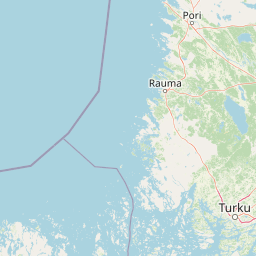
Map view of Bothnian Sea National Park

Use this park location map to pinpoint Bothnian Sea National Park in Finland, understand its exact geographic position, and read its mapped placement within the surrounding landscape more clearly.

Pigeon | © OpenStreetMap contributors

Location context for Bothnian Sea National Park

SatakuntaSouthwest Finland
Park atlas

Explore the Coastal Protected Landscapes and Archipelago Ecosystems of Southwest Finland

Discover Other National Parks and Protected Areas Near Bothnian Sea National Park
After exploring Bothnian Sea National Park, delve into nearby national parks and protected areas within Southwest Finland and the wider coastal region. Compare diverse archipelago landscapes, trace mapped protected geography, and understand the regional spread of Finland's unique conservation efforts.
Watercolor painting showing green hills, trees, and a stream in a landscape
National parkSouthwest Finland

Kurjenrahka National Park: Southwest Finland's Protected Landscape Atlas Entry

Discover geographic context and park boundaries.

Delve into Kurjenrahka National Park, a designated national park situated in Southwest Finland. This page provides an atlas-focused view of the park, detailing its protected landscape identity, mapped terrain, and its specific geographic location within the broader Finnish region. Understand the park's ecological context and its significance as a key protected area for regional geographic exploration.

Area
29 km²
Established
1998
IUCN
II
Visitors
66.8K annual
National parkPirkanmaa

Puurijärvi-Isosuo National Park: Protected Landscape Discovery in Pirkanmaa Region

Explore mapped protected areas and regional geography.

Puurijärvi-Isosuo National Park is a significant protected area in Finland's Pirkanmaa region. This entry provides detailed geographic context and maps the park's boundaries, offering a focused perspective for atlas-driven discovery of Finnish natural landscapes. Understand its place within the regional geography and the wider network of protected lands.

Area
27 km²
Established
1993
IUCN
II
Visitors
19.8K annual
National parkFinland

Archipelago National Park: Mapped Protected Landscape and Geographic Context in Finland

Explore protected area boundaries and natural terrain.

Archipelago National Park represents a vital component of Finland's protected lands. This page serves as an atlas-focused entry point, detailing the park's specific geographic context, its mapped protected area boundaries, and the nature of its landscape. Understand how this national park contributes to the broader regional geography of Finland and the Nordic region, aiding structured discovery through maps and geographic data.

Area
500 km²
Established
1983
IUCN
II
Visitors
78.8K annual
National parkSouthwest Finland

Teijo National Park: Mapped Boundaries of a Protected National Park in Southwest Finland

Explore the geographic context and protected landscape of Teijo National Park.

Teijo National Park is a designated national park within Southwest Finland, offering a distinct protected landscape for atlas exploration. This entry focuses on its geographic identity, mapped park boundaries, and its place within the broader regional geography. Discover the structured details of Teijo National Park as a key protected area, providing valuable context for understanding natural landscapes and conservation efforts in Finland.

Area
34 km²
Established
2015
IUCN
II
Visitors
92.1K annual
Watercolor illustration of a landscape featuring a body of water, trees, and distant mountains
National parkKanta-Häme

Torronsuo National Park: Explore Finland's Exceptional Raised Bog Ecosystem and Kanta-Häme Geography

Discover mapped peatlands, unique birdlife, and protected boreal wilderness.

Torronsuo National Park stands as a testament to Finland's remarkable wetland conservation efforts, presenting a striking example of a raised bog ecosystem. Located within the Kanta-Häme region, this national park is celebrated for its vast, domed peat landscape, some of the thickest peat layers ever measured in Finland, and its status as a Ramsar-designated wetland. The park's protected status ensures the preservation of its unique natural terrain, which supports a rich diversity of northern bird species and specialized bog flora, making it a significant area for ecological and geographic exploration.

Area
25.5 km²
Established
1990
IUCN
II
Visitors
58.6K annual
National parkFinland

Lauhanvuori National Park: Finland's Protected Landscape and Geographic Identity

Mapped protected area within Finland's regional geography.

Delve into the protected landscape of Lauhanvuori National Park, a key national park in Finland. This atlas-focused entry details its geographic setting and mapped boundaries, offering structured insight into its protected area status and natural terrain. Understand how Lauhanvuori National Park contributes to Finland's broader conservation geography and landscape context.

Area
53 km²
Established
1982
IUCN
II
Visitors
21.7K annual
Watercolor painting showing a lake surrounded by vegetation with rolling hills in the background
National parkKanta-Häme

Liesjärvi National Park: Protected Landscape in Kanta-Häme's Finnish Lakeland

Explore its mapped geography and protected area context.

Liesjärvi National Park is a designated national park situated in the Kanta-Häme region, a landscape rich with the characteristic features of southern Finland's Finnish Lakeland. This page serves as a focused entry point for understanding the park's protected status, its unique geographic setting, and its contribution to the regional atlas of natural landscapes. By examining Liesjärvi National Park, users gain insight into the mapped terrain and conservation efforts that define this part of Finland, fostering a deeper appreciation for protected areas.

Area
22 km²
Established
1956
IUCN
II
Visitors
57.3K annual
Watercolor painting of a lake surrounded by trees with a colorful sky.
National parkFinland

Seitseminen National Park: Ancient Boreal Forests and Vast Mire Systems in Finland

Explore mapped terrain and protected wilderness landscapes.

Seitseminen National Park represents a significant protected area in western Finland, characterized by classic boreal forest ecosystems interspersed with extensive mire and bog landscapes. The park's geography includes the notable Seitsemisharju esker, contributing to its diverse terrain. As a sanctuary for ancient forests, including the historic Multiharju primeval forest, Seitseminen offers a unique focus for understanding Finnish protected wilderness and its mapped geographic features within the Nordic context.

Area
45.5 km²
Established
1982
IUCN
II
Visitors
42.3K annual

Common questions about visiting, size, designation, and location context for Bothnian Sea National Park

Bothnian Sea National Park FAQs for park facts, access, geography, and protected area context
Find quick answers about Bothnian Sea National Park, including protected-area facts, park geography, trail and visitor context, and how the park fits into its surrounding country and regional landscape.
MoriAtlas Explorer

Continue Your Protected Areas Search Across the Global Atlas

Deepen your exploration by continuing the structured search for national parks and protected areas worldwide. Utilize the comprehensive filtering capabilities to compare different conservation landscapes and refine your understanding of global park geography. Discover more about the distribution and characteristics of protected natural areas.

Global natural geography