Mori Atlas logo
National parkKurjenrahka National Park

Explore the geographic context and protected area boundaries of Kurjenrahka National Park.

Kurjenrahka National Park: A Mapped Protected Landscape in Southwest Finland

Kurjenrahka National Park represents a significant protected landscape within the Southwest Finland region, offering a distinct focus for geographic exploration. As a national park in Finland, its mapped boundaries and natural terrain contribute to the broader atlas of protected areas. This page serves as a gateway to understanding the specific park identity, its place in regional geography, and the atlas-driven discovery opportunities it presents for users interested in Finland's natural landscapes.

BogsOld-growth forestsNorthern birdsWetlandsHiking trailsProtected wilderness
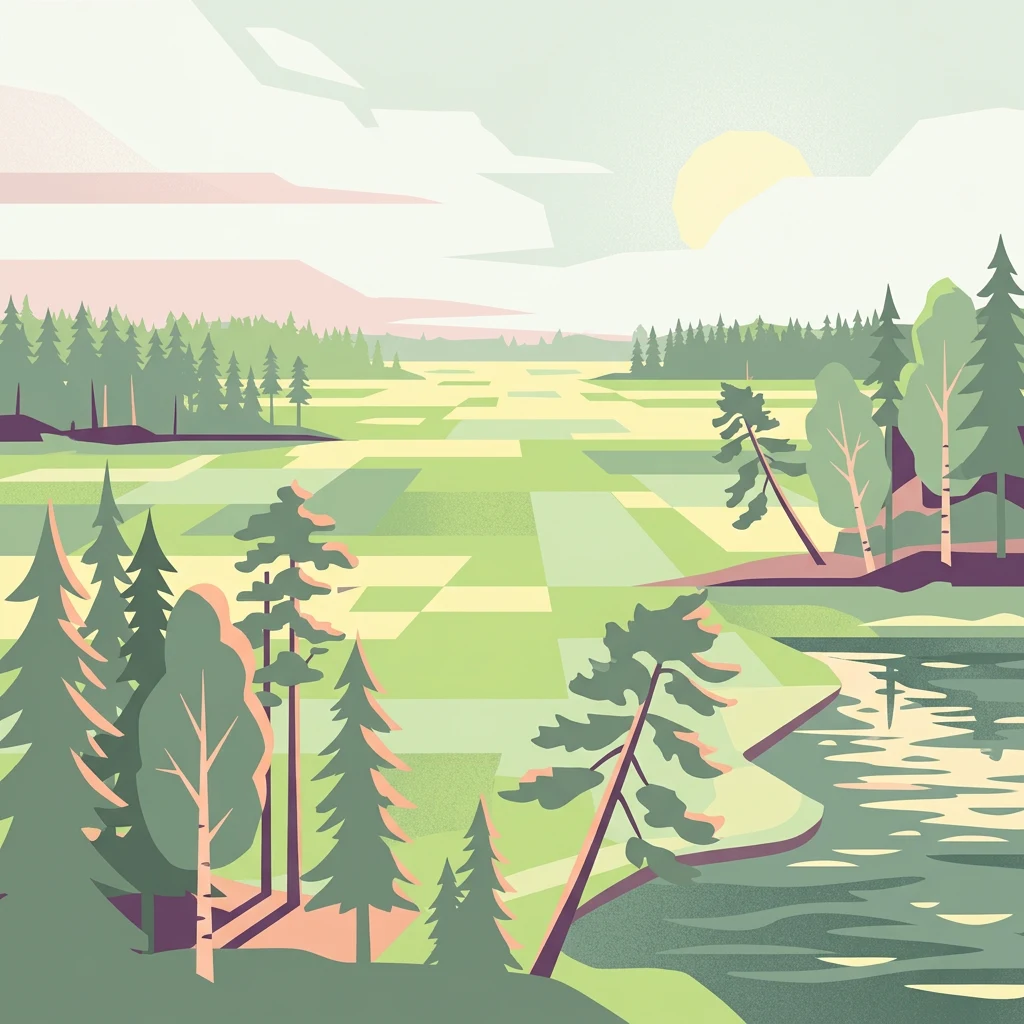
Stylized illustration of a forested landscape with a river, fields, and a setting sun.

Kurjenrahka National Park

National park

Park overview

Structured park overview, official facts, and landscape profile for Kurjenrahka National Park

Kurjenrahka National Park park facts, protected area profile, and essential visitor context
Review the core facts for Kurjenrahka National Park, including designation, size, terrain, visitor scale, habitats, and operating context in one park-focused overview.

About Kurjenrahka National Park

Kurjenrahka National Park occupies a distinctive position in Finland's protected area network as the largest and most representative example of southern Finnish bog and forest wilderness in Varsinais-Suomi. The park straddles the watershed between the Gulf of Finland and the Archipelago Sea, with terrain that slopes gently from north to south. The landscape consists primarily of raised bogs (keidassuo) interspersed with islands of mineral soil where pine and spruce forests have developed. These forest islands, though often small, contain some of the oldest trees in the region, with Pukkipalo representing a particularly remarkable example of continuous forest cover that has never been subject to commercial forestry. The park is situated in the southernmost reaches of the boreal forest zone, where the proximity to the Baltic Sea influences the climate with relatively mild winters and spring and early summer dryness. The area's conservation value stems from its combination of extensive intact peatlands, old-growth forest elements, and the presence of species that normally occur far to the north. This makes Kurjenrahka not only important for Finnish nature conservation but also significant in a European context for maintaining southern bog wilderness characteristics.

Quick facts and research context for Kurjenrahka National Park

Kurjenrahka National Park covers roughly 29 square kilometres in Southwest Finland, located about 35 kilometres north of Turku. The landscape is dominated by karu raised bogs (keidassuo) with surrounding pine forests on mineral soil islands. The park contains the largest protected natural bog area in Varsinais-Suomi and features old-growth forest at Pukkipalo. Savojärvi, the largest lake within the park, covers 124 hectares. The area supports at least 68 breeding bird species and serves as the southernmost breeding range for several northern bird species including willow grouse and Lapland longspur. The Kuhankuono boundary stone is a historic landmark marking an ancient seven-parish border.

Park context

Deeper park guide and search-rich context for Kurjenrahka National Park

Kurjenrahka National Park history, landscape, wildlife, and travel context
Explore Kurjenrahka National Park through its history, landscape character, ecosystems, wildlife, conservation priorities, cultural context, and seasonal travel timing in a structured park guide built for atlas discovery and search intent.

Why Kurjenrahka National Park stands out

Kurjenrahka is best known for its extensive, relatively untouched raised bog ecosystems that represent the finest examples of southern Finnish peatland wilderness. The Pukkipalo old-growth forest area is particularly distinguished, featuring some of the oldest trees in the region with abundant deadwood and diverse dependent species. The park is also notable for hosting rare and endangered species at the southern edge of their range, including the flying squirrel and several threatened moth species. The historic Kuhankuono boundary stone, marking an ancient parish border dating to at least 1381, provides a unique cultural landmark within the natural landscape.
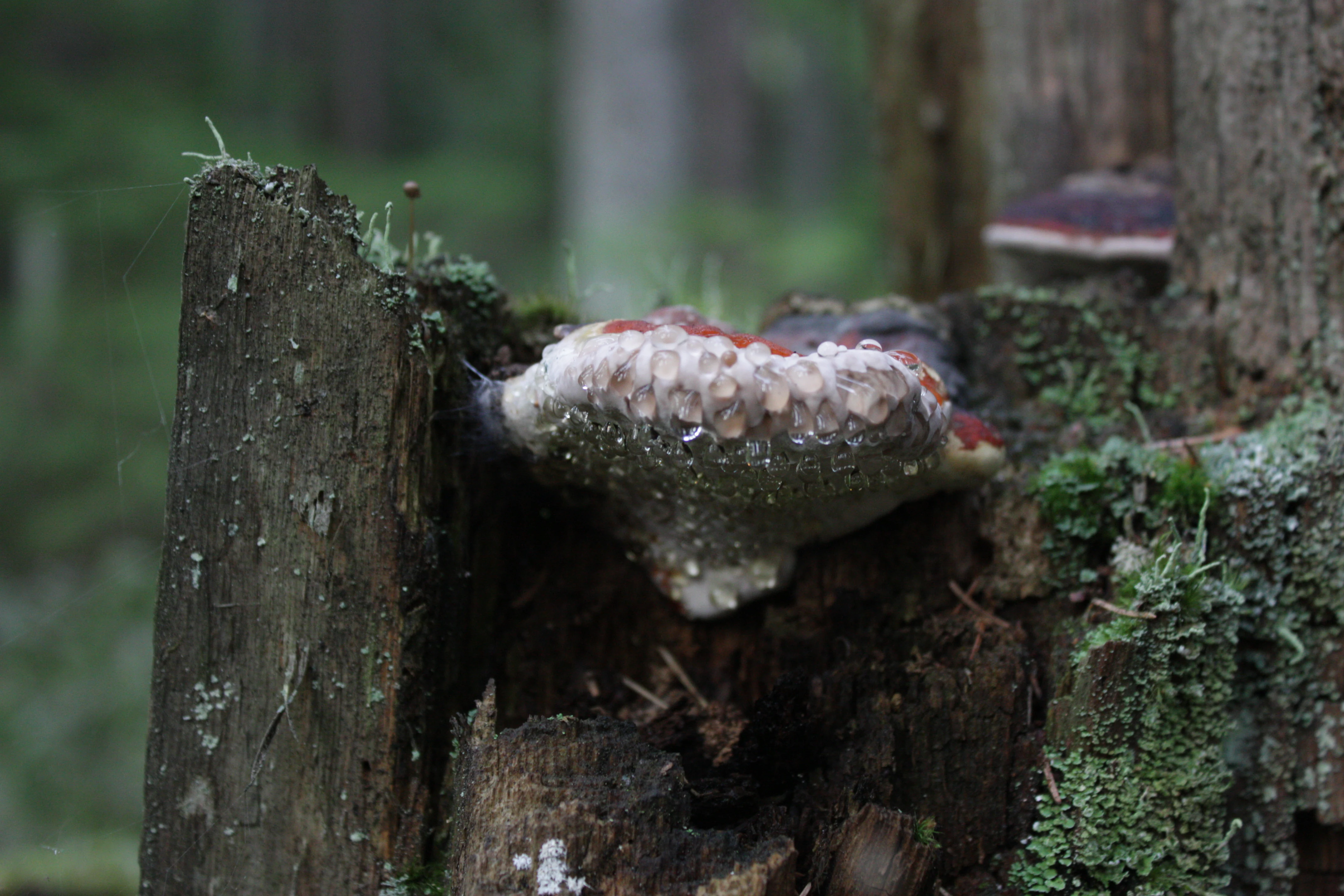
Close-up of a Fomitopsis pinicola fungus with white and brown coloring growing on a moss-covered tree stump in a forest
Fomitopsis pinicola fungus growing on a tree stump in Kurjenrahka National Park

Kurjenrahka National Park history and protected-area timeline

The history of human activity in what is now Kurjenrahka National Park extends back to the Stone Age, with the earliest evidence found at Saksala in the centre of the present-day park area. The first written mention of the region dates to 1381, when the Kuhankuono boundary stone was recorded as a border marker between Masku and Nousiainen parishes. During the medieval period, the forests around Kuhankuono were common land (yhteismaa) owned collectively by the surrounding parishes, designated as parish forests (pitäjänmetsä) established in the 1300s. The first detailed map of the area dates to 1550, created by royal scribe Jaakko Teitti, showing the seven parishes that converged at the Kuhankuono boundary stone. In the early 1800s, two manors, Uudenkartano and Yläneenkartano, acquired the former parish forests, but financial difficulties forced them to sell the land to the state by the late 19th century. Before the sale, the manors had clear-cut most accessible forest areas, though some islands in the middle of the mires remained unlogged. Peat extraction for livestock bedding occurred in the 1950s and 1960s, and limited logging continued into the mid-1950s. The first conservation action came in 1958 when Metsähallitus designated Pukkipalo as an old-growth forest reserve. After decades of campaigning by the Finnish Nature League's Varsinais-Suomi branch, the national park was finally established on 1 January 1998 based on legislation passed in December 1997, becoming Finland's 32nd national park and the first on the Varsinais-Suomi mainland.

Kurjenrahka National Park landscape and geographic character

The physical landscape of Kurjenrahka National Park is dominated by vast raised bogs that form the core of the protected area. The three largest contiguous bogs, Kurjenrahka, northern Lammenrahka, and Vajosuo, are all examples of raised bogs characterized by distinctive patterns of drier bog ridges (kermit) alternating with wetter flarks (kuljut). The most extensive is the park's namesake Kurjenrahka bog, covering over 20 square kilometres and representing the largest continuous bog in Varsinais-Suomi and nearly all of southern Finland. On the drier ridges, scattered pines grow alongside abundant bog rosemary, while the wet flarks are filled with peat mosses. The raised bog margins are typically well-developed, and the bogs receive all their water and nutrients from precipitation, making them ombrotrophic. Around the bogs, mineral soil islands support pine forests on dry heath sites and spruce-dominated forests in lower areas. The park contains two significant lakes: Savojärvi, a dystrophic (bog-fed) lake of 124 hectares, and the much smaller Lakjärvi at 3 hectares. The landscape also features numerous small bog pools (allikot) that provide important habitat for breeding waders. The underlying soil is primarily till and exposed bedrock, with glacial eskers and kame formations present in some areas.
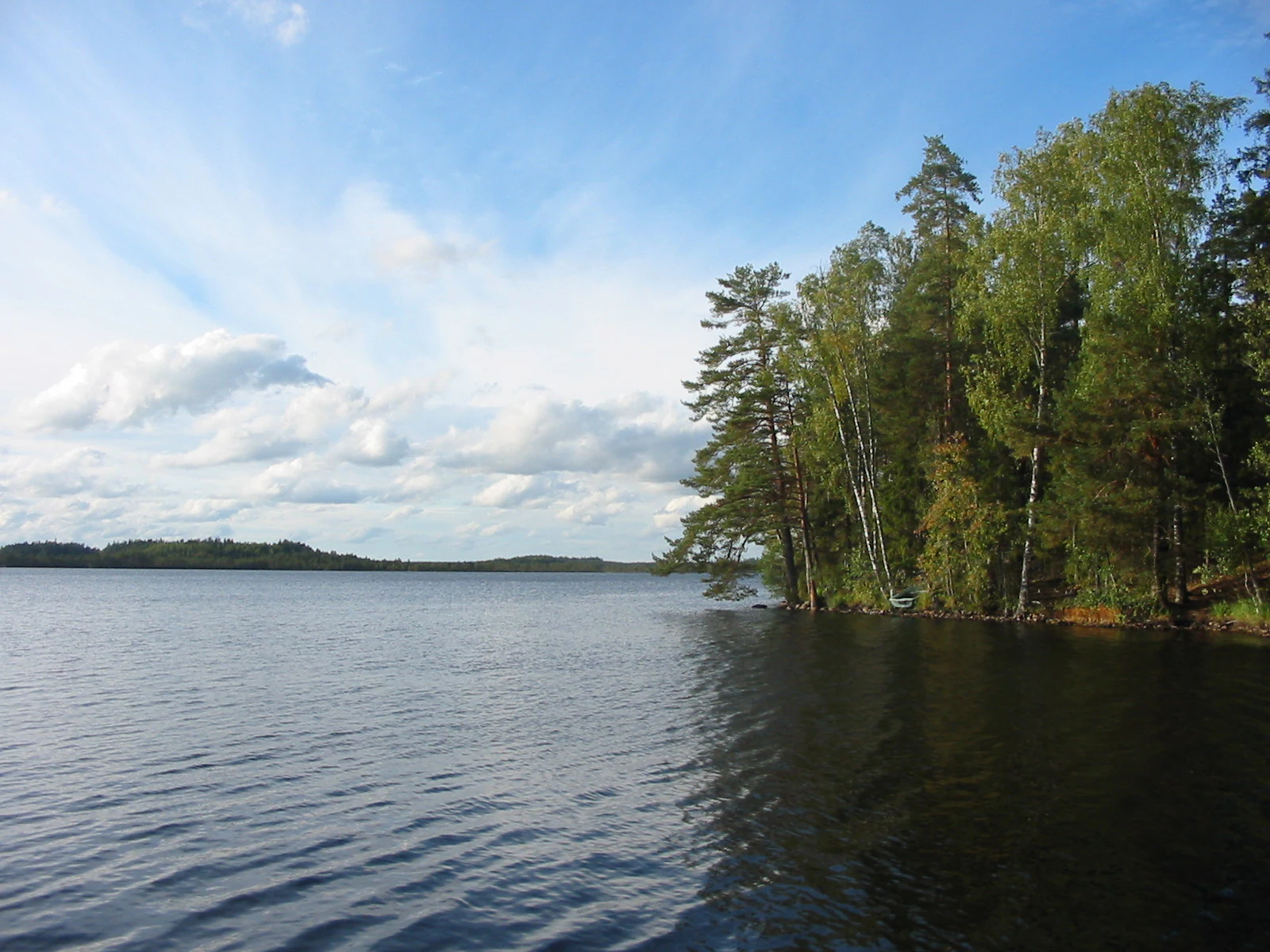
Calm lake with rippled water reflecting blue sky and clouds, bordered by dense coniferous forest on the right shore
Lake Savojärvi in Kurjenrahka National Park with forested shoreline and clear sky

Kurjenrahka National Park ecosystems, habitats, and plant life

The ecological character of Kurjenrahka is defined by its position in the southern boreal forest zone and its extensive peatland ecosystems. The park lies in the southernmost part of the northern coniferous forest biome, where the influence of the Baltic Sea creates relatively mild winter conditions and spring/early summer drought periods. The growing season at Saksala in the centre of the park lasts approximately 172 days with a mean temperature of 12°C. Annual precipitation is around 700mm, with permanent snow cover typically arriving around December 17 and disappearing around April 20. The bogs represent the ombrotrophic type, receiving all water and nutrients from rainfall, while the smaller minerotrophic fens at margins are also predominantly nutrient-poor. The forest types surrounding the bogs include dry heath forests, mesic heath forests (mustikkatyyppi), and small areas of herb-rich forest. The vegetation is typical of southern Finnish bog communities, with species including bog rosemary, heather, lingonberry, cloudberry, and various cottongrass and sedge species. The park contains at least 14 species of sphagnum mosses and diverse sedge communities.
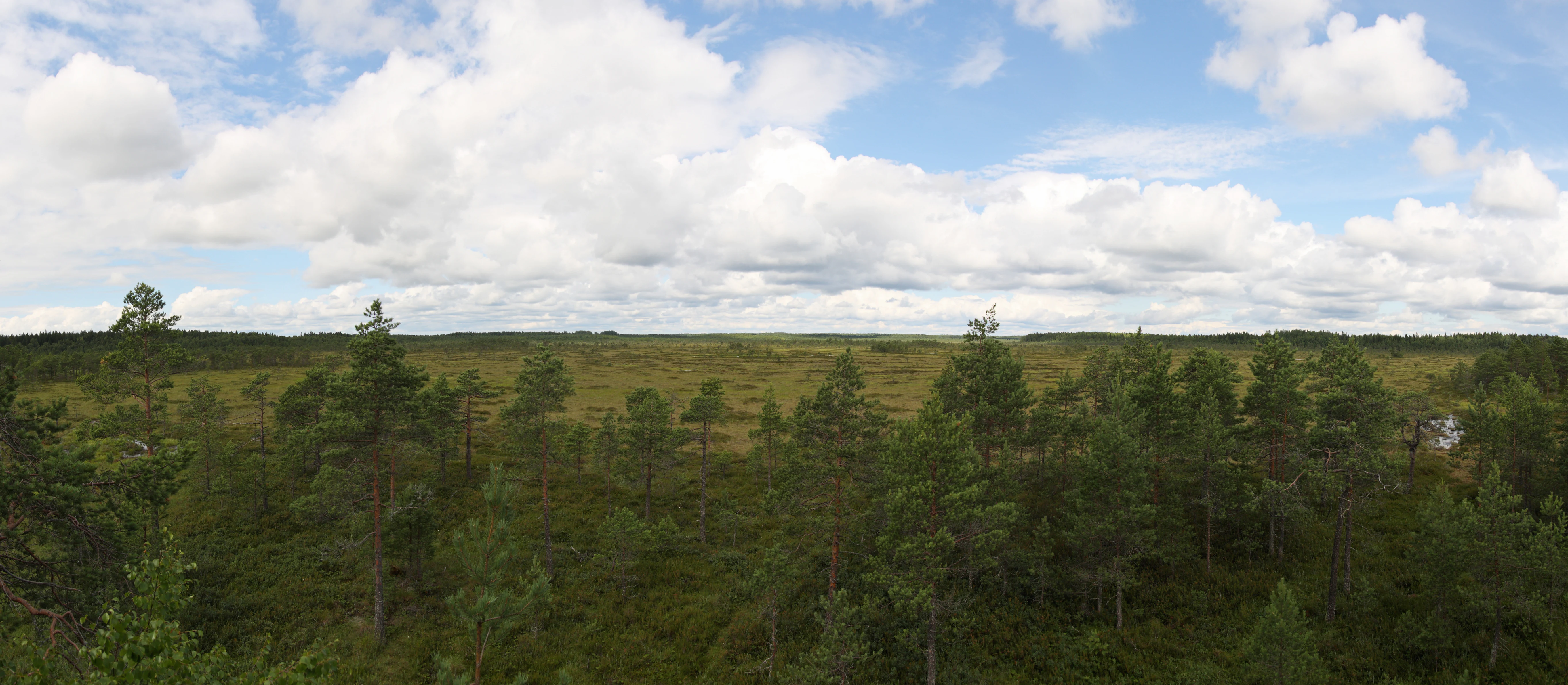
Panoramic view of a vast swamp landscape with dense forest under a partly cloudy sky
Panorama of Vajo-suo swamp within Kurjenrahka National Park

Kurjenrahka National Park wildlife and species highlights

Kurjenrahka supports a diverse fauna that includes both typical bog species and rare wilderness species at the southern edge of their range. The bird community is particularly notable, with at least 68 species breeding in the park. Several northern species reach their southernmost breeding grounds here, including willow grouse (riekko) and Lapland longspur (pohjansirkku). The endangered species include wryneck (käenpiika) and red-breasted flycatcher (tiltaltti), both classified as vulnerable in Finland. The old forests support species such as raven, Tengmalm's owl, Ural owl, black woodpecker, black grouse, and capercaillie. The mammal community includes Eurasian lynx as a permanent resident, with brown bears and gray wolves also present in or near the park. The flying squirrel (liito-orava) inhabits the old mixed forests at bog edges. Other mammals include red fox, pine marten, raccoon dog, badger, otter, moose, white-tailed deer, and roe deer. The park also hosts rare invertebrates including the endangered rosopehkiäinen beetle, and several threatened moth species such as the cloudberry fritillary and the scarce fritillary.
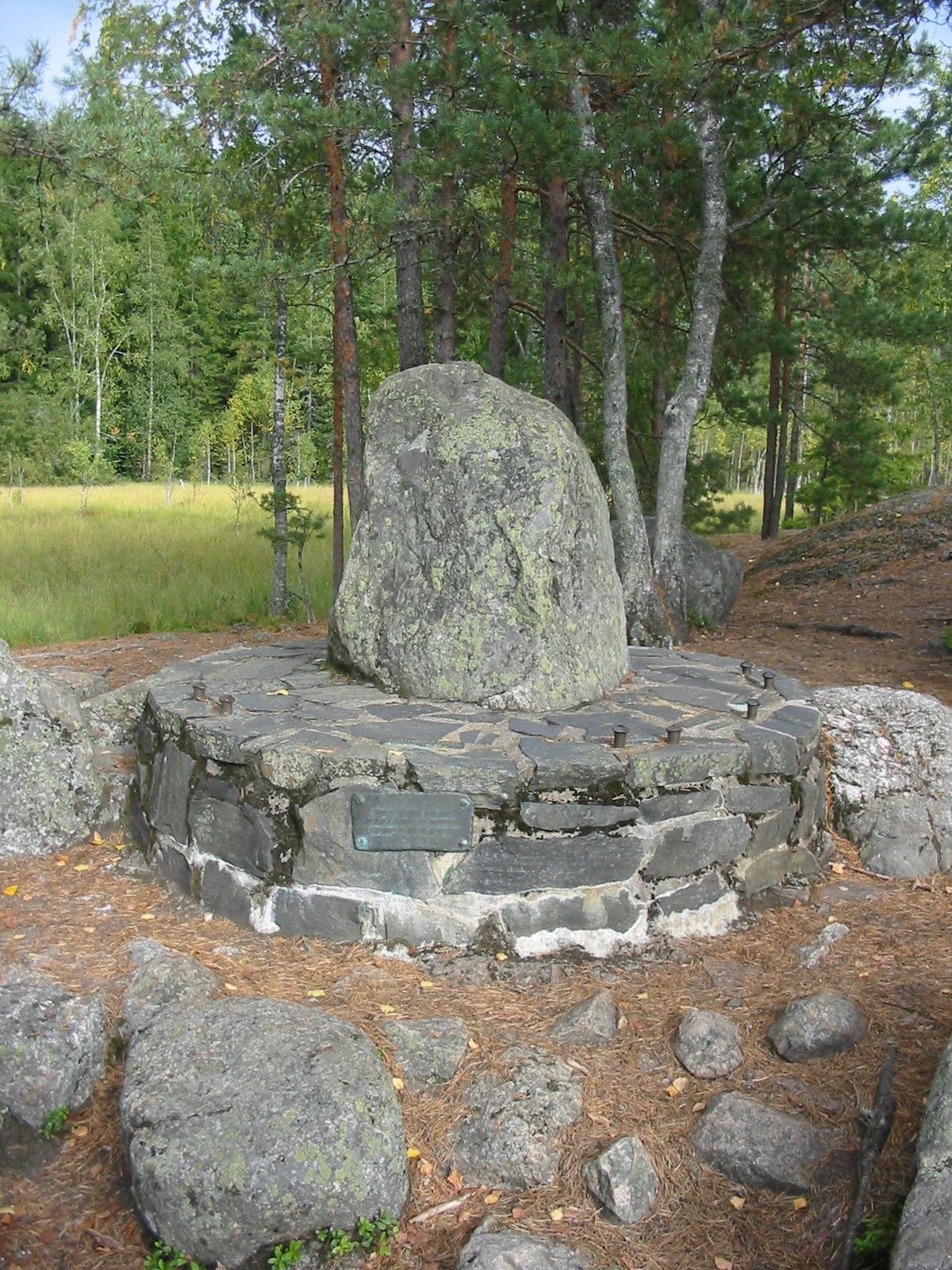
Large stone monument with a plaque surrounded by rocks and trees in a forested area
Boundary stone with plaque at Kuhankuono in Kurjenrahka National Park

Kurjenrahka National Park conservation status and protection priorities

Kurjenrahka National Park was established specifically to protect representative examples of southern Finnish bog and forest ecosystems and the species they support. The park forms part of the wider Natura 2000 network, with the surrounding Natura area covering approximately 31 square kilometres. The conservation values emphasized in the park's management plan include the extensive and natural bog systems, the old-growth forest elements, the presence of rare and endangered species at the edge of their main ranges, the region's tourism appeal, and the area's significance for wilderness trekking. The park also falls within the national network of strictly protected mires under Finland's bog conservation programme. Restoration work has been carried out in areas that were previously ditched, including blocking drainage channels, adding deadwood, removing forest roads and planted trees, and conducting controlled burning to restore natural conditions. However, not all drainage ditches can be blocked as they affect the water economy of lands outside the park.

Kurjenrahka National Park cultural meaning and human context

The cultural landscape of Kurjenrahka carries historical significance rooted in the medieval period when the area served as common parish land. The Kuhankuono boundary stone, dating to at least 1381, marks an ancient border point where the territories of seven parishes met, creating a traditional meeting place and landmark. This historical boundary function is reflected in the name Kuhankuono, which either refers to the shape of the rocky ridge resembling a beak (kuono) or serves as a term for boundary markers and wilderness trails. The first permanent settlement in the area developed in the 1700s, with the first documented permanent residents being Johan and Maria Bärnstedt who moved to Savojärvi in 1757. By the late 1800s, the state had acquired most of the land through purchase from struggling manors, and the area remained relatively sparsely populated due to poor transport connections. The establishment of the regional road (Seututie 204) in the 1930s-1940s and the impacts of World War II brought changes, including the establishment of a military shooting range and settlement schemes that brought new residents to the surrounding areas.
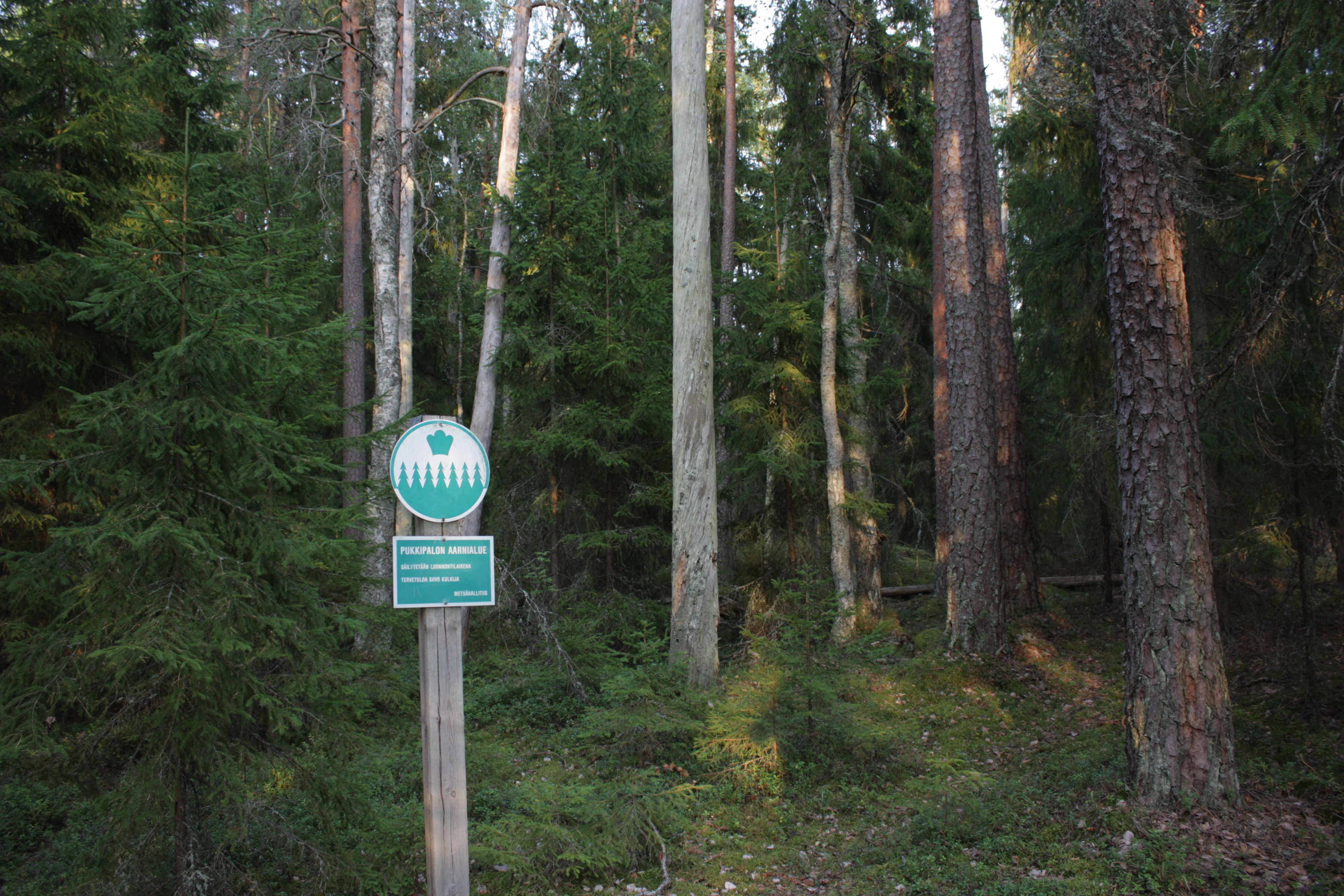
Green park sign with white text and logo on wooden post surrounded by tall trees and forest undergrowth
Park signpost in Kurjenrahka National Park's old-growth forest

Top sights and standout views in Kurjenrahka National Park

Kurjenrahka offers several standout features that distinguish it within Finland's national park network. The Kuhankuono boundary stone is the most famous landmark, representing an ancient seven-parish border point with historical significance dating to the 14th century. The Pukkipalo old-growth forest contains some of the oldest trees in Southwest Finland with exceptional amounts of deadwood, supporting specialized fungi and invertebrates. The park contains over 200 kilometres of marked trails as part of the Kuhankuono hiking trail network, with six circular routes and numerous shelters. The two nature towers at Vajosuo and Kurjenrahka provide elevated views across the bog landscape. The visitor centre at Kurjenpesä offers accessible facilities and exhibitions explaining the bog ecosystem from the crane's perspective. Savojärvi lake, one of the few significant water bodies in the park, provides additional recreational opportunities and supports fish populations including perch, roach, pike, and introduced species.
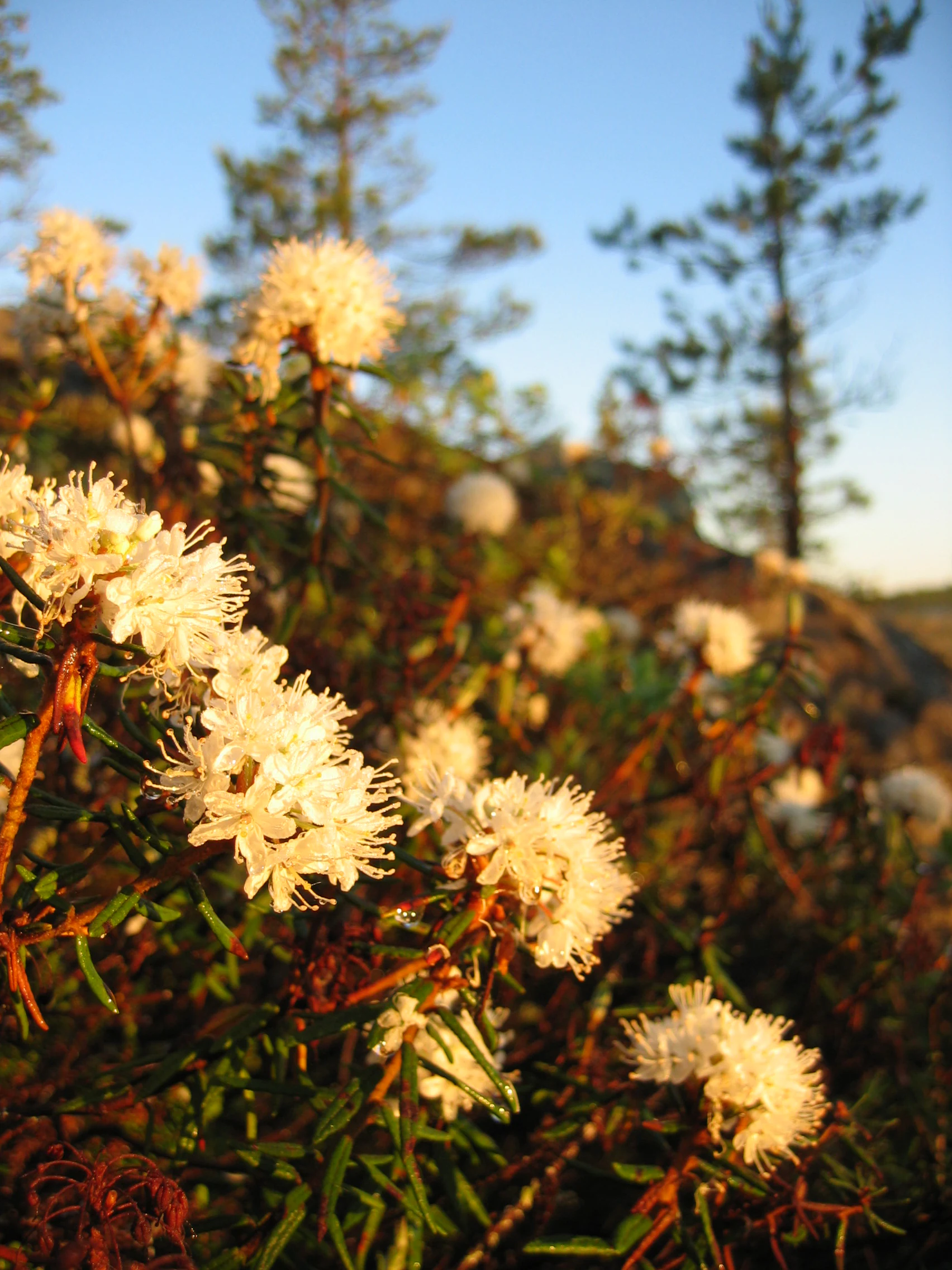
White Labrador tea flowers with green foliage, trees in background, sunlight
Labrador tea flowers (Rhododendron tomentosum) in bloom at Lakjärvenrahka, Kurjenrahka National Park

Best time to visit Kurjenrahka National Park

The park can be visited year-round, though each season offers different experiences. The summer months from June to August are popular for hiking and wildlife viewing, though midsummer can be dry and some trails may be dusty. Autumn (September to October) is particularly recommended, as visitor surveys indicate it is the most popular season, with families particularly drawn to the area for day trips. The autumn colours on the surrounding pine forests and the migratory bird movement add to the appeal. Winter offers a different character, with the bogs providing opportunities for cross-country skiing and winter hiking, though the park does not maintain regular tracks. The snow cover typically lasts from mid-December to mid-April, with snow depths reaching 40-45 centimetres in the more elevated areas. Spring (May) can be challenging due to wet conditions in the bogs but offers excellent birdwatching opportunities. Visitors should note that certain areas have access restrictions during the bird breeding season from mid-April to mid-July to protect nesting birds, particularly at Lammenrahka where access is prohibited from mid-January to mid-July.
Park location guide

Geography guide, regional context, and park location map for Kurjenrahka National Park

Kurjenrahka National Park park geography, regions, and map view in Finland
Understand where Kurjenrahka National Park sits in Finland through a broader geographic reading of the surrounding landscape, nearby location context, and its mapped position within the national park landscape.

How Kurjenrahka National Park fits into Finland

Finland, officially the Republic of Finland, is a Nordic country in Northern Europe with a population of 5.6 million. It borders Sweden, Norway, and Russia, with the Gulf of Bothnia to the west and the Gulf of Finland to the south. The country gained independence from Russia in 1917 and is a unitary parliamentary republic. Its landscape is characterized by extensive boreal forests and over 180,000 lakes.

Wider geography shaping Kurjenrahka National Park in Finland

Finland is located in Northern Europe, occupying a peninsula bordered by the Gulf of Bothnia to the west and the Gulf of Finland to the south. It shares land borders with Sweden to the northwest, Norway to the north, and Russia to the east. The terrain is predominantly flat with extensive forest coverage and numerous lakes.

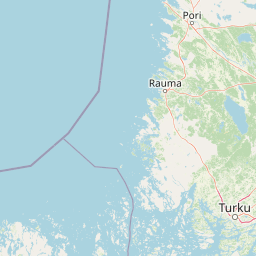
Map view of Kurjenrahka National Park

Use this park location map to pinpoint Kurjenrahka National Park in Finland, understand its exact geographic position, and read its mapped placement within the surrounding landscape more clearly.

Pigeon | © OpenStreetMap contributors

Location context for Kurjenrahka National Park

Southwest Finland

Explore the unique Finnish bog ecosystems, old-growth forest terrain, and protected mire scenery through detailed imagery.

Kurjenrahka National Park Photos: Visualizing Finland's Vast Boreal Bogs and Ancient Forests
Visually explore Kurjenrahka National Park, uncovering its distinctive raised bog landscapes, ancient Pukkipalo forests, and unique boreal habitats through a curated collection of imagery. The photography provides essential context for understanding the park's extensive peatlands, characteristic bog pools, and diverse protected-area environment, offering a deeper insight into its Finnish wilderness character.

Close-up of a Fomitopsis pinicola fungus with white and brown coloring growing on a moss-covered tree stump in a forest

Orange trail sign with blue dots on a pine tree, showing a forest trail with dirt path and scattered snow patches under tall pine trees

Calm lake with rippled water reflecting blue sky and clouds, bordered by dense coniferous forest on the right shore

Panoramic view of a vast swamp landscape with dense forest under a partly cloudy sky

Large stone monument with a plaque surrounded by rocks and trees in a forested area

Panoramic view of a lake with reflective water, surrounded by lush green vegetation and trees under a partly cloudy sky

Green park sign with white text and logo on wooden post surrounded by tall trees and forest undergrowth

White Labrador tea flowers with green foliage, trees in background, sunlight

Snow-covered ground with large animal tracks and scattered pine needles

Four pinned butterflies with patterned wings on a white surface

Wooden cabin with concrete supports on rocky hill surrounded by pine trees

Two white swans flying above a dark body of water with marshy shoreline and forested horizon under cloudy sky

Silhouette of a crane in flight over a bog landscape with forested background and gradient dawn sky.

Wide view of a bog landscape with sparse trees under overcast sky during autumn

Moss-covered ground with wooden logs and forest background in a national park

Tall pine trees in the foreground with a foggy mire landscape stretching to the horizon

Park atlas

Extend your park discovery by mapping adjacent protected landscapes and diverse natural terrain across Southwest Finland.

Compare National Parks and Protected Areas Near Kurjenrahka National Park
Discover additional national parks and protected wilderness areas situated within the boreal ecosystems of Southwest Finland, extending beyond Kurjenrahka National Park's unique bog and forest landscapes. This geographic overview allows for structured comparison of diverse conservation sites, revealing the regional spread of peatlands, old-growth forests, and other significant natural terrain.
National parkPirkanmaa

Puurijärvi-Isosuo National Park: Protected Landscape Discovery in Pirkanmaa Region

Explore mapped protected areas and regional geography.

Puurijärvi-Isosuo National Park is a significant protected area in Finland's Pirkanmaa region. This entry provides detailed geographic context and maps the park's boundaries, offering a focused perspective for atlas-driven discovery of Finnish natural landscapes. Understand its place within the regional geography and the wider network of protected lands.

Area
27 km²
Established
1993
IUCN
II
Visitors
19.8K annual
National parkSouthwest Finland

Teijo National Park: Mapped Boundaries of a Protected National Park in Southwest Finland

Explore the geographic context and protected landscape of Teijo National Park.

Teijo National Park is a designated national park within Southwest Finland, offering a distinct protected landscape for atlas exploration. This entry focuses on its geographic identity, mapped park boundaries, and its place within the broader regional geography. Discover the structured details of Teijo National Park as a key protected area, providing valuable context for understanding natural landscapes and conservation efforts in Finland.

Area
34 km²
Established
2015
IUCN
II
Visitors
92.1K annual
Watercolor illustration of a landscape featuring a body of water, trees, and distant mountains
National parkKanta-Häme

Torronsuo National Park: Explore Finland's Exceptional Raised Bog Ecosystem and Kanta-Häme Geography

Discover mapped peatlands, unique birdlife, and protected boreal wilderness.

Torronsuo National Park stands as a testament to Finland's remarkable wetland conservation efforts, presenting a striking example of a raised bog ecosystem. Located within the Kanta-Häme region, this national park is celebrated for its vast, domed peat landscape, some of the thickest peat layers ever measured in Finland, and its status as a Ramsar-designated wetland. The park's protected status ensures the preservation of its unique natural terrain, which supports a rich diversity of northern bird species and specialized bog flora, making it a significant area for ecological and geographic exploration.

Area
25.5 km²
Established
1990
IUCN
II
Visitors
58.6K annual
National parkSouthwest Finland

Bothnian Sea National Park: Southwest Finland's Coastal Protected Landscape

Mapped geography and regional protected area context.

Bothnian Sea National Park stands as a significant protected landscape situated within the extensive island formations of Southwest Finland's Archipelago Sea. This page provides an atlas-focused view of the national park, detailing its geographic spread, mapped boundaries, and its place within the regional context of Varsinais-Suomi. Understand the protected area's unique coastal identity and its contribution to the mapped natural terrain of southern Finland, facilitating structured discovery and geographic exploration.

Area
917 km²
Established
2011
IUCN
II
Visitors
79.4K annual
Watercolor painting showing a lake surrounded by vegetation with rolling hills in the background
National parkKanta-Häme

Liesjärvi National Park: Protected Landscape in Kanta-Häme's Finnish Lakeland

Explore its mapped geography and protected area context.

Liesjärvi National Park is a designated national park situated in the Kanta-Häme region, a landscape rich with the characteristic features of southern Finland's Finnish Lakeland. This page serves as a focused entry point for understanding the park's protected status, its unique geographic setting, and its contribution to the regional atlas of natural landscapes. By examining Liesjärvi National Park, users gain insight into the mapped terrain and conservation efforts that define this part of Finland, fostering a deeper appreciation for protected areas.

Area
22 km²
Established
1956
IUCN
II
Visitors
57.3K annual
National parkFinland

Archipelago National Park: Mapped Protected Landscape and Geographic Context in Finland

Explore protected area boundaries and natural terrain.

Archipelago National Park represents a vital component of Finland's protected lands. This page serves as an atlas-focused entry point, detailing the park's specific geographic context, its mapped protected area boundaries, and the nature of its landscape. Understand how this national park contributes to the broader regional geography of Finland and the Nordic region, aiding structured discovery through maps and geographic data.

Area
500 km²
Established
1983
IUCN
II
Visitors
78.8K annual
National parkUusimaa

Ekenäs Archipelago National Park: Mapped Baltic Sea Archipelago Landscape

Protected marine area with island geography in Uusimaa, Finland.

Delve into the unique protected landscape of Ekenäs Archipelago National Park, a premier example of a Baltic Sea marine protected area. Located in the Uusimaa region, this national park encompasses a vast expanse of coastal waters dotted with hundreds of rocky islets and skerries. MoriAtlas provides detailed geographic context, allowing for exploration of its mapped boundaries, island formations, and critical role as a sanctuary for breeding aquatic birds. Understand its place within Finland's protected areas atlas and appreciate its distinctive marine archipelago character.

Area
52 km²
Established
1989
IUCN
II
Visitors
53.6K annual
National parkUusimaa

Nuuksio National Park: Uusimaa Region Protected Landscape Atlas Entry

Mapped boundaries and geographic context for a Finnish National Park.

Access detailed geographic information and mapped boundaries for Nuuksio National Park, a protected national park within the Uusimaa region. This MoriAtlas entry provides context for understanding its landscape within Finland, focusing on atlas-style exploration and the identification of protected natural areas.

Area
53 km²
Established
1994
IUCN
II
Visitors
312.6K annual

Common questions about visiting, size, designation, and location context for Kurjenrahka National Park

Kurjenrahka National Park FAQs for park facts, access, geography, and protected area context
Find quick answers about Kurjenrahka National Park, including protected-area facts, park geography, trail and visitor context, and how the park fits into its surrounding country and regional landscape.
MoriAtlas Explorer

Continue Your Protected Areas Search Across the Global Atlas

Deepen your exploration by continuing the structured search for national parks and protected areas worldwide. Utilize the comprehensive filtering capabilities to compare different conservation landscapes and refine your understanding of global park geography. Discover more about the distribution and characteristics of protected natural areas.

Global natural geography