Why Chambi National Park stands out
Chambi National Park is primarily known for protecting Tunisia's highest mountain and its surrounding fragile ecosystems. The park preserves one of the last remaining refuges of the endangered Cuvier's gazelle in North Africa, making it particularly significant for anti-extinction conservation efforts for this species. It also hosts the vulnerable Barbary sheep, a distinctive North African ungulate. The park's avifauna is notable, particularly the presence of the Tunisian crossbill, an endemic subspecies with limited global distribution. The combination of alpine positioning, endangered mammal species, and endemic bird populations makes this park a focal point for North African conservation science.
Chambi National Park history and protected-area timeline
The conservation history of Chambi National Park reflects Tunisia's broader movement toward systematic environmental protection beginning in the 1970s. In 1970, authorities established a 300-hectare fenced reserve specifically to protect populations of Cuvier's gazelle, which had been experiencing significant decline across its North African range. This targeted intervention recognized the species' vulnerability and the importance of the Chambi area as a remaining stronghold. In 1977, the park and its surrounding缓冲区 were designated as a UNESCO biosphere reserve, a designation that acknowledged both the ecological importance of the mountain ecosystems and the need for sustainable management approaches. The full national park designation followed in 1980, expanding protection to the full 6,723-hectare area and establishing the framework for ongoing conservation management and scientific monitoring.
Chambi National Park landscape and geographic character
The landscape of Chambi National Park is defined by its mountainous terrain, with Djebel Chambi rising as the dominant geographic feature across the protected area. The mountain reaches 1,544 meters above sea level, making it the highest peak in Tunisia and providing the park with a pronounced elevational range that creates diverse microclimates and habitat conditions. The terrain includes rocky ridgelines, steep slopes transitioning to more gentle plateaus, and valleys that channel seasonal water flow. Vegetation patterns follow the elevational gradient, with holm oak woodlands dominating lower slopes, Aleppo pine forming forest patches at mid-elevations, and steppe vegetation including Stipa tenacissima covering exposed plateaus and higher terrain. The absence of permanent rivers or streams means the landscape relies on precipitation and limited spring sources, giving the terrain a character of Mediterranean mountain semi-aridity.
Chambi National Park ecosystems, habitats, and plant life
The ecological character of Chambi National Park reflects its position at the intersection of Mediterranean and Saharan biomes. The park's elevational range supports distinct vegetation zones, from holm oak woodlands at lower elevations through Aleppo pine forests to xeric steppe communities at higher altitudes. The holm oak (Quercus rotundifolia) represents a Mediterranean climate species reaching its southern and eastern limits in this region, while the Aleppo pine provides forest cover in areas where moisture conditions permit. The understory includes species such as Cotoneaster nummularius, a shrubby plant adapted to the seasonal climate. The park's classification as a UNESCO biosphere reserve recognizes these ecological communities as representative of Mediterranean mountain ecosystems that have limited representation in protected area networks across North Africa.
Chambi National Park wildlife and species highlights
Chambi National Park supports several mammal species of significant conservation concern. The Cuvier's gazelle, classified as endangered, finds one of its last remaining refuges within the park boundaries, making this protected area critically important for the species' survival in the wild. The Barbary sheep, also known as aoudad, is present in vulnerable populations, representing a North African endemic that inhabits the mountainous rocky terrain. The park's avifauna is diverse, with notable species including the Egyptian vulture, a scavenging raptor of conservation concern across its range, Bonelli's eagle, and the peregrine falcon. The Tunisian crossbill, an endemic subspecies, represents a particularly significant avian population, as its distribution is limited to this specific region of North Africa.
Chambi National Park conservation status and protection priorities
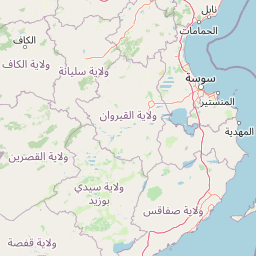
Chambi National Park holds significant conservation importance at both national and international levels. Its designation as a UNESCO biosphere reserve in 1977 acknowledged the area's ecological significance and the need for coordinated conservation approaches that balance human use with environmental protection. The park serves as a critical refuge for Cuvier's gazelle, an endangered species whose populations have declined dramatically across its North African range, making the protected habitat at Chambi essential for species persistence. The presence of the vulnerable Barbary sheep and the endemic Tunisian crossbill further elevates the park's conservation value, as these populations depend on the specific habitat conditions that the mountain ecosystems provide. The park's position within the Mont de Tebessa forest massif also provides ecological connectivity with Algerian protected areas, supporting broader regional conservation objectives.
Top sights and standout views in Chambi National Park
Chambi National Park offers visitors access to Tunisia's premier mountain hiking environment, with trails ascending toward the summit of Djebel Chambi, the country's highest point. The park's significance extends beyond recreation to include scientific value, as the UNESCO biosphere reserve designation supports research into Mediterranean mountain ecology and endangered species conservation. Wildlife observation opportunities focus on the Cuvier's gazelle and Barbary sheep, though these species require patience and appropriate timing to observe. The birdlife, particularly birds of prey such as the Egyptian vulture and Bonelli's eagle, provides additional naturalist interest, especially for those familiar with North African avifauna.
Best time to visit Chambi National Park
The optimal visiting period for Chambi National Park spans the spring months from March through May, when temperatures are moderate and vegetation is in active growth, enhancing the landscape's visual appeal. Autumn, particularly October and November, offers similar comfortable conditions and represents a second favorable season for exploration. Summer months can bring high temperatures in the mountain environment, though the higher elevation provides some relief compared to lower-lying Tunisian destinations. Winter may bring cold conditions and occasional precipitation, but also offers the possibility of snow-capped views of the mountain peak, though access may be more limited during this season.