Why Commander Islands stands out
The Commander Islands are best known for their extraordinary marine wildlife concentrations, particularly the massive northern fur seal colonies that gather on the islands' rocky shores during summer months. The islands hold global significance as the former habitat of Steller's sea cow, a massive sirenian discovered by naturalist Georg Wilhelm Steller during Vitus Bering's ill-fated 1741 expedition that was hunted to extinction within just 27 years. The surrounding waters support critically important feeding and migratory habitat for numerous whale species, including endangered North Pacific right whales and fin whales. The islands also host over a million seabirds nesting along coastal cliffs, including the rare red-legged kittiwake and significant populations of Steller's eider, making them recognized as an Important Bird Area by BirdLife International.
Commander Islands history and protected-area timeline
The Commander Islands entered recorded history through one of the most dramatic episodes in Bering Sea exploration. In 1741, Commander Vitus Bering's ship the St. Peter was wrecked on Bering Island during the return leg of the Great Northern Expedition from Alaska. Bering died on the island along with much of his crew, though approximately half survived the winter thanks to the extraordinary abundance of wildlife and the medical knowledge of naturalist Georg Wilhelm Steller, who treated scurvy by compelling crew members to eat seaweed. The survivors eventually constructed a small vessel from the wreckage and returned to Kamchatka, bringing valuable sea otter pelts that sparked the Russian expansion into Alaska.
The islands subsequently became significant in the Russian fur trade. In 1825, the Russian-American Company relocated Aleut people from Atka and Attu Islands in the Aleutian chain to the Commander Islands to support seal harvesting operations. This relocation established the contemporary Aleut population, which maintains a distinct cultural identity on the islands today. The Russian period saw the development of the unique Medny Aleut language and sustained economic activity centered on marine resources. During World War II, the waters south of the islands were the site of the 1943 Battle of the Komandorski Islands, a naval engagement between American and Japanese forces.
Commander Islands landscape and geographic character
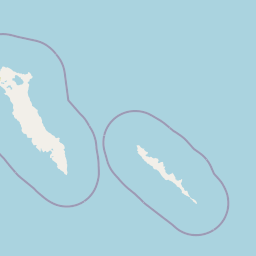
The Commander Islands present a dramatic landscape of treeless subarctic terrain shaped by volcanic origins and maritime exposure. Bering Island dominates the archipelago with its elongated 95-kilometer length and 15-kilometer width, rising to Steller's Peak at 755 meters above sea level. The terrain includes folded-block mountains, volcanic plateaus, and terraced coastal plains that create varied topography across relatively limited land area. Medny Island, though smaller at 55 kilometers long and 5 kilometers wide, reaches 647 meters at Stenjeger's Peak and features more rugged, cliff-dominated coastlines.
The absence of trees defines the terrestrial landscape, replaced instead by extensive cover of lichens and mosses that carpet the ground in the subarctic conditions. Marshy plant associations with low grasses and dwarf vegetation dominate the terrain, while very tall umbellifers provide seasonal color in summer months. The coastal regions feature dramatic cliffs that host massive seabird nesting colonies, interspersed with rocky beaches and wave-cut platforms where marine mammals haul out. The surrounding seabed drops off quickly into the productive waters of the Bering Sea shelf and Pacific slope, creating ideal conditions for marine life.
Commander Islands ecosystems, habitats, and plant life
The ecological character of the Commander Islands reflects their position at the confluence of Pacific and Arctic marine ecosystems, combined with the constraints of a harsh subarctic climate. The surrounding waters of the Bering Sea support extraordinary biological productivity, with cold currents bringing nutrients to the surface and creating rich feeding grounds for marine mammals and seabirds. This marine productivity forms the foundation of the islands' ecological significance, supporting populations of northern fur seals, Steller sea lions, sea otters, and numerous whale species that depend on the waters for feeding, breeding, and migration.
The terrestrial ecology is more limited due to the harsh conditions and lack of forest cover, but supports specialized species adapted to tundra and coastal habitats. The lichen communities have been identified as particularly significant, with recent surveys recognizing the islands as a regional center of diversity for the Teloschistales order of lichen-forming fungi. The diversity includes both widely distributed boreal and circumpolar species and forms otherwise associated with the western coast of North America or maritime northeast Asia, suggesting the Aleutian Arc functions as a dispersal corridor. The islands also support specialized populations of Arctic fox, with two distinct endemic subspecies recognized.
Commander Islands wildlife and species highlights
The Commander Islands support some of the most significant marine wildlife concentrations in the North Pacific, with the surrounding waters and coastal habitats supporting extraordinary populations of seals, sea lions, and whales. Northern fur seals number approximately 200,000 individuals during summer months, gathering in massive reproductive rookeries along the islands' coastlines. Steller sea lions, though present in smaller numbers around 5,000 individuals, still represent an important population in the western Pacific. Sea otter populations are stable or even increasing on the Commanders, in contrast to precipitous declines throughout the rest of the Aleutian chain, making the islands critically important for conservation of this species.
The marine mammalian fauna includes various seal species, with common seals and larga seals abundant in coastal waters. The surrounding seas provide essential habitat for sperm whales, orcas, minke whales, beaked whales, porpoises, and humpback whales, as well as endangered species including North Pacific right whales and fin whales. The islands support over 180 bird species, with over a million seabirds nesting in colonies along almost every coastal cliff. Key species include northern fulmar, multiple guillemot species, horned and tufted puffins, cormorants, gulls, and the locally significant red-legged kittiwake, which nests in very few colonies worldwide. Waterfowl and shorebirds are abundant in suitable habitat, while raptors including Steller's sea eagle and gyrfalcon hunt the islands.
Commander Islands conservation status and protection priorities
The Commander Islands and surrounding marine waters are protected as the Komandorsky Zapovednik, a Russian strict nature reserve that provides the highest level of environmental protection in the country. The reserve encompasses both the terrestrial islands and approximately 36,488 square kilometers of adjacent marine habitat, creating a comprehensive protected area that preserves both terrestrial and marine ecosystems. This protection has been particularly important for marine mammals and seabirds, allowing populations to remain relatively stable despite pressures that have depleted species elsewhere in the Aleutian chain.
The conservation significance of the islands extends to global recognition, with the site nominated for UNESCO World Heritage status in 2005. BirdLife International has designated the islands as an Important Bird Area due to their populations of threatened bird species, particularly waterbirds and seabirds. The marine environment serves as critical habitat for endangered whale species, while the terrestrial ecosystems support endemic subspecies of Arctic fox. The successful conservation of sea otters on the Commanders, contrasting with declines elsewhere, demonstrates the effectiveness of strict protection in maintaining healthy populations of marine mammals.
Commander Islands cultural meaning and human context
The human heritage of the Commander Islands reflects the complex history of Russian exploration, settlement, and interaction with indigenous peoples of the North Pacific. The Aleut (Unangan) population traces its origins to a forced relocation in 1825, when the Russian-American Company moved Aleut people from Atka and Attu Islands to support seal harvesting operations. Those inhabiting Bering Island came primarily from Atka, while residents of Medny Island originated from Attu, both now American territories. This displacement created the contemporary Aleut community that maintains cultural connections to the broader Unangan people.
The unique Medny Aleut language that developed among the population represents a fascinating linguistic adaptation, combining Aleut vocabulary with Russian verb inflection. Today the population remains approximately two-thirds Russian and one-third Aleut, with the community centered on Nikolskoye. The village includes a school, satellite tracking station, and small airstrip, providing basic services for this remote community. Traditional activities including fishing, mushroom gathering, and ecotourism form the contemporary economic base, alongside administration of the zapovednik.
Top sights and standout views in Commander Islands
The Commander Islands offer extraordinary wildlife viewing opportunities in one of the most remote locations in the Russian Far East. The massive northern fur seal colonies during summer provide unforgettable encounters with these marine mammals in their natural habitat, while Steller sea lions haul out on rocky shores. Seabird colonies numbering over a million birds create spectacular displays along coastal cliffs, with puffins, guillemots, and gulls providing constant activity. The islands' history is preserved at Bering's grave site, a modest monument marking where the explorer died following his ship's wreck in 1741, while the story of Steller's sea cow's rapid extinction serves as a powerful conservation message.
Best time to visit Commander Islands
The optimal time to visit the Commander Islands coincides with the summer months when marine wildlife is most active and accessible. July and August bring the northern fur seals to their rookeries for breeding, creating excellent opportunities to observe these animals in substantial numbers. However, visitors should anticipate foggy conditions, as cool summers are notoriously foggy on the islands. The extended daylight hours of the subarctic summer provide extended viewing opportunities, though the weather can change rapidly. Winter conditions are harsh and access is severely limited, making the short summer window the primary season for any meaningful visitation.