
Why Drina National Park stands out
Drina National Park is best known for its spectacular canyon landscape, which represents one of the deepest river-cut gorges in the Balkans. The park protects significant populations of large mammals including brown bears and chamois, as well as the iconic golden eagle. The Serbian spruce, a Tertiary relict and endemic species found only in the Drina River basin and the Tara Mountains, is among the most botanically significant plants in the protected area. The park also encompasses the Skelani Archaeological Site, a declared National Monument containing Roman settlement remains and early Christian basilicas.
Drina National Park history and protected-area timeline
The territory of Drina National Park falls within the historical region called Osat, which functioned as an administrative unit in past centuries. During the last century, this area gained recognition for its skilled builders, known locally as dunđers, who practiced a distinctive architectural tradition. The Nobel laureate Ivo Andrić documented this tradition in his short story Osatičani, describing the unique building techniques and cultural practices of the Osat builders. Their legacy is visible in numerous log cabin structures throughout both Serbia and Bosnia and Herzegovina. The park also contains the Skelani Archaeological Site, spread across multiple locations within the protected area. This site has been declared a National Monument of Bosnia and Herzegovina and consists of a Roman settlement (historically known as Malvesiatium), two early Christian basilicas, burial grounds, and movable artifacts now housed in the National Museum of Bosnia and Herzegovina in Sarajevo and the Archaeological Museum in Skelani. The establishment of the national park in 2017 represents the most recent chapter in the area's long history of human habitation and cultural significance.
Drina National Park landscape and geographic character
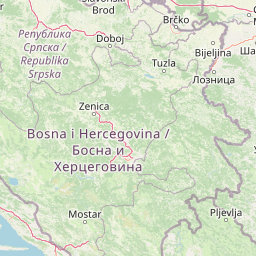
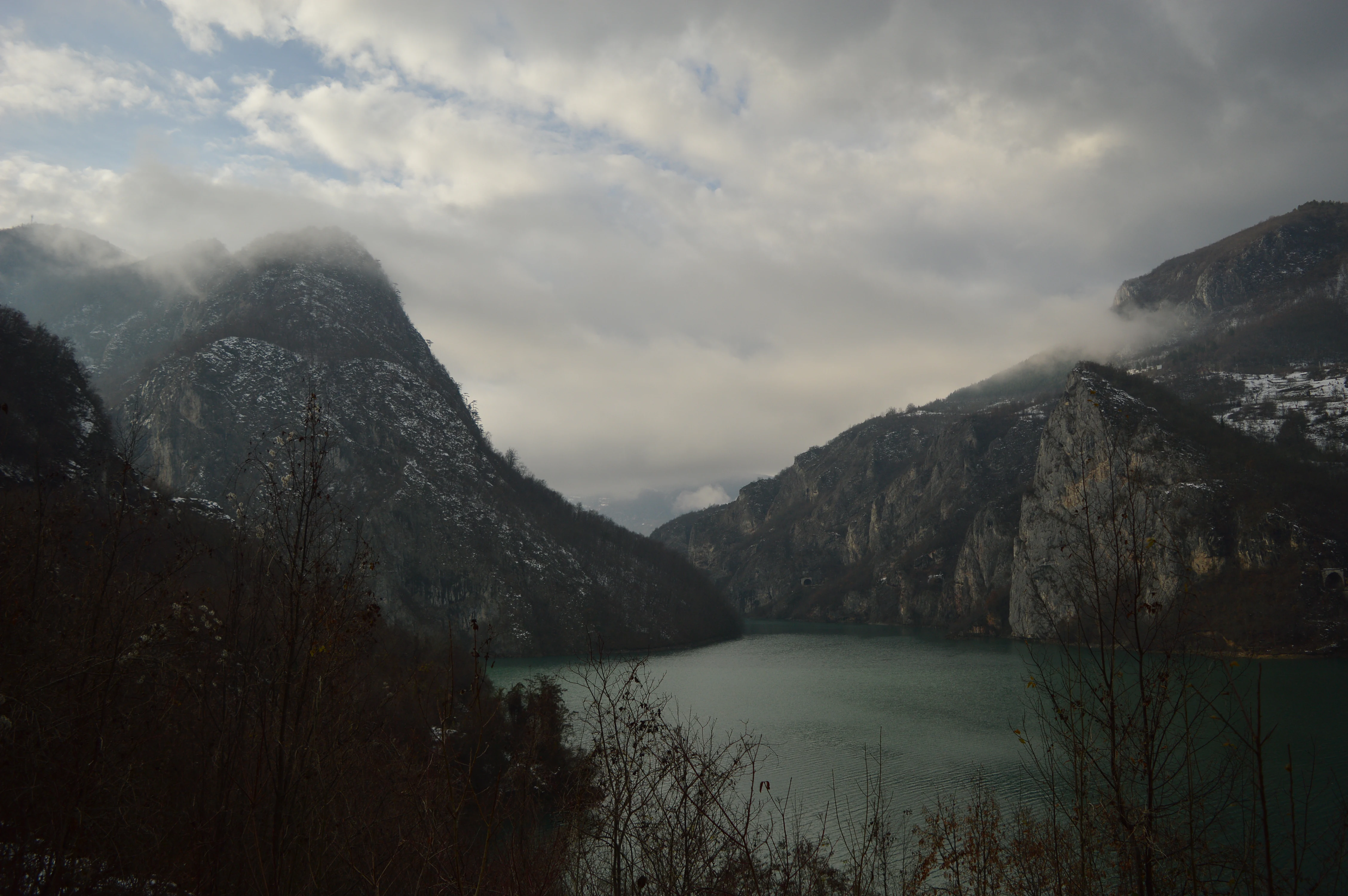
The landscape of Drina National Park is defined by the dramatic canyon-valley system carved by the Drina River and its tributaries. The gorge reaches its maximum depth of 976 meters at the confluence of Crni Potok with the Drina, making this one of the deepest canyon systems in the region. Crni Potok itself originates at elevations exceeding 1,100 meters above sea level and descends dramatically over its 6-kilometer course to the Drina, dropping more than 800 meters in elevation. The terrain features steep forested slopes descending from the surrounding mountains to the river valley, with the Drina cutting through the landscape as a major watercourse flowing northward. The canyon walls expose rock formations and create a visually striking landscape of vertical relief. The park's position along the border with Serbia means that the river itself forms a natural boundary, while the protected area extends into the mountainous terrain on the Bosnian side.
Drina National Park ecosystems, habitats, and plant life
The nature of Drina National Park is distinguished by its unique botanical heritage and diverse habitats associated with the canyon ecosystem. The most significant plant species is the Serbian spruce, an endemic and Tertiary relict species that today occurs naturally only in the middle Drina River basin across the territories of several municipalities including Rogatica, Srebrenica, Foča, Čajniče, and Višegrad in Bosnia and Herzegovina, and on Mount Tara in Serbia. This limited distribution makes the species globally significant from a conservation perspective. The park also supports endemic plant communities including the Derventanski različak, which together with Edraianthus jugoslavicus, Daphne malyana, and Sesleria tenuifolia forms communities of endemic character. The diverse topography creates varied habitats ranging from riverine corridors to forested slopes and rocky outcrops, supporting the park's ecological complexity.
Drina National Park wildlife and species highlights
Drina National Park supports populations of notable large mammals and birds that represent significant conservation value. The brown bear inhabits the forested mountain slopes and canyon terrain, representing one of the park's most impressive mammalian species. The chamois, a mountain-dwelling goat-antelope, occupies the rocky sections and steep terrain characteristic of the canyon walls. The golden eagle patrols the open skies above the canyon, using the thermal currents rising from the gorge for hunting and patrolling its territory. These three species—brown bear, chamois, and golden eagle—are identified as particularly important animal species within the protected area, reflecting both their conservation significance and their role as flagship species for the park's ecosystem. The river system itself supports aquatic biodiversity, while the varied habitats create conditions for a range of smaller mammals, birds, and other wildlife.
Drina National Park conservation status and protection priorities
Drina National Park represents an important addition to Bosnia and Herzegovina's protected area network, established in 2017 to preserve the significant natural and cultural values of the Drina canyon region. The park protects critical habitat for the Serbian spruce, an endemic species of global conservation concern due to its restricted range. The protected area also contributes to transboundary conservation by connecting with Tara National Park in Serbia, creating a larger contiguous zone for species that require extensive territories, such as the brown bear. The designation as a national park provides formal protection to the canyon ecosystem, its habitats, and the archaeological heritage within the boundaries. The Skelani Archaeological Site's status as a National Monument of Bosnia and Herzegovina provides additional protection to the cultural heritage components within the park.
Drina National Park cultural meaning and human context
The cultural context of Drina National Park is deeply connected to the historical region of Osat, which once functioned as an administrative unit encompassing the park's territory. The area developed a distinctive building tradition practiced by craftspeople known as dunđers, whose skill in constructing log cabins was renowned throughout the region. This tradition and the associated linguistic practices were documented by Ivo Andrić, Bosnia and Herzegovina's Nobel Prize-winning author, in his literary work Osatičani. The log cabin architecture represents a traditional building style adapted to the mountainous terrain and available materials. The presence of the Skelani Archaeological Site demonstrates even older human presence, with Roman settlement remains and early Christian religious structures indicating the area's long-standing significance as a settlement location and religious center.
Top sights and standout views in Drina National Park
Drina National Park's most compelling highlights include its status as one of Bosnia and Herzegovina's newest national parks established in 2017, protecting the spectacular Drina River canyon with depths reaching nearly 1,000 meters. The park safeguards populations of brown bears, chamois, and golden eagles in a relatively intact mountain ecosystem. The Serbian spruce, found only in this region, represents a globally significant endemic species. The Skelani Archaeological Site adds cultural depth, with Roman and early Christian heritage declared a National Monument. The park forms a transboundary conservation unit with Tara National Park in Serbia, creating an international protected corridor along the Drina.
Best time to visit Drina National Park
The best time to visit Drina National Park would typically be during the warmer months from late spring through early autumn, when weather conditions in the mountainous canyon environment are most suitable for outdoor exploration. The summer months offer warm temperatures in the valley and provide opportunities to experience the river and forest environments. Spring brings blooming vegetation and increased water flow in the tributaries, while autumn displays fall colors in the deciduous and mixed forests. Winter conditions in the mountainous terrain can be severe with snow and cold temperatures limiting access to higher elevations. The park's relatively recent establishment means that visitor infrastructure may still be developing, and checking current conditions before planning a visit would be advisable.