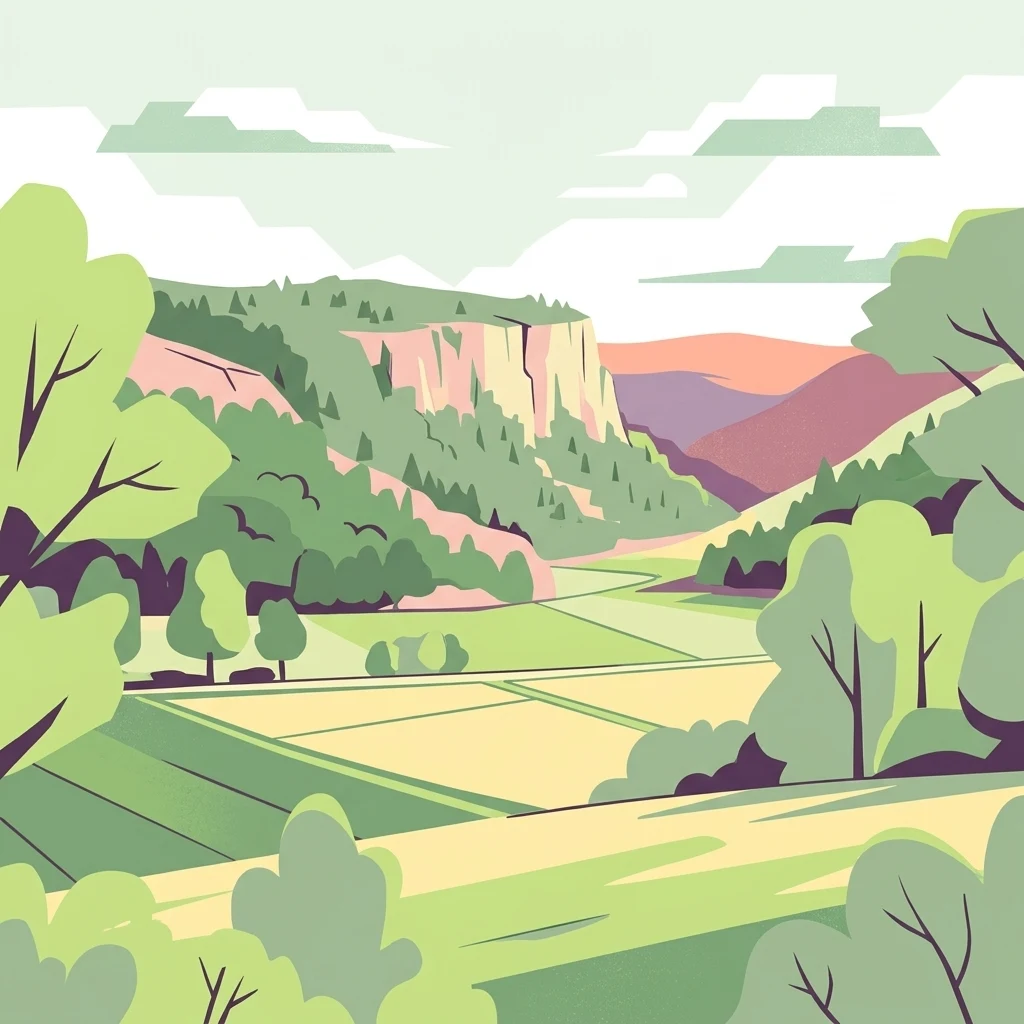
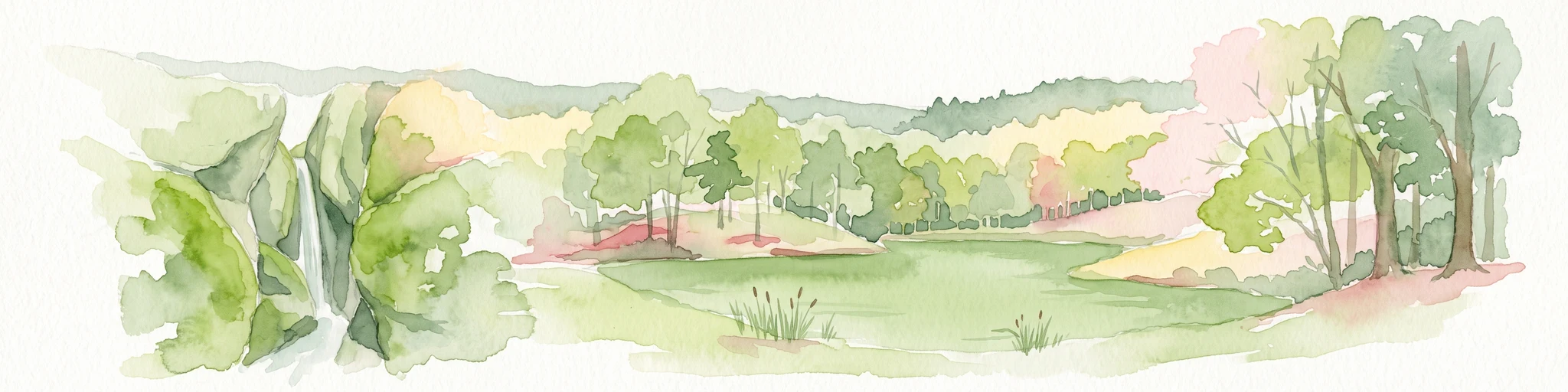
A steep, species-rich deciduous forest slope above the Werra valley in western Thuringia.
Lienig Nature Reserve
The Lienig is a small nature reserve on a forested steep slope rising from the right bank of the Werra river in the Wartburgkreis district of western Thuringia, in central Germany. Stretching for roughly 1.2 kilometres along the valley side, the protected area safeguards a compact but ecologically valuable mosaic of Muschelkalk (shell limestone) cliffs, karst landforms, narrow erosion gullies, and species-rich deciduous woodland above the village of Creuzburg.
The reserve is especially notable for its old, broadleaf-dominated forest stands, which include beech, ash, sycamore maple, wild cherry, wild service tree, pedunculate oak, and the increasingly rare wych elm. Beneath the canopy, large spring populations of yellow archangel, cuckoo pint, and yellow anemone carpet the forest floor. In ecological terms, the Lienig is embedded in a broader Natura 2000 context, joining neighbouring reserves to form the Creuzburger Werratal-Hänge Fauna-Flora-Habitat area and contributing to a nationally recognised hotspot of biological diversity.
Although modest in size at about 22.5 hectares and not designed as a traditional visitor attraction, the area holds strong regional significance for forest conservation, karst geology, and the protection of a Werratal landscape tradition that links natural heritage, the historic Werratal railway, and a long-running cycling route.