
Why Vršac Mountains stands out
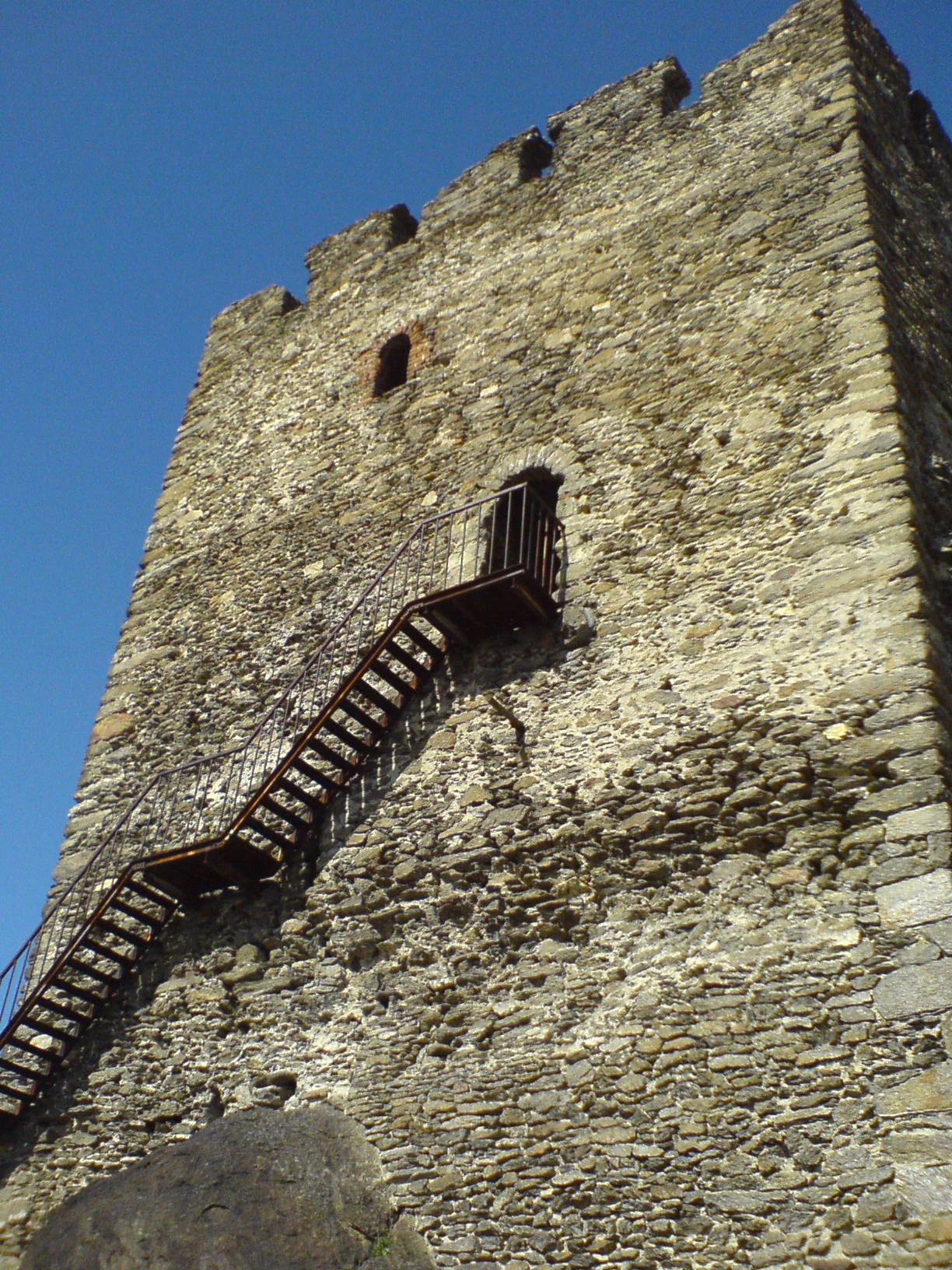
The Vršac Mountains are best known as the highest elevation in Vojvodina, with Gudurica peak standing at 641 meters. They are renowned for their exceptional ornithological diversity, supporting 120 bird species, making them one of the richest bird habitats in Serbia and Vojvodina. The distinctive geological character, with gneiss and schist formations creating dramatic hummocks and rock outcrops, sets them apart from the surrounding Pannonian plain. The iconic Vršac Tower, a 15th-century landmark, crowns one of the main peaks and serves as a symbol of the city below. The mountains also feature significant cultural heritage, including the Mesić monastery with traditions dating to 1225.
Vršac Mountains history and protected-area timeline
The protection history of the Vršac Mountains dates to 1982 when they were classified as a "Landscape of Outstanding Features" in Serbia's Registry of Protected Natural Resources, recognizing their exceptional natural and cultural value. In the period from 2001 to 2005, a comprehensive revision study was conducted to reassess and strengthen the protection status. In December 2005, the Vršac Municipal Assembly made a decision to protect 4,408 hectares of the Vršac Mountains as a Landscape of Outstanding Features, of which 190 hectares received the highest level of protection. The management responsibility was assigned to the public utility "Drugi oktobar" from Vršac. This protected status reflects the mountains' dual significance—both as a natural heritage site and as a cultural landscape shaped by centuries of human presence, including the historic Vršac Tower from the 15th century and the Mesić monastery whose origins are traditionally traced to 1225.
Vršac Mountains landscape and geographic character
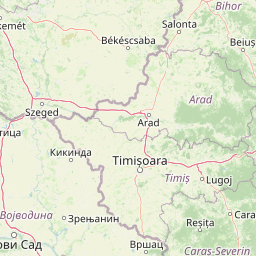
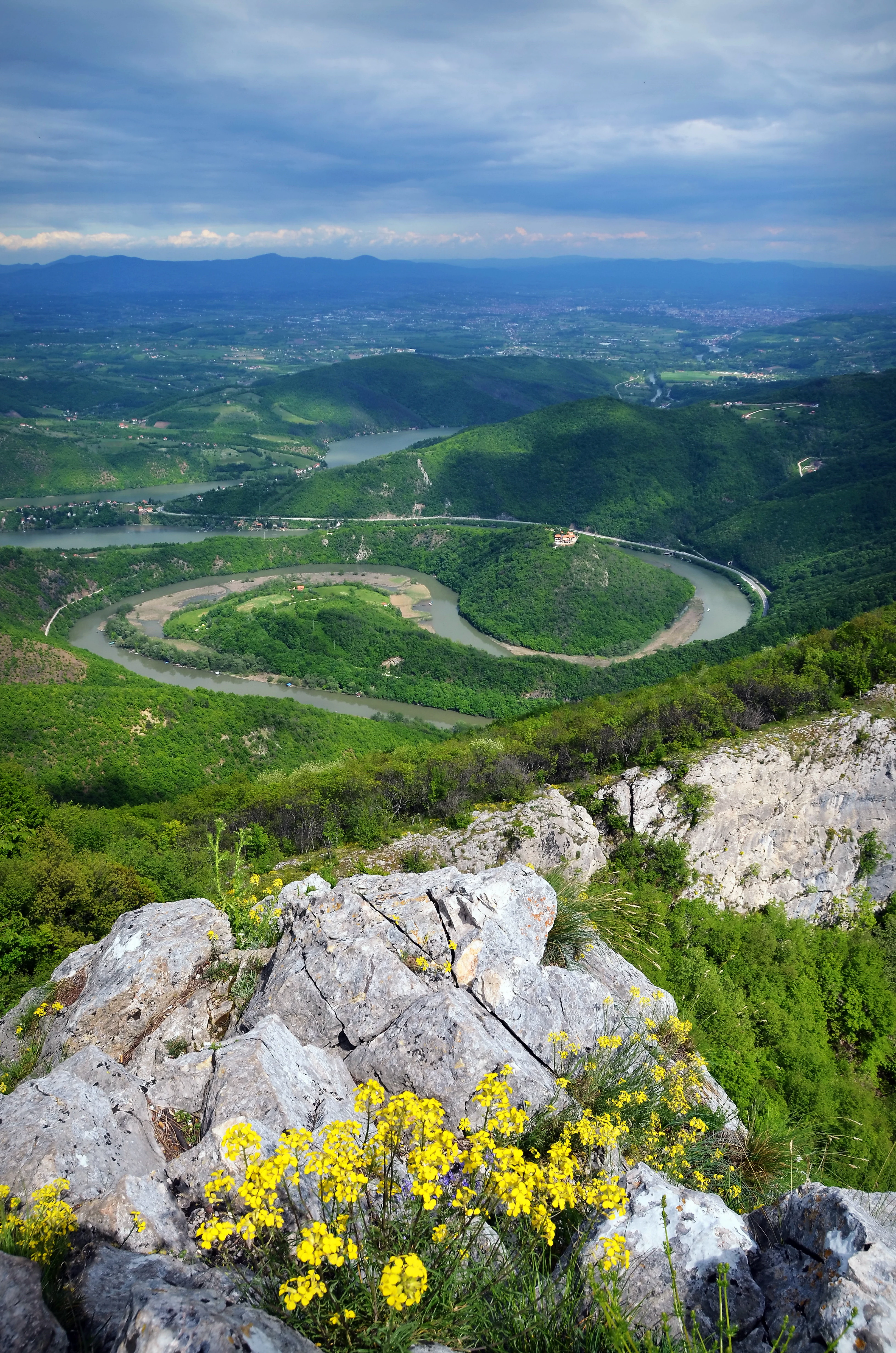
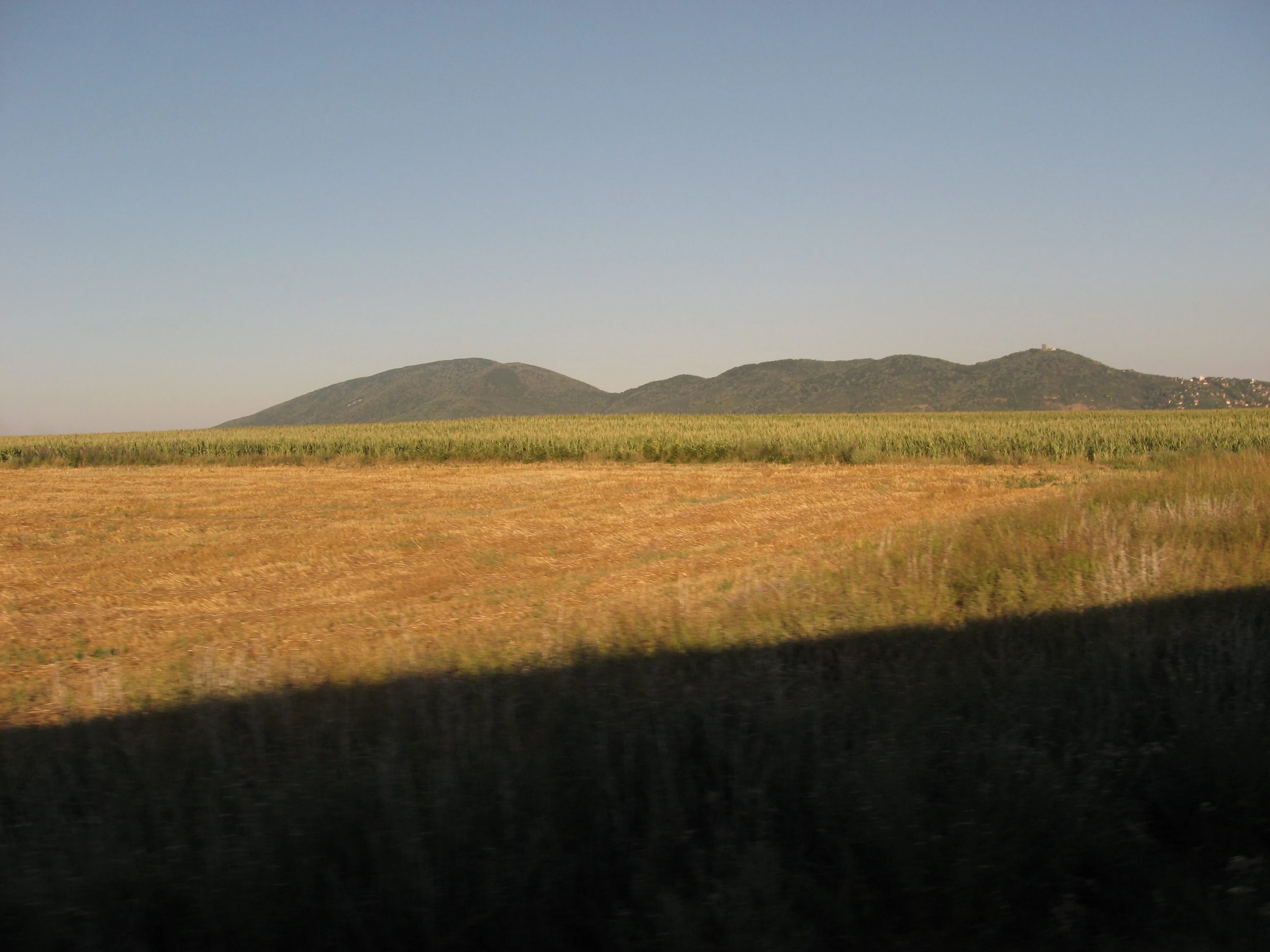
The Vršac Mountains display a characteristic arch shape with the main mountain mass occupying the central position while hills extend to both south and north. The landscape is marked by dramatic geological diversity, featuring distinctive rock formations sculpted from gneiss and schist that appear as both solitary peaks and clustered hummocks across the terrain. Four main peaks define the mountain silhouette: Vršac Tower at 399 meters, Gudurica peak at 641 meters (the highest point in Vojvodina), Fox's Head with its three peaks including Vršac Peak at 590 meters, and Vršišor at 463 meters. Between these peaks, vast rifts and valleys create a complex topographic character. The northern slopes are notably steep, while the southern slopes descend more gradually into foothills where productive vineyards thrive. The mountains rise abruptly from the surrounding Pannonian plain, creating a striking visual landmark visible across the flat agricultural lowlands of the Banat region.
Vršac Mountains ecosystems, habitats, and plant life
The ecological character of the Vršac Mountains is defined by their position as an island of diverse habitats within the otherwise flat Pannonian agricultural landscape. The protected forest ecosystems support significant tree species, with silver linden comprising approximately 37% of the forest volume and oak (kitnjak) representing about 25%, followed by black locust at roughly 8% and black ash at about 7%. The remaining forest composition includes hornbeam, white ash, and other species. The plant diversity is remarkable, with 1,017 species of higher plants recorded within the protected area, including seven species listed in the Red Book of Flora of Serbia as rare and endangered. The forests of linden and black locust create particularly distinctive seasonal experiences, as their flowering periods impart specific aromatic characteristics to the mountain environment during spring. The diverse forest communities, combined with the rocky outcrops, steep slopes, and changing elevations, create multiple microhabitats that support the exceptional biodiversity for which the mountains are renowned.
Vršac Mountains wildlife and species highlights
The Vršac Mountains support exceptional wildlife diversity, most notably in avian species where 120 registered bird species make this one of the richest ornithological habitats in Vojvodina and all of Serbia. The varied terrain—combining forested slopes, rocky outcrops, open meadows, and cultivated areas—supports diverse mammal populations including grey and red foxes, deer, wild boars, and occasional wolf sightings. The mountains serve as an important habitat island for species that require more varied terrain than the surrounding agricultural lowlands can provide, functioning as a critical refuge and corridor for wildlife movement through the Pannonian region. The combination of forest cover, rock formations, and diverse vegetation creates conditions suitable for both resident species and migratory visitors, contributing to the area's ornithological significance.
Vršac Mountains conservation status and protection priorities
The Vršac Mountains have been protected since 1982 as a Landscape of Outstanding Features, the highest category in Serbia's protected natural resources system for areas of exceptional natural value. The current protected area encompasses 4,408 hectares, with 190 hectares receiving first-level protection—the most restrictive category aimed at preserving pristine natural ecosystems. The conservation goals are directed toward preserving the unique natural values while also allowing for sustainable recreational and tourism use of the area. The protection framework recognizes the mountains' exceptional geological character, diverse flora and vegetation, rich forest ecosystems, significant landscapes and viewpoints, and the exceptional biodiversity that makes this area one of the most important conservation sites in the Pannonian region. The management approach balances natural preservation with sustainable tourism development, recognizing that the established protection does not restrict recreation and tourism but rather provides a framework for organized ecosystem management.
Vršac Mountains cultural meaning and human context
The cultural heritage of the Vršac Mountains reflects centuries of human presence in this distinctive landscape. The Vršac Tower, dating to the 15th century, stands as the most prominent cultural monument and has become the defining symbol of the city of Vršac itself, visible from the surrounding lowlands and representing a bridge between the natural and cultural identity of the region. The Mesić monastery, located in the village of the same name on the southern slopes of the mountains, holds particular significance with documented history from the 18th century indicating its 15th-century origins and local tradition claiming establishment in 1225. The mountain has long served as a recreation and pilgrimage destination for local communities, with the old Church of the Holy Cross on the first peak above the city being a particularly beloved excursion site. The southern foothills support productive vineyards that form part of the Vršac wine region, integrating agricultural tradition with the mountain landscape. The area known as Široko bilo, located 10 kilometers from the city center, features a mountaineering house with bungalows and a weekend settlement, demonstrating the long-standing role of these mountains as a recreation and nature escape for residents of the Pannonian plain.
Top sights and standout views in Vršac Mountains
The Vršac Mountains offer a unique combination of natural and cultural features that set them apart in the Pannonian region. As Vojvodina's highest elevation, Gudurica peak provides sweeping views across the flat agricultural plain toward Romania and the Banat region. The exceptional bird diversity with over 120 species makes this a prime destination for ornithological observation in Serbia. The dramatic gneiss and schist rock formations create distinctive climbing opportunities, while the Vršac Tower provides both historical interest and commanding views. The protected forest ecosystems, particularly the linden and oak communities, change dramatically through the seasons, with spring bloom creating memorable aromatic experiences. The mountain's position as a Pannonian island mountain—the geological remnant of islands in an ancient sea—gives it scientific significance beyond its recreational and aesthetic value.
Best time to visit Vršac Mountains
The Vršac Mountains can be visited throughout the year, with each season offering distinct experiences. Spring and early summer bring the forest flowering period when linden and black locust trees bloom, filling the mountain air with their distinctive fragrance and creating particularly pleasant conditions for hiking. Autumn offers another compelling season as the deciduous forests display fall coloration. The mountain's relative elevation makes it a welcome escape from the summer heat of the Pannonian plain, while winter visits provide stark contrasts between the snow-dusted peaks and the typically flat, often snow-free lowlands below. The best time for bird observation coincides with migration seasons when the diverse avian populations are most active.