
Why Wular Lake stands out
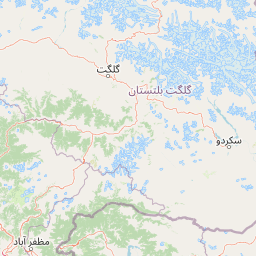
Wular Lake is renowned as one of the largest freshwater lakes in South Asia and a key component of the Jhelum River system. It is especially noted for its rich fish populations, including endemic snowtrout species of the Schizothorax group, and for sustaining large flocks of resident and migratory birds in a major Himalayan foothill wetland. The lake also stands out for its tectonic origin, its role in regional livelihoods through fishing and aquatic plant gathering, and its Ramsar-recognized status as a wetland of international importance.
Wular Lake history and protected-area timeline
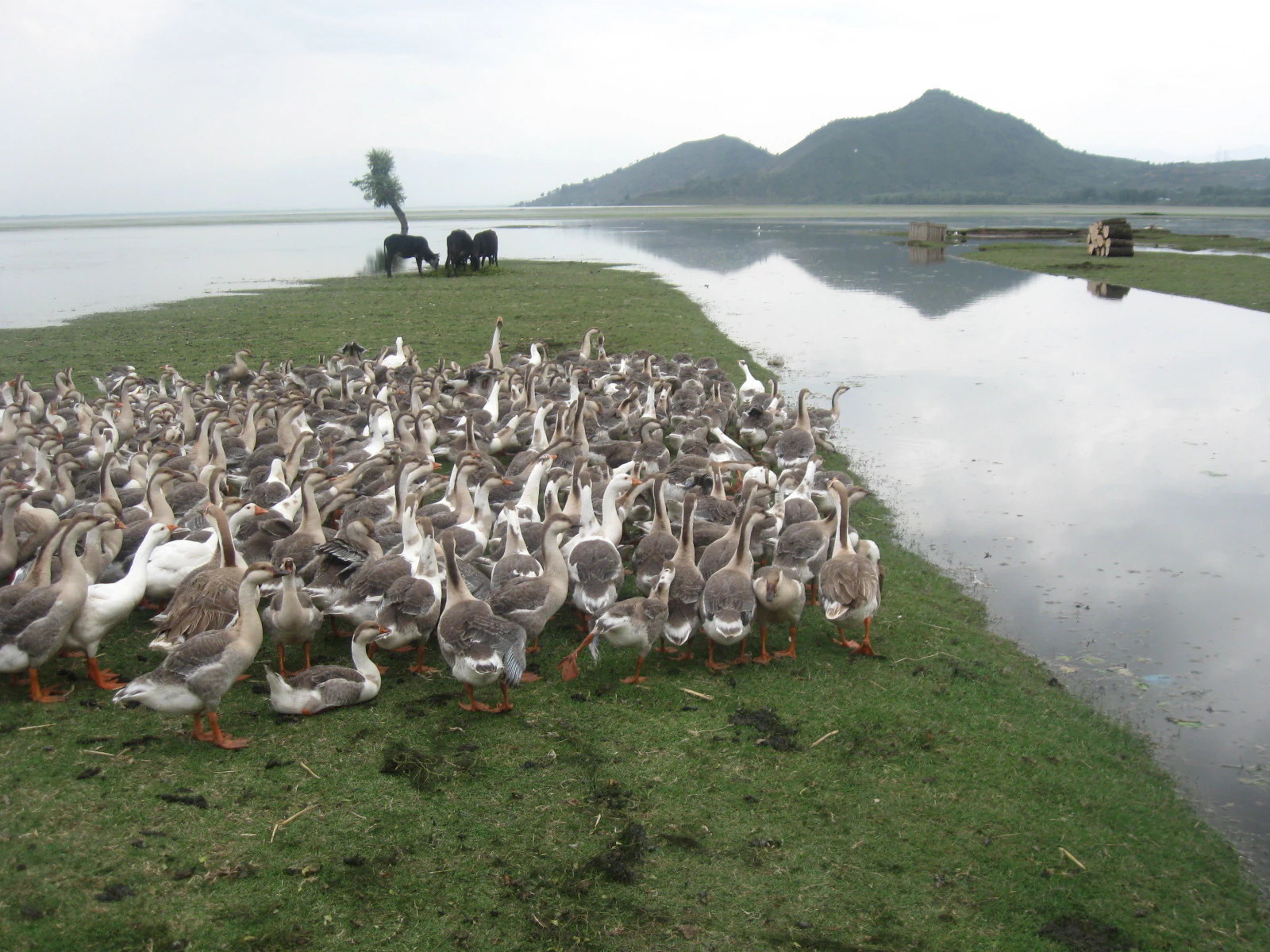
Wular Lake has deep historical and cultural references, stretching back to ancient Sanskrit literature. In classical texts such as the Nilamata Purana, the lake is referred to as Mahapadmasar or Mahapadmasaras. The name "Wular" is believed to derive either from the Sanskrit "Ullola," describing the high leaping waves the lake produces, or from the Kashmiri word "Wul," meaning a gap or fissure, a reference to the tectonic origin of the basin.
A defining moment in the lake's human history came in 1444, when the Kashmiri sultan Zain-ul-Abidin, also known as Zayn al-Abidin, is reputed to have ordered the construction of the artificial island of Zaina Lank in the middle of the lake. According to local traditions, the sultan built this island by sinking a large barge and establishing a foundation of bricks and stones on it, eventually constructing a mosque and other buildings. The work was reportedly financed by two golden idols recovered by divers from the lake. Folk traditions also speak of a once-prominent city in the lake area whose legendary rulers were said to have been submerged beneath rising waters, with ruins allegedly visible during low winter levels.
In the modern era, Wular Lake has been formally recognized through conservation designations. It was identified in 1986 as a Wetland of National Importance under India's Wetlands Programme, and in 1990 it was designated as a Wetland of International Importance under the Ramsar Convention. The late 20th and early 21st centuries brought serious environmental decline, leading to the approval of a multi-billion-rupee restoration project that was scheduled to begin in late 2011 under the National Lake Conservation Programme. The 1980s also marked the conception of the Tulbul Lock Project, a navigation and water regulation structure at the lake's outflow. Construction was halted in 1987 following objections from Pakistan under the Indus Waters Treaty and was eventually revived in 2025 after India suspended its participation in the treaty framework.
Wular Lake landscape and geographic character
Wular Lake is a large, shallow freshwater body set within the Kashmir Valley, at a relatively high surface elevation of around 1,580 meters above sea level. Its basin is tectonic in origin, shaped by geological activity that produced the natural depression the lake now fills. The lake's dimensions are unusually variable, with surface area fluctuating seasonally, and its profile is broad rather than deep, with maximum depths around 14 meters.
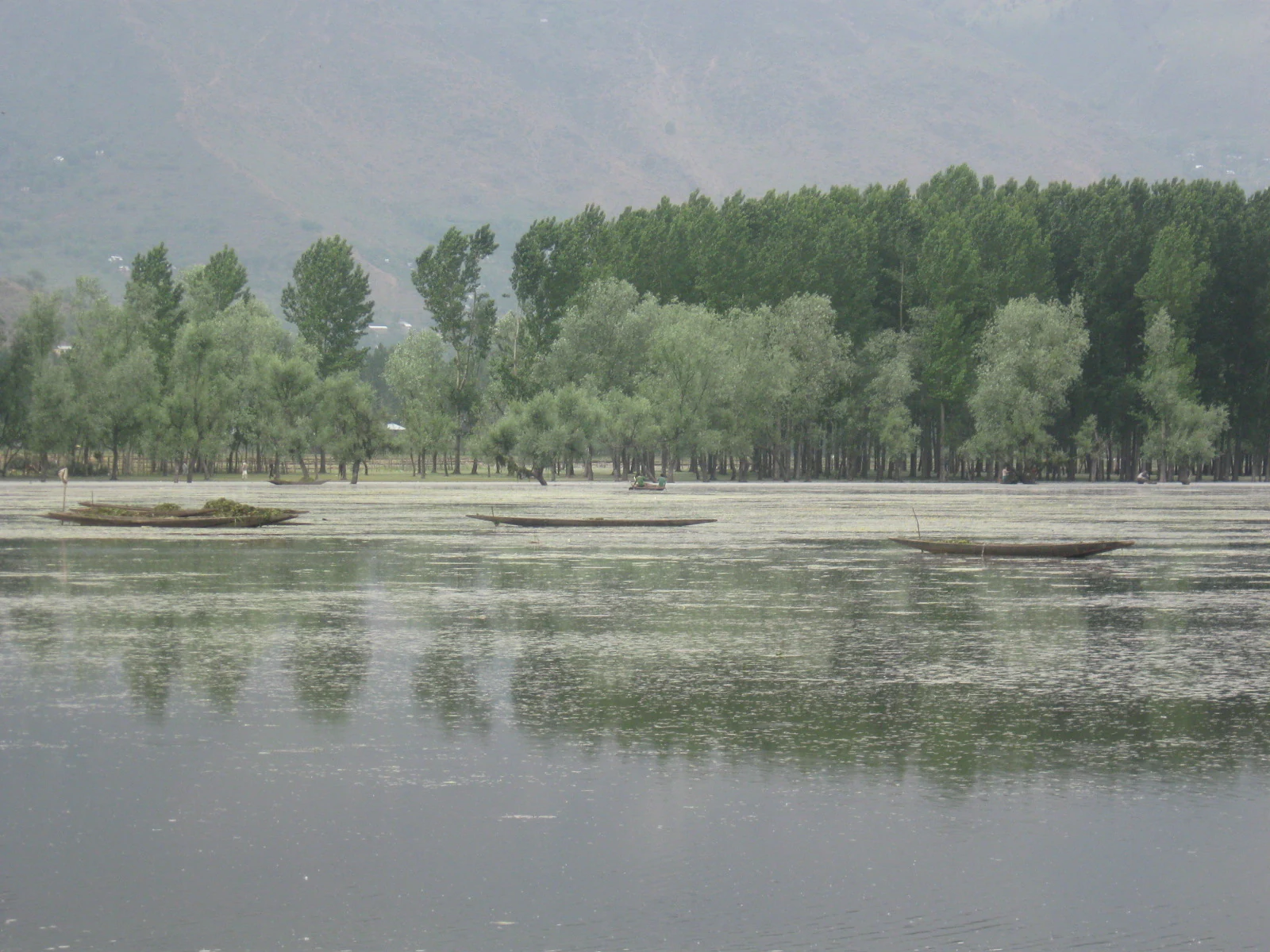
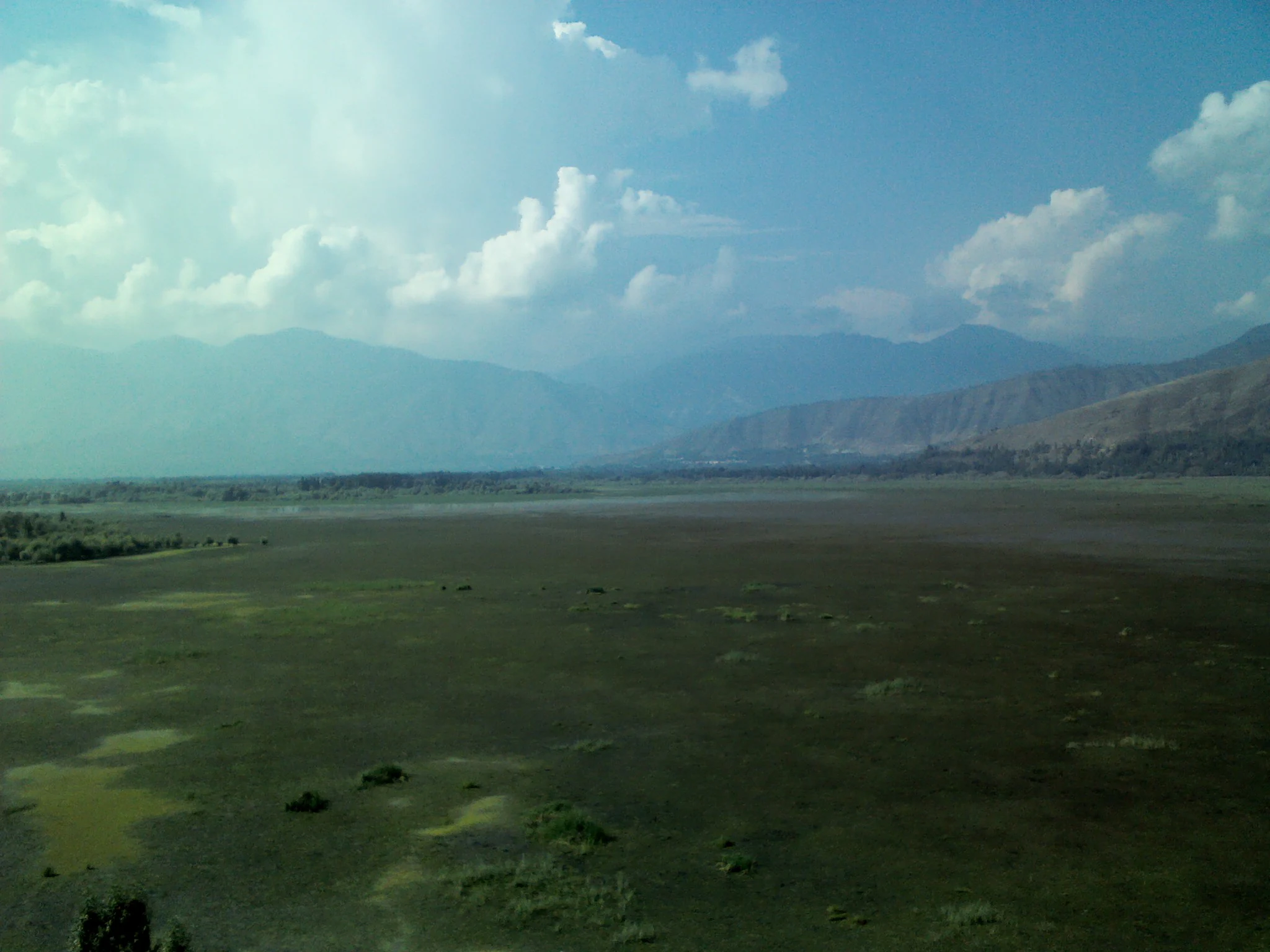
The surrounding landscape is shaped by the lake's fluctuating margins. Willow plantations established along the shoreline in the 1950s altered the hydrology and contributed to drained sections of the lake. In recent decades, accumulation of sediment, garbage, and weed growth has made portions of the lake shallower and reduced open water areas, transforming what was once broad expanse of water into a mosaic of muddy shallows, reed beds, and vegetated margins. The watershed feeding the lake, including agricultural land and hillslopes, continues to influence lake conditions through erosion and runoff.
Wular Lake ecosystems, habitats, and plant life
The ecological character of Wular Lake is built around its freshwater wetland habitat and its position along the Jhelum River system. Its varying depths, aquatic vegetation, and surrounding marshy margins create a mosaic of habitats that supports fish populations and rich birdlife. Aquatic plant communities, including reed grasses of the genus Phragmites and waterlily-like Nymphoides species, play a significant ecological role, providing habitat structure as well as materials for human harvesting.
The lake is set within the Kashmir Himalaya environment, where surrounding riverine habitats and foothill woodlands create a transitional ecological zone. This broader landscape context contributes to the diversity of species recorded around the lake, linking aquatic habitats to terrestrial habitats across the valley. As a Ramsar site, Wular Lake represents a wetland of both national and international conservation significance, recognized for its hydrological function, biological richness, and socio-economic value for surrounding communities.
Wular Lake wildlife and species highlights
Wular Lake is an important fish habitat, hosting a variety of species including the common carp, rosy barb, mosquitofish, and several snowtrout species in the genera Schizopyge and Schizothorax. Endemic snowtrout varieties such as the Sattar snowtrout, Chirruh snowtrout, and Chush snowtrout have been identified in the lake's waters, alongside other Schizothorax species. The lake also supports small bottom-dwelling fish such as Nemacheilus species and Crossocheilus latius.
Birdlife around the lake is diverse and reflects the broader Himalayan foothill avifauna. Reported terrestrial species include raptors such as the black-eared kite, Eurasian sparrowhawk, short-toed eagle, and Himalayan golden eagle; gamebirds and pheasants such as the Himalayan monal, chukar partridge, and koklass pheasant; and a mix of smaller birds including rock doves, common cuckoos, alpine swifts, Indian rollers, Himalayan woodpeckers, hoopoes, barn swallows, and golden orioles. The lake also traditionally attracts migratory and waterfowl species, though their populations are affected by hunting and habitat pressures in the wider area.
Wular Lake conservation status and protection priorities
Wular Lake holds a strong conservation profile as one of the 98 Indian wetlands formally designated under the Ramsar Convention. It was recognized in 1986 as a Wetland of National Importance under India's Wetlands Programme and subsequently designated in 1990 as a Wetland of International Importance, cited for its biological, hydrological, and socio-economic values. These designations reflect the lake's role in regional water systems, its ecological richness, and its importance to thousands of dependent livelihoods.
Despite this recognition, the lake faces serious environmental threats. Conversion of catchment areas into agricultural land has altered water and sediment flows, while fertilizers and animal waste contribute to pollution. Hunting of waterfowl and migratory birds, weed infestation within the lake, and the accumulation of waste along shorelines and within the water have all degraded the lake's condition. Restoration efforts under the National Lake Conservation Programme have been approved, including plans to cut approximately two million trees from shoreline willow plantations to restore lake extent, with substantial funding allocated for projects projected to span five to ten years.
Wular Lake cultural meaning and human context
Wular Lake is woven into the cultural memory of the Kashmir region. Ancient Sanskrit literature refers to the lake as Mahapadmasar, and local traditions speak of submerged cities, rulers, and idols beneath its waters. The 15th-century construction of the artificial island of Zaina Lank by the sultan Zain-ul-Abidin is a major historical landmark of the lake and gives the area a layered cultural heritage that blends legend and documented history.
The lake also plays a continuing role in the everyday cultural and economic life of its surroundings. Fishing families, aquatic plant harvesters, and wider communities across the Kashmir Valley have long relied on the lake, so much so that the lake's fish catch has historically represented a majority of total fish yield for the valley. This combination of deep historical narrative and present-day rural livelihoods gives Wular Lake a distinctive place in regional identity.
Top sights and standout views in Wular Lake
Wular Lake is one of South Asia's largest freshwater lakes, with a tectonic-origin basin in the Kashmir Valley fed and drained by the Jhelum River. It carries both national and international conservation recognition through India's Wetlands Programme and the Ramsar Convention, while continuing to support endemic snowtrout fish, diverse birdlife, and large-scale fishing and aquatic plant harvesting economies.
A defining feature of the lake is the contrast between its ecological significance and its present-day vulnerability. Long-running pressures including agricultural conversion in its catchment, pollution, hunting, weed infestation, and shoreline waste accumulation have reduced its water extent and depth. The lake is also at the center of the Tulbul Lock Project, a long-debated navigation and water regulation initiative at its outflow, reflecting how Wular Lake sits at the intersection of regional ecology, livelihoods, and transboundary water politics.
Best time to visit Wular Lake
Wular Lake is a strongly seasonal landscape, with surface area fluctuating significantly through the year. Winter brings lower water levels during which submerged features have historically been visible, while afternoons across the lake are known for high-leaping waves. For those interested in broader Himalayan scenery, the cooler months tend to bring crisper visibility in the Kashmir Valley, while warmer months support more active fishing operations and aquatic plant harvesting on the lake.