Why Zigalga National Park stands out
Zigalga National Park is distinguished by its preservation of Ice Age relict flora that survives across the full spectrum of altitude zones, from lowland pine and birch forests through dark coniferous taiga to alpine meadows and mountain tundra. The park contains alpine peat bogs of both mesotrophic and oligomesotrophic character, supporting boreal plant species at their southern range limits. Its position on the Southern Ural ridge places it at the crossroads of European and Siberian biogeographic provinces, creating a unique ecological transition zone. The mountainous terrain and relatively pristine condition of much of the territory make it particularly valuable for conservation of subarctic ecosystems.
Zigalga National Park history and protected-area timeline
Zigalga National Park was officially established on November 18, 2019, representing a recent addition to Russia's national park system. The creation of the park formalized protection for an area that had long been recognized for its ecological significance within the Southern Ural region. The park is governed by FGBU Zigalga, the federal government body responsible for its management and conservation operations. The establishment of the park also serves to strengthen the network of protected areas along the Southern Ural ridge, linking Zyuratkul National Park to the northeast with the South Ural Nature Reserve to the southwest. This connected corridor approach to conservation reflects contemporary understanding of the importance of landscape-scale protection for maintaining ecological processes and species movement across broader geographic areas.
Zigalga National Park landscape and geographic character
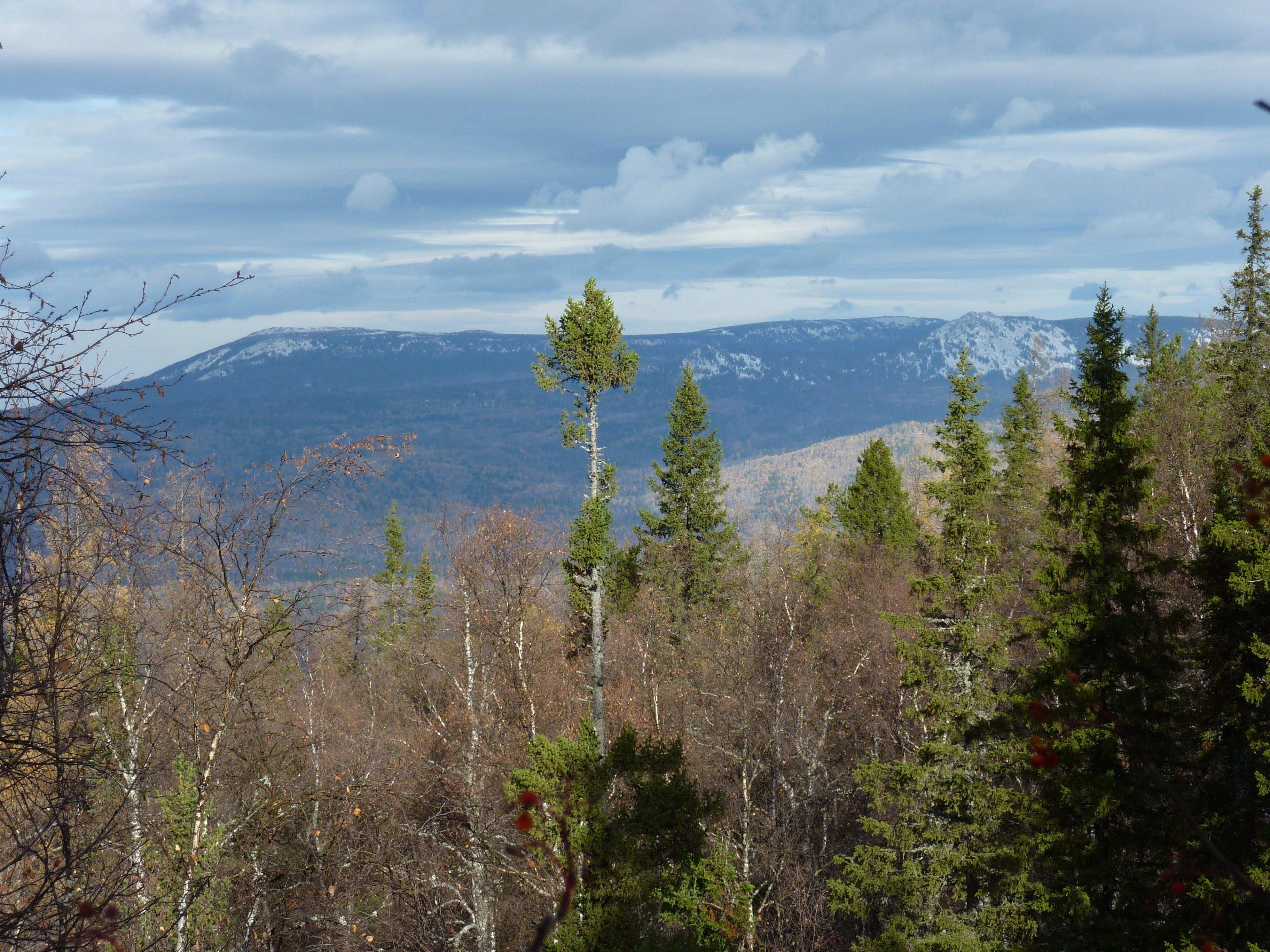
The terrain of Zigalga National Park is defined by the mountainous character of the Southern Ural ridge, with elevations ranging from lower foothills to the summit of Mount Poperechnaya at 1,387 meters. The park encompasses the headwaters of two significant river systems: the Yuryuzan River and the Kutkurka River, both of which originate within the protected area and flow outward through the surrounding landscape. The topography creates distinct altitudinal zones that profoundly influence vegetation patterns and ecological communities throughout the park. Steep slopes, ridgelines, and valley systems characterize the terrain, while the presence of alpine peat bogs adds wetland diversity to the mountainous setting. The landscape remains largely pristine across most of the park's extent, with minimal human infrastructure or development intruding upon the natural terrain.
Zigalga National Park ecosystems, habitats, and plant life
The ecological character of Zigalga National Park is defined by a remarkable vertical zonation of habitats that progresses through distinct vegetation belts from lower elevations to higher ground. Below 750 meters, the forests are dominated by Picea obovata (Siberian spruce), Abies sibirica (Siberian fir), and stands of Tilia sibirica (Siberian linden), creating a rich coniferous forest environment. Above 750 meters, the forest gives way to subalpine meadows characterized by grassland and shrub communities adapted to cooler conditions. At the highest elevations, above 1,000 to 1,200 meters, mountain tundra prevails with sparse vegetation suited to harsh alpine conditions. Alpine peat bogs are common throughout the park, including both mesotrophic and oligomesotrophic types, providing critical wetland habitat within the predominantly mountainous terrain. The park supports numerous boreal plant species that reach their southern range limits here, making the area particularly significant for the conservation of northern flora at the edge of their distributions.
Zigalga National Park wildlife and species highlights
Zigalga National Park supports diverse wildlife communities across its multiple habitat zones, with documented populations spanning multiple taxonomic groups. Scientists have recorded 55 species of mammals within the park boundaries, representing the typical fauna of Southern Ural forest and alpine ecosystems. The avifauna is particularly well-documented with 160 bird species identified, reflecting the park's importance as a habitat for both forest-dwelling and migratory bird species. The aquatic ecosystems, fed by the headwaters of the Yuryuzan and Kutkurka rivers, support 20 species of fish, while 13 species of amphibians and reptiles have been recorded in the park's varied habitats. The vascular plant diversity includes approximately 500 species, with particular significance attached to the boreal species occurring at their southern range limits within the park.
Zigalga National Park conservation status and protection priorities
Zigalga National Park serves an important conservation function as a protected area at the southern boundary of the Urals montane tundra and taiga ecoregion. The park's role in preserving Ice Age relict floral communities across all altitude zones gives it significance beyond its relatively modest area, as these communities represent surviving remnants of ancient ecological systems. The boreal plant species reaching their southern range limits within the park constitute a conservation priority, as these populations represent the southernmost viable populations of species typically found further north. The park's connection of Zyuratkul National Park and the South Ural Nature Reserve creates an important ecological corridor that supports species movement and genetic exchange across a broader protected area network. The subarctic climate, characterized by brief summers and cold snowy winters, creates conditions that have limited human impact and allowed natural ecosystem processes to continue relatively undisturbed.
Zigalga National Park cultural meaning and human context
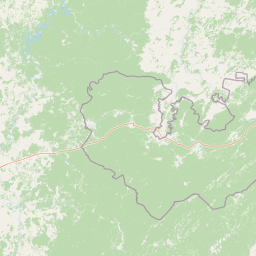
Zigalga National Park is located within the Katav-Ivanovsky District of Chelyabinsk Oblast, a region with historical ties to mining and forestry industries characteristic of the Southern Urals. The park's territory has been relatively undisturbed compared to lower-lying areas of the oblast that have experienced more intensive human development. The park lies near the city of Chelyabinsk, the largest urban center in the area, and the protected status helps preserve the natural landscape character of this mountainous portion of the region.
Top sights and standout views in Zigalga National Park
The Ice Age relict floral communities spanning all altitude zones represent perhaps the park's most scientifically significant feature, offering a window into ancient ecological conditions. The complete vertical zonation from pine and birch forest through dark coniferous taiga to alpine meadows and mountain tundra provides a natural laboratory for understanding ecological transitions across elevational gradients. The alpine peat bogs, including both mesotrophic and oligomesotrophic types, add wetland habitat diversity uncommon in mountain landscapes. The park's position at the biogeographic boundary between Europe and Siberia creates a unique meeting point for species from both continental regions. The relatively pristine condition of much of the territory, combined with its recent protection status, offers opportunities for ongoing ecological research and monitoring.
Best time to visit Zigalga National Park
The subarctic climate of Zigalga National Park shapes visitor experience significantly throughout the year. Summer months, typically June through August, offer the most accessible conditions for exploration, though the warm season is brief with only one to three months averaging above 10 degrees Celsius. Winter brings extended cold conditions with heavy snowfall, transforming the landscape into a white wilderness but limiting accessibility. The brief summer period coincides with the peak of alpine meadow flowering and offers the best opportunities for wildlife observation and trail exploration. Spring and autumn provide transitional seasons with variable conditions, while the winter months appeal to those interested in snow-covered mountain landscapes and cold-weather ecology.