
Why Bashkiriya National Park stands out
Bashkiriya National Park is especially known for its dramatic karst limestone landscape, which includes caves, natural bridges, and towering rock formations reaching heights of 150 meters along the river valleys. The park contains the Sumgan Cave, the largest cave system in the entire Ural mountain range, with passages extending over 10 kilometers. The Kuperlya Natural Bridge, a 20-meter-high karst arch, stands as one of the park's most distinctive geological features. The forest itself is notable for its ecological transition-zone character, where Siberian taiga species mingle with broadleaf trees at the geographic boundary between Europe and Asia. The Nugush Reservoir within the park also serves as a significant local recreation destination.
Bashkiriya National Park history and protected-area timeline
The Bashkiriya region has supported human habitation for thousands of years, with evidence of this long occupation preserved in the neighboring Shulgan-Tash reserve, where Paleolithic cave paintings have been dated to approximately 13,000-14,000 years ago through radio-chemical analysis. The indigenous Bashkir people, who remain the titular ethnic group of Bashkortostan, claim cultural descent from these ancient cave-dwelling communities. The region's historical economy included traditional wild beekeeping, a practice in which honey was harvested from tree hollows and artificial caverns—an industry potentially spanning 1,500 years and preserved today within the adjacent Altyn-Solok entomological reserve.
In the twentieth century, Bashkortostan became the most industrialized and densely populated republic within Russia. Despite this development, the upland areas encompassing Bashkiriya National Park and its associated reserves remained comparatively undisturbed by the broader waves of industrialization and population growth. This relative preservation increased both the ecological significance and the recreational importance of the area. The national park was formally established in 1986, formalizing protections for the forest landscape and its geological features. Today, the park balances its conservation mandate with growing recreational use, particularly around the Nugush Reservoir and through caving activities that explore the extensive underground passages characteristic of the karst terrain.
Bashkiriya National Park landscape and geographic character
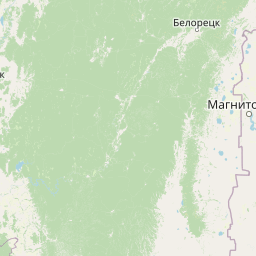
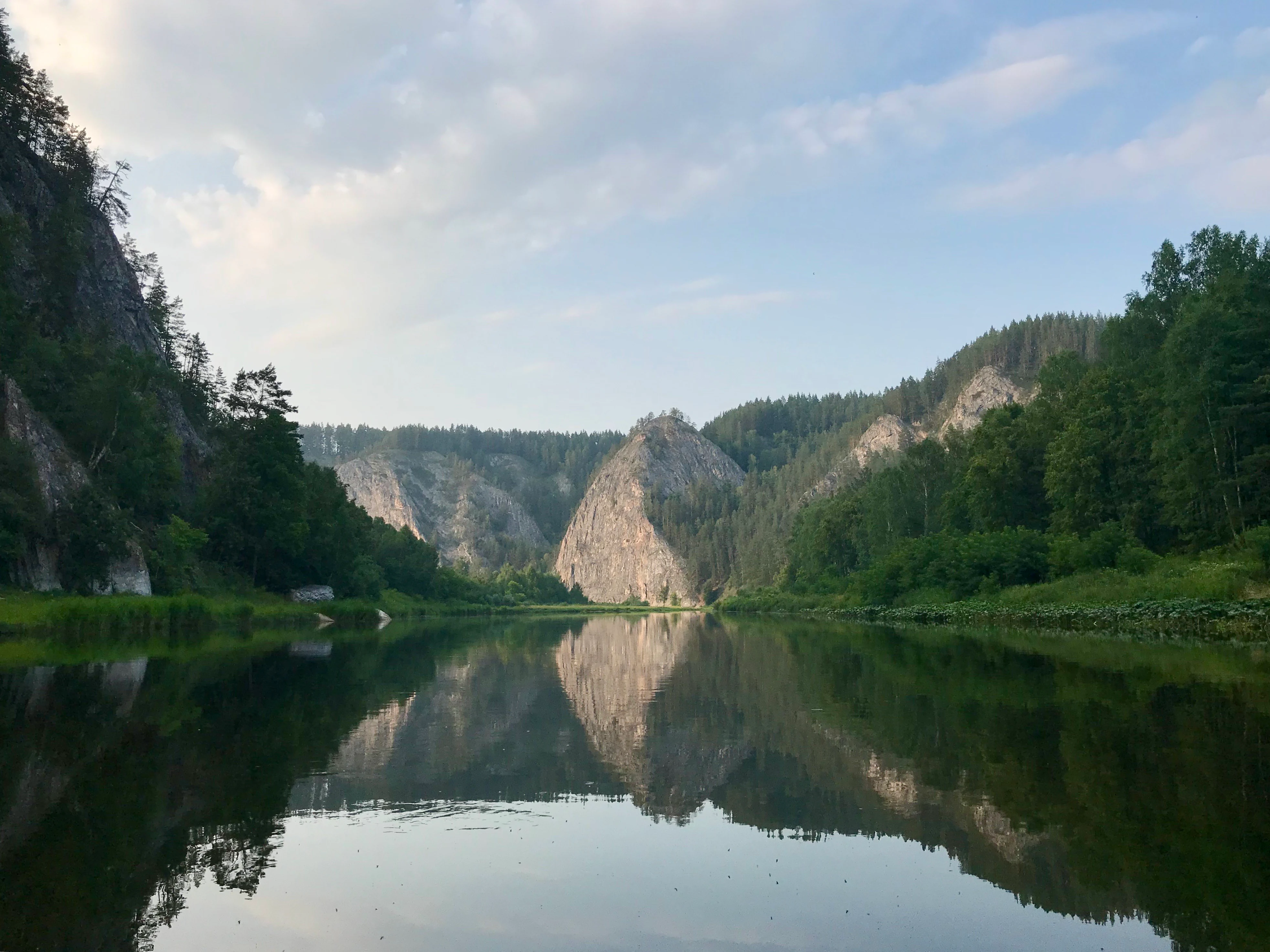
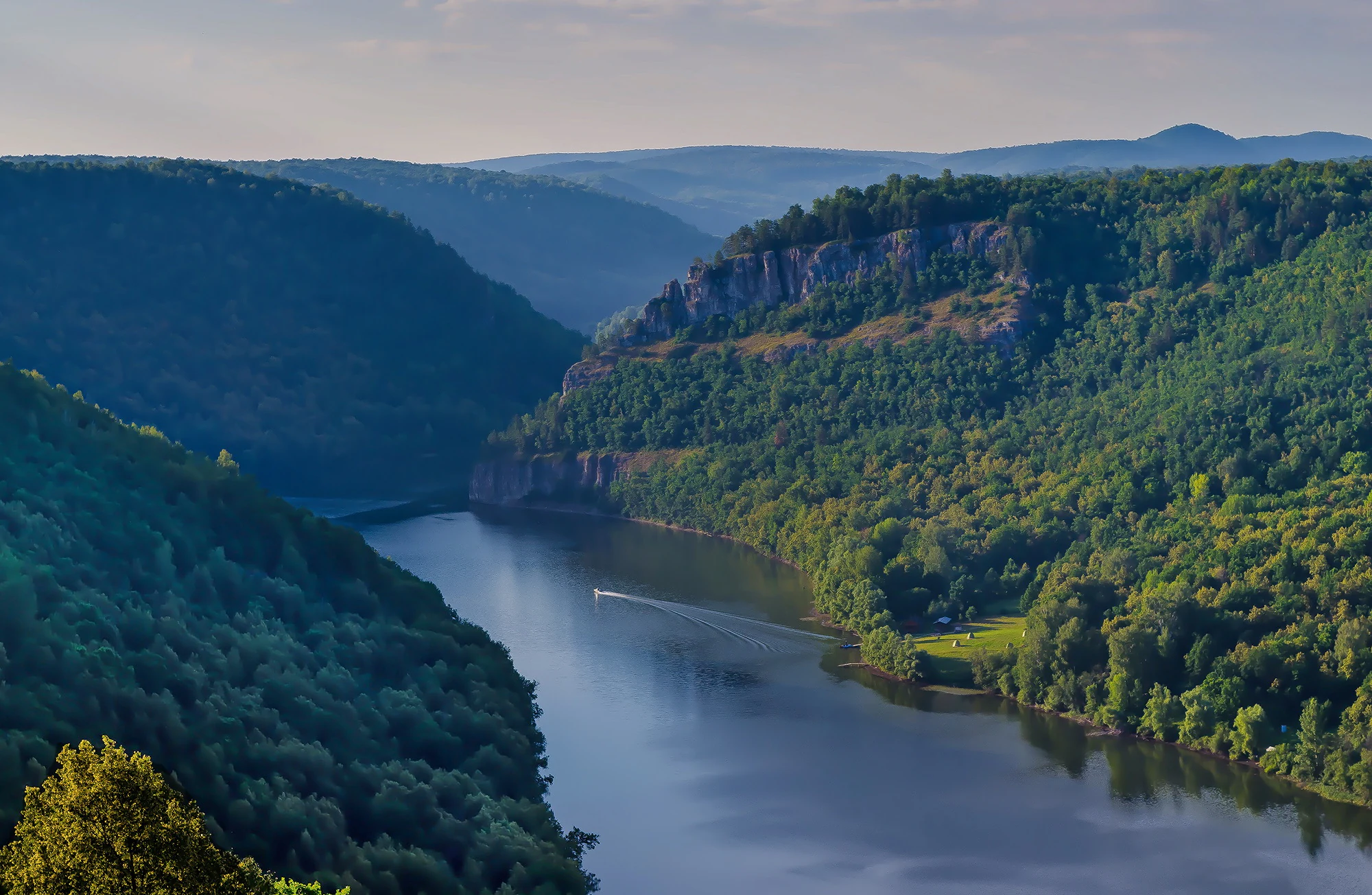
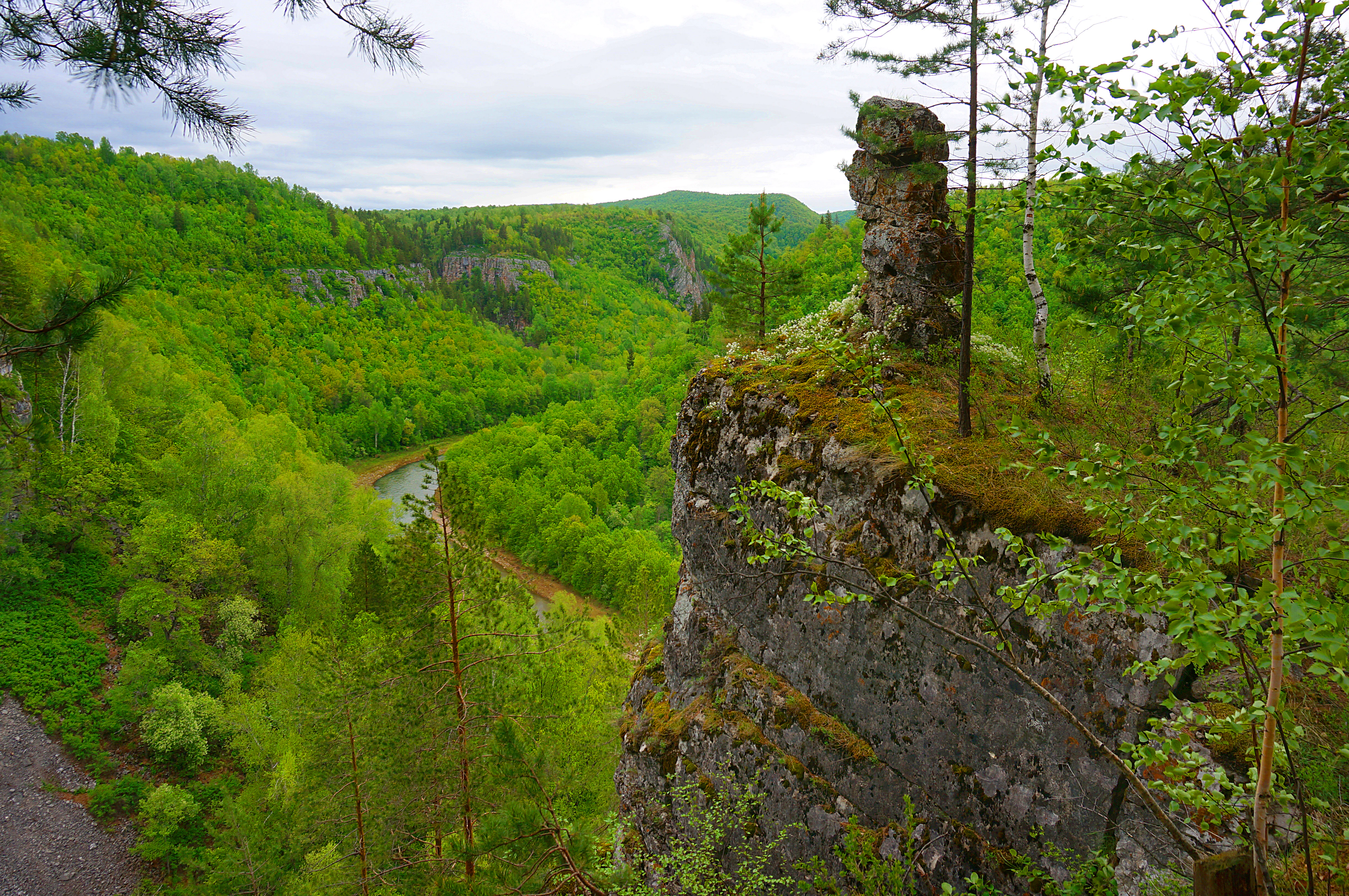
The landscape of Bashkiriya National Park is defined by the interplay of forested uplands and dramatic karst topography. The terrain ascends from relatively flat agricultural land in the western portion of the park toward more rugged limestone uplands in the east. Deep river valleys, particularly those carved by the Nugush and Belaya rivers, cut through the landscape, with rocky canyon walls reaching heights of 150 meters. The Nugush River flows through wooded valleys flanked by limestone outcrops before widening into the Nugush Reservoir in the northwest—a 25-square-kilometer lake that serves as a focal point for recreational activity.
The most visually striking geological features are the various limestone formations that characterize the karst landscape. Rocky outcrops, caves, grottoes, and underground rivers create a complex subterranean environment. The Kuperlya Natural Bridge, standing 20 meters above the ground with a span of 10 meters, represents the remains of a former underground river and serves as one of the park's signature geological landmarks. The cave systems are particularly extensive, with 30 known caves containing a combined 8.2 kilometers of major passageways. The Sumgan Cave, located in an isolated area known as Kutuk-Sumgan, represents the largest cave system in the Urals, with passages reaching depths of 126 meters and total length up to 10 kilometers.
Bashkiriya National Park ecosystems, habitats, and plant life
Bashkiriya National Park occupies a remarkable position at the confluence of several biogeographical provinces, making it a center of botanical diversity within the southern Urals. The park's location at the meeting point of boreal conifer forests, broadleaf forests, and steppe ecosystems creates a mosaic of habitat types. Over 92 percent of the park is covered by forest, making it one of the more extensively wooded protected areas in the region. The taiga component features light-coniferous species including pine and larch, while broadleaf species such as linden, oak, elm, and maple occur in richer sites. Small-leaved trees including birch and aspen populate transitional areas.
The botanical diversity is substantial, with more than 800 flowering plant species recorded within the park boundaries. Of these, 117 species are listed as rare or vulnerable, reflecting the conservation significance of this transition-zone forest. Rocky outcrops and cliff faces create microhabitats for smaller flowering plants, while the limited non-forested areas include features such as Bear Meadow, which supports the distinctive lop-sided onion (Allium obliquum), a type of wild onion. The forest structure varies across the park, with the central regions characterized by older-growth stands and accumulated dead timber that supports broader biodiversity.
Bashkiriya National Park wildlife and species highlights
The wildlife of Bashkiriya National Park reflects the park's position at the ecological crossroads between Europe and Asia, with many species at the extreme limits of their geographical ranges. The protected forest habitats support more than 60 species of mammals, including representative species such as brown bear, elk, wolf, lynx, and beaver. These larger mammals benefit from the extensive forest cover and the relative remoteness of the central park areas.
The avifauna includes approximately 150 bird species, with birds of prey representing particularly notable inhabitants. The vulnerable Eastern imperial eagle and the White-tailed eagle—both species of conservation concern—nest in the park's cliffs and forest margins. The White-tailed eagle is the largest eagle species in the region, with wingspans reaching up to 8 feet. The aquatic environments of the Nugush and Belaya rivers support 30 fish species, including the vulnerable Siberian salmon (Hucho taimen), a prized species of the headwaters. Additionally, 11 amphibian species have been recorded within the park, further contributing to the overall biodiversity of this transition-zone protected area.
Bashkiriya National Park conservation status and protection priorities
Bashkiriya National Park serves as a critical conservation node within the protected-area network of the southern Urals. The park functions as an essential buffer between the heavily industrialized and populated flatlands of western Bashkortostan and the more strictly protected mountain reserves to the east, including the Shulgan-Tash State Sanctuary. This buffer function is vital for maintaining ecological connectivity and allowing species to move between larger protected landscapes. The park's location at the Europe-Asia boundary adds further conservation significance, as it protects representative habitats of a transition zone that is limited in extent globally.
The protection of the forest cover is particularly important, given that over 92 percent of the park's area is forested. This makes Bashkiriya one of the largest contiguous forest protected areas in the southern Urals, providing sanctuary for species at range limits and preserving the ecological character of this biogeographical crossroads. The karst geological features and cave systems add another dimension to conservation value, protecting unique subterranean habitats and geological formations. The presence of vulnerable species including the Eastern imperial eagle, White-tailed eagle, and Siberian salmon further emphasizes the park's role in maintaining populations of species of conservation concern.
Bashkiriya National Park cultural meaning and human context
The Bashkiriya region carries deep cultural significance for the Bashkir people, the indigenous ethnic group of Bashkortostan. The Bashkirs claim descent from the ancient cultures that created the Paleolithic cave paintings found in the neighboring Shulgan-Tash reserve, dating back 13,000 to 14,000 years. This ancestral connection to the landscape gives the region cultural importance beyond its ecological value. Traditional land-use practices, particularly wild beekeeping, have shaped the relationship between local communities and the forest environment for potentially millennia. The Altyn-Solok entomological reserve protects this historic beekeeping tradition, which represents a unique form of interaction with the landscape that may extend back 1,500 years. The modern park continues to serve the recreational needs of surrounding communities, particularly through the Nugush Reservoir, maintaining the tradition of using these natural areas for leisure and gathering.
Top sights and standout views in Bashkiriya National Park
Bashkiriya National Park stands out for its combination of dramatic karst geology, extensive cave systems, and ecological transition-zone character at the Europe-Asia boundary. The Sumgan Cave represents the largest cave in the Urals, while the Kuperlya Natural Bridge provides a striking geological landmark. The forest covers over 92 percent of the park, protecting a diverse botanical community where Siberian taiga species mix with broadleaf trees. Wildlife includes notable species such as the Eastern imperial eagle and White-tailed eagle, as well as the endangered Siberian salmon in the river headwaters. The park also serves as a vital ecological buffer between industrialized lowlands and protected mountain reserves, maintaining connectivity across the regional conservation landscape.
Best time to visit Bashkiriya National Park
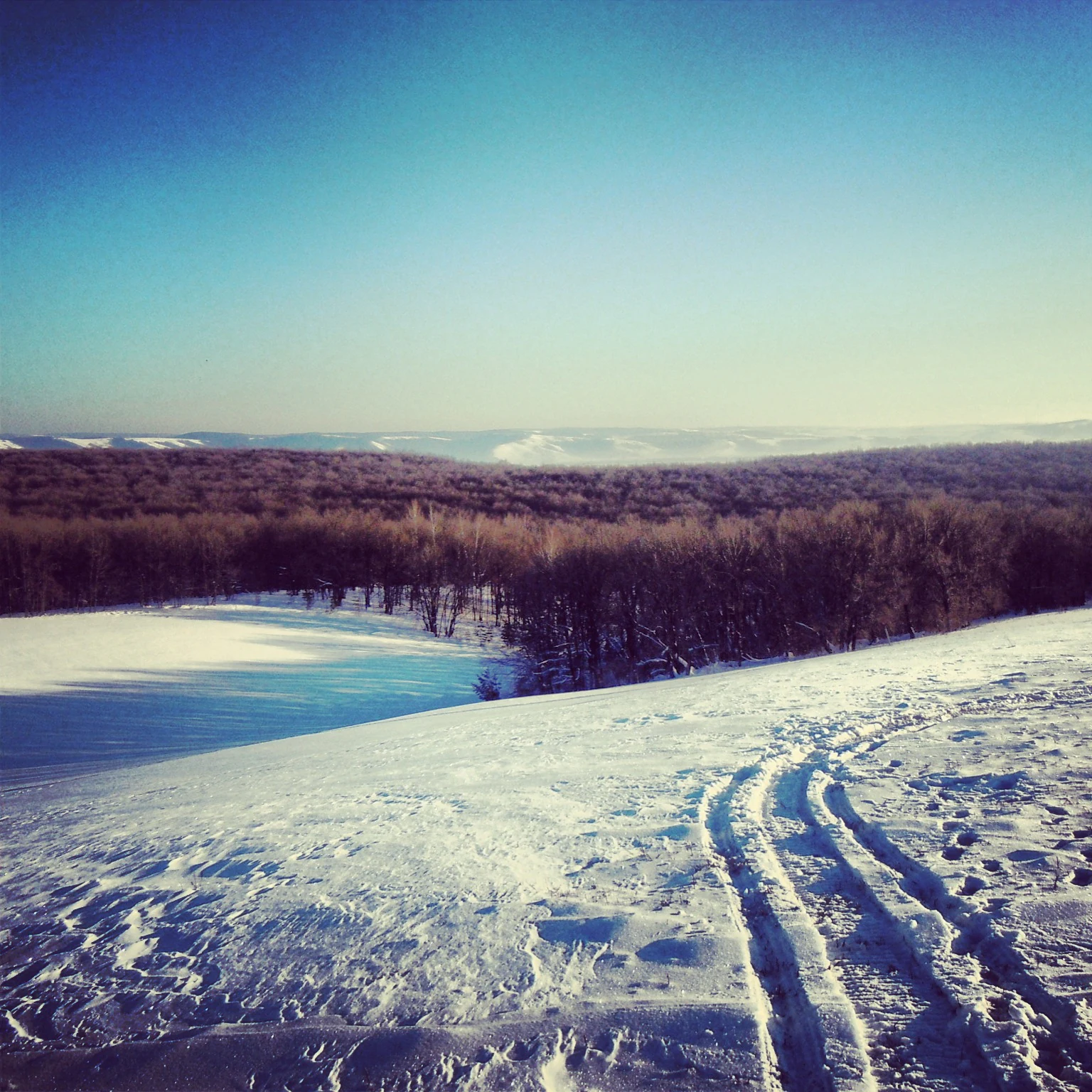
Bashkiriya National Park experiences a humid continental climate with warm summers and cold, snowy winters, characteristic of the southern Urals. Summer months offer the most accessible conditions for exploration, with the Nugush Reservoir providing a popular destination during the warm season. The forest trails, river valleys, and cave systems are most easily explored from late spring through early autumn. Winter visits provide opportunities to experience the park's snowy landscape and forest scenery, though access to some areas may be limited by snow and cold temperatures. The transition seasons of spring and autumn offer different character, with spring bringing blooming flora and autumn displaying the color change of broadleaf trees against the coniferous backdrop.