
Why Hunsrück-Hochwald National Park stands out
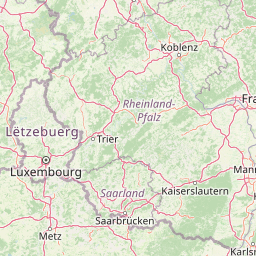
Hunsrück-Hochwald is best known as Germany's newest national park, representing a modern approach to wilderness restoration in the densely forested central European low mountain ranges. The park is renowned for its extensive beech-dominated forests, of which the potential natural vegetation would be acid-loving beech forest on quartzite substrates. The landscape features distinctive hangmoors, or elevated bogs, that have formed on the slopes of the quartzite ridges, along with rare block slope formations from the glacial period. The European wildcat, a rare and elusive predator, has established populations in the park's extensive old-growth forest areas. The park also contains the Ringwall von Otzenhausen, an ancient Celtic fortification site that provides a window into the region's prehistoric human occupation.
Hunsrück-Hochwald National Park history and protected-area timeline
The establishment of Hunsrück-Hochwald National Park followed more than a decade of planning, negotiation, and public consultation between the governments of Rhineland-Palatinate and Saarland. The process began in earnest in 2013 when most municipalities within the proposed park boundaries voted to support the concept, demonstrating unusual local consensus for a project of this scope. In 2014, the two state governments finalized the park's name and brought enabling legislation through their respective parliaments in the form of a inter-state treaty, the Staatsvertrag über die Errichtung und Unterhaltung des Nationalparks Hunsrück-Hochwald.
The park's creation was part of a broader wave of national park expansion in Germany that began in the late 1990s and accelerated in the 2000s, with new parks established in the Black Forest, Kellerwald, and Eifel regions. Hunsrück-Hochwald was preceded by the Nationalpark Schwarzwald, established in 2014, making it the sixteenth German national park and the youngest. The decision to create a park crossing state boundaries was itself notable, as most German national parks lie entirely within a single federal state. The dual-state administration required the creation of novel governance structures, including the inter-state National Park Office and the National Park Assembly that brings together elected representatives from both states.
Hunsrück-Hochwald National Park landscape and geographic character
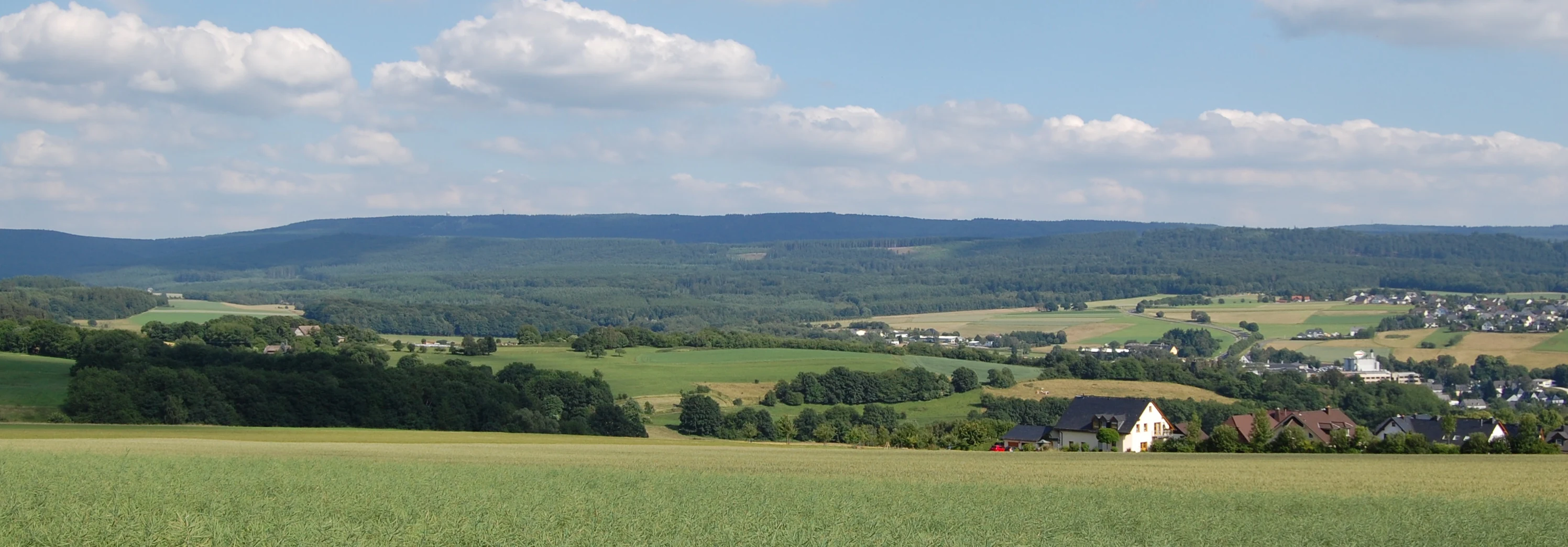
The landscape of Hunsrück-Hochwald National Park reflects the geological character of the Hunsrück low mountain range, built upon Devonian slate and quartzite substrates that form the backbone of this western German highland region. The park encompasses the Idarwald in the north and the Schwarzwälder Hochwald in the south, two interconnected forest-covered ridges that rise to elevations between 400 and 700 meters above sea level. The highest point, Erbeskopf, reaches 816 meters and offers panoramic views across the forested highlands to the Rhine valley beyond.
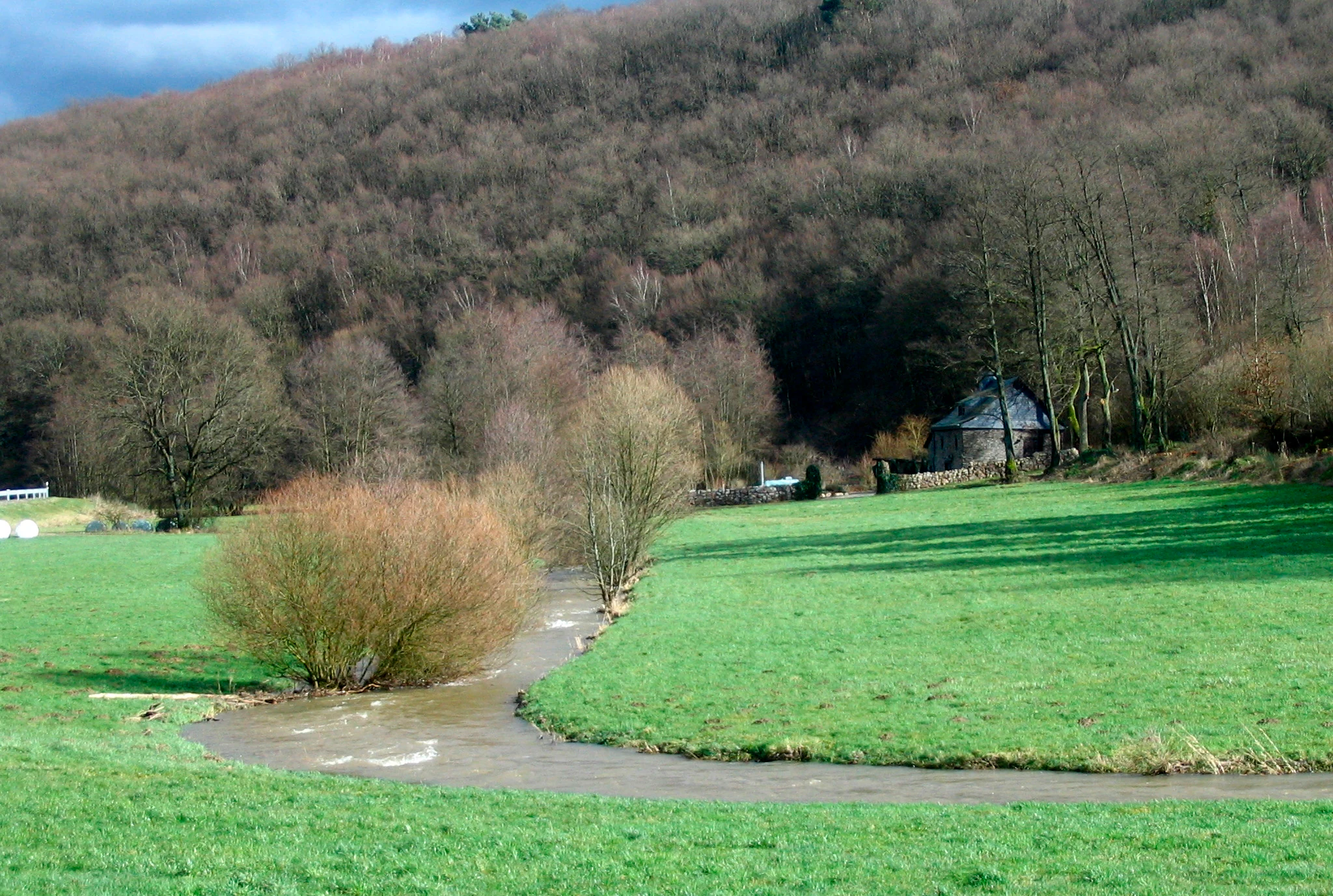
The park contains a remarkable variety of terrain features shaped by geological processes and the passage of ice during the last glacial period. The Mörschieder Burr, a prominent block slope of granite boulders accumulated during the glacial maximum, represents one of the most visually striking landscape features. Steep-sided valleys, such as those carved by the Idarbach and its tributaries, descend sharply from the plateau, creating dramatic changes in elevation and exposing rocky cliff faces along their banks. The upland plateaus are punctuated by numerous springs and seeps that have given rise to extensive hangmoor complexes, where peat-forming vegetation has developed on the moisture-retentive slopes.
Hunsrück-Hochwald National Park ecosystems, habitats, and plant life
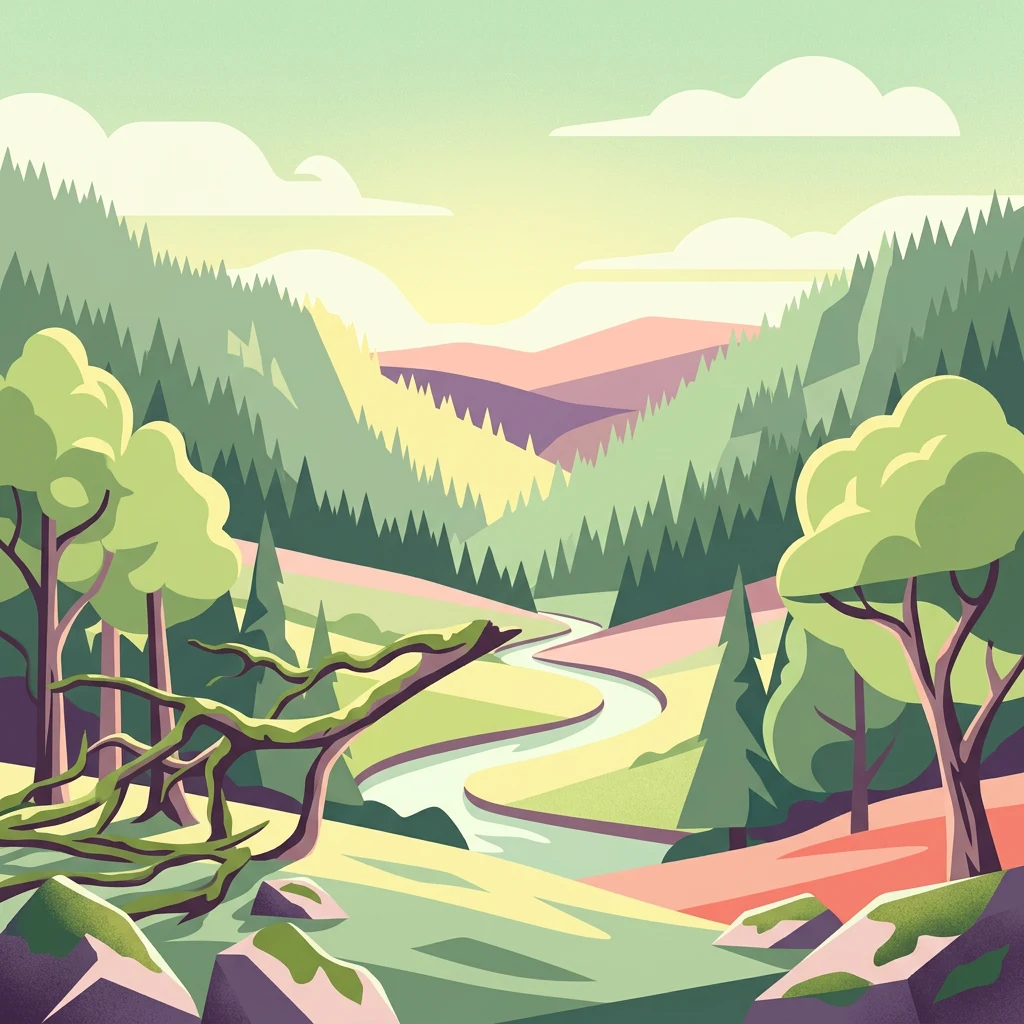
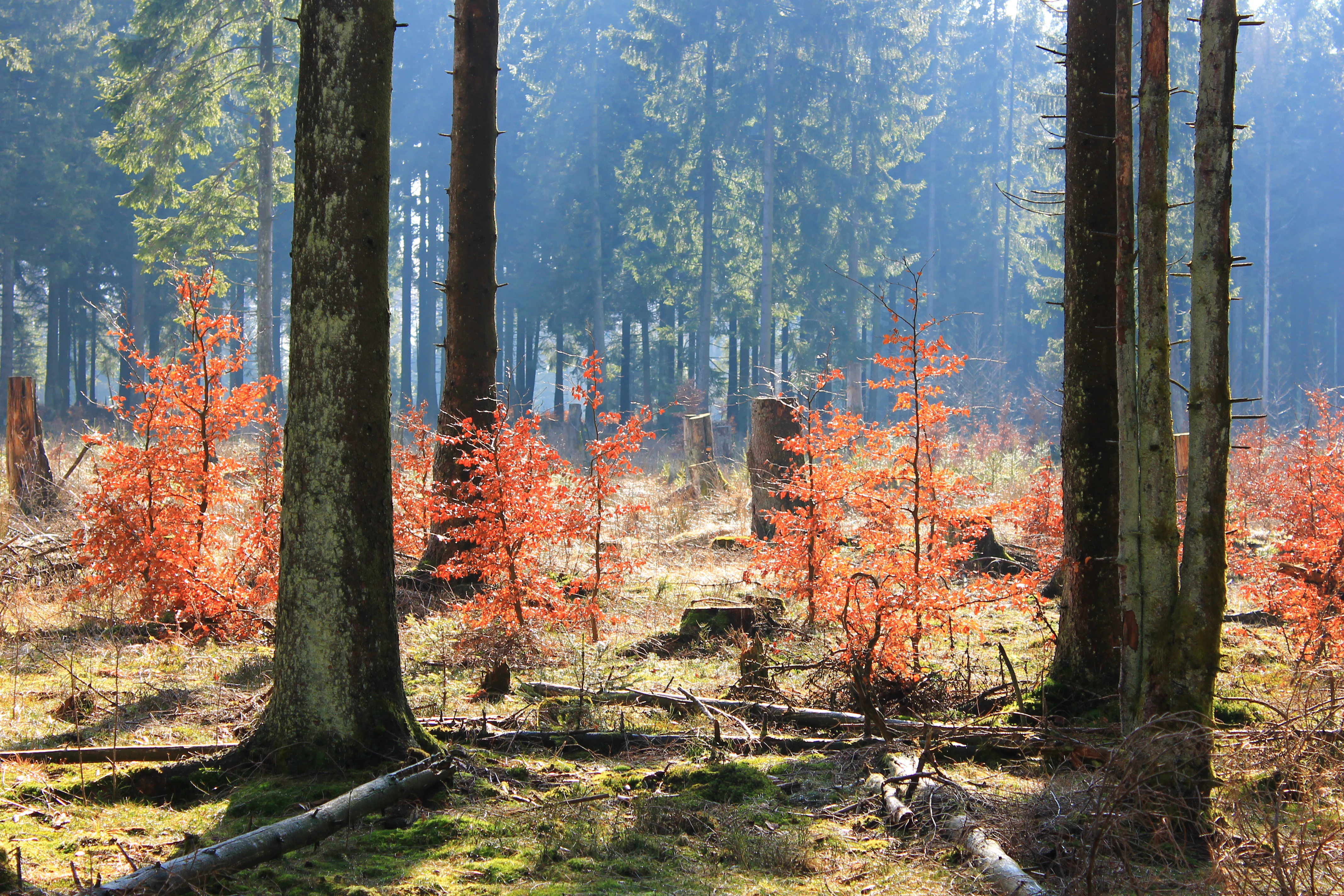
The ecological character of Hunsrück-Hochwald is defined by its extensive forest ecosystems, which cover the vast majority of the park's area. The potential natural vegetation across most of the park would be acid-loving beech forest growing on the quartzite-dominated substrates, reflecting the cool, moist climate of the highlands with more than 800 millimeters of annual precipitation. However, decades of commercial forestry have replaced much of the original beech forest with planted spruce monocultures, and one of the park's primary ecological missions is the conversion of these artificial plantations back toward more natural deciduous forest conditions.
The park lies within one of Germany's designated biodiversity hotspots, the Saar-Ruwer-Hunsrück region recognized for its exceptional concentration of characteristic species and habitats. The old-growth beech forests and spruce stands with large deadwood volumes support specialized species including the Black Woodpecker, Three-toed Woodpecht, and the Pygmy Owl, all of which require substantial tree cavities for nesting. The park's wetlands and moorlands, though limited in total extent, provide crucial habitat for species adapted to permanently moist conditions, and the mosaic of forest types with open grassland creates edge habitats that support diverse communities of insects, including numerous butterfly species.
Hunsrück-Hochwald National Park wildlife and species highlights
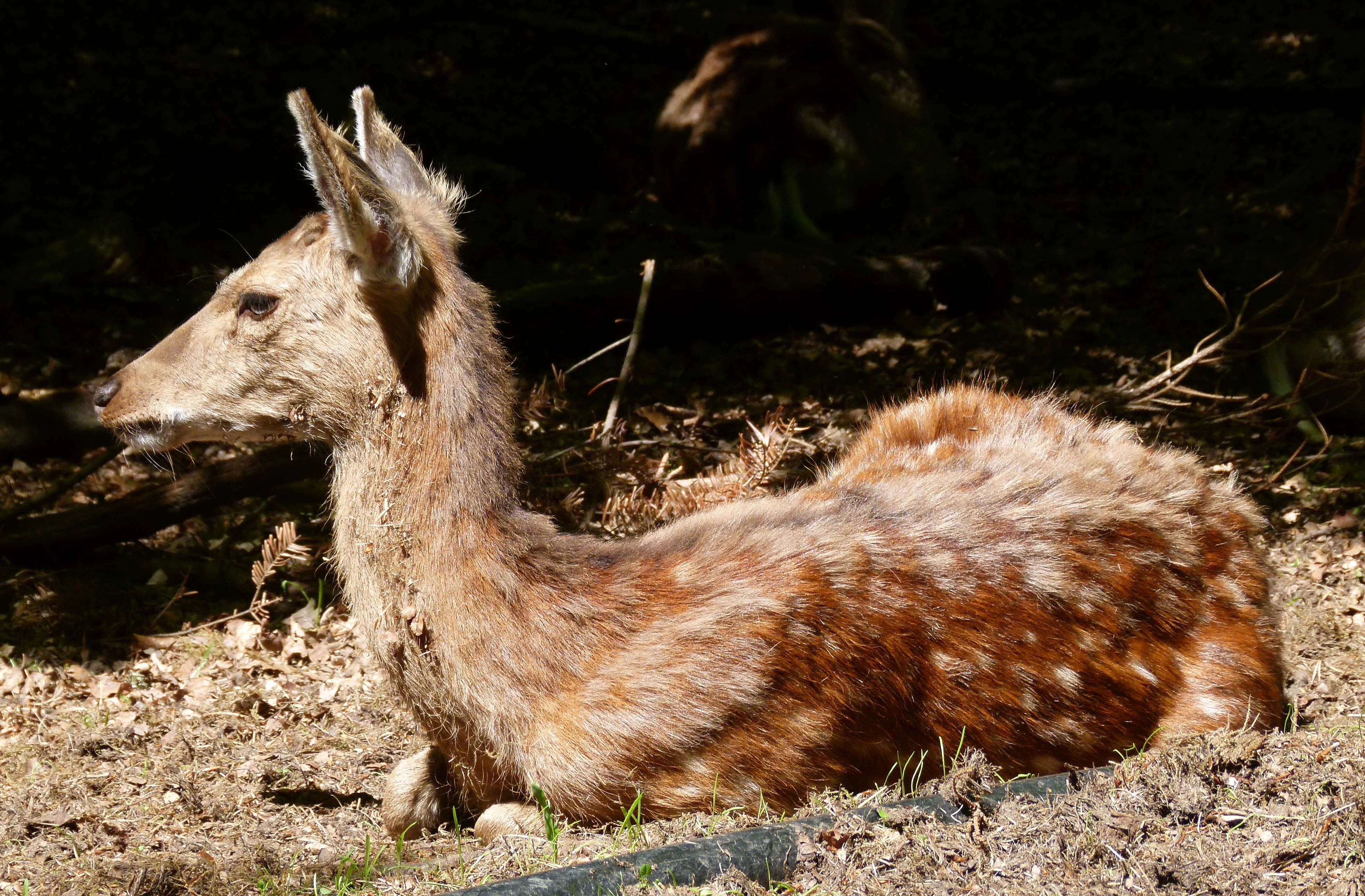
Hunsrück-Hochwald supports a diverse community of forest-dwelling species that have benefited from the protection afforded by the national park designation. The European Wildcat, a rare and elusive predator that was driven to near-extinction across much of central Europe during the nineteenth and twentieth centuries, has established viable populations in the extensive forested areas of the park. This shy felid prefers dense, structurally diverse woodland with ample prey populations of small mammals and birds. The Red Deer, representing the largest wild herbivore in the region, is present throughout the park and can be observed particularly at dawn and dusk in the more open areas and forest clearings.
The bird community of the park is notably rich, with species such as the Black Woodpecker, Three-toed Woodpecker, and Pygmy Owl representing characteristic inhabitants of old-growth forest environments. The Wasp Buzzard, a specialized raptor that feeds primarily on social wasps and their larvae, hunts across the park's open woodland and clearings. The Bechstein's Bat, one of Europe's rarest bat species, roosts in tree cavities within the park's old trees and forages through the insect-rich forest habitats. The Hazel Grouse, a ground-dwelling bird of coniferous and mixed forest understory, survives in the remaining coppice woodlands and scrubby areas of the park.
Hunsrück-Hochwald National Park conservation status and protection priorities
Hunsrück-Hochwald represents Germany's commitment to expanding wilderness protection in the heavily forested and densely populated heart of central Europe. The park is designated as both an EU Birds Directive Special Protection Area and a Fauna-Flora-Habitat Directive site, integrating it into the continental network of protected areas known as Natura 2000. This double designation reflects the exceptional ecological value of the forest, moorland, and grassland habitats that the park protects.
The park's management strategy emphasizes allowing natural processes to proceed without active intervention across the majority of its territory, reflecting the IUCN Category II criteria for national parks. This approach distinguishes Hunsrück-Hochwald from many older German protected areas that continue to manage forests for timber production or other extractive uses. The conversion of former spruce plantations toward more natural deciduous forest conditions represents a long-term ecological restoration project that will unfold over several decades. The park also functions as a node in the federal biotope network, connecting to surrounding landscapes and contributing to broader conservation objectives for mobile species that require large territories.
Hunsrück-Hochwald National Park cultural meaning and human context
The Hunsrück highlands have been inhabited by humans for thousands of years, and the park contains evidence of this long occupation. The Ringwall von Otzenhausen, a Celtic hillfort dating to the Iron Age, represents one of the most significant archaeological sites in the region. This fortification, constructed between 500 and 200 BCE, sits on a prominent hilltop within the park and demonstrates that the forested highlands were not merely a wilderness to be avoided but an area of strategic and economic importance to prehistoric communities. The Celtic name for the Idarwald, "id ar" meaning forest height above the land, indicates that this landscape has been recognized as distinct and significant throughout human history.
The park region was shaped by traditional agricultural practices that created and maintained the semi-open landscapes of meadows, orchards, and rough grasslands that surround the core forest areas. These traditional cultural landscapes, now protected as part of the park's maintenance zone, provide habitat for many species that require the transition between forest and open land. The village of Börfink, an enclave within the park boundaries, represents the human dimension of this landscape and illustrates how communities have historically lived in close association with the forest.
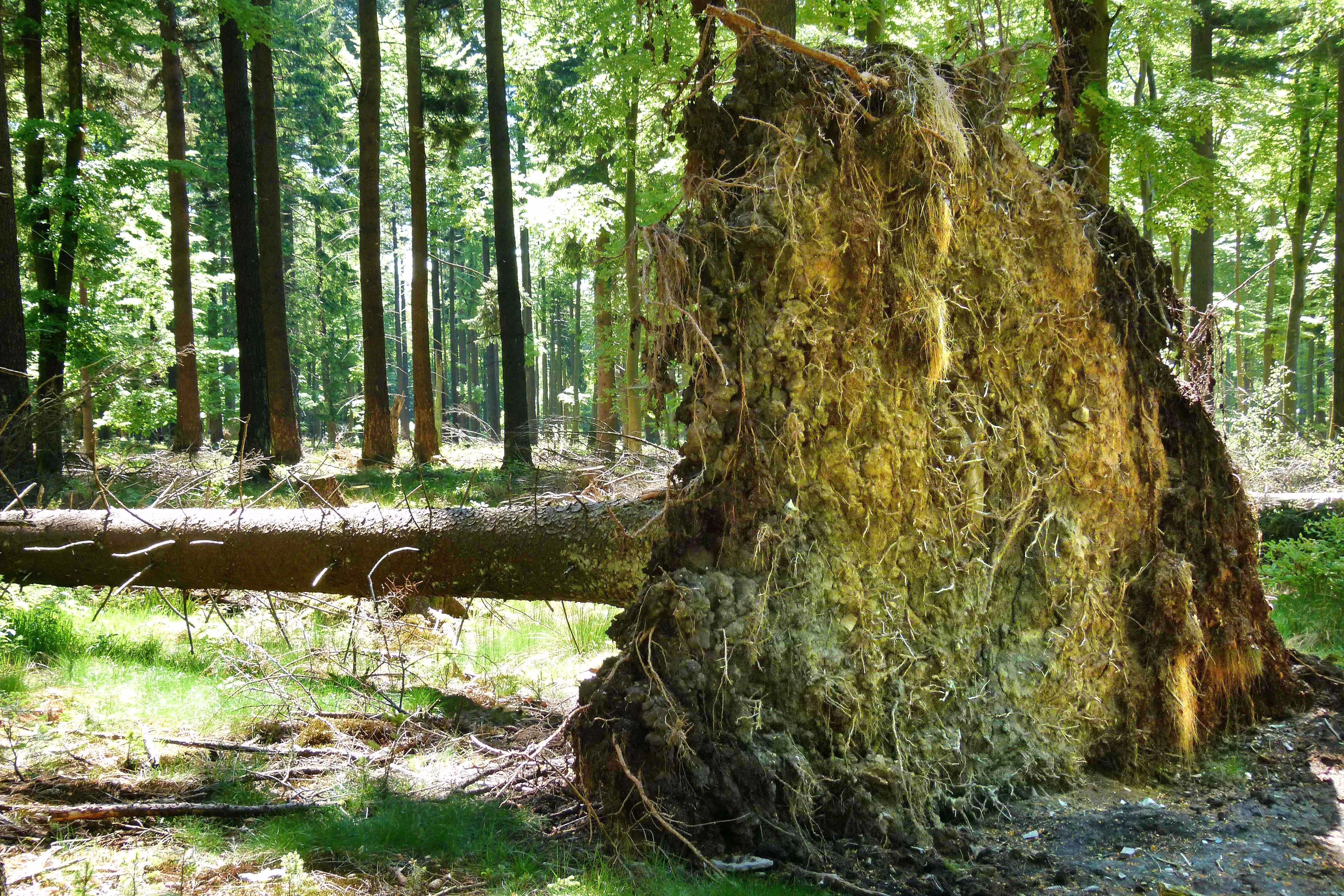
Top sights and standout views in Hunsrück-Hochwald National Park
The park offers several distinctive experiences for visitors seeking to explore its natural and cultural values. Erbeskopf, accessible by hiking trails and road, provides the highest viewpoint in the Hunsück with a visitor center and the Windklang sculpture that commemorates the park's establishment. The Saar-Hunsrück-Steig long-distance hiking trail passes through the park on its way from the Saarland to the Rhine, offering experienced hikers access to the most scenic sections. The hangmoors, with their elevated bog vegetation and wooden walkway systems, provide accessible encounters with wetland ecosystems that are otherwise rare in Germany's low mountain ranges. The Wildfreigehege Wildenburg enclosure allows visitors to observe red deer and other forest animals in a semi-natural setting.
Best time to visit Hunsrück-Hochwald National Park
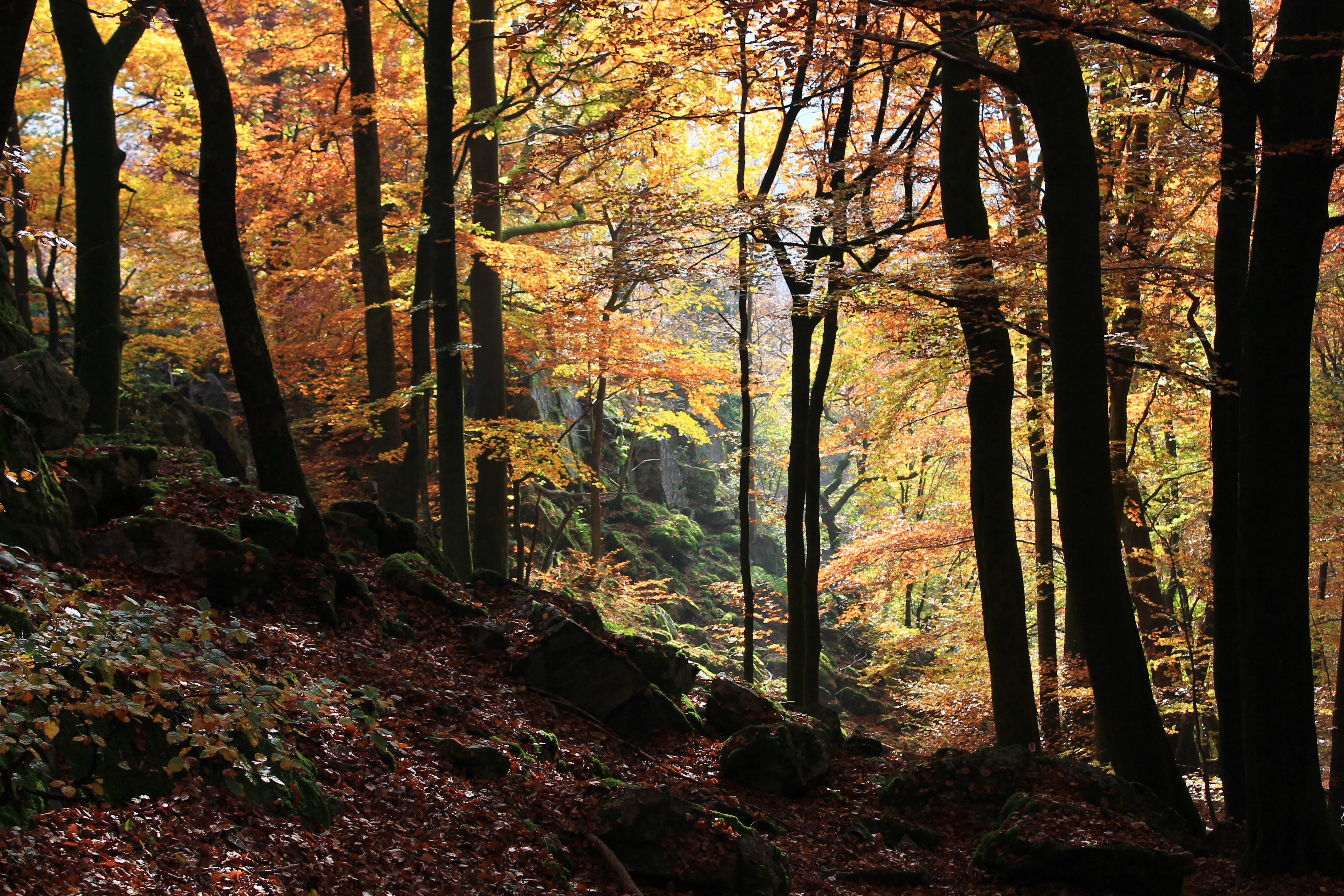
The park can be explored year-round, though each season offers distinct experiences. Spring brings the awakening of the forest, with fresh leaf growth and the return of migratory birds, while the damp conditions of early summer make the moors particularly vibrant with flowering vegetation. Autumn transforms the beech forests with spectacular color, and this season often sees the largest numbers of visitors attracted by the striking fall foliage. Winter, while quieter, reveals the stark beauty of the leafless forest and offers opportunities to track wildlife in the snow, though some trails may be difficult to navigate. The shoulder seasons of spring and autumn generally provide the most comfortable conditions for hiking and wildlife observation.