Mori Atlas logo
National parkKampinos National Park

Discover the mapped geography and unique ecosystems of this Masovian Voivodeship national park.

Kampinos National Park: Poland's Premier Inland Dune Landscape and Protected Area

(Kampinoski Park Narodowy)

Kampinos National Park, located in the Masovian Voivodeship near Warsaw, represents a significant protected landscape. As Poland's second-largest national park, it safeguards the ancient Kampinos Forest and boasts one of Europe's most exceptional inland sand dune systems. This page serves as your gateway to understanding the park's unique geography, its role as a UNESCO biosphere reserve, and its vital status as a protected area for diverse wildlife and historical reflection.

national parkforest protected areasand duneswetlandsbiosphere reserveNatura 2000

Kampinos National Park

National park

Park overview

Structured park overview, official facts, and landscape profile for Kampinos National Park

Kampinos National Park park facts, protected area profile, and essential visitor context
Review the core facts for Kampinos National Park, including designation, size, terrain, visitor scale, habitats, and operating context in one park-focused overview.

About Kampinos National Park

Kampinos National Park occupies a unique position in Poland's protected area network as the nation's second-largest national park and the sole representative in the densely populated Masovian Voivodeship. The park protects the historic Kampinos Forest, an ancient woodland that once formed part of the much larger Mazovian Forest that covered central Poland. Today, this forest ecosystem survives as a critical green lung for the Warsaw metropolitan area, providing ecological, recreational, and cultural functions for millions of people. The park's location at the confluence of major river valleys—the Vistula with its tributary Bzura, and the Narew with its tributaries Bug and Wkra—creates a complex hydrological system that supports diverse wetland habitats. The landscape is characterized by a striking contrast between the towering sand dunes, covered in pine forest or exposed with specialized sand-dwelling vegetation, and the extensive marshlands, peat bogs, and wet meadows that fill the intervening depressions. This juxtaposition of xeric dune habitats and hydric wetland environments within a relatively compact area produces remarkable ecological diversity. The park's proximity to Warsaw—just a short journey from the city center—makes it extraordinarily accessible, with approximately one million visitors annually exploring its trails and natural wonders.

Quick facts and research context for Kampinos National Park

Kampinos National Park covers 385.44 square kilometers of forested wetland landscape in east-central Poland, making it the country's second-largest national park. Located in the Masovian Voivodeship on Warsaw's northwest edge, the park protects the ancient Kampinos Forest within the Warsaw Basin. Around 73% of the area is covered by forests, predominantly pine, with the remaining landscape consisting of sand dunes and marshland. The park was established in 1959 and achieved UNESCO biosphere reserve status in 2000. It hosts significant populations of large mammals including moose, Eurasian beaver, and lynx, all of which have been reintroduced since the mid-20th century. A protective buffer zone of 377.56 square kilometers surrounds the core protected area.

Park context

Deeper park guide and search-rich context for Kampinos National Park

Kampinos National Park history, landscape, wildlife, and travel context
Explore Kampinos National Park through its history, landscape character, ecosystems, wildlife, conservation priorities, cultural context, and seasonal travel timing in a structured park guide built for atlas discovery and search intent.

Why Kampinos National Park stands out

Kampinos National Park is best known for its exceptional inland sand dune system, which is considered the best-preserved complex of its kind in Europe. Grochalskie Piachy represents the largest and most impressive sand dune formation in Poland, with parabolic dunes reaching heights of up to 30 meters. The park is also renowned as one of Poland's three premier locations for moose viewing, with a thriving population that serves as the park's symbolic emblem. The combination of pine-covered dunes, extensive wetlands, and mature forest creates a distinctive landscape that supports remarkable biodiversity, including over 200 documented bird species and numerous reintroduced large mammals.

Kampinos National Park history and protected-area timeline

The establishment of Kampinos National Park represents the culmination of decades of scientific research and conservation advocacy. The concept of creating a protected area in the Kampinos Forest was first proposed during the 1920s, reflecting growing awareness of the forest's ecological and landscape value. In the 1930s, the first forest reserves were established at Granica, Sieraków, and Zamczysko, based on pioneering botanical and geological research conducted by Roman and Jadwiga Kobendza. These early reserves, originally designed to protect representative samples of the forest ecosystem, later formed the core of the national park. Kampinos National Park was officially created on January 16, 1959, through a regulation of Poland's Council of Ministers, covering an initial area of 407 square kilometers. The park's boundaries were adjusted in 1997, reducing its area to the current 385.44 square kilometers while consolidating its protection focus. In January 2000, the park and its surrounding buffer zone were inscribed on UNESCO's World Network of Biosphere Reserves, recognizing its international significance for biodiversity conservation and sustainable development. The park's historical significance extends beyond its natural values to encompass Poland's turbulent modern history. The forest and surrounding areas served as refuge and battleground during the January Uprising of 1863, the Polish-German war of 1939, and the anti-German resistance movement of 1944-1945. The Palmiry cemetery within the park contains the graves of Polish civilians secretly executed by Nazi forces during the Warsaw occupation, while other sites commemorate fallen insurgents and partisans.

Kampinos National Park landscape and geographic character

The landscape of Kampinos National Park presents a remarkable combination of geomorphological features shaped by glacial and post-glacial processes. The park's most distinctive element is its extensive sand dune system, formed during the Weichselian glaciation and subsequently reshaped by wind action during the Holocene period. These inland dunes, particularly well-preserved in the Grochalskie Piachy area, represent one of Europe's finest examples of parabolic and dune-ridge formations found away from coastal environments. The dunes reach heights of up to 30 meters and create a dynamic terrain of ridges, blowouts, and interdunal depressions. Between the dune fields, extensive wetlands have developed in the naturally impounded depressions, where poor drainage and high groundwater levels support marshland, peat bogs, and wet meadow communities. The park lies within the Warsaw Basin, a broad flat area that represents the ancient valley of the Vistula River. The river junction where the Vistula and Narew systems converge adds to the hydrological complexity, with numerous small streams, canals, and former river channels creating a varied water landscape. The Łasica canal, at 35 kilometers the longest watercourse within the park, drains the western portions before joining the Bzura River.

Kampinos National Park ecosystems, habitats, and plant life

The ecological character of Kampinos National Park reflects the interplay between its sandy soils, forest cover, and wetland systems. Approximately 73% of the park's area is forested, with continental fresh pine forest (bór świeży) as the dominant plant community. Pine forests dominate the dune slopes and sand plains, while oak represents an important minor component, comprising roughly 10% of the tree cover and including native species such as pedunculate oak and sessile oak alongside introduced red oak. Wetland forests of alder carrs and riparian woodlands occupy the lower-lying areas, providing habitat contrast to the dry pine stands. The park supports approximately 1,400 species of vascular plants, including 74 tree species, and around 150 species of bryophytes. The plant communities include notable glacial relicts such as dwarf birch, northern wintergreen, sand pink, and mountain avens, reflecting the site's biogeographical significance at the edge of boreal and continental plant distribution ranges. The wetland environments support specialized vegetation including sedge communities, peat mosses, and bog shrubs. Soils across the park are typically acidic and nutrient-poor, derived from aeolian sands and including rust soils, podzols, and groundwater gley soils, with occasional black earths, mud, peat, and muck soils in wetland areas.

Kampinos National Park wildlife and species highlights

Kampinos National Park supports remarkable wildlife populations, with particular significance attached to its large mammal communities. The park is one of Poland's three primary locations for moose, the largest deer species in Europe, and this iconic animal serves as the park's emblematic symbol. Moose were reintroduced to the park in 1951 and have established a thriving population that benefits from the extensive wetland habitats. The Eurasian beaver, reintroduced in 1980 with the release of seven individuals, has similarly prospered in the park's river and wetland systems, contributing to the restoration of natural hydrological processes through its dam-building activities. The Eurasian lynx, reintroduced in 1992, represents a more recent addition to the park's predator community, helping to balance the ecosystem as a top predator. Other mammals inhabiting the park include wolf, European otler, beech marten, red fox, eastern hedgehog, raccoon dog, roe deer, red deer, and wild boar, as well as 17 species of bats. The bird fauna is exceptionally diverse, with over 200 species documented. Notable species include bittern, black stork, white stork, crane, corncrake, little bittern, common kingfisher, aquatic warbler, lesser spotted eagle, marsh harrier, and eagle owl. The park is recognized as a European-level bird sanctuary by the European Parliament, underscoring its importance for breeding and migratory bird populations.

Kampinos National Park conservation status and protection priorities

Kampinos National Park holds significant conservation status at both national and international levels. As a Category II protected area under the IUCN classification, it meets international standards for national park designation. The park forms part of the Natura 2000 network as a Special Area of Conservation under the EU Habitats Directive, specifically designated as the Puszcza Kampinoska site (PLC140001). The UNESCO biosphere reserve designation, granted in January 2000, recognizes the park's role in combining biodiversity conservation with sustainable development. The reserve comprises three zones: the core zone consisting of the park's strict protection areas, a buffer zone encompassing areas under partial and landscape protection, and a transition zone represented by the surrounding protective buffer. Within the park, 22 strict protection areas cover a total of 5,823 hectares, approximately 15% of the total area, where human intervention is minimized to allow natural processes to proceed. The park faces ongoing conservation challenges related to its location adjacent to a major metropolitan area, including pressures from urban development, visitor impact, and the need to balance recreation with protection.

Kampinos National Park cultural meaning and human context

The cultural landscape of Kampinos National Park reflects centuries of human interaction with the forest environment. The Kampinos Forest has historically served as a source of game, timber, and other forest products, while its wetlands provided grazing and hay-making opportunities. Settlement within the forest area expanded from the 17th century onward as clearing of forest glades, agricultural cultivation, and village establishment proceeded. By the 20th century, the agricultural footprint had significantly reduced the forest's extent, though since the late 1970s the park authority has been progressively acquiring former agricultural lands for reforestation and restoration. The park contains numerous sites of historical and cultural significance related to Poland's struggles for independence. The 1863 January Uprising against Russian rule is commemorated by monuments to fallen insurgents. World War II history is particularly poignant, with the Palmiry cemetery holding the remains of Polish civilians executed by Nazi forces during the German occupation of Warsaw. War cemeteries from the 1939 Polish-German conflict and partisan graves from the 1944-1945 anti-German resistance add to the park's historical significance. Perhaps most famously, the park contains Żelazowa Wola, the manor house where composer Frédéric Chopin was born in 1810, located on the park's outskirts and now operating as a museum.

Top sights and standout views in Kampinos National Park

The Grochalskie Piachy sand dune complex stands as the park's most spectacular geological feature, representing Europe's best-preserved inland dune system and providing a unique landscape of pine-covered and exposed sand ridges. The opportunity to observe moose in their natural wetland habitat makes Kampinos one of Poland's premier locations for wildlife viewing, with the species serving as the park's official emblem. The extensive trail network, including the main Kampinos Forest Trail spanning 55.8 kilometers and the 144.5-kilometer Kampinos Bicycle Trail, provides exceptional access for hiking and cycling exploration. The presence of reintroduced beaver and lynx populations demonstrates successful wildlife restoration, while the bird checklist exceeding 200 species makes the park significant for ornithological interest. The historical dimension adds depth to the visitor experience, with sites commemorating Polish independence history and the Palmiry massacre providing reflection opportunities. The park's accessibility from Warsaw—just minutes from the city center—makes it a uniquely valuable green resource for both recreation and environmental education.

Best time to visit Kampinos National Park

Kampinos National Park can be visited year-round, though each season offers distinct experiences. Spring and early summer bring the park to life as migratory birds return, wetlands fill with breeding calls of cranes and bitterns, and the dune vegetation blooms with specialized sand-loving flowers. May and June offer particularly rich wildlife viewing as birds are actively nesting and mammals are more visible in the warming weather. Autumn provides excellent conditions for forest walking as the pine forests take on golden hues and fewer visitors populate the trails, while late autumn sees the start of the elk rutting season. Winter transforms the landscape, with snow-covered dunes and frozen wetlands offering a different character, and the lack of foliage makes wildlife such as moose easier to spot. The park remains accessible throughout the year, though some trails may be less suitable during muddy periods in late autumn and early spring. Summer weekends can be busy given the park's proximity to Warsaw, so visiting on weekdays or during the shoulder seasons offers a more tranquil experience.
Park location guide

Geography guide, regional context, and park location map for Kampinos National Park

Kampinos National Park park geography, regions, and map view in Poland
Understand where Kampinos National Park sits in Poland through a broader geographic reading of the surrounding landscape, nearby location context, and its mapped position within the national park landscape.

How Kampinos National Park fits into Poland

Poland, officially the Republic of Poland, is a Central European country spanning from the Baltic Sea in the north to the Carpathian Mountains in the south. It borders Germany, Czech Republic, Slovakia, Ukraine, Belarus, Lithuania, and Kaliningrad Oblast. The country has a temperate climate, diverse landscapes, and is known for its rich history, cultural heritage, and strong economic position within the EU.

Wider geography shaping Kampinos National Park in Poland

Poland occupies 312,696 km2 in Central Europe, extending from the Baltic Sea coast in the north to the Sudetes and Carpathian Mountains in the south. It borders Germany to the west, Czech Republic and Slovakia to the south, Ukraine and Belarus to the east, and Lithuania and Kaliningrad Oblast to the northeast. The landscape includes lowland plains, uplands, and mountain ranges.

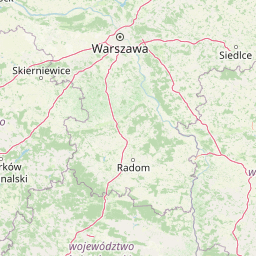
Map view of Kampinos National Park

Use this park location map to pinpoint Kampinos National Park in Poland, understand its exact geographic position, and read its mapped placement within the surrounding landscape more clearly.

Pigeon | © OpenStreetMap contributors

Location context for Kampinos National Park

Masovian Voivodeship
Park atlas

Trace the regional geography and diverse protected landscapes surrounding Kampinos National Park, comparing conservation efforts across Poland.

Explore Other National Parks and Protected Areas Near Kampinos National Park in Masovian Voivodeship
Browse a curated selection of national parks and notable protected areas located near Kampinos National Park, examining their unique ecological features and geographical settings. This structured atlas view allows for direct comparison of different protected landscapes, revealing how conservation strategies vary across the Masovian Voivodeship and wider Polish terrain.
Watercolor painting showing a winding river through marshy fields with distant hills
National parkPodlaskie Voivodeship

Narew National Park: Discover Poland's Premier Wetland National Park with Unique River Geography

Explore its mapped boundaries and rich protected landscape.

Narew National Park represents a significant protected area within the Podlaskie Voivodeship, distinguished by its one-of-a-kind anastomosing river system where the Narew River splits into numerous interconnected channels. This dynamic wetland environment provides critical habitat and showcases a complex interplay of water, land, and diverse ecosystems. Users can explore the park's geographic features, understand its protected landscape status, and appreciate its vital role within the regional atlas through detailed mapping and factual context.

Area
73.5 km²
Established
1996
IUCN
II
Relief
Lowland
Watercolor illustration of rolling hills with green forests in the foreground and purple, green, pink, and yellow mountain ranges in the background
National parkŚwiętokrzyskie Voivodeship

Świętokrzyski National Park: Protected Landscape and Mapped Terrain of Poland's Ancient Mountains

Discover the unique gołoborze and ancient forests of this national park.

Świętokrzyski National Park in Poland's Świętokrzyskie Voivodeship offers a unique geographic discovery experience. Explore the park's mapped boundaries, characterized by its distinctive gołoborze rock rubble fields, ancient silver fir trees, and endemic Polish larch forests. This protected area within the Holy Cross Mountains provides a prime example of ancient landscape evolution and protected forest ecosystems, ideal for atlas-based exploration and understanding regional geography.

Area
76.26 km²
Established
1950
IUCN
II
Visitors
168K annual
Watercolor painting showing a wetland scene with reeds, patches of water, and trees under a light sky
National parkPodlaskie Voivodeship

Biebrza National Park: Poland's Largest National Park and European Wetland Atlas

Explore the mapped geography of its vast protected fenlands.

Biebrza National Park represents a critical protected landscape in northeastern Poland, famed for its vast, intact Biebrza Marshes, the largest lowland peat bog complex in Europe. This national park page offers detailed geographic context, highlighting the unique fenland terrain, marshland ecosystems, and protected area boundaries. Discover why this region is internationally recognized for its biodiversity and its significance within the broader atlas of European protected lands.

Area
592.23 km²
Established
1993
IUCN
II
National park

Polesie National Park: Protected National Park in Poland's Eastern Lowlands

Explore its mapped wetland geography and unique glacial terrain.

Polesie National Park represents a key protected landscape within eastern Poland, notable for its vast wetland complexes, including extensive peat bogs and marshes interspersed with pine forests on sandy dunes. This national park showcases a distinct geography shaped by glacial processes, offering a unique perspective on lowland ecosystems and their conservation. MoriAtlas allows for a structured discovery of its protected boundaries and the surrounding regional context, providing an atlas-driven understanding of this vital natural territory.

Area
97.52 km²
Established
1979
IUCN
II
Watercolor painting showing a river flowing through a forested landscape with green hills, distant mountains, and a pink and yellow sky
National park

Belavezhskaya Pushcha National Park: Ancient Primeval Forest & European Bison Sanctuary

Explore mapped protected areas and regional geography.

Belavezhskaya Pushcha National Park stands as a testament to Europe's ancient woodland heritage, a protected landscape of immense ecological value. This primeval forest, a sanctuary for the European bison, offers a unique glimpse into an ecosystem preserved for millennia. The park's mapped boundaries and geographic context provide essential detail for understanding its role as a critical natural monument and a cornerstone of regional protected areas.

Area
1,500.69 km²
Established
1932
IUCN
II
Visitors
300K annual
Watercolor illustration of a river flowing through grassy terrain with rolling hills in the background
National parkPodlaskie Voivodeship

Białowieża National Park: Europe's Last Unmodified Primeval Forest and Bison Habitat

Mapped protected landscape and regional geography in Podlaskie Voivodeship.

As Poland's most vital natural heritage site, Białowieża National Park protects an exceptionally rare example of an ancient temperate primeval forest. This national park, located within the Podlaskie Voivodeship, serves as a living ecological laboratory, showcasing natural processes in unmodified woodland habitats. Its significance extends to being a critical sanctuary for the European bison, housing the world's largest free-ranging population. MoriAtlas provides detailed map context and geographic insights into this globally important protected area and its unique landscape.

Area
105.17 km²
Established
1932
IUCN
II
Visitors
140K annual
Watercolor depiction of a lake with reeds, forested shoreline, and distant mountains
National parkUkraine

Shatsk National Natural Park: Ukraine's Deepest Lake and Wetland Protected Area Atlas

Mapped landscape and protected geography of a premier Ukrainian national park.

Shatsk National Natural Park in Ukraine is a significant protected area featuring a remarkable cluster of over thirty lakes, most notably Svitiaz Lake, the nation's deepest. This park protects vital wetland and forest ecosystems within the Polissia region, offering a rich geographic context for atlas exploration. Understanding its mapped boundaries and terrain provides insight into its importance as a Ramsar site and a key corridor for migratory birds, making it a cornerstone of conservation geography in Eastern Europe.

Area
489.77 km²
Established
1983
Relief
Lowland
Climate
Temperate
National parkLesser Poland Voivodeship

Ojców National Park: Karst Geography and Protected Landscape Atlas Entry

Explore the mapped terrain and unique geology of this national park.

Ojców National Park, situated in Lesser Poland Voivodeship, offers a concentrated display of dramatic karst topography. This protected national park is renowned for its towering limestone cliffs, intricate ravines, and over 400 caves, showcasing a unique Jurassic geology. As a vital protected area, its mapped boundaries encompass distinctive rock formations like Hercules' Club and the historic Trail of the Eagles' Nests, providing rich context for landscape discovery and atlas exploration.

Area
21.46 km²
Established
1956
IUCN
II
Relief
Upland

Common questions about visiting, size, designation, and location context for Kampinos National Park

Kampinos National Park FAQs for park facts, access, geography, and protected area context
Find quick answers about Kampinos National Park, including protected-area facts, park geography, trail and visitor context, and how the park fits into its surrounding country and regional landscape.
MoriAtlas Explorer

Continue Your Protected Areas Search Across the Global Atlas

Deepen your exploration by continuing the structured search for national parks and protected areas worldwide. Utilize the comprehensive filtering capabilities to compare different conservation landscapes and refine your understanding of global park geography. Discover more about the distribution and characteristics of protected natural areas.

Global natural geography