Mori Atlas logo
National parkNairobi National Park

Discover the mapped boundaries and regional landscape context of this protected national park.

Nairobi National Park: Kenya's Premier National Park for Geographic and Atlas Discovery

Nairobi National Park stands as a vital protected national park within Kenya's dynamic geography. This page offers an atlas-driven exploration of its specific location, providing insight into its mapped boundaries and its role within the broader East African landscape. Users can investigate the park's geographic identity and understand its significance as a conservation area, detailed within a structured, map-focused context.

Savanna EcosystemRhino SanctuaryUrban Proximity WildlifeEast African WildlifeBirdwatching DestinationMigration Corridor

Nairobi National Park

National park

Park overview

Structured park overview, official facts, and landscape profile for Nairobi National Park

Nairobi National Park park facts, protected area profile, and essential visitor context
Review the core facts for Nairobi National Park, including designation, size, terrain, visitor scale, habitats, and operating context in one park-focused overview.

About Nairobi National Park

Nairobi National Park represents a unique conservation achievement as a functioning wilderness area that exists in close proximity to a rapidly growing metropolitan population of over one million people. The park forms the core protected area of the Athi-Kapiti ecosystem, though it comprises less than ten percent of this larger ecological system. Its landscape consists primarily of open grass plains dotted with Acacia trees, transitioning to western uplands where highland dry forest contains species such as Olea africana, Croton dichogamus, Brachylaena hutchinsii, and Calodendrum. The southern boundary follows the Mbagathi River, which provides crucial water resources that sustain wildlife during the dry season. Small dams constructed along the river create additional wetland habitat that supports diverse bird populations and aquatic species. The park's location on the Athi plains historically formed part of a migration corridor stretching from Mount Kilimanjaro to Mount Kenya, comparable in scale to the famous Serengeti migration. While urban expansion has reduced this corridor, the park still maintains its role as the northern terminus for seasonal wildlife movements, with animals utilizing the Kitengela area to reach southern grazing grounds.

Quick facts and research context for Nairobi National Park

Nairobi National Park covers 117.21 square kilometers of savanna and woodland habitat approximately seven kilometers from Nairobi's central business district. Established in 1946, it was Kenya's first national park and remains one of the country's most successful rhinoceros sanctuaries. The park features open grass plains with scattered Acacia vegetation, western highland dry forest, and riverine forest along the Mbagathi River. Its elevation ranges from 1,533 to 1,760 meters, creating a unique highland savanna environment. The park contains the David Sheldrick Wildlife Trust elephant and rhino orphanage, established in 1963, which rehabilitates orphaned calves for release into secure sanctuaries. The 1989 ivory burning ceremony by President Daniel arap Moi took place within the park, symbolizing Kenya's commitment to wildlife conservation.

Park context

Deeper park guide and search-rich context for Nairobi National Park

Nairobi National Park history, landscape, wildlife, and travel context
Explore Nairobi National Park through its history, landscape character, ecosystems, wildlife, conservation priorities, cultural context, and seasonal travel timing in a structured park guide built for atlas discovery and search intent.

Why Nairobi National Park stands out

Nairobi National Park is best known as Kenya's premier rhinoceros sanctuary, earning the nickname Kifaru Ark meaning Rhinoceros Sanctuary in local language. The park is one of the few places where visitors can be virtually guaranteed sightings of black rhinoceros in their natural habitat. It also hosts remarkable wildlife diversity despite its small size, including populations of lion, leopard, cheetah, giraffe, African elephant, and substantial herds of wildebeest and zebra that perform seasonal migrations through the park. The park's proximity to Nairobi makes it uniquely accessible, allowing visitors to experience an authentic safari minutes from a major capital city. The annual wildebeest and zebra migration through the park in July and August draws particular attention, as animals move between the park and southern grazing grounds.

Nairobi National Park history and protected-area timeline

The area that became Nairobi National Park was originally part of the Southern Game Reserve established during the British colonial period in the late 19th century. At that time, the Athi plains east and south of what is now Nairobi supported abundant wildlife, with nomadic Maasai pastoralists and Kikuyu farmers inhabiting the surrounding highlands. As Nairobi grew to 14,000 residents by 1910, human-wildlife conflicts increased, with city residents carrying weapons to protect against lions. Conservationist Mervyn Cowie, born in Nairobi, returned to Kenya in 1932 after a nine-year absence to find wildlife populations dramatically declined due to expanding farms and livestock. He campaigned vigorously for a national park system, and the colonial government formed a committee to examine the proposal. Nairobi National Park officially opened in 1946 as Kenya's first national park, with Maasai pastoralists removed from their traditional lands to create the reserve. Cowie served as director until 1966. A pivotal moment in conservation history occurred in 1989 when President Daniel arap Moi burned twelve tons of ivory on a site within the park, dramatically improving Kenya's international conservation reputation. In March 2024, a mid-air collision involving a Cessna 172 and a Dash 8 passenger aircraft resulted in a crash within the park, highlighting the unusual proximity of aviation traffic to wildlife habitat.

Nairobi National Park landscape and geographic character

The park's physical landscape features a diverse topography ranging from open savanna plains to rocky valleys and gorges. The predominant environment consists of grass plains with scattered Acacia bushes, creating the classic East African safari scenery. The western uplands contain patches of highland dry forest with characteristic tree species, while the lower slopes feature grassland dominated by Themeda, cypress, Digitaria, and Cynodon species. A notable landscape feature is the riverine forest that follows the permanent Mbagathi River through the southern portion of the park, providing a contrasting green corridor amidst the drier savanna. The park contains areas of broken bushland and deep rocky valleys where Acacia and Euphorbia candelabrum predominate. Several rocky hillsides support plant species unique to the Nairobi area, including Euphorbia brevitorta, Drimia calcarata, and Murdannia clarkeana. The terrain creates a visually varied landscape that supports distinct habitat types within a relatively compact area.

Nairobi National Park ecosystems, habitats, and plant life

The park's ecological character reflects its position within the Athi-Kapiti ecosystem, representing a remnant of the once-vast savanna that extended from Mount Kilimanjaro to Mount Kenya. The diverse habitats support over 500 permanent and migratory bird species, with man-made dams creating additional aquatic environments. The vegetation zones range from open grassland through bushland to forest patches, with each zone supporting characteristic species assemblages. The park represents the only protected portion of the Athi-Kapiti ecosystem, making it critically important for maintaining ecological processes in this rapidly developing region. Seasonal patterns shape wildlife distribution, with herbivores dispersing across the plains during wet seasons and concentrating in the park during dry periods when water becomes scarce outside the fenced boundaries. The Mbagathi River and associated dams provide crucial water resources that sustain wildlife concentrations during dry months.

Nairobi National Park wildlife and species highlights

Nairobi National Park supports an impressive array of large mammals despite its relatively small size. The park contains populations of lion, leopard, African buffalo, black rhinoceros, giraffe, hippopotamus, spotted hyena, African bush elephant, blue wildebeest, plains zebra, cheetah, Thomson's gazelle, Grant's gazelle, common eland, impala, hartebeest, waterbuck, common warthog, olive baboon, black-backed jackal, common ostrich, and Nile crocodile. The park is particularly significant for black rhinoceros conservation, being one of Kenya's most successful rhino sanctuaries and among the few parks where visitors can reliably see this endangered species. Herbivore movements follow seasonal patterns, with wildebeest and zebra utilizing the Kitengela migration corridor to reach the Athi-Kapiti plains during wet seasons and returning to the park's water sources during dry periods. The David Sheldrick Wildlife Trust operates a sanctuary within the park that hand-rears orphaned elephant and rhinoceros calves, providing rehabilitation and release programs that contribute to species conservation across Kenya.

Nairobi National Park conservation status and protection priorities

The park faces significant conservation challenges stemming from its location adjacent to a rapidly expanding capital city. Urban growth has reduced the traditional migration corridor, with the park now representing the northern limit of wildlife movements that once extended much further. Human populations surrounding the park create ongoing conflicts through livestock intrusion, habitat fragmentation, and pollution. Factories along the northern boundary contribute effluent that contaminates surface and ground water systems within the park. Changing land use patterns on the Kitengela plains, including subdivision of former group ranches for agriculture and settlement, threaten the wildlife corridor that connects the park to southern grazing areas. The Kenya Wildlife Service works with the Kitengela Landowners Association to balance wildlife protection with community benefits, using park revenues to support local development projects. Since 2005, the park has been recognized as a Lion Conservation Unit for East African lions, highlighting its importance for apex predator populations. The preservation of this park represents an ongoing negotiation between urban development pressures and the need to maintain functional ecosystems within a metropolitan context.

Nairobi National Park cultural meaning and human context

The park's establishment involved significant cultural displacement, with Maasai pastoralists removed from their traditional lands when the protected area was created in 1946. Historical treaties in 1904 and 1911 had already forced Maasai communities to surrender grazing lands on the Laikipia escarpment, with some displaced families resettled in the Kitengela area. The Maasai traditionally lived harmoniously alongside wildlife without the conflicts that later emerged with more intensive land use. The Kitengela area, which provides the crucial migration corridor to the south of the park, was historically Maasai group-ranch land but has since been privatized and subdivided. The David Sheldrick Wildlife Trust's orphanage, founded in memory of anti-poaching warden David Sheldrick, represents a more recent cultural element, having operated since 1963 under the guidance of Daphne Sheldrick. The park's proximity to Nairobi also makes it an important educational resource, with thousands of Kenyan schoolchildren visiting weekly for field trips and wildlife education programs.

Top sights and standout views in Nairobi National Park

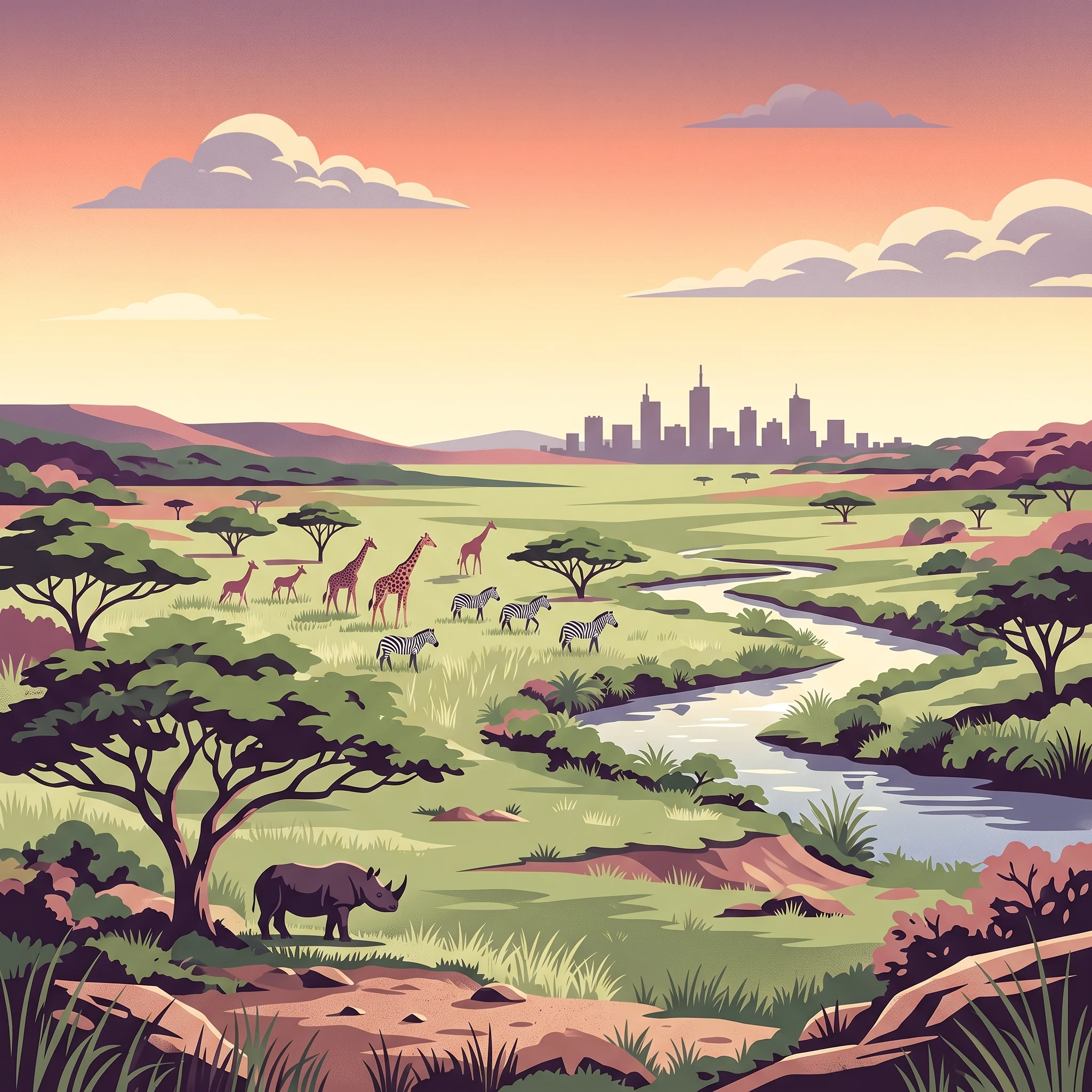
Nairobi National Park offers a unique safari experience combining accessibility with authentic wilderness. The guaranteed black rhinoceros sightings distinguish this park from most other African reserves. The annual wildebeest and zebra migration in July and August provides a spectacular natural display minutes from a capital city. The David Sheldrick Wildlife Trust elephant and rhino orphanage allows visitors to see orphaned calves being rehabilitated. The 1989 Ivory Burning Site Monument commemorates Kenya's landmark conservation commitment. The park's elevated position overlooking Nairobi skyline creates a striking visual contrast between urban development and wild nature. The diverse birdlife, with over 500 species, attracts ornithologists and casual birdwatchers alike. The Nairobi Safari Walk and animal orphanage provide interactive conservation education experiences.

Best time to visit Nairobi National Park

The optimal time to visit Nairobi National Park coincides with the dry season, when wildlife concentrations reach their highest levels as animals gather around the park's water sources while surrounding areas have dried up. The period from June through September typically offers excellent wildlife viewing, with the wildebeest and zebra migration occurring in July and August. The dry conditions create easier terrain for game drives and increase visibility of animals as they congregate near water. However, the park remains accessible year-round, and the wet season from November to May brings different advantages including lush green scenery, migratory bird arrivals, and fewer visitors. The park's proximity to Nairobi means it can be visited as a day trip regardless of season, though early morning game drives offer the best opportunities for predator sightings. The dry season heat can be intense, making early morning departures preferable for comfortable viewing.
Park location guide

Geography guide, regional context, and park location map for Nairobi National Park

Nairobi National Park park geography, regions, and map view in Kenya
Understand where Nairobi National Park sits in Kenya through a broader geographic reading of the surrounding landscape, nearby location context, and its mapped position within the national park landscape.

How Nairobi National Park fits into Kenya

Kenya is a presidential republic in East Africa and the seventh-most populous country on the continent. Its capital is Nairobi, and it borders five countries and the Indian Ocean. The country features significant geographic diversity including Mount Kenya, the Rift Valley, and coastal regions.

Wider geography shaping Nairobi National Park in Kenya

Kenya is located in East Africa, bordering South Sudan to the northwest, Ethiopia to the north, Somalia to the east, Tanzania to the southwest, and Uganda and Lake Victoria to the west. The southeastern border meets the Indian Ocean. The geography includes the Rift Valley highlands with Mount Kenya, coastal plains, and northern arid regions.

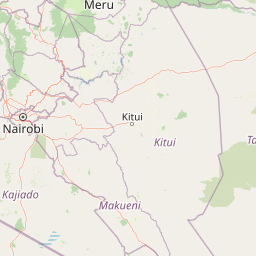
Map view of Nairobi National Park

Use this park location map to pinpoint Nairobi National Park in Kenya, understand its exact geographic position, and read its mapped placement within the surrounding landscape more clearly.

Pigeon | © OpenStreetMap contributors
Park atlas

Compare surrounding East African savanna ecosystems and connected conservation landscapes for deeper geographic insight.

Explore National Parks and Protected Areas Near Nairobi National Park
After exploring Nairobi National Park, continue your discovery by browsing other national parks and protected areas across Kenya's diverse landscapes and the broader East African region. Compare neighboring savanna ecosystems, trace wildlife migration corridors, and assess distinct conservation priorities within a wider geographic context.
National parkNakuru County

Hell's Gate National Park: National Park Atlas and Mapped Landscape Exploration

Discover Nakuru County's protected terrain and geographic context.

Explore the mapped boundaries and unique geographic identity of Hell's Gate National Park, a protected national park within Kenya's Nakuru County. This detailed atlas view focuses on the park's natural landscape and its place within the regional geography, offering structured discovery of its protected terrain and surrounding context. Understand the visual and geographic essence of this significant conservation area.

Area
68.25 km²
Established
1984
IUCN
II
Relief
Mountain
National parkNyeri County

Aberdare National Park: Mapped Protected Landscape in Nyeri County

National Park Geography and Atlas Context

Aberdare National Park is a protected national park located within Nyeri County, Kenya. This entry offers detailed geographic information and map context, highlighting its protected boundaries and landscape characteristics. Users can explore its regional setting, understand its specific terrain features, and discover its significance as a conservation area within the Kenyan geography. Access structured data that clarifies the park's identity as a vital protected landscape.

Area
767 km²
Established
1950
IUCN
II
Relief
Mountain
National parkKenya

Amboseli National Park: Kenya National Park Protected Landscape Atlas

Mapped geographic context and protected area boundaries.

Amboseli National Park is a protected national park in Kenya, offering a distinct geographic entity for exploration. This atlas-focused view details the park's mapped boundaries and regional landscape context. Understand its role as a national park and a significant protected area within the broader geography of Kenya for structured discovery.

Area
392 km²
Established
1974
IUCN
II
Visitors
120K annual
National parkKenya

Mount Kenya National Park: Mapped Volcanic Landscape & Protected Area Geography

Kenya's high-altitude Afro-alpine ecosystems and mapped park boundaries.

Mount Kenya National Park safeguards a globally significant volcanic landscape and vital water resources for Kenya. This protected area above 3,000 meters features dramatic peaks, glaciers, and distinctive Afro-alpine flora. Explore its comprehensive mapped boundaries, understand its regional geographic importance, and discover the unique ecosystems that define this exceptional national park through detailed atlas context.

Area
715 km²
Established
1949
IUCN
II
Relief
Mountain
National parkKilimanjaro Region

Kilimanjaro National Park: Protected Landscape Geography and Atlas Exploration

Explore its mapped boundaries and regional context.

Delve into Kilimanjaro National Park, a protected national park situated in the Kilimanjaro Region. This detail page offers an atlas-driven view of the park's geographic scope, focusing on its mapped boundaries and the surrounding natural landscape. Understand the unique terrain and regional context that make this protected area a significant feature within Tanzania's geography.

Area
1,688 km²
Established
1973
IUCN
II
Visitors
52K annual
National parkArusha Region

Arusha National Park: A Protected Landscape in Tanzania's Arusha Region

Explore its mapped boundaries and regional geography.

Arusha National Park represents a significant protected landscape within the Arusha Region of Tanzania, offering specific geographic details for atlas-based exploration. This national park's identity is tied to its mapped natural terrain and its position within the broader regional context. Users can delve into the park's protected status and geographic features, making it a valuable entity for understanding the landscape of northern Tanzania.

Area
137 km²
Established
1960
IUCN
II
Visitors
66.8K annual
National parkEastern Province

Meru National Park National Park: Mapped Protected Boundaries and Eastern Province Geography

Explore regional landscape context and natural terrain.

Meru National Park represents a vital national park entity within the Eastern Province of Kenya, offering unique opportunities for structured geographic and atlas exploration. This page details its protected landscape identity, emphasizing mapped boundaries and the surrounding regional context. Users interested in conservation lands and natural terrain can find comprehensive details on Meru National Park's geographic significance and its role within the broader atlas of protected areas.

Area
870.44 km²
Established
1966
IUCN
II
Relief
Upland
National parkTana River County

Kora National Park: A Unique Protected Landscape in Tana River County, Kenya

Explore its inselberg geography and mapped natural terrain.

Kora National Park represents a remarkable protected area characterized by its striking inselberg topography and semi-arid bushland, set against the backdrop of the Tana River. This national park in Tana River County offers a unique geographic profile, featuring massive granite formations that punctuate the expansive terrain. Discover the mapped boundaries and the distinctive landscape that make Kora National Park a significant entity for regional atlas exploration and understanding protected lands in eastern Africa.

Area
1,788 km²
Established
1989
IUCN
II
Relief
Mixed relief

Common questions about visiting, size, designation, and location context for Nairobi National Park

Nairobi National Park FAQs for park facts, access, geography, and protected area context
Find quick answers about Nairobi National Park, including protected-area facts, park geography, trail and visitor context, and how the park fits into its surrounding country and regional landscape.
MoriAtlas Explorer

Continue Your Protected Areas Search Across the Global Atlas

Deepen your exploration by continuing the structured search for national parks and protected areas worldwide. Utilize the comprehensive filtering capabilities to compare different conservation landscapes and refine your understanding of global park geography. Discover more about the distribution and characteristics of protected natural areas.

Global natural geography