Why Pyriatyn National Nature Park stands out
The park is best known for its representation of complete river valley ecosystems along the Udai River, encompassing the full topographic sequence from the native riverbank (korinny bereh) through the sand terrace (borova terasa) to the floodplain (zaplava). Its wetlands are particularly significant, with extensive reed beds, emergent marsh communities, and floating aquatic vegetation. The park protects rare boreal plant species at their southern range limits, including sphagnum mosses and species typically found much further north. The area also supports notable bird populations, including a monitored white stork nesting site that has gained public attention through a dedicated YouTube channel.
Pyriatyn National Nature Park history and protected-area timeline
Pyriatyn National Nature Park was established on December 11, 2009, by presidential decree signed by President Viktor Yushchenko. The decree mandated the creation of the park to preserve valuable natural and historical-cultural complexes and objects that hold special conservation, recreational, historical-cultural, scientific, educational, and aesthetic value. The park was formed from state-owned lands totaling 12,028.42 hectares, including 5,555.14 hectares of reserve lands granted to the park for permanent use and 6,473.28 hectares incorporated into the park without appropriation.
The decree outlined specific requirements for the park's development, including the establishment of an administration, approval of park regulations within three months, preparation of land allocation materials during 2010-2011, and development of a comprehensive park management plan covering 2010-2012. The decree also addressed funding requirements for the park's ongoing operation.
Prior to the national park's establishment, the territory included several protected areas of local and national significance. The Deimanivsky landscape reserve and Kukvinsky hydrological reserve were designated as protected areas of national importance, while several local reserves (zakaznyky) focused on hydrological and zoological protection existed at the district level. The creation of the national park provided a unified protective framework for these previously separate designations.
Pyriatyn National Nature Park landscape and geographic character
The park's landscape is defined by the Udai River valley, which flows through the protected area for approximately 62 kilometers. The river is a second-order tributary of the Dnieper, entering the Sula River before reaching the Dnieper system. The terrain exhibits the classic structure of river valleys on the East European Plain, with three main landscape zones represented within the park.
The native left bank (korinny bereh) forms the highest elevation, where loess-like loams underlie the terrain. This area supports meadow steppe communities and broadleaf deciduous forests. The sand terrace (borova terasa) occupies an intermediate position, with podzolic soils supporting pine plantations and mixed pine-oak forests. The floodplain (zaplava) represents the lowest elevation, dominated by wetlands, reed beds, and periodically flooded meadows.
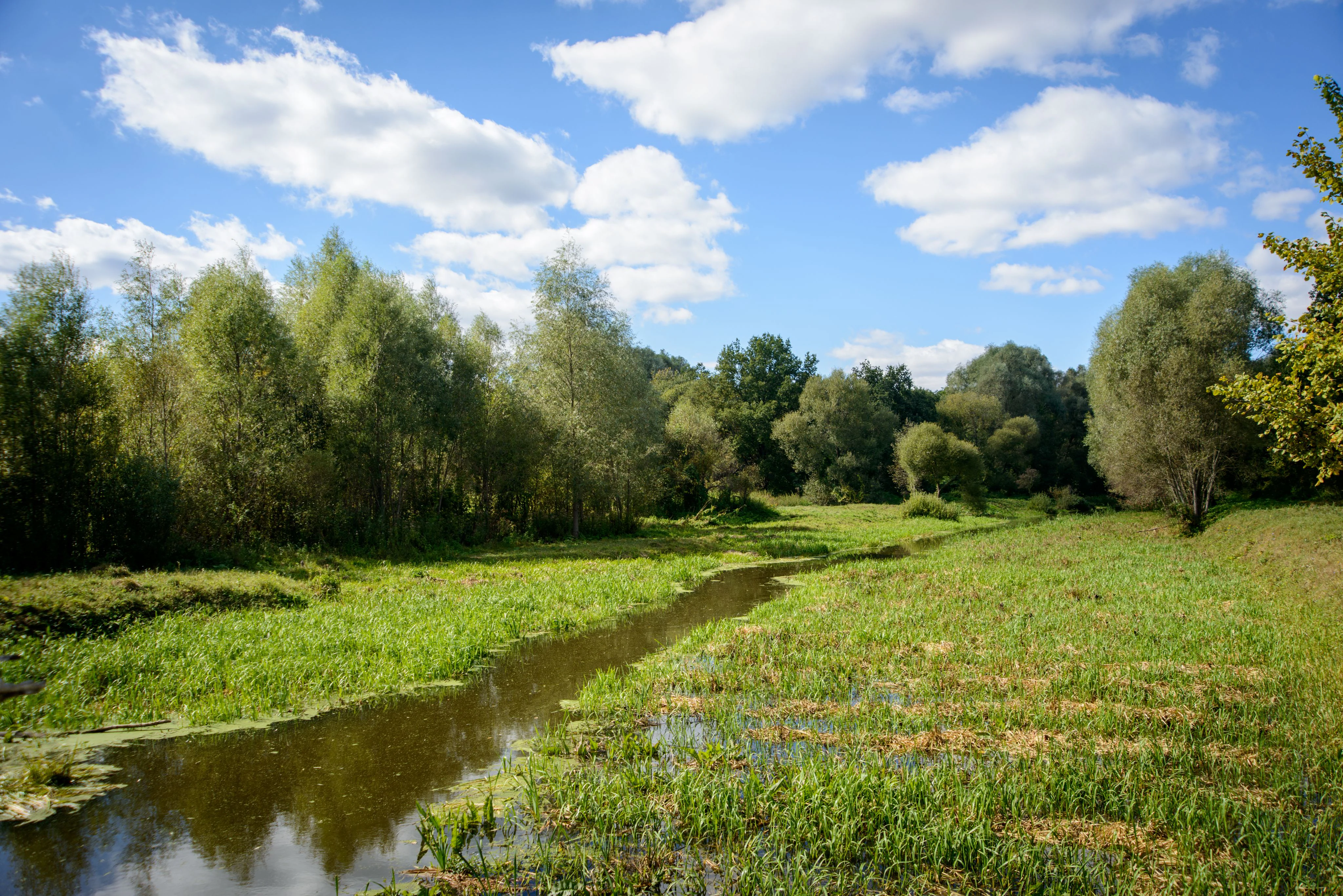
The Udai River's floodplain is predominantly a reed marsh, covered by 0.1-0.5 meters of water or extremely saturated during most of the year. Flood duration varies from 10-15 days in the upper reaches to 2-4 months in the lower sections, with water depths sometimes reaching 1.0-1.25 meters. The river valley ranges from 3 to 8 kilometers in width, with slopes rising 30-50 meters above the floodplain.
Pyriatyn National Nature Park ecosystems, habitats, and plant life
The park's ecological character is defined by its position in the East European forest steppe ecoregion, a transition zone between the broadleaf forests of northern Ukraine and the grassland steppes to the south. This transitional position is reflected in the diversity of habitats preserved within the park, from river corridors through wetlands to forest-steppe slopes.
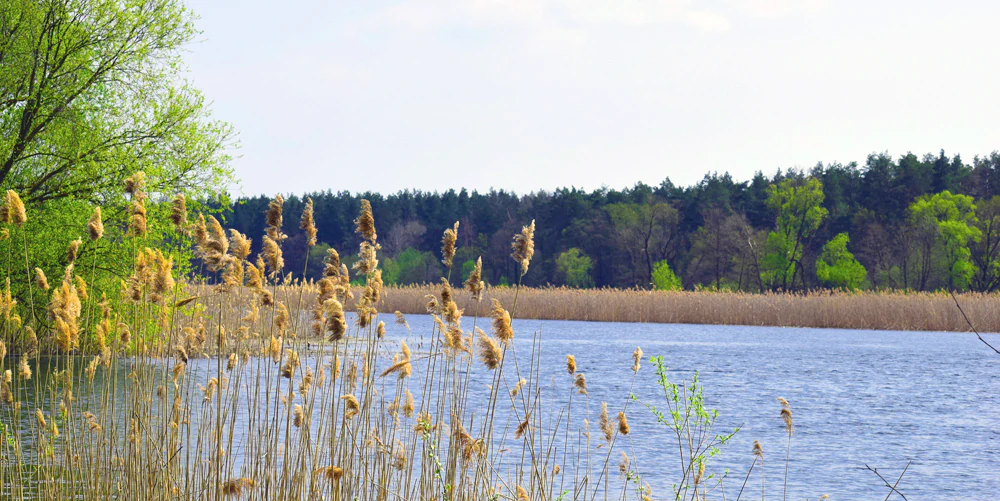
The vegetation cover includes various types of weakly transformed plant communities of both natural and artificial origin. The park supports significant areas of water vegetation, with the lowest relief areas containing aquatic and semi-aquatic plant communities widespread in modern floodplains. Common reed dominates the wetland areas, while communities of broad-leaved cattail, great bulrush, and lake sedge are also widespread. Open water bodies support pondweed communities including species such as fennel pondweed, shining pondweed, and various others.
The flora includes over 700 species of higher vascular plants. The park protects numerous rare species listed in the Red Book of Ukraine, including various orchids such as the Early spider orchid, Marsh orchid, and Bird's-nest orchid, as well as species such as Lily of the valley, Spring snowflake, and Yellow star of Bethlehem. The boreal terrace forests support rare northern plant species at their southern range limits.
Pyriatyn National Nature Park wildlife and species highlights
The wildlife of Pyriatyn reflects the diversity of habitats within the river valley complex. The park supports significant bird populations associated with wetlands, forests, and open grasslands. Among the notable species are the Montagu's harrier, white stork (with a monitored nesting site), black stork, and various waders and waterfowl.
The protected area includes several red-listed species of conservation concern. Birds of prey such as the short-toed eagle and honey buzzard are present in the region. The European roller and grey shrike are among the characteristic bird species. Among mammals, the European polecat, weasel, and European hamster are recorded, along with the Eurasian beaver in the aquatic habitats.
The amphibian and reptile communities include common toad, moor frog, and common frog in the wetland areas, with dice snake and common viper in the surrounding habitats. The river and wetland systems support diverse fish communities characteristic of lowland river ecosystems in the region.
Pyriatyn National Nature Park conservation status and protection priorities
Pyriatyn National Nature Park serves an important conservation function in a region where river valley ecosystems have been extensively modified by agriculture. The park protects the full ecological spectrum of a river valley system, from upland forest-steppe to floodplain wetlands, maintaining ecological connectivity along the river corridor.
The protected status ensures preservation of rare plant communities, including wetland complexes that support boreal species at their southern range limits. The sphagnum peatland communities within the park represent particularly valuable conservation assets, supporting rare moss species that are unusual for the Poltava region. The aquatic vegetation communities, particularly those dominated by snow-white water lily, are listed in the Green Book of Ukraine.
The park's conservation value is enhanced by the integration of previously designated protected areas, including landscape and hydrological reserves that maintain specific ecological functions within the larger park framework. The ongoing scientific inventory work contributes to understanding of the park's biodiversity and supports adaptive management.
Pyriatyn National Nature Park cultural meaning and human context
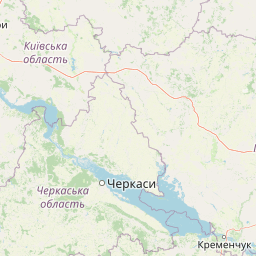
The park is located near the town of Pyriatyn in what is historically part of the Lubenshchyna region of Poltava Oblast. The territory includes lands of the former Pyriatyn forestry enterprise, with the park encompassing areas around multiple villages including Hrabarivka, Davydivka, Berezova Rudka, Sasinivka, Hurbyntsi, Lyelyaky, Usivka, Keybalivka, Kaplyntsi, Kharkivtsi, Deymanivka, Vysoke, Velyka Krupa, Povstyn, and Oleksandrivka.
The area has a long human history, with the river valley providing resources and transport routes for local communities. The region is part of the traditional cultural landscape of central Ukraine, though the park itself focuses on natural ecosystem preservation. The park's name derives from the nearby town of Pyriatyn, which serves as the administrative center for the surrounding area.
Top sights and standout views in Pyriatyn National Nature Park
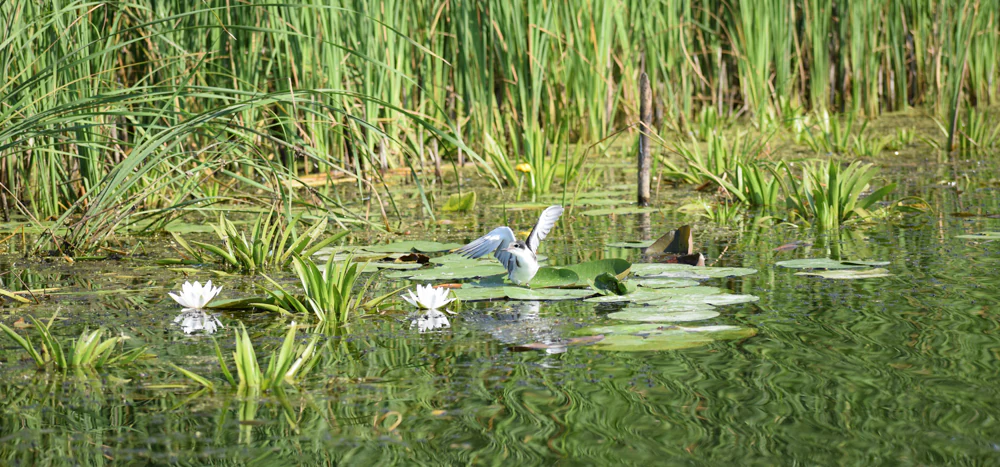
The park's defining feature is its comprehensive representation of a river valley ecosystem, protecting the complete topographic sequence from upland slopes through terrace forests to floodplain wetlands. The diversity of wetland types, from reed beds through floating aquatic communities to sphagnum peatlands, supports exceptional biodiversity. The presence of boreal plant species at their southern range limits makes the park particularly significant for understanding climate-driven range shifts. The monitored white stork nest provides a unique public connection to the park's wildlife, with round-the-clock observation of a nesting pair in the village of Lyelyaky.
Best time to visit Pyriatyn National Nature Park
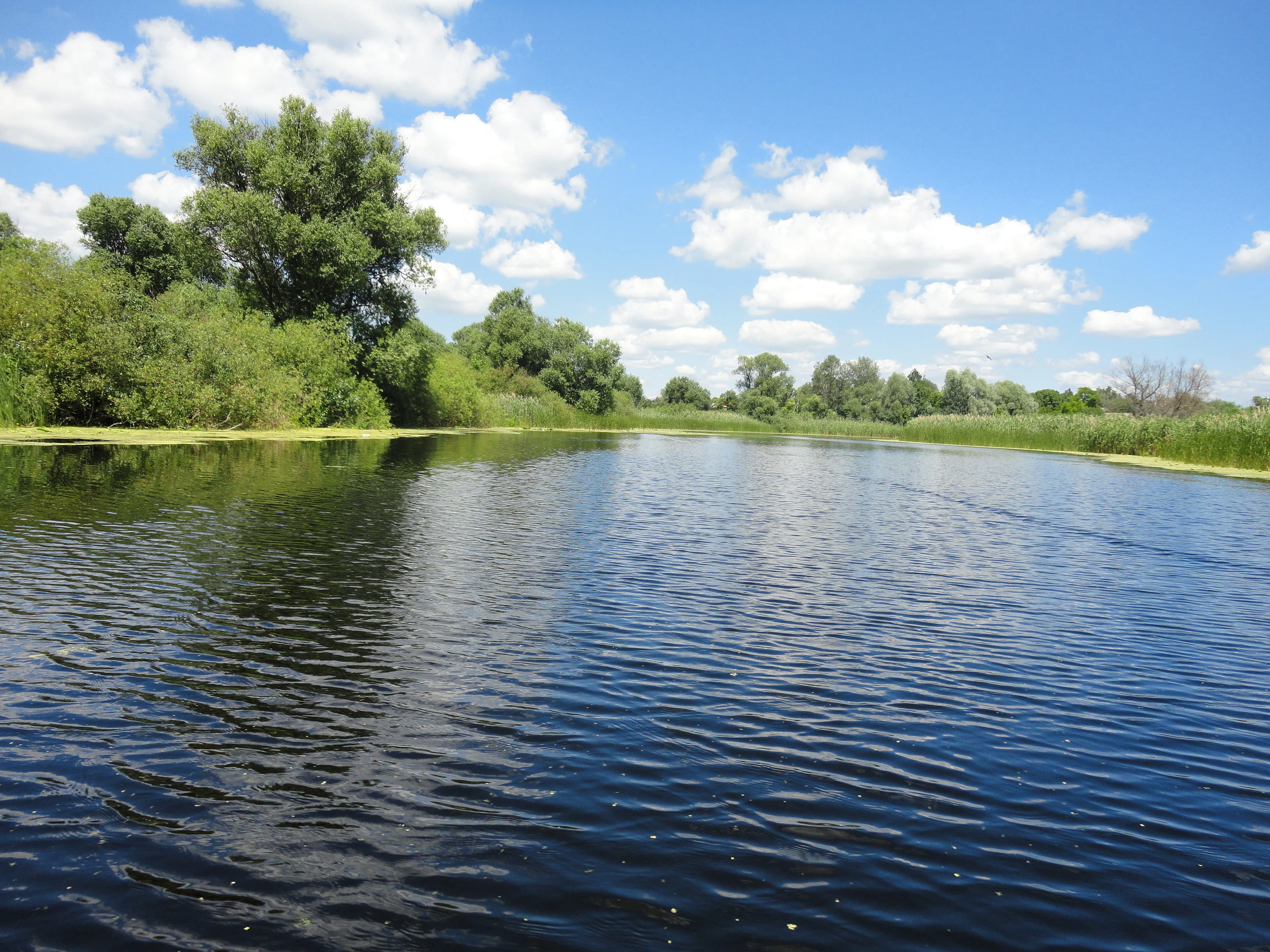
The park can be visited throughout the year, with each season offering distinct experiences. Spring brings flooding of the floodplain, creating extensive wetland conditions that attract waterfowl and support dramatic displays of aquatic vegetation. Summer offers the most accessible conditions for hiking the ecological trails, with full foliage in the forest areas and active wildlife in the wetlands. Autumn provides color changes in the forest-steppe and terrace woodlands. Winter reveals the structure of the landscape when vegetation is minimal, though access to some wetland areas may be limited. The relatively new status of the park means infrastructure continues to develop, so visitors should check current conditions before traveling.