Why Salim Ali National Park stands out
Salim Ali National Park was particularly known for its association with one of India's most influential naturalists and for protecting a representative sample of Kashmir valley forest ecosystems. The park served as an important habitat for several threatened Himalayan species, most notably the hangul (Cervus hangul), a distinctive subspecies of red deer endemic to the Kashmir region. Its bird fauna included visually striking species such as the Himalayan monal, a vibrantly colored pheasant, and the elegant paradise flycatcher with its long tail plumes. The park's location near Srinagar made it one of the few protected areas accessible from a major urban center in the Kashmir valley, offering residents and visitors a glimpse of the region's natural heritage before the landscape was altered by development.
Salim Ali National Park history and protected-area timeline
The park was formally established in 1986 through official notification, entering India's system of protected national parks under the Wildlife (Protection) Act framework. Its creation was part of broader conservation efforts in Jammu and Kashmir to preserve representative samples of the valley's forest ecosystems and associated wildlife. The decision to name the protected area after Salim Ali reflected recognition of his contributions to Indian ornithology and his role in championing bird conservation awareness throughout the country. During the tenure of Farooq Abdullah as Chief Minister of Jammu and Kashmir, spanning from 1996 to 2002, the park was converted into the Royal Springs Golf Course between 1998 and 2001. This conversion represented a major land-use change that effectively ended the park's function as a protected wilderness area. The timeline of events highlights the competing pressures on natural spaces in the Kashmir valley during periods of political and administrative transition.
Salim Ali National Park landscape and geographic character
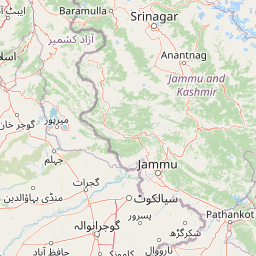
The park occupied terrain in the Srinagar area characterized by the gently undulating landscape typical of the Kashmir valley floor. The elevation and setting placed the park within the temperate climate zone of the western Himalayas, where forest vegetation transitions between coniferous species at higher elevations and deciduous trees in the valleys. The landscape would have included areas of dense tree cover, interspersed clearings and meadows, and potentially small water bodies or wetland zones that added to habitat diversity. The proximity to Srinagar meant the park sat within a landscape where human settlement and agricultural activity had already shaped the environment over centuries, making the protected area a fragment of relatively natural habitat within a modified landscape.
Salim Ali National Park ecosystems, habitats, and plant life
The ecological character of Salim Ali National Park reflected the Kashmir valley's position within the Himalayan biogeographic region, supporting a mix of temperate forest habitats. The vegetation would have included coniferous species such as pine and fir alongside deciduous trees including oak and maple, creating a layered forest structure. These forest types support diverse arthropod and small mammal communities that form the base of the food web for larger mammals and birds. The park's bird fauna of approximately 70 species represented a meaningful sample of the Kashmir valley's avifauna, including both resident species and migrants that used the area seasonally. The presence of multiple large mammal species indicated a relatively functional ecosystem capable of supporting predator-prey relationships.
Salim Ali National Park wildlife and species highlights
The mammal community in the park included several species characteristic of Himalayan forests. The hangul, or Kashmiri stag, represented the most notable species—a subspecies of red deer endemic to the Kashmir region that has faced significant population pressure and habitat loss over decades. Musk deer, known for the valuable musk produced by males, inhabited the forested areas. The Himalayan black bear and leopard represented larger predators present in the park, while the Himalayan serow, a goat-antelope adapted to steep terrain, rounded out the mammalian community. The bird community was diverse, with the Himalayan monal standing out as a visually striking pheasant species, the paradise flycatcher notable for its elongated tail feathers in breeding males, and the Himalayan snowcock representing the alpine bird fauna of higher elevations.
Salim Ali National Park conservation status and protection priorities
The establishment of Salim Ali National Park reflected conservation priorities in Jammu and Kashmir during the 1980s, a period when India was expanding its protected area network. The park's IUCN Category II designation indicated recognition of its value as a national park protecting representative Himalayan forest ecosystems. However, the conversion of the park to a golf course between 1998 and 2001 demonstrated the vulnerability of protected areas to development pressures and administrative decisions. The loss of this protected area highlighted ongoing tensions between conservation objectives and competing land-use demands in the Kashmir valley. The hangul population in particular faced cumulative pressures from habitat fragmentation across its limited range in the Kashmir region.
Salim Ali National Park cultural meaning and human context
The park's location near Srinagar placed it within a landscape of deep cultural significance to Kashmir. The valley has been shaped by centuries of settlement, agricultural development, and the traditions of local communities who have interacted with the forest resources of the region. The naming of the park after Salim Ali connected the site to the broader narrative of Indian natural history and conservation, reflecting the influence of one of India's most prominent naturalists on protected area creation. Dr. Ali's work, including his efforts to establish bird sanctuaries and promote conservation awareness, left a lasting mark on India's approach to wildlife protection. The park's transformation also reflected the complex political context of Jammu and Kashmir, where decisions about land use have carried particular weight given the region's distinctive status and history.
Top sights and standout views in Salim Ali National Park
The park's primary significance lay in its role as a tribute to Salim Ali's legacy and as a habitat for Kashmir's distinctive wildlife, particularly the hangul deer. The presence of species like the Himalayan monal and paradise flycatcher made it noteworthy for bird enthusiasts. Its location near Srinagar offered accessibility that many Himalayan protected areas lack, though this accessibility also contributed to the development pressures that ultimately transformed the site. The conversion to a golf course remains a notable example of how protected areas in India have sometimes been repurposed despite their formal conservation status.
Best time to visit Salim Ali National Park
Since the park was converted to a golf course in the early 2000s, its character as a natural protected area has been fundamentally altered. Historical visiting patterns would have favored the spring and summer months (April through September) when Kashmir's climate is most pleasant and wildlife activity in forest areas is most observable. The winter months bring heavy snow to the valley, limiting access and visibility. Those interested in the remaining natural features of the area would find the spring migration period particularly interesting for birdwatching, though the site's current recreational function differs substantially from its original protected-area purpose.