
Why Serra de São Mamede Natural Park stands out
Serra de São Mamede Natural Park is best known for its remarkable ecological transition zone where Atlantic and Mediterranean ecosystems meet, creating unusual vegetation patterns within Portugal. The park preserves one of the largest populations of the critically endangered Iberian lynx, as well as a small but significant presence of Iberian wolves. It features Portugal's most extensive cork oak forests alongside Pyrenean oak woodlands at higher elevations. The mountain range serves as a critical migratory bird corridor between Europe and Africa, with approximately 150 bird species documented, including Bonelli's eagle, Griffon vulture, and Black vulture. The park also contains the Cova da Moura former lead mine, which hosts one of Europe's most important bat colonies.
Serra de São Mamede Natural Park history and protected-area timeline
Serra de São Mamede Natural Park was formally established on April 14, 1989, as part of Portugal's expansion of its protected areas network during the late 1980s. The creation of the park coincided with broader recognition of the mountain range's significant natural and landscape heritage, as well as the need to address the degradation of traditional agricultural systems that had been underway since the late nineteenth century.
The decline of traditional farming practices in the mountain areas, accelerated by cereal cultivation campaigns during that period, led to landscape changes that prompted conservation concern. The establishment of the protected area aimed to support the restoration and maintenance of these traditional systems while preserving the ecological values they had helped sustain.
The park is managed by ICNF (Instituto da Conservação da Natureza e da Biodiversidade), the national nature conservation authority, which oversees both the natural resource protection and the sustainable development aspects of the management approach appropriate to an IUCN Category V protected landscape. This category reflects the park's designation as a protected seascape that maintains harmonious traditional landscape character while enabling ongoing human activities.
Serra de São Mamede Natural Park landscape and geographic character
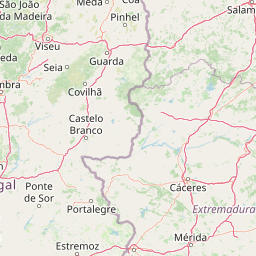
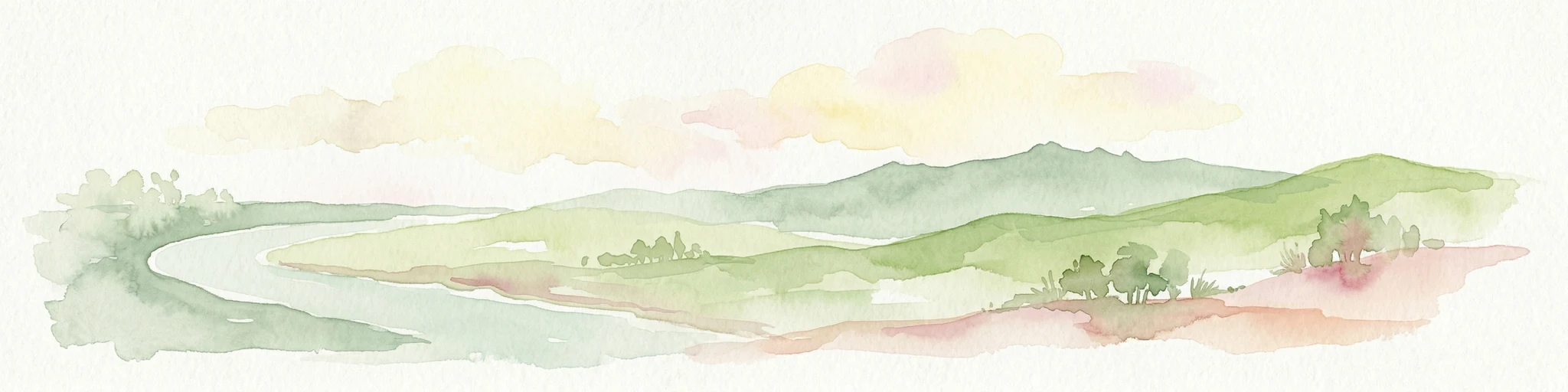
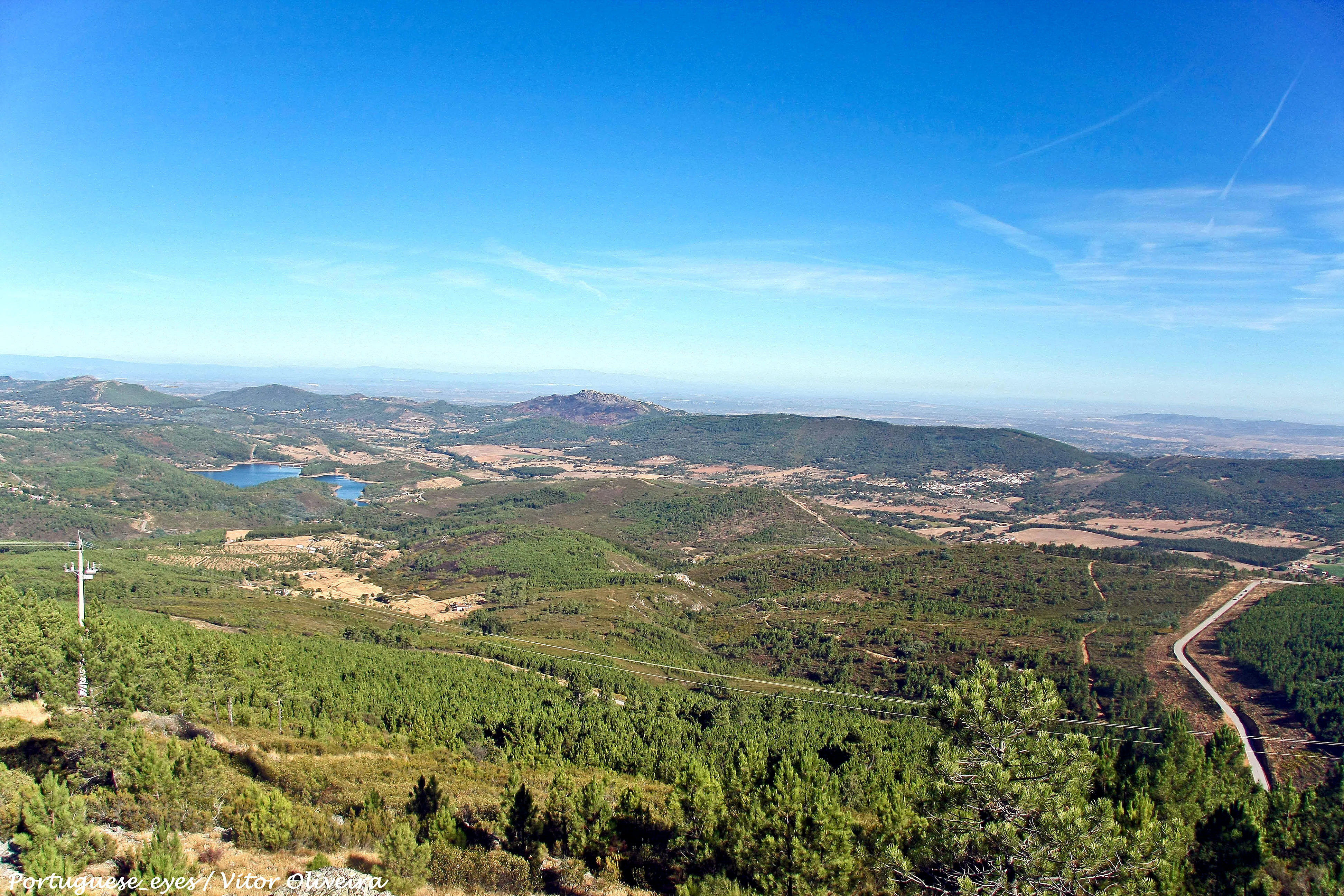
The landscape of Serra de São Mamede Natural Park is defined by a series of northwest-southeast oriented quartzite ridges that create a distinctive mountainous terrain rising abruptly from the surrounding Alentejo plains. The southern portion of the park features gentle, undulating relief with elevations between 300 and 400 meters, presenting a more accessible terrain that transitions smoothly into the surrounding lowland agricultural landscape. The Portalegre plateau, situated at 400 to 500 meters altitude, forms a kind of step that rises from the southern zone and creates a visible topographic transition.
The core mountain area, occupying the northern and central portions of the park, features elevations consistently above 800 meters and is characterized by prominent quartzite crests and steep-sided valleys. This more rugged terrain supports different vegetation communities and creates the conditions for the occurrence of cooler, wetter microclimates that allow species at the edge of their distribution to persist. The highest points reach approximately 1,025 meters, providing expansive views across the Alentejo plains and into Spain beyond.
The combination of elevation, aspect, and substrate creates a complex landscape where northern-facing slopes support Atlantic-influenced vegetation communities while southern slopes display more Mediterranean character, all within close proximity to one another. This environmental heterogeneity is a defining feature of the park's physical geography.
Serra de São Mamede Natural Park ecosystems, habitats, and plant life
The ecological character of Serra de São Mamede Natural Park is defined by the convergence of three major biogeographic influences: Mediterranean, Atlantic, and in some cases even central European elements. This convergence makes the park exceptionally species-rich for its size, with over 800 plant species documented within its boundaries. The position of the range at the southern limit of Portugal for some Atlantic species and at the southwestern European limit for certain other taxa gives the area particular conservation significance.
The park supports extensive cork oak woodlands, which represent one of the most important Mediterranean forest types in Portugal. These evergreen oak forests provide habitat for numerous species and are economically significant through sustainable cork harvesting. At higher elevations, particularly on cooler north-facing slopes, Pyrenean oak (known locally as carvalho-negral) forms extensive woodland that represents the southern limit of this species' range in Portugal. Holm oak occurs on drier sites, while sweet chestnut dominates at the highest elevations.
The park also contains significant areas of planted forest, including maritime pine and eucalypt, reflecting historical forestry decisions that have modified some portions of the original vegetation cover. The interaction between these planted areas and the remaining natural and semi-natural vegetation creates a complex habitat mosaic.
Serra de São Mamede Natural Park wildlife and species highlights
The fauna of Serra de São Mamede Natural Park reflects the ecological diversity of the vegetation communities and the park's position along important biogeographic boundaries. The park supports populations of two of Europe's most endangered carnivores: the Iberian lynx, which occurs primarily in the northern portions of the park, and the Iberian wolf, present in small numbers throughout the area. These apex predators depend on healthy prey populations and extensive habitat connectivity.
The park is particularly significant for birdlife, with approximately 150 species documented and roughly 40 of these nesting within the park boundaries. The mountainous terrain and its position along the Iberian Peninsula's main migratory flyway make it important for both breeding and passage migrants. Notable species include Bonelli's eagle, Griffon vulture, Black vulture, Eagle owl, Short-toed eagle, and Sparrowhawk. The diverse bird community includes both Mediterranean and Atlantic species, reflecting the habitat diversity of the park.
Smaller mammals are well represented, with European otter occurring along watercourses and Cabrera's vole in appropriate grassland habitats. Common species include badger, weasel, polecat, genet, wildcat, red fox, wild boar, and red deer. The former lead mine at Cova da Moura supports important bat colonies, considered among the most significant in Europe, while the limestone caves in the area provide roosting sites for numerous species. The reptile and amphibian fauna includes species such as Schreiber's green lizard, Iberian midwife toad, Bosca's newt, and European pond turtle.
Serra de São Mamede Natural Park conservation status and protection priorities
Serra de São Mamede Natural Park plays a critical role in Portuguese and European conservation as a protected area encompassing significant populations of endangered species and important biogeographic communities. The presence of breeding Iberian lynx, one of the world's most endangered cat species, gives the park global conservation significance. The species has benefited from targeted conservation efforts across the Iberian Peninsula, and the park's rocky terrain and dense vegetation provide suitable habitat.
The protection of the park also preserves important ecosystem services for the surrounding region, including watershed protection, soil conservation, and carbon storage. The cork oak woodlands, in particular, represent a traditional land use system that is both economically viable and ecologically valuable, demonstrating how sustainable human activities can maintain high biodiversity.
The park's classification as an IUCN Category V protected landscape reflects a management approach that balances conservation objectives with the continuation of traditional land uses. This approach recognizes that the landscape character and many of the species present are dependent on ongoing agricultural activities, rather than strict wilderness preservation. The maintenance of these traditional systems, combined with specific protection measures for key species and habitats, addresses both cultural and ecological conservation goals.
Serra de São Mamede Natural Park cultural meaning and human context
The landscape of Serra de São Mamede Natural Park reflects centuries of interaction between human communities and the mountainous terrain. The agricultural patterns visible throughout the park represent traditional land use systems that have shaped both the vegetation and the physical landscape. The northern highland areas feature a complex pattern of small to medium properties with diverse uses, while the southern portions are characterized by larger estates practicing extensive dryland agriculture.
The park encompasses four municipalities that share this mountainous landscape: Portalegre, Castelo de Vide, Marvão, and Arronches. Each of these towns has historical significance and includes heritage structures that reflect the region's rural character. The traditional buildings, stone walls, and agricultural infrastructure contribute to the landscape character that the park designation aims to protect.
The traditional silvopastoral systems, particularly the cork oak montados and the chestnut groves, represent cultural landscape forms that have been maintained through generations. These systems are not merely historical remnants but continue to function as productive land uses that shape both the ecology and the cultural identity of the region.
Top sights and standout views in Serra de São Mamede Natural Park
Serra de São Mamede Natural Park offers visitors the opportunity to experience Portugal's highest mountain landscape south of the Tagus River, with dramatic quartzite ridges, diverse woodlands, and panoramic views across the Alentejo plains. The park's ecological significance centers on its role as a convergence zone for Atlantic and Mediterranean ecosystems, creating unusual species assemblages within Portuguese context. The presence of Iberian lynx and wolf provides exceptional wildlife watching opportunities for patient observers, while the bird-rich environment attracts ornithologists throughout the year. The extensive cork oak forests represent both ecological importance and the continuation of traditional sustainable land use. The notable bat colonies at Cova da Moura constitute one of Europe's most significant underground bat habitats, though access may be restricted. The park's position along migratory routes means that seasonal bird watching opportunities vary throughout the year, with different species present during breeding and passage periods.
Best time to visit Serra de São Mamede Natural Park
The best time to visit Serra de São Mamede Natural Park depends on specific interests, though spring and early summer offer particularly favorable conditions for experiencing the park's ecological character. During April through June, the park's diverse vegetation is at its most vibrant, wildflowers are abundant, and breeding bird activity provides excellent wildlife observation opportunities. The moderate temperatures of spring make hiking and outdoor exploration comfortable, and the landscapes retain moisture from winter rains.
Autumn also offers rewarding conditions, particularly for bird watching during the migration period when numerous species pass through the area. The fall colors of the deciduous oak woodlands add visual interest to the landscape, and the quieter visitor season allows for more immersive nature experiences. Summer months can be very hot in the lower elevations, though the higher terrain provides some relief. Winter brings cooler conditions and the potential for snow on the highest peaks, creating dramatic winter landscapes but potentially limiting some access routes.