Why Serranía de Macuira stands out
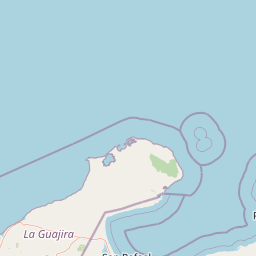
Serranía de Macuira is best known for its extraordinary ecological paradox: a cloud forest ecosystem existing within a desert environment. The range harbors dwarf trees and cloud forest vegetation that thrives on moisture carried by trade winds from the Caribbean, creating a biodiversity hotspot that is completely isolated from the Sierra Nevada de Santa Marta and the Eastern Ranges of the Colombian Andes. This unique combination of high humidity microclimates amid arid surroundings makes it a singular natural laboratory for understanding how isolated mountain ecosystems function in tropical desert contexts.
Serranía de Macuira history and protected-area timeline
Serranía de Macuira was designated as a National Natural Park to protect the unique cloud forest ecosystem that exists within the La Guajira Desert. The establishment of formal protection reflects recognition of the range's ecological significance as an isolated biodiversity hotspot containing species found nowhere else on the planet. The area holds particular cultural importance for the Wayuu people, the indigenous inhabitants of the La Guajira peninsula, who have historically relied on the mountain's water sources and unique microclimate for survival in an otherwise challenging desert environment.
Serranía de Macuira landscape and geographic character
The landscape of Serranía de Macuira presents one of Colombia's most striking topographic contrasts. The mountain range rises abruptly from the flat desert plains, forming a series of rugged peaks and ridgelines that create a complex terrain of slopes, valleys, and summits. The three main massifs are interconnected by lower ridges, creating a unified mountain system despite their individual identities. Cerro Paluou, the highest point, stands at 864 meters and offers commanding views over the surrounding desert. The slopes of the range feature a combination of rocky outcrops, forested areas, and steep-sided valleys that channel the moisture-laden trade winds into the interior of the range. This terrain creates multiple microhabitats, from the exposed rocky ridges to the sheltered forested slopes where cloud formation occurs.
Serranía de Macuira ecosystems, habitats, and plant life
The nature of Serranía de Macuira is defined by a remarkable ecological phenomenon: the presence of cloud forest and dwarf tree ecosystems in the middle of a desert. This occurs because the trade winds blowing from the Caribbean Sea collide with the mountain slopes, causing moisture to condense and form persistent cloud cover at higher elevations. The resulting humidity supports vegetation types that would be impossible at these latitudes without the mountain's elevation and exposure. The forests that develop are characterized by relatively small trees, often described as dwarf or elfin forest, adapted to the constant moisture and exposed conditions. These cloud forests represent a distinct vegetation formation that exists in sharp contrast to the surrounding desert scrub and dry forest of the lowlands.
Serranía de Macuira wildlife and species highlights
Serranía de Macuira supports a distinctive fauna adapted to its unique mountain forest environment. The range is notable as the only known location for the frog species Allobates wayuu, an endemic amphibian that is found exclusively within the boundaries of the Macuira mountains. This single-site endemism underscores the importance of the range as a center of biodiversity uniqueness. Beyond this flagship species, the cloud forests and dwarf tree habitats support a variety of bird species, small mammals, and invertebrates that have adapted to the humid forest conditions. The combination of isolation from major mountain systems and the unique habitat conditions created by the cloud forest environment has allowed the evolution of a distinct fauna community.
Serranía de Macuira conservation status and protection priorities
Serranía de Macuira represents a conservation priority of national and international significance due to its unique ecological character. The protected area preserves an isolated cloud forest ecosystem that exists as a biodiversity island within the larger La Guajira Desert, making it irreplaceable in conservation terms. The presence of endemic species such as Allobates wayuu further elevates the conservation importance of the range, as these species exist nowhere else and depend entirely on the preservation of their specific habitat. The park also provides essential ecosystem services by capturing and retaining moisture that would otherwise not be available in this arid region, supporting both ecological processes and the water needs of local communities.
Serranía de Macuira cultural meaning and human context
Serranía de Macuira holds deep cultural significance for the Wayuu people, the indigenous communities that have inhabited the La Guajira peninsula for centuries. The mountains represent one of the few reliable sources of freshwater in the otherwise arid region, making the range historically important for the survival and settlement patterns of Wayuu communities. The relationship between the Wayuu and the Macuira mountains exemplifies how isolated mountain ecosystems in desert regions can be central to human habitation and cultural practices, contrasting with the more commonly understood patterns of settlement in wetter mountain environments.
Top sights and standout views in Serranía de Macuira
The defining highlight of Serranía de Macuira is its extraordinary ecological setting: a mountain range of cloud forests and dwarf trees rising from desert, creating a green island in a sea of brown. The three massifs of the range offer distinct visual character, with Cerro Palauou providing the highest summit experience. The endemic frog Allobates wayuu represents a unique biological treasure found only within these mountains. The view from the mountain slopes overlooking the surrounding desert plains provides one of the most dramatic landscape contrasts in Colombia.
Best time to visit Serranía de Macuira
Serranía de Macuira can be visited year-round, though the dry season from December through April typically offers the most comfortable conditions for exploration. The cloud forest conditions are largely driven by the persistent trade winds rather than seasonal rainfall patterns, meaning the characteristic moisture and fog are present throughout the year. Visitors interested in experiencing the full visual impact of the desert-to-forest contrast may find the clearer atmospheric conditions of the dry season particularly rewarding for landscape photography and sightseeing.