
Why Shorsky National Park stands out
Shorsky National Park is best known for its extensive dark taiga forests, which cover 92 percent of the park and represent some of the most intact southern Siberian conifer woodland. The park is particularly renowned for its populations of sable, a commercially valuable marten species for which the area has long been known. The landscape features notable karst topography with over 60 named caves, including the Moonlight Cave with its 200-meter length and decorative stalactites and stalagmites. The park also preserves the cultural heritage of the Shor people, whose traditional homeland encompasses this mountainous forest region.
Shorsky National Park history and protected-area timeline
The Shorsky National Park was established on December 27, 1989, creating formal protection for a mountainous forest region that had long been associated with human activity. The indigenous Shor people have traditionally considered this area their ancestral homeland, maintaining settlements along the river banks that continue to exist within the park boundaries today. Historically, the Shor people developed expertise in iron smelting that earned them recognition throughout Russia, and they maintained cultural practices including traditional shamanism. Prior to the park's establishment, the region experienced active logging and mining industries that shaped the landscape. Following the creation of the protected area, commercial logging operations ceased, allowing the mature forest to regenerate. The park was formally designated and began functioning as a protected area in 1999.
Shorsky National Park landscape and geographic character
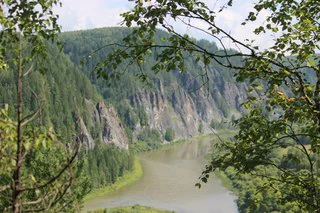
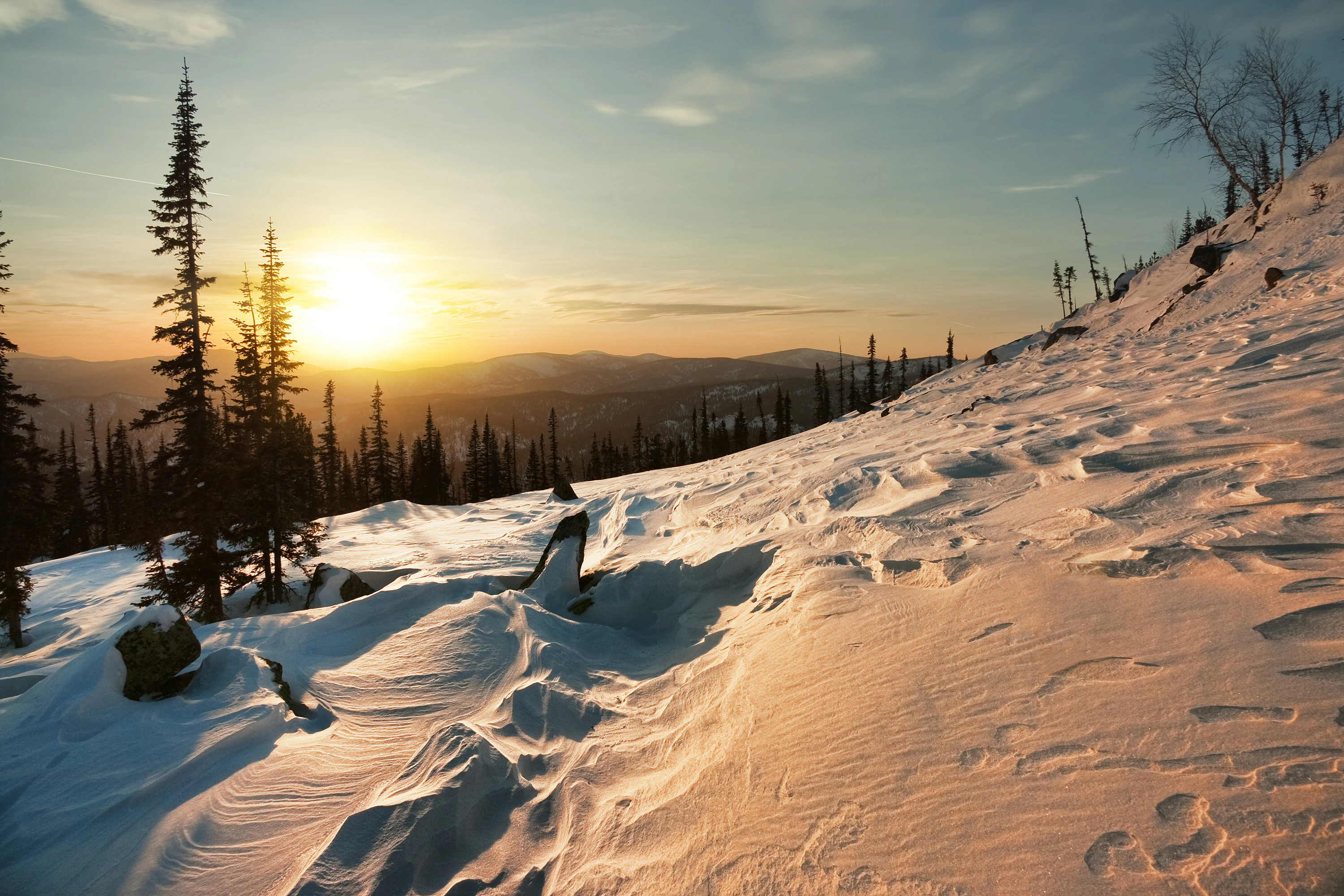
The topography of Shorsky National Park is characterized by mountainous terrain of medium elevation with deeply incised river valleys. The mountains typically range from 500 to 800 meters in height, with Kubez Mountain reaching the park's highest point at 1,555 meters above sea level. A notable geological feature of the park is its extensive karst landscape, where soluble limestone bedrock has created conditions for springs, caves, and unusual rock formations. The park contains over 60 named caves and rock formations of interest. Notable features include the Saga Waterfall, a multi-tier cascade dropping 15 meters to a pool and grotto, and the Tsar's Gate rocks, a large formation with a natural arch overlooking the Mrassu River. The Moonlight Cave extends 200 meters underground and features impressive stalactite and stalagmite formations, while the Azasskoy Cave boasts a large underground gallery.
Shorsky National Park ecosystems, habitats, and plant life
Shorsky National Park falls within the Sayan montane conifer forests ecoregion, representing a transitional zone between the higher Altai mountains and the lower Siberian plains. The park's vegetation consists predominantly of southern Siberian taiga, characterized by dark coniferous forests where Siberian pine and Siberian fir dominate as the most common tree species. Additional tree species include spruce, pine, and aspen, while willow populations occur along lowland floodplains. The biodiversity of plants within the park reflects its position as a forested transition zone, with records showing 51 species of trees and bushes, over 600 vascular plant species, approximately 300 moss species, and more than 200 mushroom species documented within the park boundaries.
Shorsky National Park wildlife and species highlights
The mammal population of Shorsky National Park includes 61 recorded species, with large mammals such as brown bear, red deer, roe deer, mink, and particularly sable being notable inhabitants. The park is especially known for its sable populations, a commercially valuable marten species that has historically been important to the region's economy. Other predatory mammals present include wolf, fox, wolverine, weasel, ermine, otter, badger, and lynx. The bird fauna comprises 183 species, while 14 species of fish inhabit the park's waters. Relatively few species associated with steppe and forest-steppe landscapes are found in the park, reflecting its position within the taiga forest zone.
Shorsky National Park conservation status and protection priorities
Shorsky National Park functions as a Category II protected area under the IUCN classification system, providing formal protection for representative examples of southern Siberian mountain and taiga ecosystems. The park conserves an extensive tract of dark taiga forest that has been allowed to regenerate following the cessation of commercial logging after park establishment. Its karst landscape with numerous caves and geological formations represents a distinct habitat type requiring protection. The park also preserves habitat for significant wildlife populations including sable, brown bear, and ungulate species, maintaining ecological connectivity in a region where natural landscapes have been altered by human activity.
Shorsky National Park cultural meaning and human context
Shorsky National Park encompasses the ancestral homeland of the Shor people, an indigenous Turkic-speaking group whose traditional territories extend across this mountainous forest region of southern Siberia. The Shor have historically been known throughout Russia for their skilled iron-smelting practices, a craft that developed due to the region's mineral resources. Traditional shamanic practices also formed an important part of Shor cultural identity. Today, small Shor villages continue to exist along the river banks within the park boundaries, maintaining connections to this ancestral landscape. The park's name itself derives from the Shor people, reflecting their deep historical association with this territory.
Top sights and standout views in Shorsky National Park
The park offers exceptional opportunities for exploration of karst landscapes with over 60 caves including the notable Moonlight Cave and Azasskoy Cave. The Saga Waterfall provides a scenic cascade dropping 15 meters to a natural grotto, while the Tsar's Gate rocks present a dramatic natural arch formation overlooking the Mrassu River. Visitors can experience the dark taiga forest on hiking or horseback riding routes through mountainous terrain, with the opportunity to observe wildlife including sable, brown bear, and red deer. The cultural heritage of the Shor people adds historical depth to the park experience, with traditional villages accessible along the river valleys.
Best time to visit Shorsky National Park
The park experiences a humid continental climate with warm summers and cold, snowy winters, featuring significant temperature variations both diurnally and seasonally. Summer months offer the most comfortable conditions for outdoor activities including hiking, horseback riding, and caving, with average rainfall of 950 millimeters annually distributed throughout the year. Winter visits allow for snow-based activities and winter wildlife viewing, though the cold temperatures require appropriate preparation. The park maintains visitor facilities including three wooden shelters accessible throughout all seasons.