
Mori Atlas logo
National parkSipoonkorpi National Park

Explore the mapped boundaries and diverse terrain of this key southern Finland national park.

Sipoonkorpi National Park: Finland's Uusimaa Protected Landscape and Regional Geography

Sipoonkorpi National Park represents a crucial protected natural area within the Uusimaa region of southern Finland, established as one of the country's national parks. Situated near the Helsinki metropolitan area, it stands as a vital undeveloped green space, showcasing a remarkable combination of dense spruce-dominated forests, extensive wetlands, and pockets of cultural landscape. This page serves as your atlas entry point to understanding the park's geographic identity, its significant terrain variations, and its role in the broader regional context.

Boreal forestsFinland national parksSouthern FinlandNature conservationMetropolitan parksSpruce forests
An illustration showing a waterfall cascading down a rocky cliff into a stream surrounded by trees and rocks

Sipoonkorpi National Park

National park

Park overview

Structured park overview, official facts, and landscape profile for Sipoonkorpi National Park

Sipoonkorpi National Park park facts, protected area profile, and essential visitor context
Review the core facts for Sipoonkorpi National Park, including designation, size, terrain, visitor scale, habitats, and operating context in one park-focused overview.

About Sipoonkorpi National Park

Sipoonkorpi National Park occupies a special place in Finland's national park system as one of the few protected areas situated directly adjacent to a major urban center. The park was created to preserve the remaining natural values of the Sipoonkorpi area, which had long served as an important recreational space for residents of the Helsinki region even before formal protection was granted. The establishment of the park in 2011 reflected growing recognition that natural areas within or near metropolitan zones provide irreplaceable ecological and social benefits, from biodiversity conservation to mental health and outdoor recreation for urban populations. The park's location across three municipalities demonstrates the cross-jurisdictional nature of ecological systems and the importance of cooperative conservation planning. Within the Finnish national park network, Sipoonkorpi represents the southern boreal forest ecosystem, characterized by Norway spruce as the dominant tree species alongside Scots pine, birch, and mixed deciduous species in certain areas. The diverse terrain includes marshy swamps, rocky ridges, and lake basins, creating a mosaic of habitats that support numerous species. The park's accessibility from central Helsinki, combined with its relatively wild character, makes it an important gateway for Finns and visitors to experience boreal forest nature without traveling to more remote northern regions.

Quick facts and research context for Sipoonkorpi National Park

Sipoonkorpi National Park is located in the Uusimaa region of southern Finland, spanning Helsinki, Vantaa, and Sipoo municipalities. The park was established in 2011 and covers approximately 18.5 square kilometers of forest, swamp, and lake-dominated terrain. It is administered by Metsähallitus, Finland's state-owned enterprise for natural resource management. The park features the Byabäcken river valley with its rich birdlife, several small lakes, and a landscape that includes spruce forests, fresh mineral soil forests, and rocky areas. Six marked nature trails ranging from 1 to 4.8 kilometers provide visitor access throughout the park.

Park context

Deeper park guide and search-rich context for Sipoonkorpi National Park

Sipoonkorpi National Park history, landscape, wildlife, and travel context
Explore Sipoonkorpi National Park through its history, landscape character, ecosystems, wildlife, conservation priorities, cultural context, and seasonal travel timing in a structured park guide built for atlas discovery and search intent.

Why Sipoonkorpi National Park stands out

Sipoonkorpi National Park is best known as one of the last significant undeveloped natural areas in the Helsinki metropolitan region, representing a rare opportunity for nature conservation near a major Nordic capital. The park's spruce-dominated forests, though common in southern Finland, are well-preserved here and support a diverse ecosystem. The Byabäcken river valley is particularly notable for its abundant birdlife, especially in areas with deciduous tree cover along the watercourse. The park also stands out for the dramatic terrain variations within its relatively compact area, with significant elevation differences creating diverse microhabitats. The combination of forest, swamp, lake, and cultural landscape within a single protected area makes it ecologically varied for its size.
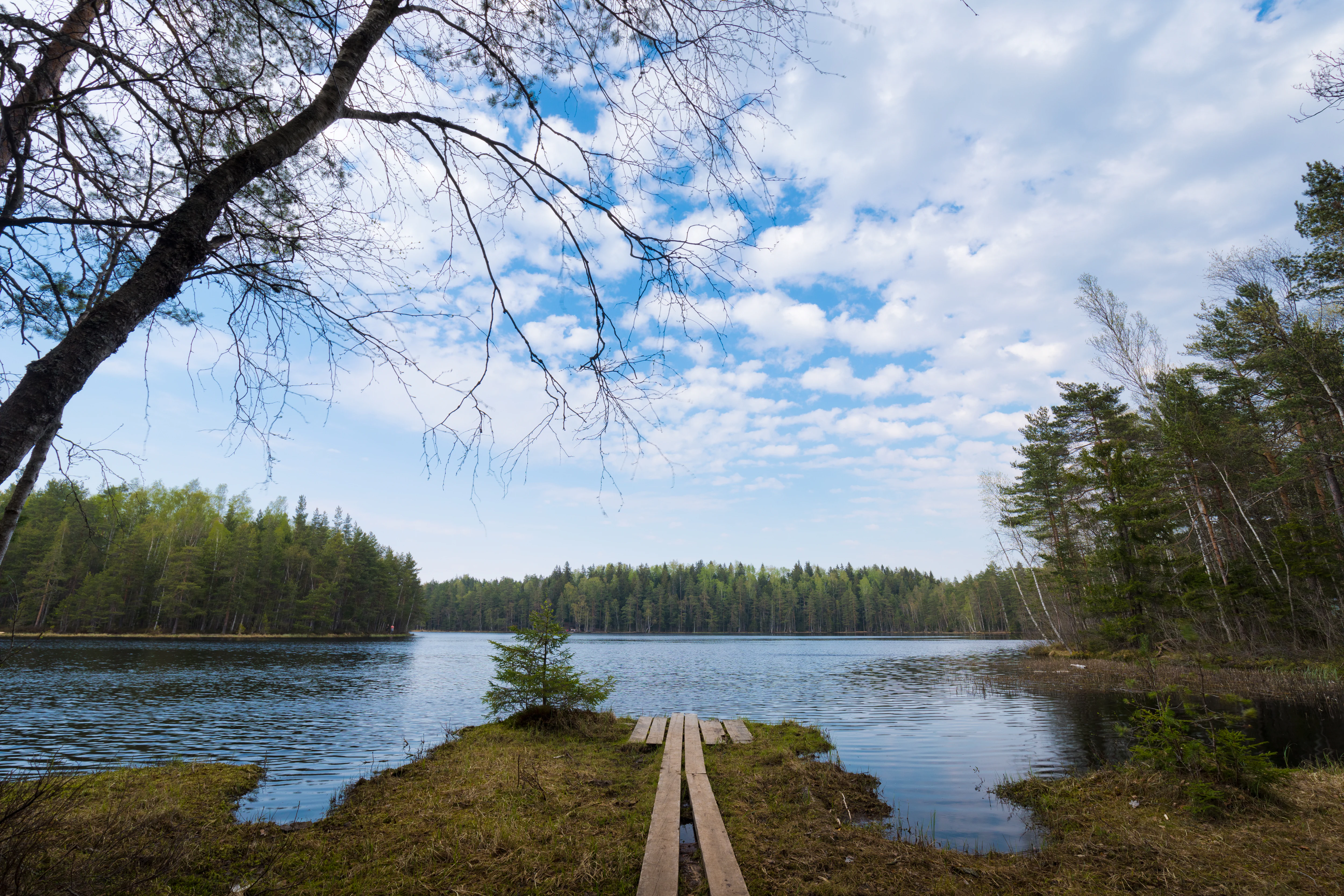
Wooden duckboards extending toward a calm lake surrounded by forest with a blue sky
Wooden duckboards leading to a lake in Sipoonkorpi National Park, Finland

Sipoonkorpi National Park history and protected-area timeline

The campaign to establish Sipoonkorpi National Park began in 2006 when the Finnish Nature League and the Natur och Miljö organization submitted a proposal for protecting the Sipoonkorpi area. This initiative responded to growing concerns about development pressures on the last remaining natural areas near Helsinki and the need to secure permanent conservation status for the region's ecological values. The proposal gained political support, and in March 2011, the Finnish Parliament passed legislation establishing the national park. The law came into effect on May 1, 2011, and the park was officially opened on August 27, 2011. Prior to national park status, the Sipoonkorpi area had already been designated as a nature reserve in 1996, providing a baseline of protection. The establishment of the national park elevated the protection status and enabled more comprehensive management and development of visitor infrastructure. The creation of Sipoonkorpi as the 36th Finnish national park reflected a broader trend of expanding the national park network to include representative ecosystems from all regions of Finland, including areas in the more densely populated southern part of the country where such protection had previously been limited.

Sipoonkorpi National Park landscape and geographic character

The landscape of Sipoonkorpi National Park displays notable topographic diversity despite its relatively compact size. The terrain features significant elevation differences across the park, creating varied local conditions that influence vegetation patterns and soil types. The area lies within the southern boreal forest zone, where Norway spruce forms the dominant tree species in the climax forest communities. Spruce-dominated forests cover much of the park's area, but the landscape also includes fresh mineral soil forests with more mixed composition, rocky forests on exposed bedrock ridges, and extensive swampy areas in the lower-lying terrain. Several small lakes interrupt the forest landscape, including Storträsk, Gumböle träsk, Fallträsk, and Bakunkärrsträsket, each surrounded by their own characteristic shoreline vegetation. The Byabäcken river, a tributary of the Sipoon River, flows through the park in a roughly north-south direction, carving a valley that adds further topographic complexity. This river valley, with its relatively broader floodplain and deciduous-dominated vegetation along the watercourse, contrasts with the surrounding coniferous forest terrain.
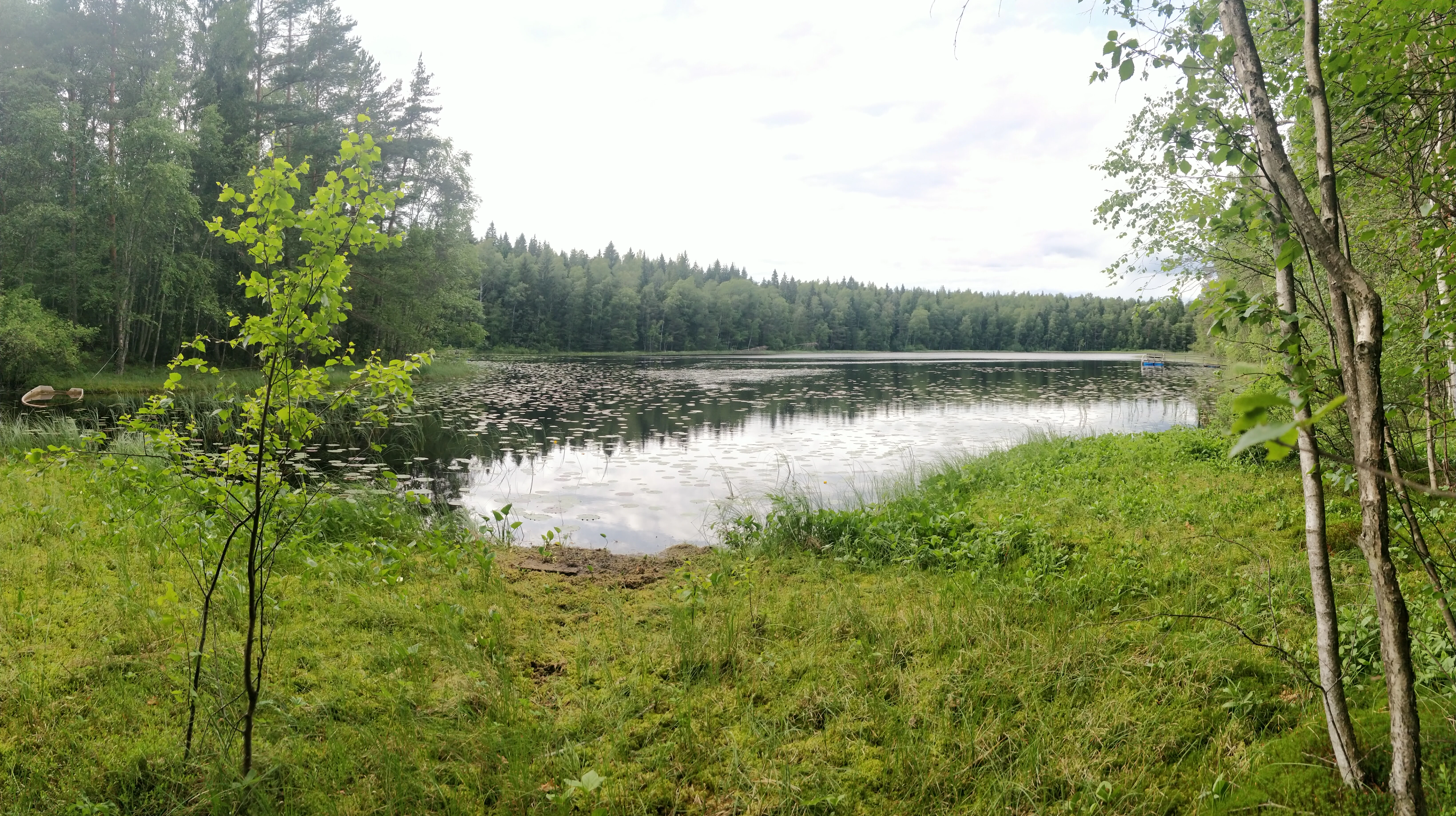
Lake Bisajärvi surrounded by green vegetation and forest in Sipoonkorpi National Park
Bisajärvi lake in Sipoonkorpi National Park surrounded by forest and green vegetation

Sipoonkorpi National Park ecosystems, habitats, and plant life

The ecological character of Sipoonkorpi National Park reflects the southern boreal forest ecosystem typical of Finland's coastal region. The spruce-dominated forests represent the climax vegetation type for this climatic zone, though the park's habitat mosaic includes several distinct forest variants. Fresh mineral soil forests support more diverse understory communities with greater representation of deciduous species including birch, aspen, and willow. Rocky areas with thin soil cover support more open pine-dominated communities and specialized dry-adapted species. The swamp areas, or peatlands, represent another important habitat type, characterized by sphagnum mosses, cottongrass, and dwarf shrubs. These wetlands serve as important regulators of water flow and carbon storage. The park's lake systems add further ecological diversity, providing habitat for aquatic plants, insects, and the fish and amphibians that depend on them. The Byabäcken river corridor functions as an ecological conduit connecting these diverse habitats, and the riparian zone with its deciduous trees supports species that require interface between aquatic and terrestrial environments.
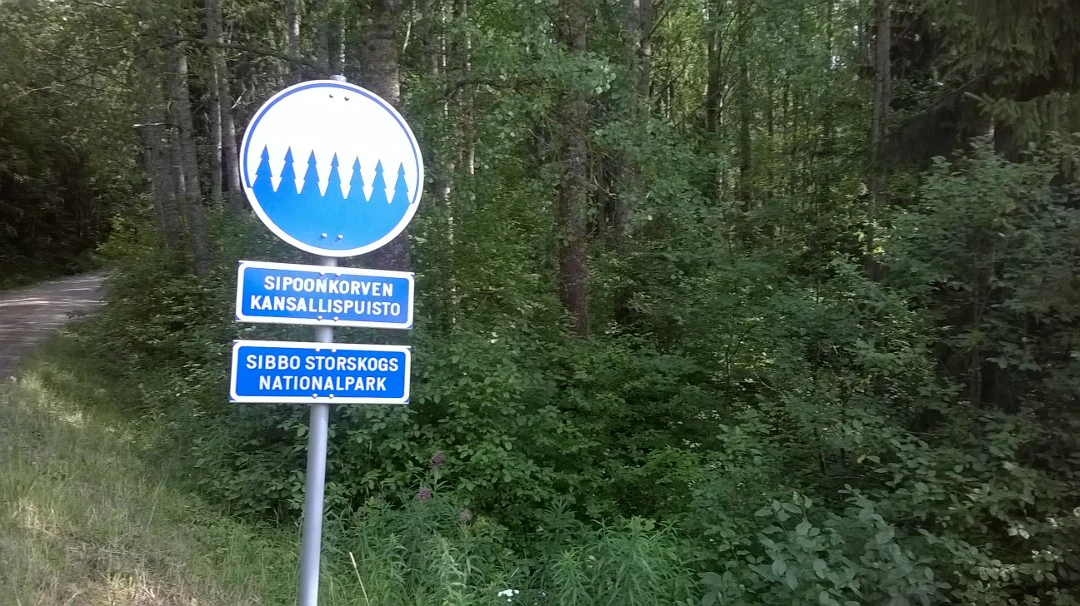
Blue and white sign on a pole with text 'Sipoonkorven Kansallispuisto' and 'Sipoonkorpi National Park' in a forest setting with green trees and a dirt path
Park entrance sign for Sipoonkorpi National Park in a forested area

Sipoonkorpi National Park wildlife and species highlights

The wildlife of Sipoonkorpi National Park is characteristic of southern Finnish boreal forest environments, with several species groups benefiting from the habitat diversity the park provides. The Byabäcken river valley supports a particularly rich bird population, especially in areas where deciduous trees line the watercourse. These riparian corridors provide important nesting and foraging habitat for numerous bird species. Waterfowl utilize the lake systems and river, while forest-dwelling songbirds populate the woodland areas. Larger mammals present in the park include moose, which browse on forest vegetation, and roe deer. Smaller mammals such as hares, squirrels, and various small rodents are present throughout the forest and swamp habitats. The diverse habitat structure, combining forest, wetland, and aquatic environments, supports a broader range of species than would a more homogeneous landscape. The park's position near the southern limit of Finland's boreal zone also means some species reach the northern edge of their range here, while others at the southern edge of their Finnish distribution are present.
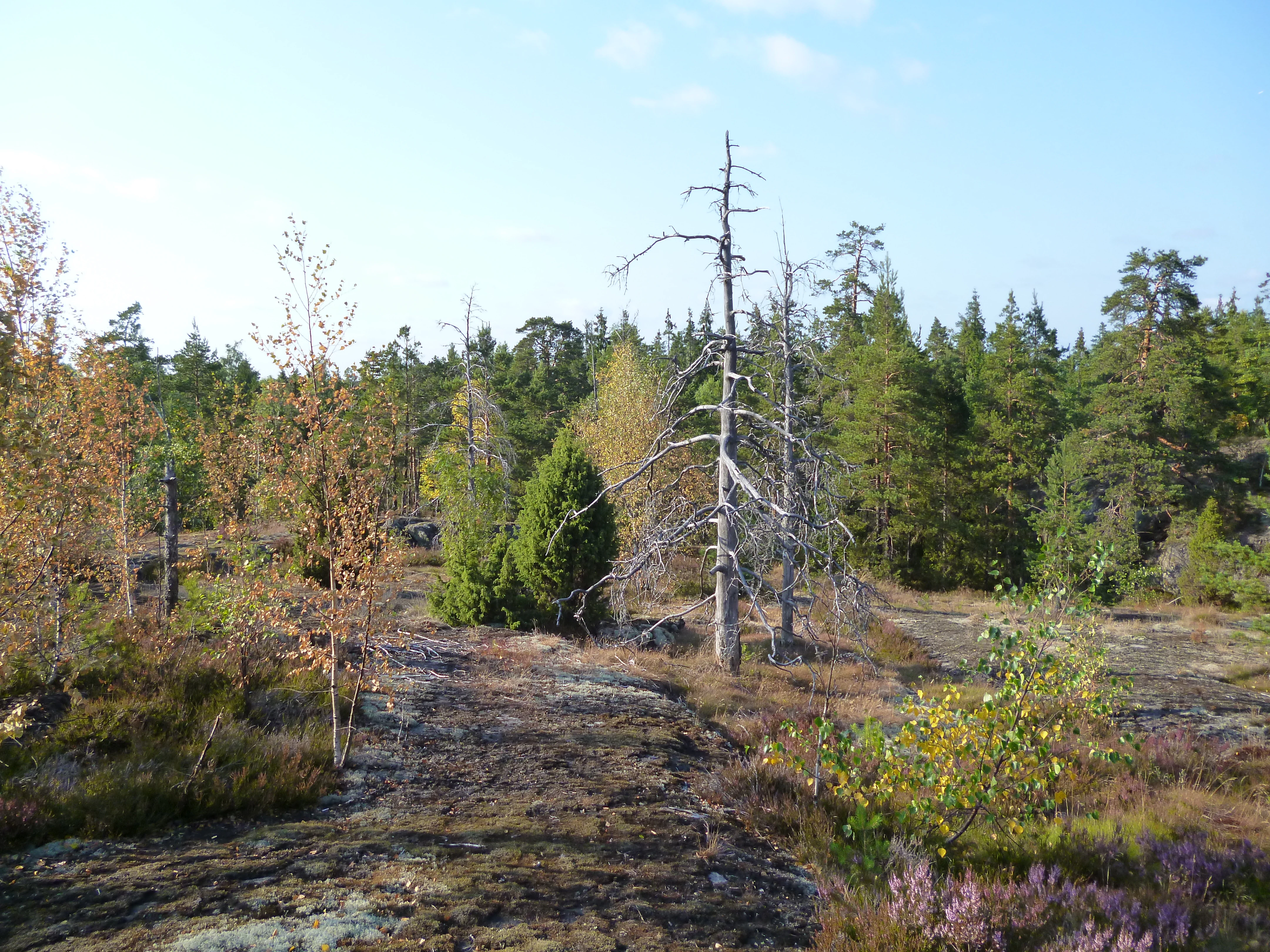
A forest landscape with spruce trees, rocky ground, a trail, and patches of heather under a clear sky.
Sipoonkorpi National Park forest trail with spruce trees and heather under a clear sky.

Sipoonkorpi National Park conservation status and protection priorities

Sipoonkorpi National Park represents an important conservation priority within the heavily developed Helsinki metropolitan region. Before its establishment, the Sipoonkorpi area was one of the few remaining large natural areas near the Finnish capital, and its protection ensures the preservation of representative southern boreal forest ecosystem within a region where such habitats have otherwise been largely transformed by agriculture and urban development. The park protects not only forest and wetland habitats but also the ecological corridors provided by the river system, which allow for species movement between larger green spaces. The designation as a national park also serves a social function, providing accessible nature experiences for urban residents and supporting the concept of green infrastructure within metropolitan planning. Visitor numbers have grown substantially since the park's establishment, reaching over 200,000 in 2020 during the COVID-19 pandemic when outdoor recreation increased dramatically. This high visitation demonstrates the importance of protected natural areas for urban populations and underscores the need for careful management to balance conservation with public access.

Sipoonkorpi National Park cultural meaning and human context

The Sipoonkorpi area has long served as a recreational and livelihood resource for local residents, with evidence of human activity in the region spanning centuries. The cultural landscape elements within the park reflect historical land use practices, including forest management and potentially agricultural activities in certain areas. The area's name itself derives from the Finnish word 'sipoo' and 'korpi,' referring to the marshy forest character of the landscape. The Swedish name 'Sibbo storskog' translates to 'Sipoo large forest,' indicating the historical significance of this area as an extensive woodland. Prior to national park establishment, the area had already provided informal recreation opportunities for generations of residents from Helsinki, Vantaa, and Sipoo. The creation of the national park formalized access and ensured that this tradition of nature enjoyment would continue under proper management and infrastructure. The park's cross-municipal boundaries reflect the ecological reality that natural systems do not follow human administrative divisions, and the conservation of Sipoonkorpi represents successful cooperation between three municipalities in the Helsinki region.
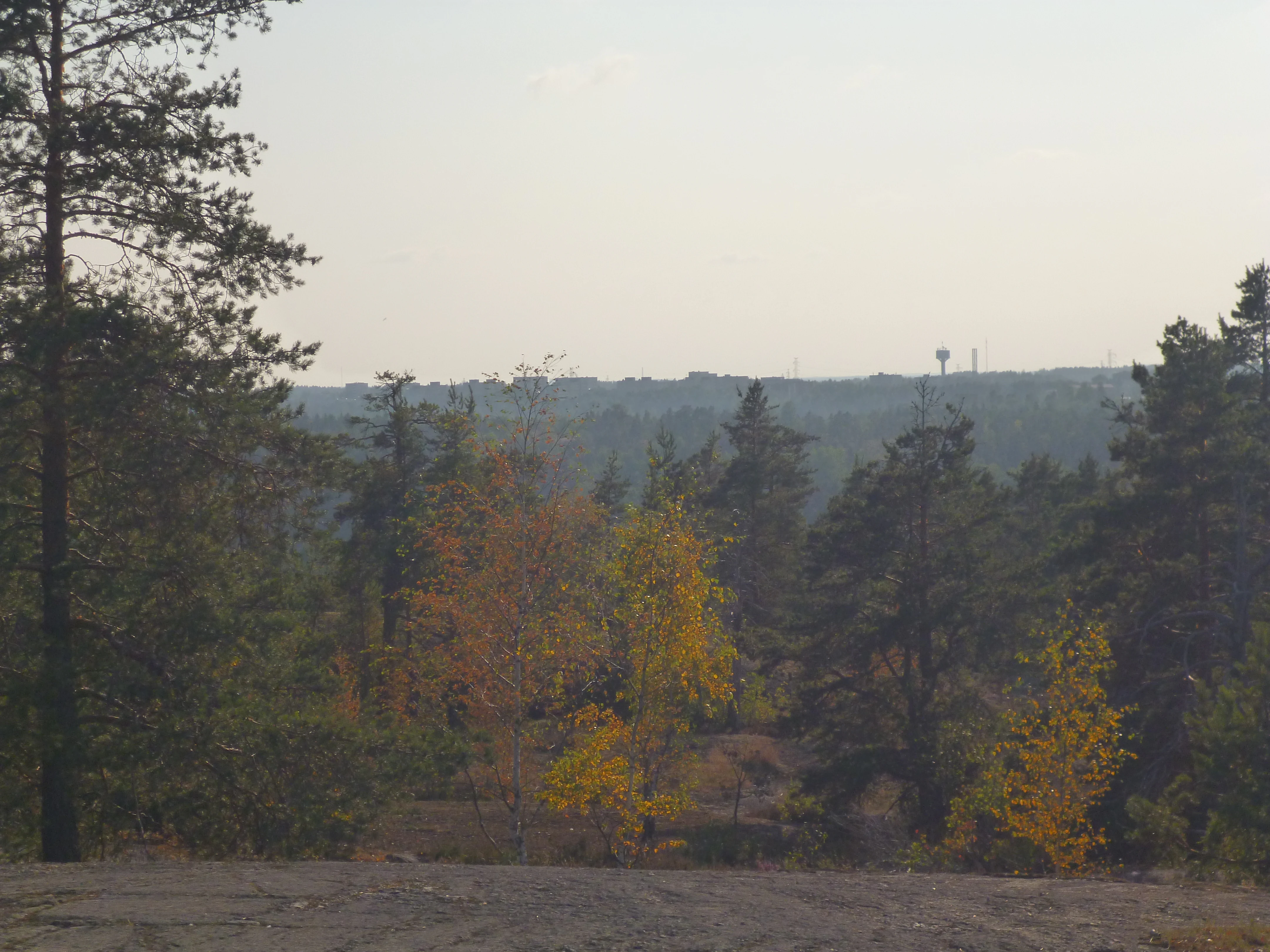
A forest landscape with pine trees and autumn-colored trees, showing a distant horizon with forested terrain
Forest landscape in Sipoonkorpi National Park

Top sights and standout views in Sipoonkorpi National Park

Sipoonkorpi National Park offers visitors the rare opportunity to experience relatively wild boreal nature within a short distance of central Helsinki. The park's six nature trails, ranging from 1 to 4.8 kilometers, provide access to diverse landscapes including forest, swamp, and lakeside environments. The Byabäcken river trail showcases the riparian bird habitat, while other routes explore the spruce-dominated forest interior and the lake basins. The park serves as an important area for birdwatching, with the river valley supporting diverse species. The terrain variation creates interesting hiking conditions, with elevation changes providing views across the forested landscape. The combination of accessibility, ecological diversity, and natural beauty makes Sipoonkorpi a standout destination within Finland's national park system for residents and visitors to the Helsinki region.
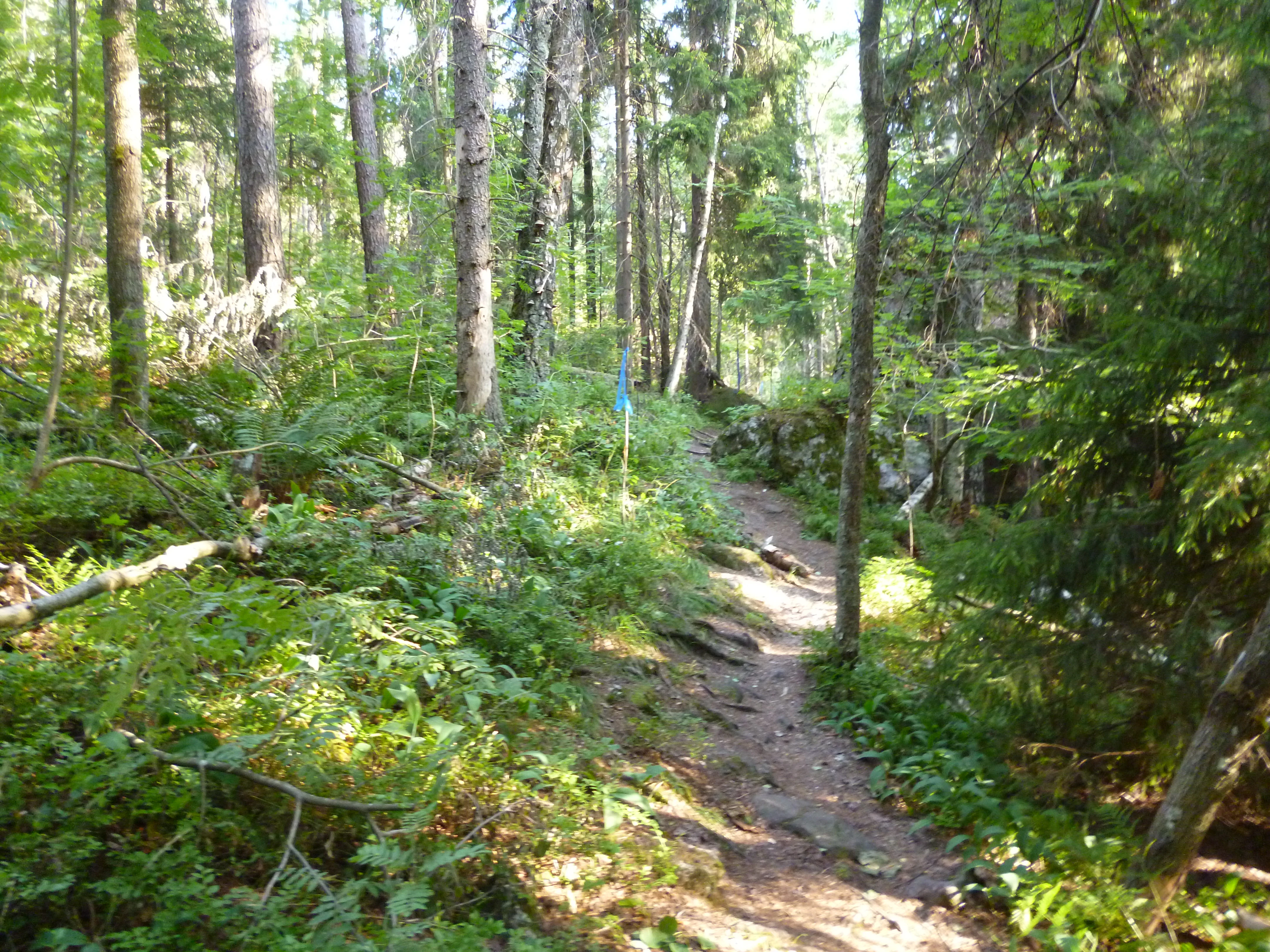
A dirt trail surrounded by tall trees and lush green undergrowth in a forested area
Dirt trail winding through dense forest in Sipoonkorpi National Park with blue trail marker

Best time to visit Sipoonkorpi National Park

Sipoonkorpi National Park can be enjoyed throughout the year, with each season offering a different experience of the landscape. Spring and early summer bring active birdlife, with migrants returning to the region and the deciduous foliage adding color to the forest. Summer offers the warmest conditions for hiking and the longest days for exploring the trails, with the swamp flowers and lake shores at their most vibrant. Autumn transforms the park with fall colors, particularly striking in the mixed forest areas where birch and aspen turn golden. Winter provides a completely different character, with snow-covered forests offering peaceful Nordic atmosphere for cross-country skiing and winter walking, though trails may require appropriate equipment. The park's proximity to Helsinki makes it accessible year-round for day visits, though visitor numbers are highest during the warmer months. The significant increase in visits during the COVID-19 pandemic period in 2020 demonstrated the park's value as an accessible outdoor space during times when other activities were restricted.
Park location guide

Geography guide, regional context, and park location map for Sipoonkorpi National Park

Sipoonkorpi National Park park geography, regions, and map view in Finland
Understand where Sipoonkorpi National Park sits in Finland through a broader geographic reading of the surrounding landscape, nearby location context, and its mapped position within the national park landscape.

How Sipoonkorpi National Park fits into Finland

Finland, officially the Republic of Finland, is a Nordic country in Northern Europe with a population of 5.6 million. It borders Sweden, Norway, and Russia, with the Gulf of Bothnia to the west and the Gulf of Finland to the south. The country gained independence from Russia in 1917 and is a unitary parliamentary republic. Its landscape is characterized by extensive boreal forests and over 180,000 lakes.

Wider geography shaping Sipoonkorpi National Park in Finland

Finland is located in Northern Europe, occupying a peninsula bordered by the Gulf of Bothnia to the west and the Gulf of Finland to the south. It shares land borders with Sweden to the northwest, Norway to the north, and Russia to the east. The terrain is predominantly flat with extensive forest coverage and numerous lakes.

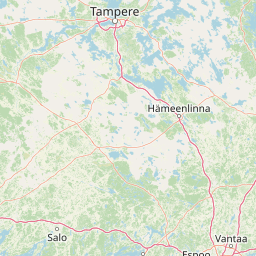
Map view of Sipoonkorpi National Park

Use this park location map to pinpoint Sipoonkorpi National Park in Finland, understand its exact geographic position, and read its mapped placement within the surrounding landscape more clearly.

Pigeon | © OpenStreetMap contributors

Location context for Sipoonkorpi National Park

Uusimaa

Visual Guide to Sipoonkorpi's Diverse Protected Landscapes, Spruce Forests, and Riparian Habitats

Sipoonkorpi National Park Photos: Explore Finnish Boreal Forests, Swamps, and Lakes
Explore a visual atlas of Sipoonkorpi National Park's diverse landscapes, showcasing its characteristic spruce forests, extensive swamp areas, and tranquil lake environments. These detailed protected area images offer a clear understanding of the park's varied terrain, crucial habitats, and unique natural identity within the Helsinki metropolitan region of Finland.

Wooden duckboards extending toward a calm lake surrounded by forest with a blue sky

A narrow stream with rocks flowing through a forested area with tall trees and green foliage

Lake Bisajärvi surrounded by green vegetation and forest in Sipoonkorpi National Park

Blue and white sign on a pole with text 'Sipoonkorven Kansallispuisto' and 'Sipoonkorpi National Park' in a forest setting with green trees and a dirt path

A forest landscape with spruce trees, rocky ground, a trail, and patches of heather under a clear sky.

Dirt trail winding through forest with tall trees, ferns, and rocks under dappled sunlight

A forest landscape with pine trees and autumn-colored trees, showing a distant horizon with forested terrain

A dirt trail surrounded by tall trees and lush green undergrowth in a forested area

Park atlas

Trace the regional spread of conserved boreal forests, wetlands, and diverse landscapes across the Uusimaa region.

Browse National Parks and Protected Areas Near Sipoonkorpi National Park, Southern Finland
Browse national parks and protected areas across the Uusimaa region and southern Finland, offering diverse examples of boreal forests, wetlands, and varied terrain near the capital. Compare these protected landscapes to Sipoonkorpi National Park, understanding their unique conservation profiles and geographic spread within Finland's broader atlas of natural areas.
National parkUusimaa

Nuuksio National Park: Uusimaa Region Protected Landscape Atlas Entry

Mapped boundaries and geographic context for a Finnish National Park.

Access detailed geographic information and mapped boundaries for Nuuksio National Park, a protected national park within the Uusimaa region. This MoriAtlas entry provides context for understanding its landscape within Finland, focusing on atlas-style exploration and the identification of protected natural areas.

Area
53 km²
Established
1994
IUCN
II
Visitors
312.6K annual
Watercolor painting showing a lake surrounded by vegetation with rolling hills in the background
National parkKanta-Häme

Liesjärvi National Park: Protected Landscape in Kanta-Häme's Finnish Lakeland

Explore its mapped geography and protected area context.

Liesjärvi National Park is a designated national park situated in the Kanta-Häme region, a landscape rich with the characteristic features of southern Finland's Finnish Lakeland. This page serves as a focused entry point for understanding the park's protected status, its unique geographic setting, and its contribution to the regional atlas of natural landscapes. By examining Liesjärvi National Park, users gain insight into the mapped terrain and conservation efforts that define this part of Finland, fostering a deeper appreciation for protected areas.

Area
22 km²
Established
1956
IUCN
II
Visitors
57.3K annual
National parkKymenlaakso

Valkmusa National Park: Protected Area Atlas & Kymenlaakso Geography

Mapped natural landscape context within southeastern Finland.

Valkmusa National Park offers a unique opportunity for structured exploration of Finland's protected areas. Within the Kymenlaakso region, this national park presents a specific geographic identity for map-based discovery. Understand its protected landscape, mapped terrain, and regional context to build a comprehensive picture of southeastern Finland's natural geography through MoriAtlas.

Area
17 km²
Established
1996
IUCN
II
Visitors
20.3K annual
National park

Lahemaa National Park: Explore Estonia's Coastal Geography and Protected Landscape Atlas

Mapped terrain, bogs, and coastal peninsulas of a major protected area.

Delve into the detailed geography of Lahemaa National Park, Estonia's largest national park situated on the southern coast of the Gulf of Finland. This protected landscape encompasses a diverse range of terrain, from the deeply indented coastline and ancient glacial boulders to expansive raised bogs and rolling boreal forests. Understand the park's mapped boundaries and its significance as a premier destination for exploring distinct Baltic natural environments and historical coastal villages. The park's unique blend of natural features and cultural heritage makes it a key point of reference in any protected-area atlas.

Area
747 km²
Established
1971
IUCN
II
Relief
Lowland
Watercolor illustration of a landscape featuring a body of water, trees, and distant mountains
National parkKanta-Häme

Torronsuo National Park: Explore Finland's Exceptional Raised Bog Ecosystem and Kanta-Häme Geography

Discover mapped peatlands, unique birdlife, and protected boreal wilderness.

Torronsuo National Park stands as a testament to Finland's remarkable wetland conservation efforts, presenting a striking example of a raised bog ecosystem. Located within the Kanta-Häme region, this national park is celebrated for its vast, domed peat landscape, some of the thickest peat layers ever measured in Finland, and its status as a Ramsar-designated wetland. The park's protected status ensures the preservation of its unique natural terrain, which supports a rich diversity of northern bird species and specialized bog flora, making it a significant area for ecological and geographic exploration.

Area
25.5 km²
Established
1990
IUCN
II
Visitors
58.6K annual
National parkUusimaa

Ekenäs Archipelago National Park: Mapped Baltic Sea Archipelago Landscape

Protected marine area with island geography in Uusimaa, Finland.

Delve into the unique protected landscape of Ekenäs Archipelago National Park, a premier example of a Baltic Sea marine protected area. Located in the Uusimaa region, this national park encompasses a vast expanse of coastal waters dotted with hundreds of rocky islets and skerries. MoriAtlas provides detailed geographic context, allowing for exploration of its mapped boundaries, island formations, and critical role as a sanctuary for breeding aquatic birds. Understand its place within Finland's protected areas atlas and appreciate its distinctive marine archipelago character.

Area
52 km²
Established
1989
IUCN
II
Visitors
53.6K annual
National parkKymenlaakso

Eastern Gulf of Finland National Park: Kymenlaakso's National Park and Coastal Geography

Explore protected lands and mapped terrain.

The Eastern Gulf of Finland National Park is a designated national park located in the Kymenlaakso region of southeastern Finland. This entry provides specific geographic context for the park, detailing its role as a protected landscape and its mapped boundaries within the coastal atlas of the Gulf of Finland. Understanding its regional setting within Kymenlaakso allows for a more structured exploration of Finland's protected natural areas and their unique geographic identities.

Area
6 km²
Established
1982
IUCN
II
Visitors
15.8K annual
National parkPäijät-Häme

Päijänne National Park: Mapped Island Archipelago in Finland's Päijät-Häme Region

Explore unique glacial geology and boreal island wilderness.

Päijänne National Park presents a compelling protected landscape for atlas discovery, focusing on its distinct archipelago character within Lake Päijänne, Southern Finland. This national park features numerous islands showcasing ancient geological formations, from rocky outcrops to sandy beach ridges and moraine formations. Its mapped terrain offers insights into glacial processes and the development of boreal island ecosystems. Navigate its unique island settings to understand the geographic context of this protected area in the Päijät-Häme region.

Area
14 km²
Established
1993
IUCN
II
Visitors
67K annual

Common questions about visiting, size, designation, and location context for Sipoonkorpi National Park

Sipoonkorpi National Park FAQs for park facts, access, geography, and protected area context
Find quick answers about Sipoonkorpi National Park, including protected-area facts, park geography, trail and visitor context, and how the park fits into its surrounding country and regional landscape.
MoriAtlas Explorer

Continue Your Protected Areas Search Across the Global Atlas

Deepen your exploration by continuing the structured search for national parks and protected areas worldwide. Utilize the comprehensive filtering capabilities to compare different conservation landscapes and refine your understanding of global park geography. Discover more about the distribution and characteristics of protected natural areas.

Global natural geography