Why Škocjan Caves Regional Park stands out
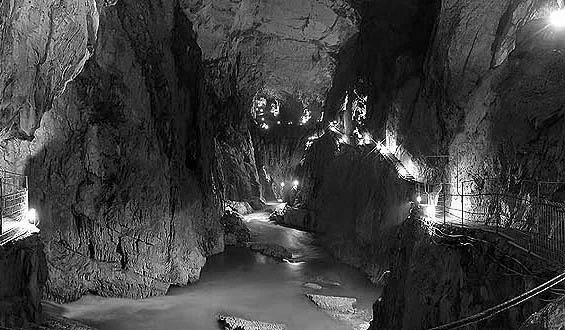
Škocjan Caves Regional Park is best known for its extraordinary underground cave system, which ranks among the most significant karst phenomena in the world. The park protects the Škocjan cave system featuring one of Europe's largest underground river canyons, with massive chambers and the dramatic collapse dolines of Mala dolina and Velika dolina that rank among the deepest in Slovenia. The Reka River's underground journey, emerging as the Timavo in Italy, represents a classic example of karst hydrology. In 1986, the caves were inscribed on the UNESCO World Heritage List, and in 1999, the park became the world's first underground wetland recognized by the Ramsar Convention. The exceptional biodiversity, with both Alpine and Mediterranean flora meeting in the dolines and cave entrances, further distinguishes this karst landscape.
Škocjan Caves Regional Park history and protected-area timeline
Škocjan Caves Regional Park was established following Slovenia's independence, with the nation's commitment to protecting this extraordinary natural area formalized through dedicated legislation. The park's managing authority, the Škocjan Caves Park Public Service Agency, was created to oversee conservation, research, and public access at this globally significant site. The protection of the Škocjan Caves area reflects decades of recognition of its outstanding universal value, beginning with systematic exploration and documentation that revealed the true scale and complexity of the underground system.
The cave system's international recognition culminated in 1986 when Škocjan Caves were inscribed on the UNESCO World Heritage List, acknowledging their significance as one of the world's most important natural landmarks. This designation was followed by additional international recognition in 1999 when the park became the first underground wetland to be designated under the Ramsar Convention, highlighting the unique ecological character of the subterranean ecosystem. In 2004, the park was incorporated into the World Network of Biosphere Reserves as the Karst Biosphere Reserve, encompassing the central protected area, the park's area of influence, and a transition zone covering the Municipality of Divača. This layered protection reflects the park's multifaceted value as a geological, ecological, and cultural landscape.
Škocjan Caves Regional Park landscape and geographic character
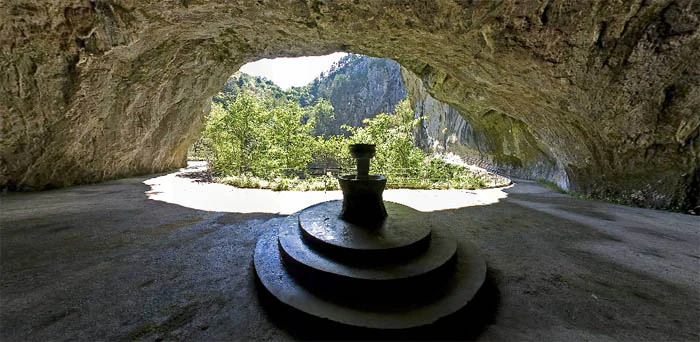
The physical landscape of Škocjan Caves Regional Park exemplifies the karst terrain that has given its name to a geological phenomenon recognized worldwide. The Škocjan Karst surface appears deceptively flat but conceals an extraordinarily dynamic underground world carved by water moving through soluble limestone. The most prominent surface features are the collapse dolines, particularly Mala dolina and Velika dolina, which rank among Slovenia's deepest sinkholes. Velika dolina descends 163 meters from the viewpoint to the Reka River's ponor, while Mala dolina reaches 120 meters in depth. These dramatic depressions formed as the roofs of underlying cave chambers collapsed, creating windows into the subterranean realm.
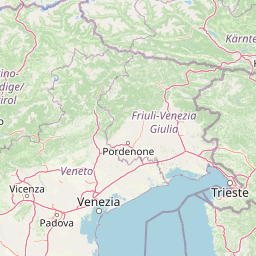
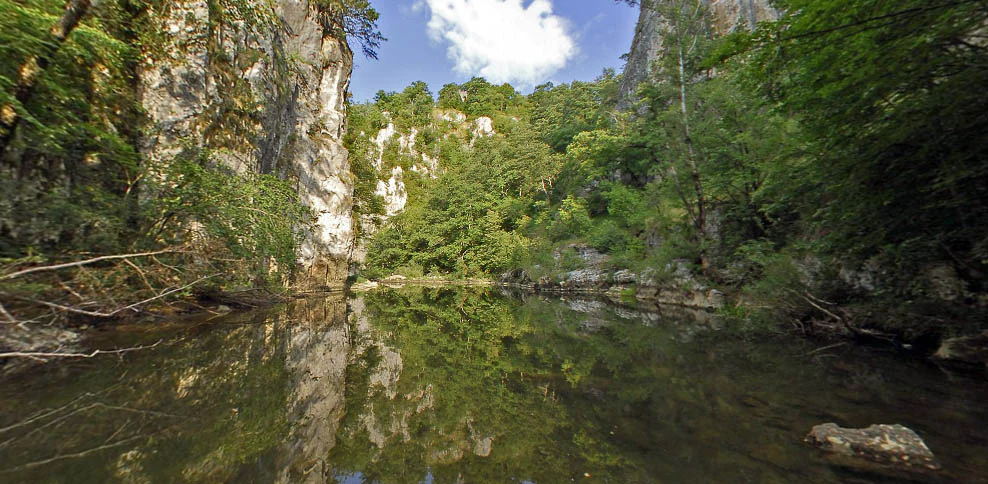
The Reka Gorge represents another landscape highlight, where the river has carved a dramatic canyon up to 100 meters deep as it approaches its underground entrance. The gorge reaches its narrowest point below Školj Castle, a 16th-century structure perched on the canyon walls. The landscape above the caves maintains the characteristic karst appearance with its limestone pavement, sinkholes, and limited surface drainage, as water quickly disappears underground through fissures and swallow holes. The surrounding area of influence extends across 450 square kilometers, encompassing the entire Reka River drainage basin and including the Snežnik mountain chain, the Reka Valley, Brkini hills, Vremščica, and the Košana Valley, creating a comprehensive karst landscape unit.
Škocjan Caves Regional Park ecosystems, habitats, and plant life
The ecological character of Škocjan Caves Regional Park reflects the unique conditions created by the interaction between karst geology, underground rivers, and the meeting of different climatic and vegetational zones. The collapse dolines and their surroundings provide shelter to rare and endangered bird species and several bat species, while the extraordinary ecosystem that has developed due to particular geomorphologic and microclimatic conditions preserves species assemblages found nowhere else. The special climatic conditions in the dolines and at cave entrances allow Alpine and Mediterranean flora to intermingle in a remarkable botanical convergence.
The underground environment supports several species of cave animals, both terrestrial and aquatic, adapted to life in perpetual darkness. These troglobitic and stygobitic species represent an unusual component of the park's biodiversity, having evolved in isolation within the cave system. The park's integration into the World Network of Biosphere Reserves as the Karst Biosphere Reserve in 2004 recognizes these ecological values, encompassing not only the strictly protected central zone but also the surrounding area of influence and transition zones where human activities continue within an ecological framework. The Ramsar designation as the world's first underground wetland in 1999 further acknowledges the unique ecological character of this karst groundwater system.
Škocjan Caves Regional Park wildlife and species highlights
The wildlife of Škocjan Caves Regional Park encompasses both surface and underground species adapted to the distinctive karst environment. The collapse dolines and their surrounding cliffs provide nesting and shelter sites for rare and endangered bird species, while the cave entrances and passages harbor several bat species that roost in the dark chambers during daylight hours. These surface-dwelling species utilize the underground spaces seasonally or nocturnally, while the deeper cave passages support specialized troglobitic fauna that has evolved entirely in the subterranean environment.
The underground is rich with several species of cave animals, including both terrestrial invertebrates and aquatic organisms that have adapted to life in the underground river system. These range from specialized crustaceans to insects that have lost pigmentation and sight through evolutionary adaptation to perpetual darkness. The Reka River itself supports aquatic communities adapted to the variable conditions created by seasonal flooding and the cave environment. While the cave system has been well-explored scientifically, new species continue to be discovered, reflecting the incomplete understanding of this complex underground ecosystem.
Škocjan Caves Regional Park conservation status and protection priorities
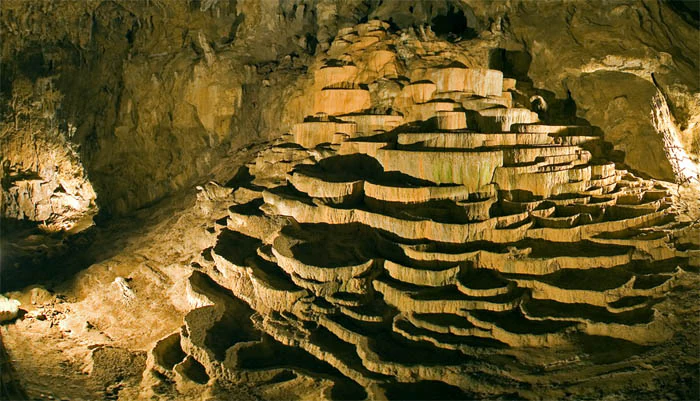
Škocjan Caves Regional Park holds exceptional conservation significance as one of the world's most important karst protected areas, recognized through multiple international designations that reflect its outstanding universal value. The UNESCO World Heritage inscription in 1986 acknowledged the caves as a natural phenomenon of exceptional significance, while the 1999 Ramsar designation as the first underground wetland recognized the unique ecological character of the subterranean ecosystem. The park's inclusion in the World Network of Biosphere Reserves in 2004 as the Karst Biosphere Reserve created a comprehensive conservation framework encompassing the core protected area, the broader area of influence, and transition zones.
Natural heritage within the protected area is protected by Slovenian law, with specific phenomena declared natural monuments due to their outstanding natural and aesthetic value. These include Mala dolina and Velika dolina to the collapse doline edge, the Okroglica abyss, the walls and banks of the Reka Valley, and multiple cave systems including the main Škocjan Caves, Jama na Prevali II, Mala jama na Prevali, and Škrlica Cave. The stalactite in Lipje Caves near Divača also holds protected status. This layered protection addresses both the underground cave system and the surface karst landscape, recognizing that the two are fundamentally interconnected through hydrological processes.
Škocjan Caves Regional Park cultural meaning and human context
The landscape around Škocjan Caves has attracted human occupation from time immemorial, leaving the area exceptionally rich in archaeological sites and cultural heritage. The medieval village of Škocjan preserves its historic ground plan and sits on a large natural bridge beneath which the Reka River carved the Mahorčič and Marinič caves. The village, named after the church of St. Cantianius, was presumably settled in the prehistoric period and certainly during the Roman era. Around this church, which was consecrated in 1606, the village developed, leaning on the partly preserved hill fort walls that define its historic core. Today the village is nearly deserted except during the tourist season when visitors to the museum exhibitions bring it temporarily back to life.
The park contains various protected cultural monuments including settlement monuments, archaeological monuments, historical art monuments, ethnological monuments, and technical monuments. Betanja village is entirely protected as a cultural monument, with Betanceva house, over 200 years old and uniquely covered with limestone slabs (skrlami), representing traditional regional architecture. The park's area of influence encompasses a broader cultural landscape including the Reka Valley and traditional karst villages that maintain connections to the underground landscape above which they sit.
Top sights and standout views in Škocjan Caves Regional Park
Škocjan Caves Regional Park protects one of the world's most impressive karst cave systems, featuring one of Europe's largest underground river canyons with massive chambers reaching heights that dwarf cathedrals. The collapse dolines of Mala and Velika dolina rank among the deepest in Slovenia, creating dramatic windows into the underground world below. The Reka River's subterranean journey of approximately 35 kilometers before emerging in Italy represents a classic demonstration of karst hydrology. The park's triple international recognition—UNESCO World Heritage site, Ramsar wetland, and Biosphere Reserve—acknowledges its outstanding universal value across geological, ecological, and cultural dimensions. The medieval village of Škocjan, perched on a natural bridge above the caves, preserves centuries of human presence in this remarkable landscape.
Best time to visit Škocjan Caves Regional Park
The karst landscape and cave system can be visited throughout the year, though the underground environment maintains relatively constant temperatures regardless of season. The character of the visit changes significantly with water levels, as the Reka River's flow varies considerably between dry and wet periods. During autumn and winter rains, the river can flood dramatically within the caves, with water levels rising dramatically and creating powerful underground cascades visible from safe observation points. The spring and early summer months often offer excellent conditions for exploring the surface trails around the dolines and villages, with wildflowers adding color to the karst landscape. Summer brings the most stable conditions for underground tours, though this is also the busiest season for tourism. The shoulder seasons of spring and autumn balance good conditions with fewer visitors and offer the opportunity to witness the karst landscape in different seasonal moods.