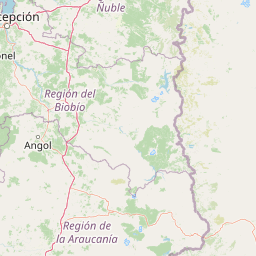
Why Tolhuaca National Park stands out
Tolhuaca National Park is best known for its exceptional old-growth forests dominated by southern beech species and the iconic monkey puzzle tree (Araucaria araucana). The park protects a significant portion of Chile's ancient forest heritage, with its Nothofagus woodlands and araucaria stands representing some of the oldest protected forests in South America. The dramatic landscape, shaped by Andean volcanic terrain and featuring scenic waterfalls such as Salto Malleco (50 meters) and Salto de la Culebra (49 meters), provides a visually striking setting. The park is also notable for its biological importance, supporting rare and endemic species including the frog Alsodes igneus, which is found nowhere else in the world.
Tolhuaca National Park history and protected-area timeline
Tolhuaca National Park was established on October 16, 1935, when an initial area of 3,500 hectares was separated from Malleco National Reserve to create the new protected area. This establishment built upon the pioneering conservation work that created Malleco National Reserve in 1907, which was the first protected wildlife area in Chile and the entire South American continent. The park underwent a significant expansion in 1985 when a second portion of Malleco National Reserve was incorporated, bringing the park to its current extent of 6,474 hectares. This sequential protection approach reflects Chile's long-standing commitment to forest conservation in the Andean regions of Araucanía. The land within Tolhuaca National Park therefore represents some of the oldest continuously protected territory in South America, having been under some form of protection since the early twentieth century.
Tolhuaca National Park landscape and geographic character
The landscape of Tolhuaca National Park is defined by its position on the lower western spurs and foothills of the Andes Mountains in southern Chile. The terrain is mountainous and rugged, shaped by volcanic processes that created the underlying geology and continue to influence the environment through the nearby Tolhuaca volcano. The park encompasses steep ridges, deep valleys, and rolling forested slopes that transition from lower elevations around 700 meters to higher points approaching 1,822 meters. Several small lakes and ponds are scattered throughout the park, with Laguna Malleco and Laguna Verde being the most significant. These water bodies, set among dense forest, create scenic vistas and important habitat for wildlife. The relief is characterized by its complexity and visual drama, with the forest-covered mountains providing a continuously verdant backdrop. The presence of the Malleco River's source within the park adds hydrological significance to the already varied terrain.
Tolhuaca National Park ecosystems, habitats, and plant life
The natural environment of Tolhuaca National Park features forest ecosystems typical of the Chilean Andes, characterized by the southern beech genus Nothofagus and the distinctive araucaria tree. In the park's higher regions, forests are dominated by coihue (Nothofagus dombeyi), lenga beech (Nothofagus pumilio), and Patagonian oak (Nothofagus obliqua), creating layered canopy environments. The iconic monkey puzzle tree (Araucaria araucana), known locally as pehuén, is a prominent feature of the higher forest zones, often displaying yellow lichen growth on its distinctive trunks and branches. The forest composition changes with elevation and aspect, creating diverse habitat conditions. These forests form part of the larger and ecologically significant temperate forest ecosystem of southern South America, representing a conservation priority due to limited global distribution. The forest character varies with seasons, showing summer green density and winter branch patterns.
Tolhuaca National Park wildlife and species highlights
Tolhuaca National Park supports a diverse faunal community across its forest and aquatic habitats. The park's lakes, particularly Laguna Malleco, host significant populations of waterfowl and are monitored by CONAF to track bird species requiring protection. Bird species found in the park include the Andean gull, yellow-billed teal, rosy-billed pochard, lake duck, chimango caracara, buff-necked ibis, Andean condor, ringed kingfisher, and Magellanic woodpecker. Mammal species present include the cougar (puma), coypu, South American gray fox, and the small kodkod cat. The park is notable for supporting rare terrestrial mammals including the pudú, one of the world's smallest deer species, and the monito del monte, a diminutive marsupial endemic to southwestern South America. The frog Alsodes igneus is particularly significant as it is known only from Tolhuaca National Park, representing a species with an extremely restricted global distribution and making the park critically important for its conservation.
Tolhuaca National Park conservation status and protection priorities
Tolhuaca National Park holds significant conservation value as part of one of South America's oldest protected area networks, originating from Malleco National Reserve established in 1907. The park protects old-growth forest ecosystems that are globally limited to the temperate forests of southern Chile and Argentina. The protection of these forests conserves critical habitat for species including the endemic frog Alsodes igneus, which is known only from this location. The monitoring program at Laguna Malleco demonstrates ongoing conservation management, with regular counts of waterbird populations to identify species requiring protective action. The park's forests store carbon, regulate water cycles, and provide habitat for numerous species, including rare and endemic taxa. The long-protected status of this land makes it a significant reservoir of biodiversity and ecological processes in the Andean region of southern Chile.
Tolhuaca National Park cultural meaning and human context
The park lies within the traditional territory of the Mapuche people, an indigenous communities of southern Chile whose ancestral lands encompass much of the La Araucanía Region. Several plant names in the area reflect Mapuche language influence, including coihue derived from the Mapuche term koywe. The monito del monte marsupial is known locally by its Mapuche name chumaihuén. The relationship between the landscape and Mapuche culture is embedded in the place names and local knowledge of the region, though the park's primary designation focuses on natural rather than cultural heritage protection.
Top sights and standout views in Tolhuaca National Park
The park's most distinctive features include the ancient forest landscape of the Andean foothills, the scenic waterfalls of Salto Malleco and Salto de la Culebra, and the tranquil lakes of Laguna Malleco and Laguna Verde. The proximity of the Tolhuaca volcano creates a dramatic backdrop to the forested terrain. The network of four marked hiking trails provides access to these highlights, while the rare pudú and monito del monte represent special wildlife viewing opportunities. The park's status as part of Chile's oldest protected lands gives it historical significance beyond its ecological value. The combination of volcanic landscape, ancient forests, and diverse wildlife creates a comprehensive representation of southern Chilean natural heritage.
Best time to visit Tolhuaca National Park
The park can be visited throughout the year, though the experience varies with Chile's southern hemisphere seasons. The higher elevations experience cold temperatures while valleys are more moderate. Rain occurs throughout the year, so visitors should be prepared for variable conditions. Summer months (December to February) typically offer warmer temperatures and fuller vegetation, making hiking more comfortable, while winter brings colder conditions and potentially more dramatic forest atmosphere. The key consideration is that both access routes require travel on gravel roads and are most reliably passable during the warmer summer months. The park receives relatively few visitors annually, with the majority being Chilean, offering a more secluded experience compared to more heavily visited parks.