Why Tuktut Nogait National Park stands out
Tuktut Nogait is most renowned for protecting the calving grounds of the Bluenose-West caribou herd, one of the four major barren-ground caribou herds in the Northwest Territories. The park serves as a critical refuge for this herd, which has shown recovery following the establishment of protected area status, with populations reaching approximately 122,000 in 2010. The dramatic river canyons, particularly along the Hornaday River, provide nesting habitat for impressive raptors including peregrine falcons, rough-legged hawks, gyrfalcons, and golden eagles. The park's extreme remoteness and harsh Arctic environment create one of Canada's most pristine wilderness experiences, where visitors venture into a landscape largely untouched by modern development.
Tuktut Nogait National Park history and protected-area timeline
Human occupation of Tuktut Nogait extends back to approximately AD 1000, with archaeological surveys identifying over 400 sites within the park boundaries. These sites include remnants of campsites, food caches, graves, and kayak rests, representing Thule and Copper Inuit cultures from the period between AD 1200 and 1500. The first European to reach the area was Father Émile Petitot, a French Oblate missionary who traveled through the region in 1867-68. In 1930, the Hudson's Bay Company established a trading outpost at Letty Harbour, though it closed in 1937 due to insufficient trade. A Roman Catholic mission was established at Paulatuk in 1935 and operated a small trading post until 1954. The park was formally established in 1998 as part of Canada's national parks system, created in conjunction with the Inuvialuit Final Agreement. The Tuktut Nogait Agreement outlines specific provisions for Inuvialuit beneficiaries to pursue subsistence harvesting within the park, primarily fishing for Arctic char, hunting caribou, and selective trapping in the northwestern portion of the protected area.
Tuktut Nogait National Park landscape and geographic character
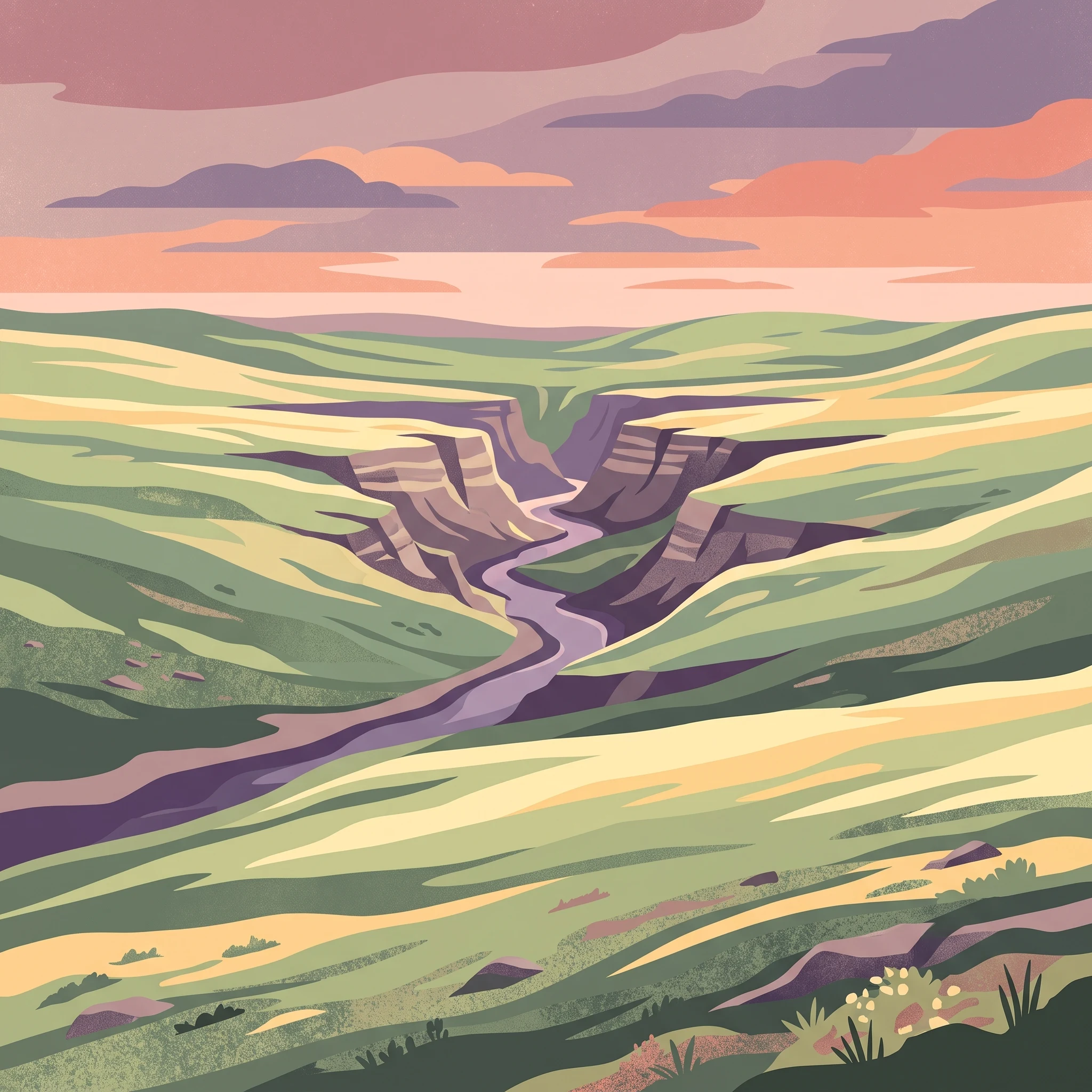
The terrain of Tuktut Nogait National Park represents classic Arctic tundra landscape shaped by glacial processes and the persistent influence of permafrost. The park's three major rivers, the Hornaday River, Brock River, and Roscoe River, have carved significant valleys through the tundra, creating distinctive canyon features with steep walls that rise above the river corridors. These canyon walls provide sheltered microhabitats and critical nesting sites for raptorial birds. The overall landscape consists of gently rolling tundra broken by river valleys, with exposed bedrock in some areas and extensive wetland zones in low-lying regions. The Arctic environment supports limited vegetation, primarily mosses, lichens, sedges, and dwarf shrubs adapted to the short growing season and extreme cold. The absence of trees defines the visual character of the landscape, with the horizon stretching unbroken across vast expanses of tundra interrupted only by river courses and the occasional rocky outcrop.
Tuktut Nogait National Park ecosystems, habitats, and plant life
The ecological character of Tuktut Nogait is defined by its position in the Arctic tundra biome, where biodiversity is shaped by the extreme climate and short summer growing season. The park protects one of North America's most significant caribou calving grounds, supporting the Bluenose-West herd whose population has shown meaningful recovery since the park's establishment. The river systems support healthy populations of Arctic char, a cold-water fish species essential to both ecological function and local subsistence harvesting. Wetland areas, though limited in tree growth, support productive ecosystems for migratory birds and small mammals. The vegetation patterns reflect the harsh Arctic conditions, with mosses and lichens dominating in many areas while sedge meadows occur in better-drained locations. The park's ecological integrity depends on the maintenance of natural processes including caribou migration, predator-prey relationships, and the seasonal patterns that have shaped Arctic ecosystems for millennia.
Tuktut Nogait National Park wildlife and species highlights
Tuktut Nogait supports a diverse assembly of Arctic wildlife adapted to the harsh northern environment. The park is best known as the calving ground for the Bluenose-West barren-ground caribou herd, whose recovery has been attributed in part to the protection afforded by the park. Muskoxen roam the tundra in small groups, their thick coats providing insulation against Arctic temperatures. Grizzly bears, though rarely encountered, roam the landscape in search of berries and carrion. The river systems support Arctic char, a prized sport and food fish that also attracts wildlife to the water's edge. Smaller mammals include red foxes, wolverines, Arctic ground squirrels, and collared lemmings, each filling important ecological niches in the Arctic food web. The park is particularly significant as a breeding and nesting ground for migratory birds, with raptors including peregrine falcons, rough-legged hawks, gyrfalcons, and golden eagles nesting along the steep canyon walls. The Dolphin-Union caribou herd, which normally occupies Victoria Island and winters in Nunavut, occasionally migrates to the park area following the shoreline in search of wind-swept grazing areas.
Tuktut Nogait National Park conservation status and protection priorities
Tuktut Nogait National Park plays a crucial role in conserving one of Canada's most important Arctic ecosystems and one of North America's last great caribou migrations. The protection of Bluenose-West caribou calving grounds has been instrumental in the herd's recovery, with population estimates reaching approximately 122,000 individuals in 2010 following the park's establishment. This represents a significant conservation success story, particularly given that other regional caribou herds have experienced substantial declines of 84-93 percent from their peak populations in the 1980s and 1990s. The park is designated as an IUCN Category II protected area, reflecting its primary purpose of ecosystem conservation. Management of the park operates under the framework of the Inuvialuit Final Agreement, which recognizes Indigenous rights to subsistence harvesting while maintaining the protected status of the area. Current initiatives focus on establishing base camp facilities at Uyarsivik Lake to support ecological monitoring, cultural resource preservation, and visitor programming.
Tuktut Nogait National Park cultural meaning and human context
The cultural landscape of Tuktut Nogait reflects over a millennium of continuous Indigenous human presence in the Arctic. Archaeological evidence documents occupation dating to approximately AD 1000, with the oldest known sites likely representing Thule and Copper Inuit cultures from between AD 1200 and 1500. The region's traditional inhabitants were Mackenzie and Alaskan Inuit who came to the Paulatuk and Darnley Bay area. Under the Inuvialuit Final Agreement and the Tuktut Nogait Agreement, Inuvialuit beneficiaries retain the right to pursue subsistence harvesting within the park, a provision that recognizes the deep connection between Indigenous peoples and this Arctic landscape. This subsistence activity primarily involves fishing for Arctic char, hunting caribou, and limited trapping, concentrated in the northwestern portion of the park. The coexistence of national park protection with Indigenous subsistence rights represents a model of collaborative conservation that honors both ecological preservation and cultural continuity.
Top sights and standout views in Tuktut Nogait National Park
Tuktut Nogait offers a rare glimpse into one of North America's last great Arctic wilderness areas, where the annual caribou migration remains a living ecological process. The dramatic Hornaday River canyon provides both scenic grandeur and crucial raptor nesting habitat. The park's extreme remoteness, with only 12 visitors recorded in 2022-23, ensures an authentic wilderness experience for those who venture to this northern frontier. The combination of caribou calving grounds, significant archaeological sites, and ongoing Indigenous cultural connections creates a layered landscape of ecological and human significance. The Bluenose-West caribou herd's recovery demonstrates the value of protected areas in safeguarding critical habitat.
Best time to visit Tuktut Nogait National Park
Visiting Tuktut Nogait National Park requires planning around the Arctic's extreme seasonal patterns. The brief summer season, typically from late June through August, offers the most accessible conditions for visitation, with temperatures occasionally reaching above freezing and the tundra displaying its brief but vibrant green period. This is also when wildlife viewing opportunities are most accessible, as caribou are more active and migratory birds are nesting. The park's remote location and lack of developed infrastructure means that most visits occur through organized expeditions with Parks Canada or authorized operators. Winter visitation is essentially impossible due to extreme cold, darkness, and the absence of any support facilities. The shoulder seasons of spring and fall offer transitional conditions but present significant logistical challenges. The best opportunities for experiencing this remote protected area come through planning well in advance and understanding the expedition-style nature of Arctic park visits.