
Why Vashlovani National Park stands out
Vashlovani National Park is best known for its exceptional lowland desert and forest ecosystems that are rare in the Caucasus region. The park preserves wild pistachio woodlands, a distinctive feature of its floral identity, along with peonies and various orchid species. Its dramatic badland terrain, locally called the "Sharp Walls," features eroded canyon cliffs that create a striking desert landscape. The Alazani flood plains and adjoining forests form another characteristic environment. The park is also notable for its wildlife, including the presence of the critically important Caucasian leopard, with confirmed tracks and camera trap recordings documenting this elusive predator's return to the area.
Vashlovani National Park history and protected-area timeline
Vashlovani National Park traces its institutional history to 1935, when it was originally established as the Vashlovani State Reserve to protect its unique shallow forests and semi-arid ecosystems. For decades, the reserve served as a protected area managing the core natural assets of the region. A significant expansion occurred in April 2003, when the protected territory was enlarged by 84.80 square kilometers to create the modern national park with an area of 251.14 square kilometers. The expansion reflected growing understanding of the ecological connections between the original reserve and surrounding landscapes, as well as the need to provide adequate habitat connectivity for species like the Caucasian leopard. The park is currently managed by Georgia's Agency of Protected Areas, which oversees the country's protected area system. The expansion also coincided with increased conservation attention to the lowland ecosystems of eastern Georgia, which had historically received less protection focus than the country's mountainous regions.
Vashlovani National Park landscape and geographic character
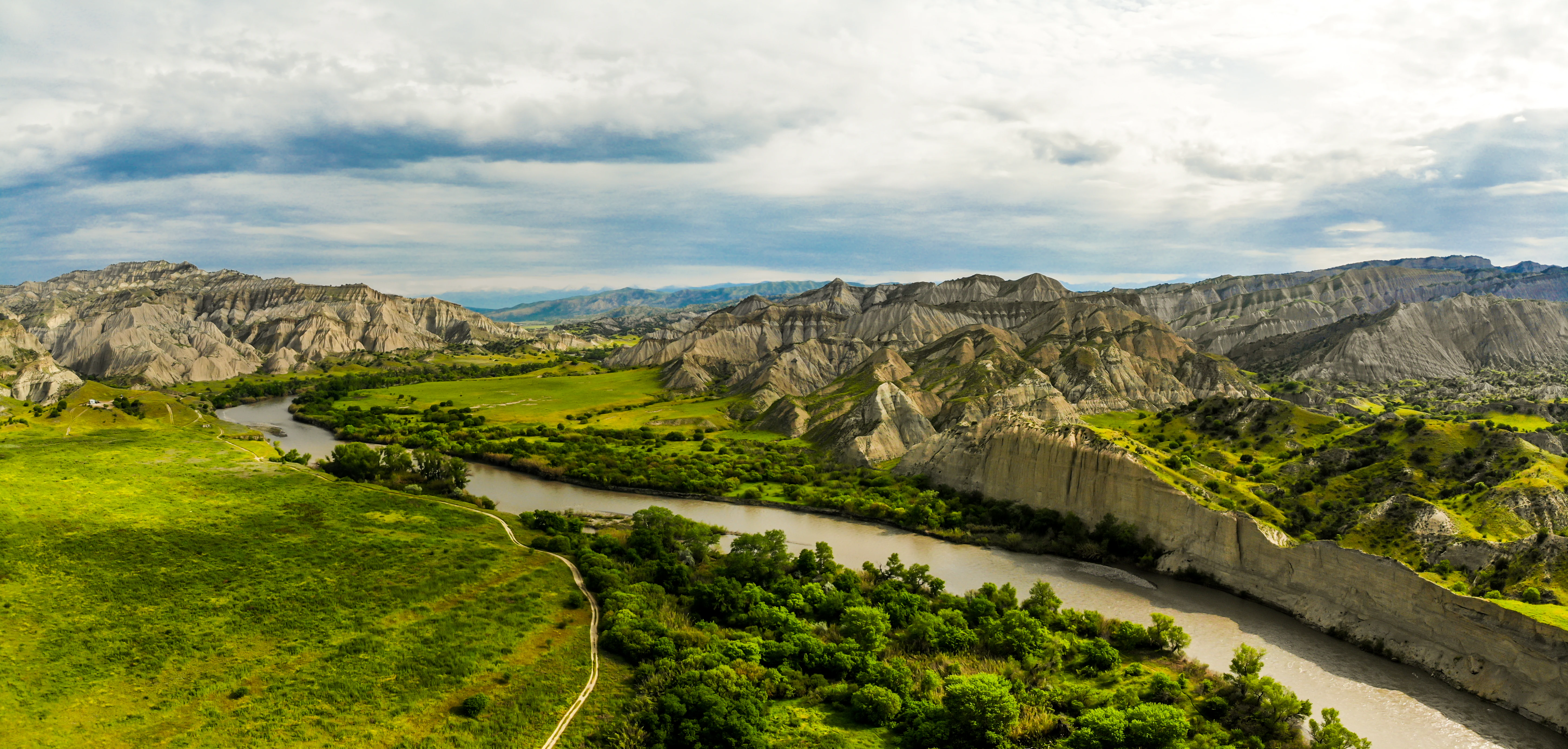
The landscape of Vashlovani National Park is defined by its lowland position on the Iori Plateau, creating an environment that stands in sharp contrast to the alpine and forest-covered mountains that dominate much of Georgia. The terrain features extensive badland formations—eroded areas of soft sedimentary rock that have been carved by water and wind into a maze of gullies, ravines, and sheer cliff faces. These dramatic formations, known locally as the "Sharp Walls," create a visually striking desert-like landscape with vertical faces and凹凸不平 surfaces. Between the badland areas, the terrain flattens into semi-desert steppe and scattered patches of arid deciduous forest. The Alazani River flows along the eastern boundary of the park, marking both the edge of the protected area and the international border with Azerbaijan. The river's flood plain supports riparian forests that provide important habitat connectivity through the otherwise dry landscape. The overall impression is one of a semi-arid wilderness where desert and forest elements intermingle across a relatively flat terrain.
Vashlovani National Park ecosystems, habitats, and plant life
The natural environment of Vashlovani National Park is defined by its unique position as a lowland protected area in Georgia, preserving ecosystems that are largely absent from the country's more mountainous parks. The park contains a mosaic of habitats including semi-desert steppe, badland terrain, arid deciduous forests, and riparian zones along the Alazani River. The forests feature particularly distinctive elements, with wild pistachio trees representing one of the park's most notable botanical features. These pistachio woodlands occur in a region where this Mediterranean-influenced species reaches its northern and eastern limits. The park also supports populations of peonies and various orchid species, adding to its botanical significance. The semi-desert steppe vegetation includes characteristic drought-adapted plant communities that thrive in the low-elevation, semi-arid conditions. Riverine forests along the Alazani provide additional habitat diversity, creating forest corridors that connect the park's various habitat patches.
Vashlovani National Park wildlife and species highlights
Vashlovani National Park supports a diverse fauna despite its relatively small size and semi-arid character. The reptile population includes at least 25 species, with notable records including Macrovipera lebetinus and Eryx jaculus representing venomous and non-venomous snake species adapted to the dry landscape. The park's bird fauna is particularly rich, with more than 100 native species documented. Raptors including the imperial eagle and black vulture soar over the badland terrain, while the rare black stork inhabits the riparian zones. Pheasants and numerous other bird species occupy the forest and steppe habitats. The mammal community numbers 46 species, including golden jackals, red foxes, wolves, Eurasian lynx, and brown bears—the latter two representing significant predators within the ecosystem. Jungle cats and porcupines round out the mammalian diversity. Most notably, Vashlovani has become a stronghold for the critically important Caucasian leopard, with tracks first discovered in 2003 and a camera trap recording a leopard within the park in 2004, marking a significant conservation milestone for this endangered subspecies in Georgia.
Vashlovani National Park conservation status and protection priorities
Vashlovani National Park holds significant conservation importance for Georgia and the broader Caucasus region. The park preserves lowland ecosystems that are poorly represented in the country's protected area network, which is dominated by mountainous terrain. Its semi-desert steppe, badland environments, and pistachio woodlands represent rare habitat types that require active management and protection. The park's significance has been elevated by the confirmed presence of the Caucasian leopard, an endangered subspecies with very limited populations throughout its range. The discovery of leopard tracks in 2003 and subsequent camera trap confirmation in 2004 demonstrated that Vashlovani provides crucial habitat for one of the Caucasus's most threatened large cats. The Alazani River flood plain forests also serve as important wildlife corridors, connecting the park with adjacent landscapes in Georgia and Azerbaijan. As an IUCN Category II protected area, the park balances conservation of its natural values with sustainable management objectives.
Vashlovani National Park cultural meaning and human context
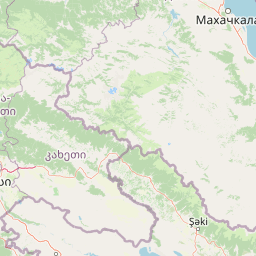
Vashlovani National Park is situated in the Kakheti region of eastern Georgia, an area with deep historical and cultural significance as one of the country's oldest wine-producing regions. The local communities in the Dedoplistsqaro Municipality maintain traditional land use practices that have shaped the landscape surrounding the protected area. While the park itself is relatively remote from major population centers, the surrounding agricultural lands—particularly the small Shiraki and Eldari plains—represent an important interface between protected and managed landscapes. The park can be explored through several means including foot trails, horse riding routes, rowing boats along the Alazani, and designated vehicle routes, allowing visitors to experience this distinctive landscape while minimizing impacts on sensitive habitats.
Top sights and standout views in Vashlovani National Park
Vashlovani National Park offers visitors a distinctive lowland wilderness experience unlike any other protected area in Georgia. The park's badland formations—the "Sharp Walls"—create an almost surreal desert landscape of eroded cliffs and gullies that contrasts sharply with the alpine environments found in other Georgian parks. The wild pistachio forests represent a botanical highlight and a significant range limit for this species. Wildlife enthusiasts are drawn by the possibility of encountering the elusive Caucasian leopard, one of the rarest large cats in the region. The Alazani River and its flood plain forests provide scenic variety and important habitat for water birds including the black stork. The park's semi-arid character, with its combination of desert terrain, steppe, and forest, creates a unique ecological experience that appeals to those interested in the Caucasus region's less-famous habitats.
Best time to visit Vashlovani National Park
Vashlovani National Park can be visited throughout the year, though the experience varies considerably by season. The semi-arid climate means that the park is most comfortable during the cooler months of spring and autumn, when temperatures are moderate and the landscape retains its green character. Summer months can bring very hot conditions in the lowland terrain, potentially limiting outdoor activities. Winter offers a different experience, with the dry landscape taking on a more austere character. Spring brings flowering of the park's notable plant species, including peonies and orchids, adding color to the steppe and forest edges. The best overall conditions for wildlife viewing and landscape appreciation typically occur in the cooler shoulder seasons, when temperatures are more comfortable for hiking and the various habitats are at their most visually appealing.