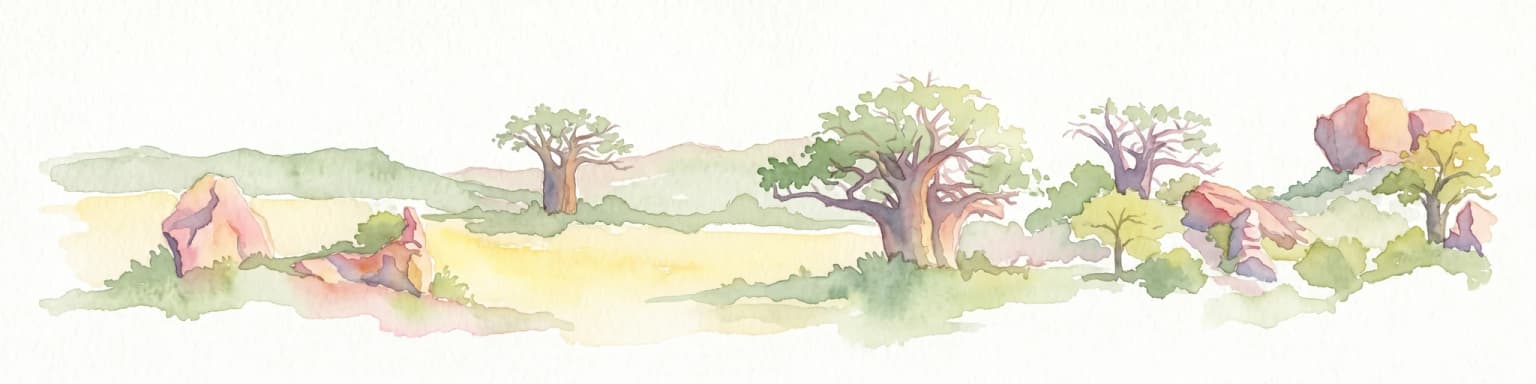
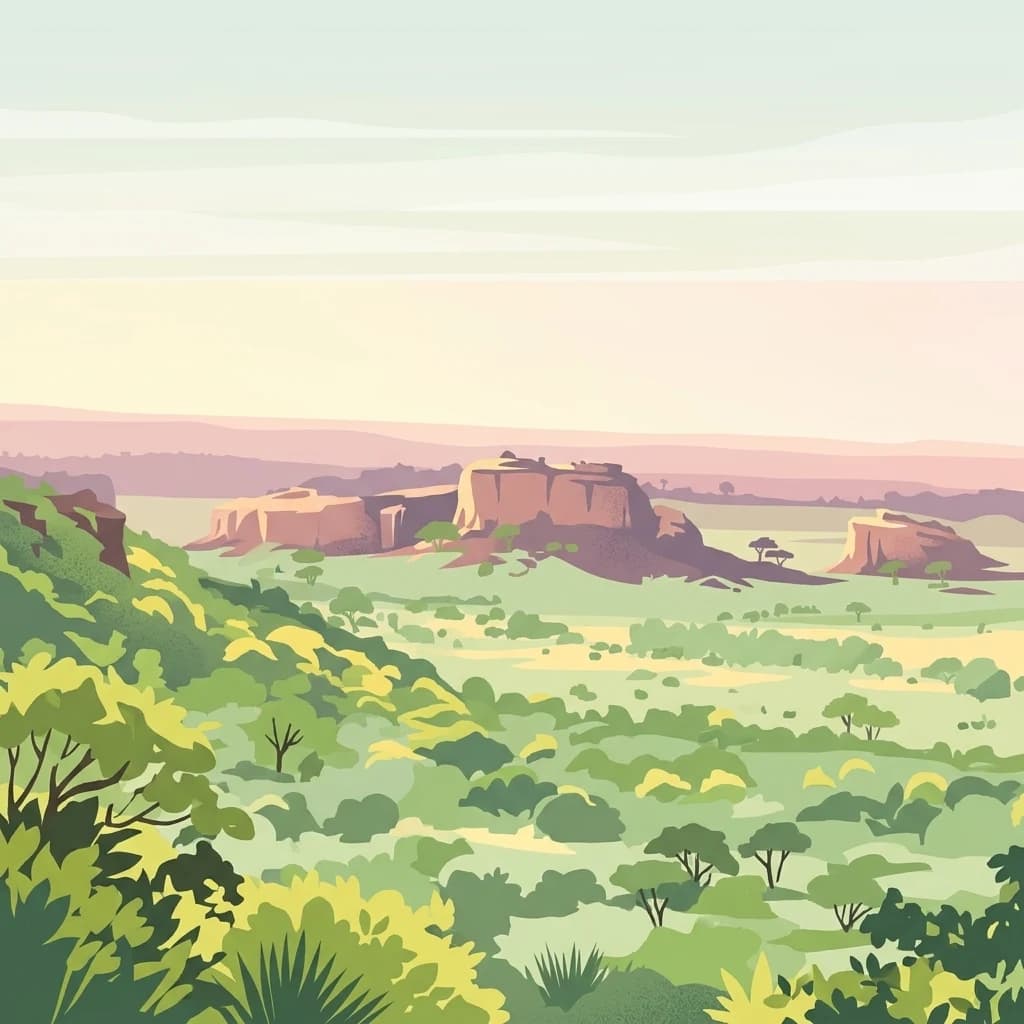
A sandstone massif in northern South Africa, designated as the country's first northern UNESCO Biosphere Reserve.
Waterberg Biosphere
The Waterberg Biosphere is a mountainous massif and protected landscape in the northern part of South Africa's Limpopo Province, designated as a UNESCO Biosphere Reserve in 2001. It is the first region in northern South Africa to receive this international biosphere status, recognizing both its ecological and cultural significance.
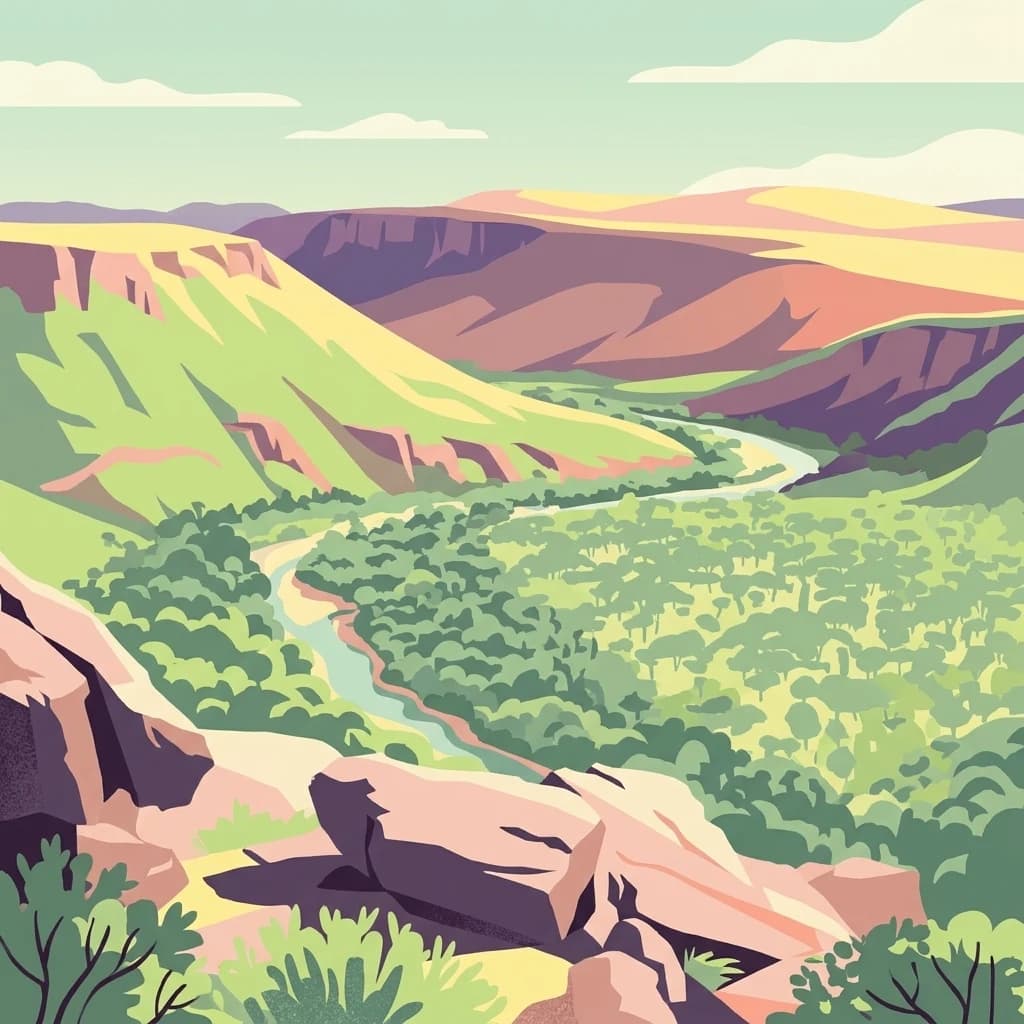
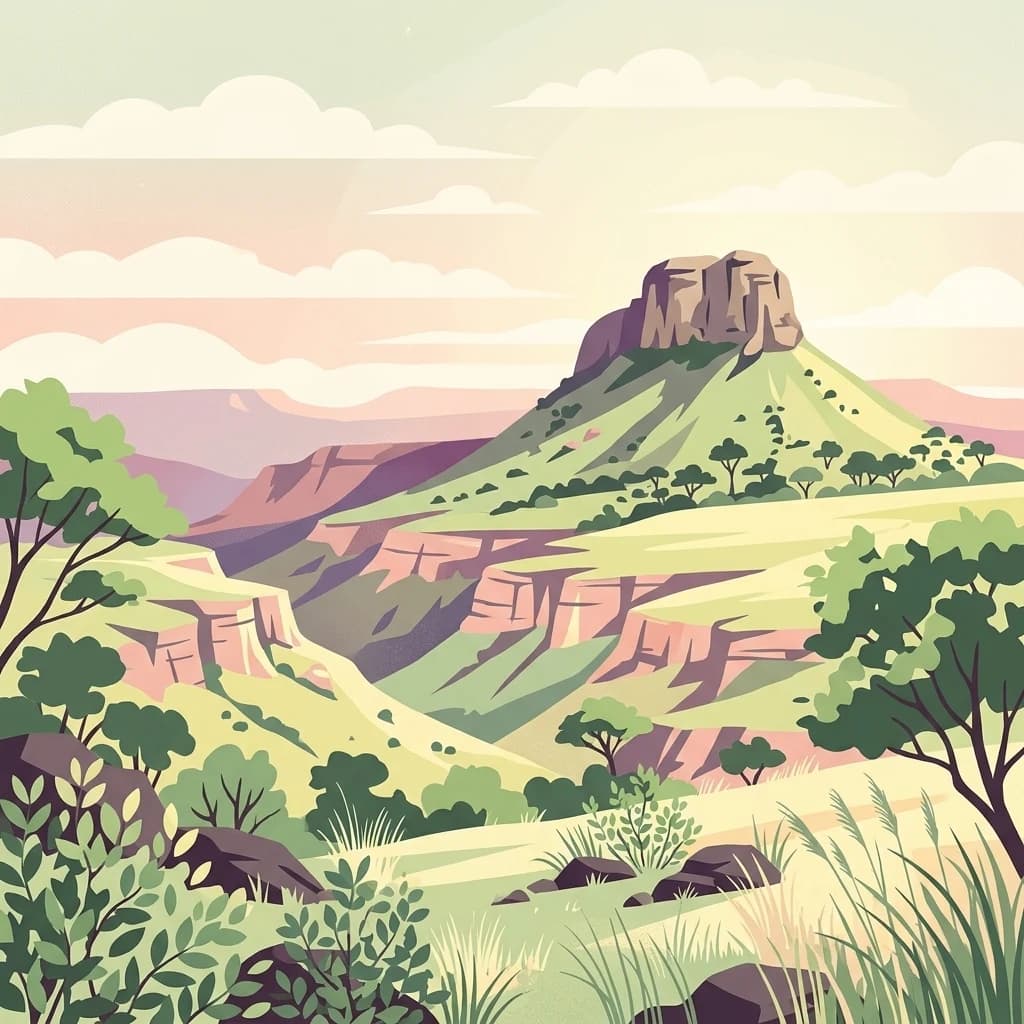
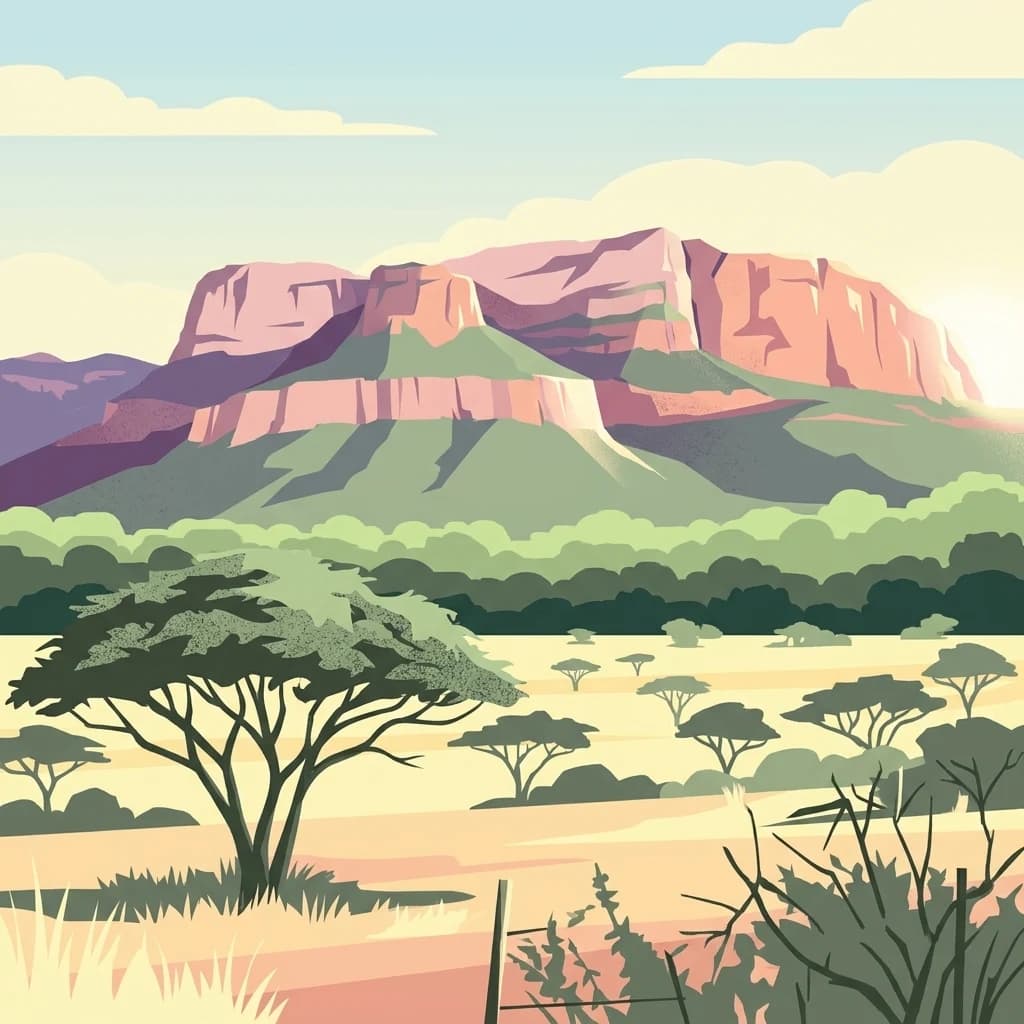
The massif forms a broad sandstone upland shaped by hundreds of millions of years of riverine erosion, producing distinctive bluffs, buttes, mesas, and kopje outcrops. Some cliffs rise several hundred meters above the surrounding plains. Ecologically, the area is fundamentally a dry deciduous forest or Bushveld system, with savanna grasslands, shaded cliff vegetation, and riparian zones supporting a wide array of plant and animal life.
The Waterberg also carries deep human history, from Stone Age occupation and Bushman rock art to early Iron Age settlements and later colonial-era encounters. Today, the biosphere combines conservation, ecotourism, and active land restoration, anchored by reserves such as Marakele National Park, Welgevonden Game Reserve, and the Lapalala Wilderness.