
Why Zhongar-Alatau National Park stands out
Zhongar-Alatau is best known for its wild Sievers apple trees (Malus sieversii), which grow in scattered stands across roughly 1% of the park's area. These wild apple populations are considered the progenitors of all cultivated apple varieties grown worldwide today, making this one of the most genetically significant forest ecosystems on the planet. Beyond the apple groves, the park protects extensive apricot, barberry, cherry, and currant thickets that form a unique wild fruit tree ecosystem. The dramatic glaciated mountain scenery, deep canyons, glacial valleys, and alpine peaks, provides the visual backdrop for this remarkable botanical heritage.
Zhongar-Alatau National Park history and protected-area timeline
Zhongar-Alatau National Park was officially established on April 30, 2010, through a decree of the Government of Kazakhstan. The park was created specifically to protect the unique ecology of the Dzungarian Alatau mountain range and its remarkable wild fruit tree forests. The establishment reflected growing recognition of the global significance of the region's genetic resources, particularly the wild apple populations that serve as the ancestral source of cultivated apple varieties. The park was placed under the management of the Forestry and Wildlife Committee, which operates under the Ministry of Ecology, Geology and Natural Resources of Kazakhstan. The selection of this area for national park status also reflected its ecological position as a critical transition zone where multiple biogeographic regions meet, creating exceptional species diversity.
Zhongar-Alatau National Park landscape and geographic character
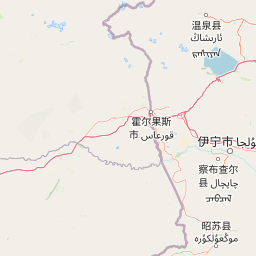
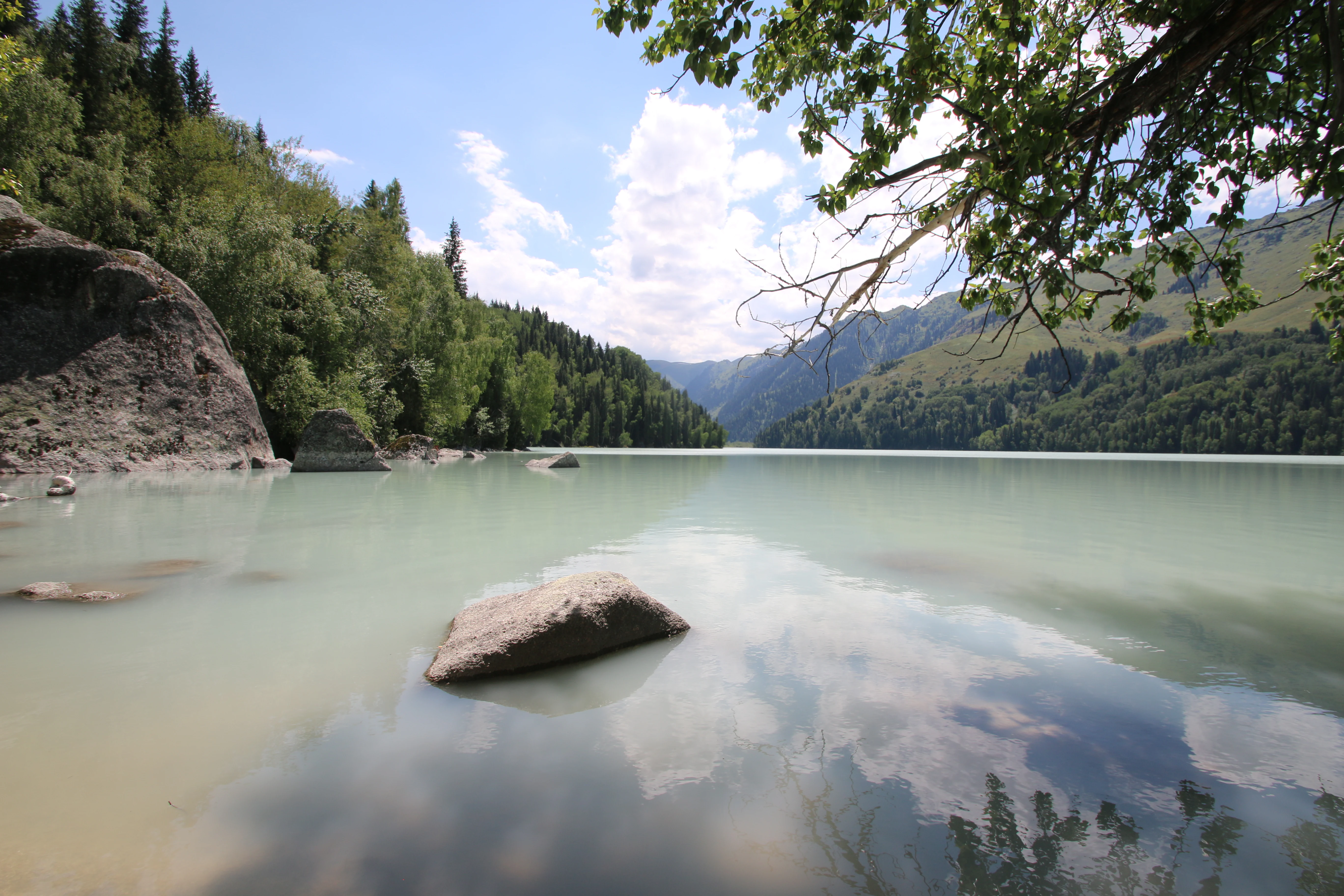
The park occupies the northern slope of the Dzungarian Alatau, a mountain range characterized by steep, rocky canyons and rapid-flowing streams descending from glacial source areas. The terrain is dominated by two parallel mountain ridges—the Northern and Southern Dzungarian Alatau—separated by the Koksu River valley. The highest peaks reach elevations exceeding 4,600 meters, with Besbakan at 4,622 meters being the tallest point in the Northern ridge. The landscape displays classic alpine topography with cirques, U-shaped glacial valleys, and sharp ridgelines. Two major river systems originate within the park: the Aksu River and the Lepsy River, both flowing northward across the foothills before emptying into Lake Balkhash. Extensive glaciation characterizes the higher elevations, with numerous glaciers descending from the permanent snowfield zones.
Zhongar-Alatau National Park ecosystems, habitats, and plant life
The Dzungarian Alatau sits at a critical ecological crossroads where boreal, steppe, and desert biogeographic regions converge, creating extraordinary habitat diversity within a relatively compact area. The park's altitude zones span from desert and semi-desert at the lowest elevations through grassland, shrubland, and forest to subalpine and alpine meadows and finally to permanent glaciers. This vertical stratification supports remarkable plant diversity, with 2,168 species of vascular plants documented across 112 families and 622 genera. Approximately 76 species are endemic to the region, found nowhere else on Earth. The forest cover is dominated by pine and spruce at mid-elevations, but the most distinctive feature is the scattered stands of wild fruit trees—most notably the Sievers apple (Malus sieversii)—that represent the wild ancestor of all cultivated apple varieties. Wild apricot, barberry, cherry, and currant thickets also occur throughout the park.
Zhongar-Alatau National Park wildlife and species highlights
The Dzungarian Alatau supports a rich fauna that reflects its position at the overlap zone between Siberian and Tian Shan wildlife communities. The park's mammal population includes snow leopards, which have been recorded in the area in recent years, as well as populations of deer, brown bear, and various mountain ungulates. The diverse habitats created by the park's vertical zonation—from forest through alpine meadows to glacial terrain—support both species adapted to different elevation zones and those that move seasonally between them. Birdlife includes species typical of both northern and central Asian mountain environments.
Zhongar-Alatau National Park conservation status and protection priorities
Zhongar-Alatau National Park holds exceptional conservation significance both within Kazakhstan and globally. The primary conservation priority is the protection of wild fruit tree genetic resources, particularly the Sievers apple populations that represent the direct ancestors of all cultivated apple varieties worldwide. Approximately 1% of the park's area is covered by Sievers apple stands, making this one of the most important locations for apple genetic diversity on the planet. The park also protects a critical biodiversity hotspot, as the Dzungarian Alatau ranks second only to the Altai region in Kazakhstan for biological diversity. The combination of high endemism, globally significant genetic resources, and the meeting point of multiple biogeographic regions makes this area a priority for long-term conservation. The park's designation as IUCN Category II reflects its primary mandate of protecting natural ecosystems while allowing for sustainable environmental education and tourism.
Zhongar-Alatau National Park cultural meaning and human context
The Dzungarian Alatau has historically served as a mountainous corridor and border zone between Kazakhstan and China. The region has been inhabited by pastoral communities who have traditionally utilized the mountain pastures for seasonal livestock grazing. The Kazakh-language name for the park—Жоңғар Алатауы ұлттық паркі—reflects the local identity and ownership of this protected landscape. While the park itself does not contain major archaeological sites, the broader Dzungarian Alatau region includes historical sites related to the ancient Silk Road routes that passed through the mountain passes.
Top sights and standout views in Zhongar-Alatau National Park
The park protects the world's most important wild apple genetic resource—the Sievers apple stands that are the direct ancestors of all cultivated apple varieties. The Dzungarian Alatau mountain range provides dramatic glaciated scenery with peaks exceeding 4,600 meters, extensive glacier systems, and deep alpine valleys. The biodiversity is exceptional, with over 2,000 plant species including 76 endemics, ranking second only to the Altai region in Kazakhstan. The location at the crossroads of major biogeographic regions creates habitat diversity from desert through forest to alpine meadows. Snow leopards have been documented in the park, adding to its conservation credentials.
Best time to visit Zhongar-Alatau National Park
The park experiences a cold semi-arid climate typical of central Asian mountain environments. Summer months from June through August offer the most accessible conditions for hiking and exploration, with average temperatures reaching around 25°C in the lower elevations. Higher elevations remain significantly cooler. Spring and early summer bring more robust water flow in the mountain streams, while autumn offers the opportunity to observe the wild fruit trees in their seasonal coloration. Winter visits are possible but should only be undertaken by those prepared for severe cold, as temperatures at higher elevations can drop dramatically below freezing.