Mori Atlas logo
National parkCuronian Spit National Park

Discover the dramatic dunes, unique forests, and migratory bird pathways of this coastal protected landscape.

Curonian Spit National Park: A UNESCO World Heritage Sand Spit National Park

(National Park "Kurshskaya Kosa")

Curonian Spit National Park, situated within Russia's Kaliningrad Oblast, protects a significant portion of one of the world's longest sand spits. This national park showcases a dynamic geography shaped by the Baltic Sea and Curonian Lagoon, renowned for its towering sand dunes, including the iconic Epha Dune, and the enigmatic Dancing Forest. As a UNESCO World Heritage Site, it offers unparalleled opportunities for atlas-based exploration of unique coastal ecosystems and migratory bird routes.

UNESCO World Heritage SiteCoastal DunesMigratory BirdsBaltic SeaSand SpitWetlands

Curonian Spit National Park

National park

Park overview

Structured park overview, official facts, and landscape profile for Curonian Spit National Park

Curonian Spit National Park park facts, protected area profile, and essential visitor context
Review the core facts for Curonian Spit National Park, including designation, size, terrain, visitor scale, habitats, and operating context in one park-focused overview.

About Curonian Spit National Park

Curonian Spit National Park represents a unique coastal protection zone in the Baltic region, preserving a landscape that has evolved over millennia through the interplay of wind, waves, and glacial deposits. The park encompasses the Russian-owned southern portion of the Curonian Spit, a slender finger of land that extends from the Sambian Peninsula in the south northward toward Lithuania. This depositional sandbar, formed as receding glaciers left behind the materials that would become the Baltic Sea, has been shaped by marine and aeolian processes into one of Europe's most distinctive coastal landforms. The park's significance extends beyond its natural features to encompass the cultural landscape that has developed over centuries, with the spit serving as a corridor for human settlement and trade. The proximity of multiple distinct ecological communities—beach, dune ridge, various wetland types, meadows, and forests—within a relatively confined area creates exceptional biodiversity, making the park a living laboratory of coastal ecosystem dynamics.

Quick facts and research context for Curonian Spit National Park

Located in Kaliningrad Oblast, Russia, Curonian Spit National Park encompasses 41 kilometers of the southern portion of the 98-kilometer Curonian Spit. The park was established in 1987 and is managed by Russia's Ministry of Natural Resources and Environment. The spit functions as a natural barrier between the saltwater Baltic Sea and the freshwater Curonian Lagoon, with lagoon waters averaging 3.7 meters in depth and sitting approximately 12 centimeters above Baltic Sea level. The park's width varies from 0.4 to 4 kilometers, following the narrow sandy landform that is the second longest spit in the world after the Arabat Spit in the Sea of Azov.

Park context

Deeper park guide and search-rich context for Curonian Spit National Park

Curonian Spit National Park history, landscape, wildlife, and travel context
Explore Curonian Spit National Park through its history, landscape character, ecosystems, wildlife, conservation priorities, cultural context, and seasonal travel timing in a structured park guide built for atlas discovery and search intent.

Why Curonian Spit National Park stands out

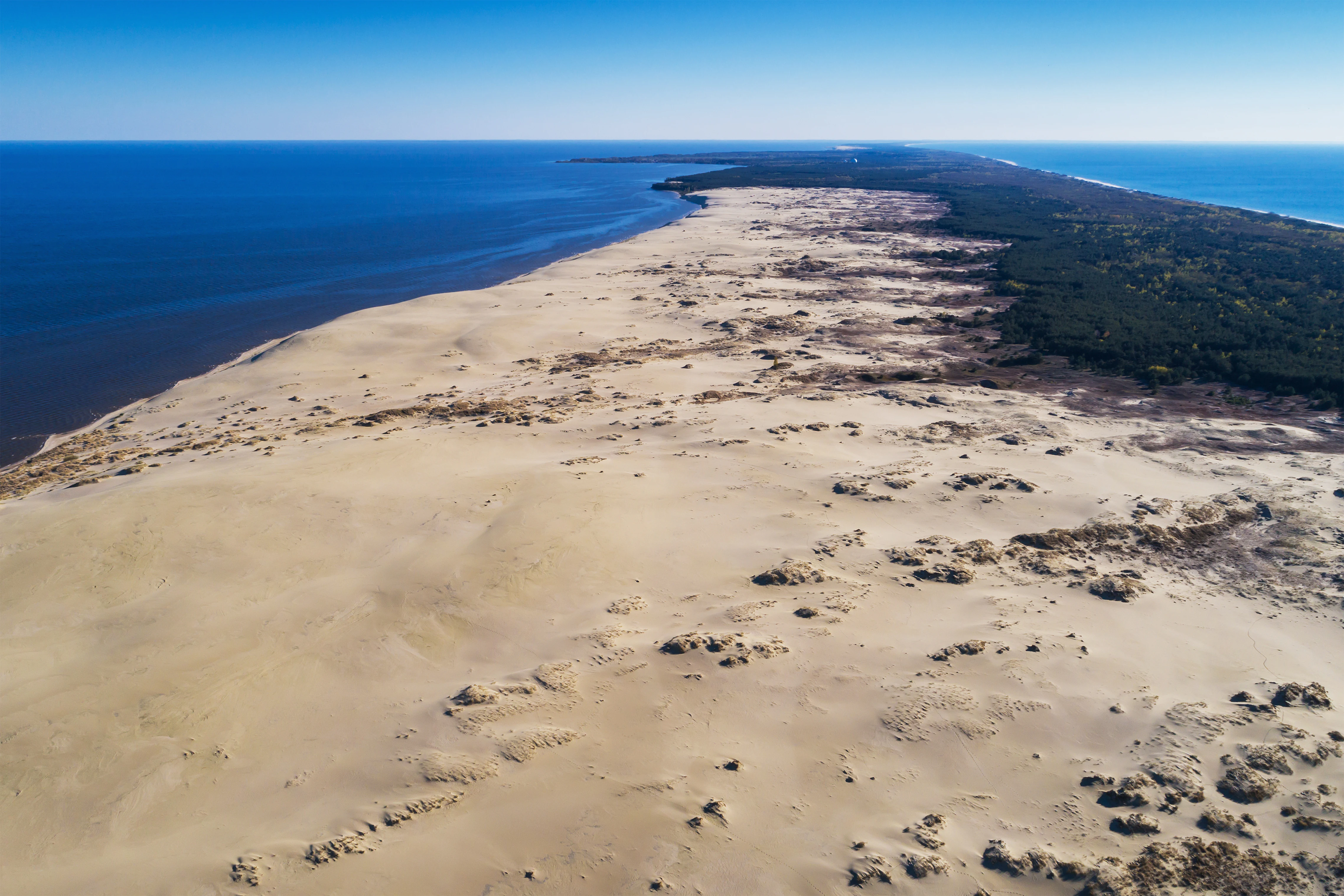
Curonian Spit National Park is best known for its extraordinary dune landscape, one of the most impressive in Europe. The park features the iconic Dancing Forest, a grove of oddly twisted pine trees whose curved and spiral forms remain a subject of scientific curiosity. The spit serves as a critical habitat along major migratory bird routes, with over 260 bird species recorded within its boundaries. Its status as a UNESCO World Heritage Site, shared with Lithuania, reflects the outstanding universal value of this dynamic coastal landscape where natural processes continue to shape the terrain.
Overview image of Curonian Spit National Park showing what the park is best known for
Visual overview of what makes Curonian Spit National Park a notable national park destination.

Curonian Spit National Park history and protected-area timeline

The Curonian Spit began forming approximately 15,000 years BCE as the Weichselian glaciation retreated, depositing glacial moraine that would become the foundation for the spit. The subsequent action of sea currents and wind built upon this glacial substrate, creating the extensive dune systems that characterize the landscape today. The area has been inhabited for millennia, with human communities adapting to the challenging coastal environment. The modern protected area was established in 1987, recognizing the need to preserve this unique landscape and its ecological communities. The international recognition came in 2000 when the Curonian Spit was inscribed as a UNESCO World Heritage Site, a designation that encompasses both the Russian and Lithuanian portions of the spit, acknowledging that the outstanding universal value of this landscape transcends national boundaries.

Curonian Spit National Park landscape and geographic character

The Curonian Spit presents a dramatic landscape defined by its narrow, elongated form varying between 400 meters and 4 kilometers in width. The park's defining feature is its chain of sand dunes, some reaching heights of 35 meters above sea level, which have been shaped by prevailing winds into characteristic parabolic forms. The Epha Dune stands as one of the most impressive moving sand masses in Europe, continuing the centuries-old process of dune migration that has periodically buried forests and settlements. Along the western coast, wide sandy beaches meet the Baltic Sea, while the eastern side borders the calmer waters of the Curonian Lagoon. Between these water bodies, the spit supports a mosaic of habitats including wet meadows, marshland, and forest stands that have developed in the sheltered dune hollows. The landscape possesses a stark beauty, where the rhythmic lines of dunes meet the open horizons of the Baltic, creating a sense of expansive solitude.
Satellite image showing the Curonian Spit as a narrow landmass between the Baltic Sea and Curonian Lagoon
Satellite view of Curonian Spit National Park showing the sandbar between Baltic Sea and Curonian Lagoon

Curonian Spit National Park ecosystems, habitats, and plant life

The Curonian Spit supports remarkable ecological diversity resulting from the close proximity of multiple distinct habitat types within a narrow geographic space. The park's plant life includes 889 documented species, hybrids, varieties, and forms of wild vascular plants distributed across 398 genera and 111 families, reflecting the variety of conditions from exposed beach to sheltered forest. The transitional nature of the spit—where freshwater meets saltwater, terrestrial meets marine, and open dune meets closed forest—creates edge conditions that support species assemblages found nowhere else in the Baltic region. Wetlands play a particularly significant role, providing critical habitat for breeding, staging, and wintering waterfowl. The landscape's dynamic character, with ongoing dune movement and natural succession processes, maintains a diversity of early-successional habitats that complement the more stable forest communities.
A forest with tall pine trees having twisted trunks, patches of grass, and sunlight filtering through the canopy
Dancing Forest in Curonian Spit National Park, featuring uniquely twisted pine trees under dappled sunlight

Curonian Spit National Park wildlife and species highlights

The Curonian Spit's position along major migratory bird flyways makes it exceptionally significant for avian fauna. Park researchers have recorded 262 bird species within the protected area, of which approximately 100 species nest and breed on the spit, utilizing the wetlands, forests, and dune habitats for reproduction. The wetlands and lagoon shallows provide crucial staging areas for migratory waterfowl moving between northern breeding grounds and southern wintering areas. Mammalian fauna includes 46 species, with elk (moose), European roe deer, and wild boar among the larger mammals present, joined by more cryptic species including fox, marten, raccoon dog, badger, hare, red squirrel, and beaver. Overall, the park supports over 290 species of terrestrial vertebrates, representing approximately 80 percent of all vertebrate species found in the Kaliningrad region, underscoring the area's importance as a biodiversity hotspot.
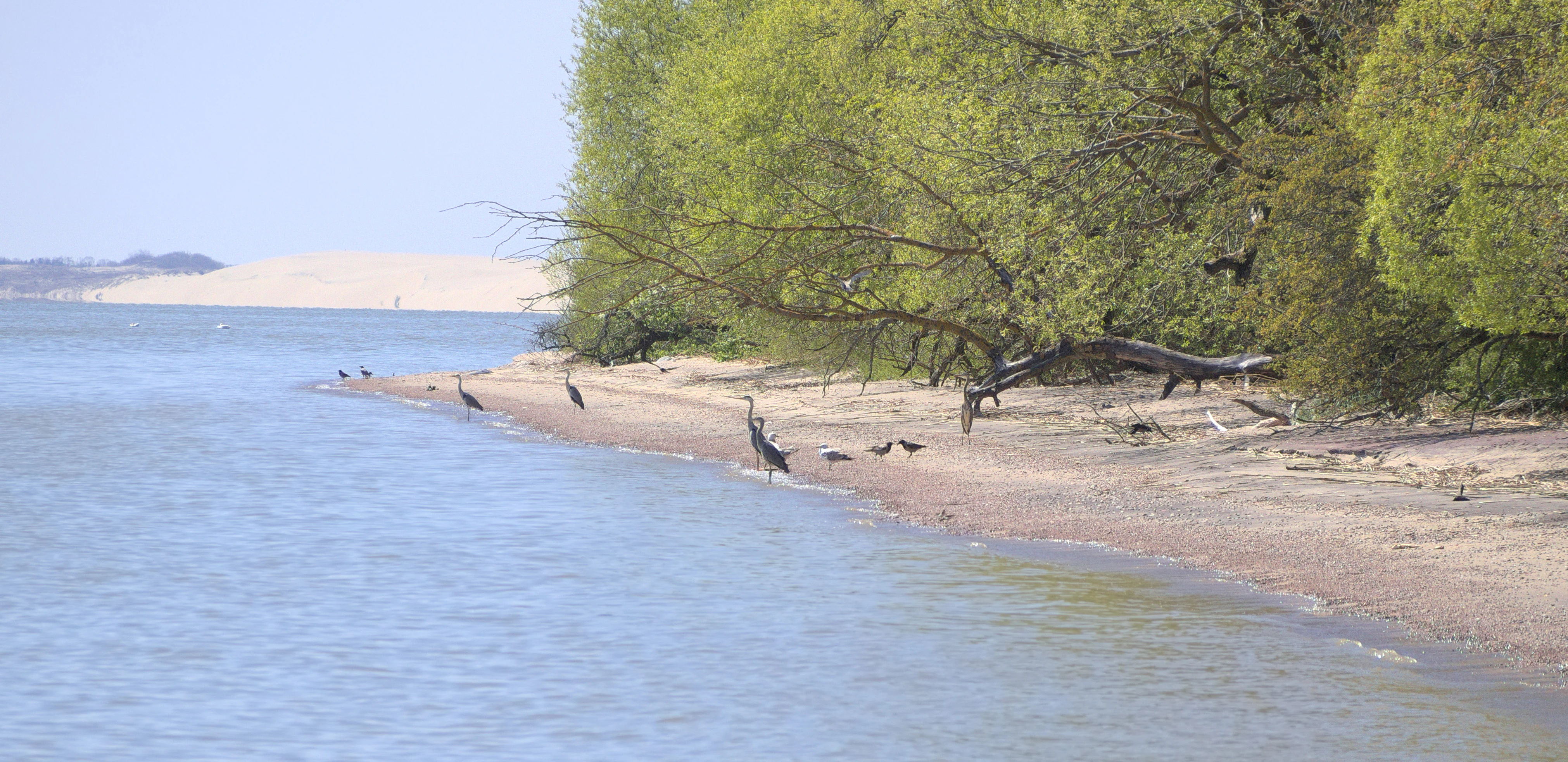
A coastal beach scene with calm water, sandy shore, trees, and several birds along the shoreline
Coastal beach scene of the Curonian Spit near the settlement of Rybachy

Curonian Spit National Park conservation status and protection priorities

Curonian Spit National Park serves as a critical conservation unit for coastal Baltic ecosystems, protecting both the dynamic geological processes that create and maintain the dune landscape and the biological communities that depend on these habitats. The UNESCO World Heritage designation reflects the international recognition that the spit represents outstanding universal value—not merely as a Russian or Lithuanian asset, but as a global heritage site where natural processes continue to operate relatively unimpeded. The park's conservation value is amplified by its position along the East Atlantic Flyway, one of the major migratory bird routes in the Western Palearctic, making it essential for the protection of waterfowl populations that traverse continents twice yearly. The diverse habitat mosaic, from open beach through dune, wetland, meadow, and forest, maintains ecological processes that support both resident species and the extraordinary number of migratory visitors.

Curonian Spit National Park cultural meaning and human context

The Curonian Spit has been a place of human habitation and activity for millennia, with the landscape shaped not only by natural forces but also by the traditions and practices of local communities. The spit served as a natural corridor for travel and trade between the Sambian Peninsula and the regions to the north, with fishing communities establishing settlements along both the Baltic and lagoon shores. The name "Kurshskaya" derives from the historical Curonians, a Baltic people who inhabited the region in medieval times. The park contains remnants of human activity dating to earlier periods, while contemporary communities continue to maintain connections to the land and its resources. The cultural dimension of the spit is intertwined with its natural features, as traditional land use practices contributed to the development of the distinctive cultural landscape that exists today.

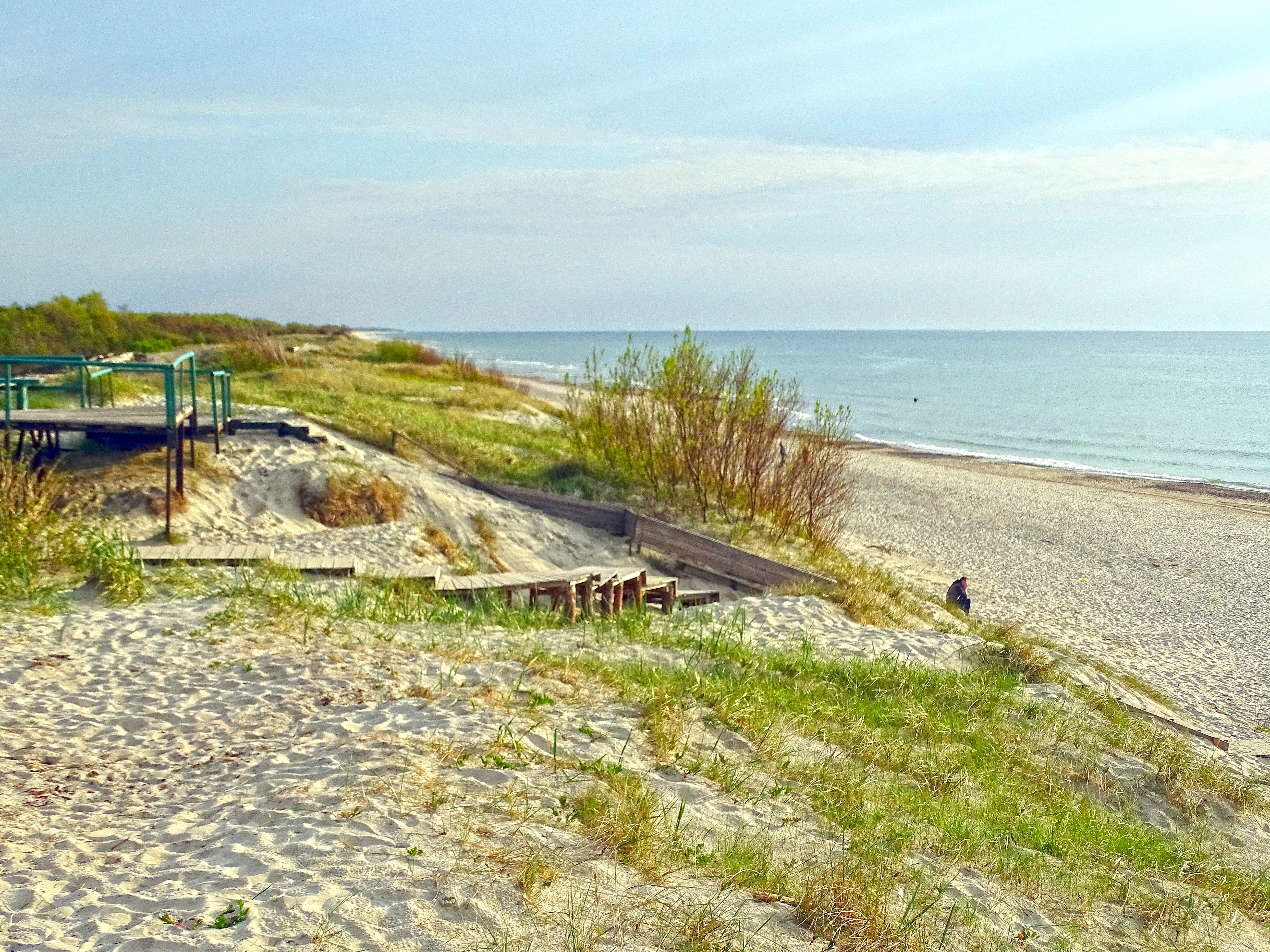
Sandy beach with grassy dunes, wooden boardwalk, and the Baltic Sea in the background
Sandy dunes and wooden boardwalk leading to the Baltic Sea at Curonian Spit National Park

Top sights and standout views in Curonian Spit National Park

The Curonian Spit's UNESCO World Heritage status and its position as one of the world's longest spits make it a landmark of international significance. The park's dune systems, particularly the impressive Epha Dune, represent exceptional examples of coastal aeolian processes in action. The Dancing Forest remains one of the most enigmatic features, where hundreds of pine trees exhibit curious twisted and curved forms whose origin—whether natural genetic variation, soil conditions, or historic human intervention—remains debated. The bird migration spectacle, with hundreds of thousands of waterfowl passing through twice annually, ranks among the most impressive in Europe. The juxtaposition of Baltic Sea beaches with the tranquil Curonian Lagoon creates a distinctive coastal experience where visitors can witness the meeting of two very different aquatic environments.

Best time to visit Curonian Spit National Park

The Curonian Spit can be visited throughout the year, though each season offers distinctly different experiences. Late spring through early autumn provides the most comfortable weather for exploring the beaches and hiking the dune trails, with May and June offering particularly good conditions and the opportunity to observe breeding bird activity. Autumn brings the dramatic raptor and waterfowl migration, making September and October particularly rewarding for birdwatchers. Winter transforms the landscape, with snow-covered dunes offering a stark, minimalist beauty and far fewer visitors. The changing seasons reveal different aspects of the spit's character, from the green freshness of early summer to the amber and grey tones of autumn storms to the crystalline winter silence.
Park location guide

Geography guide, regional context, and park location map for Curonian Spit National Park

Curonian Spit National Park park geography, regions, and map view in Russia
Understand where Curonian Spit National Park sits in Russia through a broader geographic reading of the surrounding landscape, nearby location context, and its mapped position within the national park landscape.

How Curonian Spit National Park fits into Russia

Russia is a transcontinental nation spanning eleven time zones, bordered by fourteen countries. It is the world's largest country by area, covering 17,098,246 km². Moscow is the capital and largest city, while Saint Petersburg is the second-largest and a major cultural centre.

Wider geography shaping Curonian Spit National Park in Russia

Russia spans Eastern Europe and North Asia, covering 17,098,246 km². It shares land borders with fourteen countries, more than any other nation, and spans eleven time zones. The landscape includes vast plains, mountain ranges such as the Urals and Caucasus, and extensive coastlines along the Arctic Ocean, Pacific Ocean, Baltic Sea, Black Sea, and Caspian Sea.

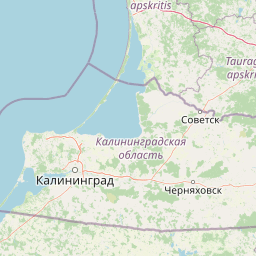
Map view of Curonian Spit National Park

Use this park location map to pinpoint Curonian Spit National Park in Russia, understand its exact geographic position, and read its mapped placement within the surrounding landscape more clearly.

Pigeon | © OpenStreetMap contributors

Location context for Curonian Spit National Park

Kaliningrad Oblast

Explore the unique protected landscapes of the Curonian Spit, from vast moving sand dunes to tranquil lagoon shores and critical migratory bird habitats.

Curonian Spit National Park Photos: Visualizing Coastal Dunes, Forests, and Baltic Scenery
Browse a curated collection of Curonian Spit National Park images, offering an in-depth visual understanding of its dramatic coastal terrain and diverse protected ecosystems. These photographs reveal the park's iconic sand dunes, the enigmatic Dancing Forest, and critical habitats for migratory birds, helping to contextualize its UNESCO World Heritage status.

Aerial view of a sandy coastal spit extending into the sea, bordered by forested land and blue water, with visible sand dunes and sparse vegetation

Satellite image showing the Curonian Spit as a narrow landmass between the Baltic Sea and Curonian Lagoon

A forest with tall pine trees having twisted trunks, patches of grass, and sunlight filtering through the canopy

A coastal beach scene with calm water, sandy shore, trees, and several birds along the shoreline

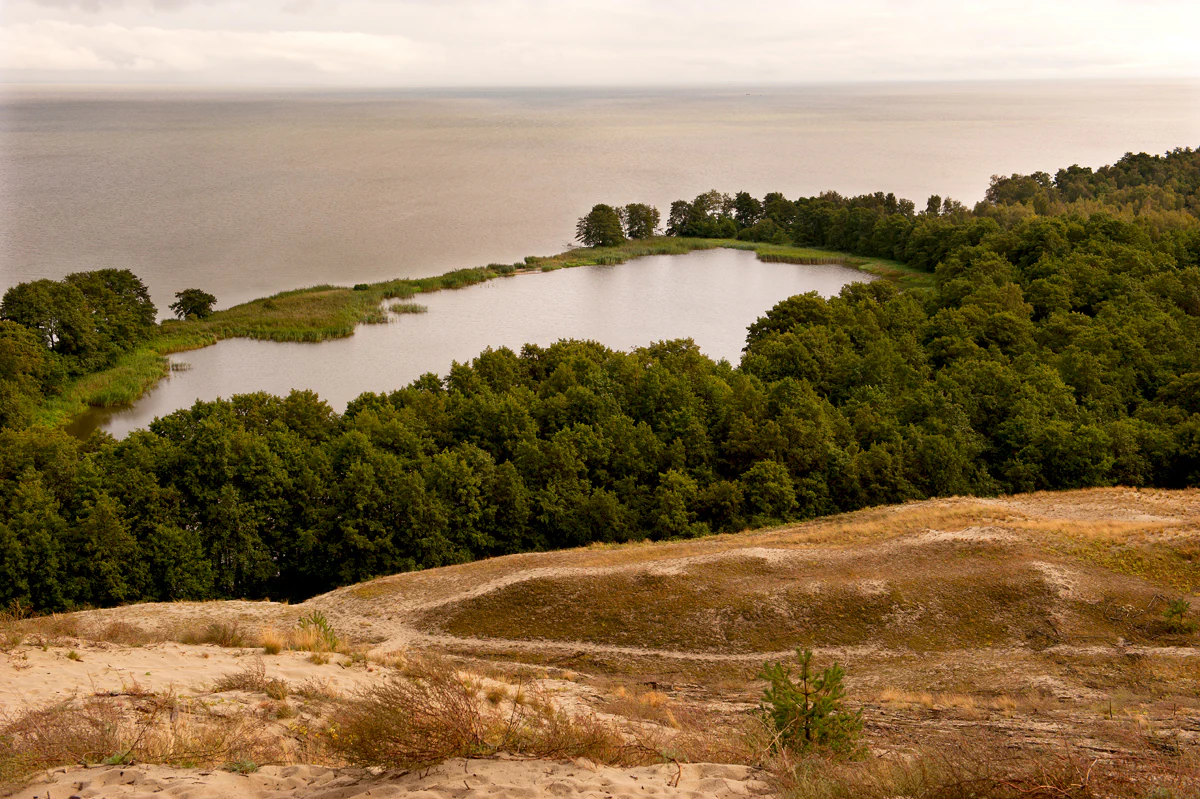
Lake surrounded by dense forest and sandy terrain with the Baltic Sea visible in the distance

Sandy beach with grassy dunes, wooden boardwalk, and the Baltic Sea in the background

Park atlas

Explore similar coastal protected landscapes and regional park geography across the Baltic Sea area.

Discover Other Protected Areas and National Parks Near Curonian Spit
Continue your protected area discovery from Curonian Spit National Park by exploring other nearby parks and conservation landscapes within Kaliningrad Oblast and the surrounding Baltic region. This comparative atlas view allows users to trace distinct geographic patterns and understand the broader ecological context of coastal protected areas.
Watercolor painting of a landscape with a river flowing through grassy fields, trees, and mountains in the background
National park

Curonian Spit National Park: Mapped Sand Dunes and Baltic Protected Landscape

Explore the unique geography of this Baltic national park.

Curonian Spit National Park represents a remarkable synthesis of natural processes and cultural heritage along the Lithuanian coast. Dominated by dramatic sand dunes, including the famed grey dunes of Nagliai and active dunes at Parnidžio, this national park showcases dynamic landscape evolution. Its designation as a UNESCO World Heritage site underscores its global importance as a protected area safeguarding unique coastal ecosystems and migratory bird pathways. MoriAtlas provides detailed mapping context for this exceptional protected landscape, enabling structured exploration of its geographic features and ecological significance.

Area
264.74 km²
Established
1991
IUCN
II
Visitors
400K annual
Watercolor painting showing rolling hills, a lake, and green forests under a soft sky
National park

Žemaitija National Park: Mapped Glacial Terrain and Samogitian Protected Landscape

Explore protected areas and natural geography in Northwestern Lithuania.

Žemaitija National Park is a protected natural reserve in Lithuania, defined by its distinctive glacially sculpted landscape. This park preserves over 217 square kilometers of hilly terrain, featuring significant lake systems like Lake Plateliai and substantial forest cover interspersed with wetlands. Users can explore the park's unique topographic character, its mapped geographic features, and its role as a vital protected area within the Samogitian region, offering a rich context for atlas-based discovery.

Area
217.54 km²
Established
1991
IUCN
II
Relief
Highland
Watercolor illustration showing lakes, green vegetation, and hills in the background
National parkPodlaskie Voivodeship

Wigry National Park: Protected Area Atlas of Poland's Glacial Lake District

Explore mapped landscapes and wetland ecosystems in Podlaskie Voivodeship

Delve into the geography of Wigry National Park, a national park situated in the Podlaskie Voivodeship of northeastern Poland. This protected area is defined by its glacial landscape, featuring 42 lakes including the expansive Lake Wigry, alongside critical wetland habitats and significant peat bogs. Discover the mapped boundaries and ecological importance of Wigry National Park, renowned as a prime location for beaver populations and a vital component of Poland's protected lands atlas.

Area
150.86 km²
Established
1989
IUCN
II
Visitors
110K annual
Watercolor painting showing a wetland scene with reeds, patches of water, and trees under a light sky
National parkPodlaskie Voivodeship

Biebrza National Park: Poland's Largest National Park and European Wetland Atlas

Explore the mapped geography of its vast protected fenlands.

Biebrza National Park represents a critical protected landscape in northeastern Poland, famed for its vast, intact Biebrza Marshes, the largest lowland peat bog complex in Europe. This national park page offers detailed geographic context, highlighting the unique fenland terrain, marshland ecosystems, and protected area boundaries. Discover why this region is internationally recognized for its biodiversity and its significance within the broader atlas of European protected lands.

Area
592.23 km²
Established
1993
IUCN
II
National parkPomeranian Voivodeship

Slovincian National Park: Moving Dunes and Baltic Coast Protected Landscape Exploration

Discover its unique geography and mapped terrain.

Slovincian National Park is a protected area in Pomeranian Voivodeship, Poland, celebrated for its impressive moving sand dunes and coastal wetland ecosystems. These dynamic dunes, some reaching 30 meters high, migrate inland, creating an ever-changing landscape. The park also features large shallow lakes like Łebsko and Gardno, vital for migratory birds. Explore the mapped boundaries and geographic context of this significant protected area, a Ramsar site and UNESCO biosphere reserve.

Area
186.18 km²
Established
1967
IUCN
II
Visitors
319K annual
National park

Trakai National Historic Park: Medieval Heritage and Lake District Protected Landscape

Explore Lithuania's historic park and its mapped geographic context.

Trakai National Historic Park offers a rich tapestry of medieval history intertwined with a captivating lake district landscape. As a protected area in southeastern Lithuania, it preserves significant architectural monuments, including the iconic Trakai Castle, set against a backdrop of interconnected lakes, forests, and wetlands. MoriAtlas provides a structured overview of its geographic boundaries and regional setting, facilitating atlas-style exploration of this historically significant protected landscape.

Access
Moderate access
Scope
Mixed
Watercolor painting showing a winding river through marshy fields with distant hills
National parkPodlaskie Voivodeship

Narew National Park: Discover Poland's Premier Wetland National Park with Unique River Geography

Explore its mapped boundaries and rich protected landscape.

Narew National Park represents a significant protected area within the Podlaskie Voivodeship, distinguished by its one-of-a-kind anastomosing river system where the Narew River splits into numerous interconnected channels. This dynamic wetland environment provides critical habitat and showcases a complex interplay of water, land, and diverse ecosystems. Users can explore the park's geographic features, understand its protected landscape status, and appreciate its vital role within the regional atlas through detailed mapping and factual context.

Area
73.5 km²
Established
1996
IUCN
II
Relief
Lowland
National park

Dzūkija National Park: Explore Lithuania's Largest Protected Forest and Inland Dune Landscapes

Mapped protected area geography and natural terrain of the Dainava region.

Delve into the protected landscape of Dzūkija National Park, Lithuania's expansive national park renowned for its vast primeval pine forests and extraordinary inland dune formations. This page provides a detailed atlas-style view of the park's mapped boundaries, diverse terrain, and significant natural features, offering insight into its protected territory and regional geographic importance. Examine the unique wetland systems and forest ecosystems that make this a crucial area for protected land discovery.

Area
584.53 km²
Established
1991
IUCN
II
Visitors
30K annual

Common questions about visiting, size, designation, and location context for Curonian Spit National Park

Curonian Spit National Park FAQs for park facts, access, geography, and protected area context
Find quick answers about Curonian Spit National Park, including protected-area facts, park geography, trail and visitor context, and how the park fits into its surrounding country and regional landscape.
MoriAtlas Explorer

Continue Your Protected Areas Search Across the Global Atlas

Deepen your exploration by continuing the structured search for national parks and protected areas worldwide. Utilize the comprehensive filtering capabilities to compare different conservation landscapes and refine your understanding of global park geography. Discover more about the distribution and characteristics of protected natural areas.

Global natural geography