
Why Karaburun-Sazan Marine Park stands out
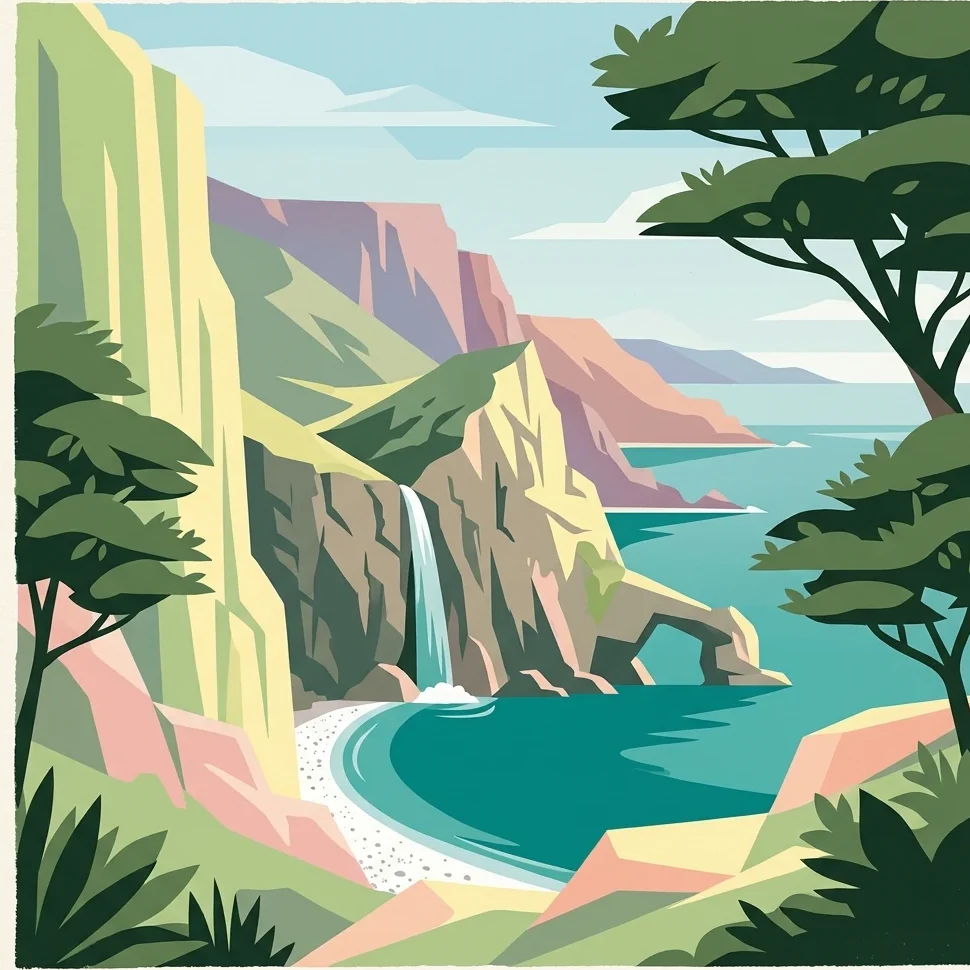
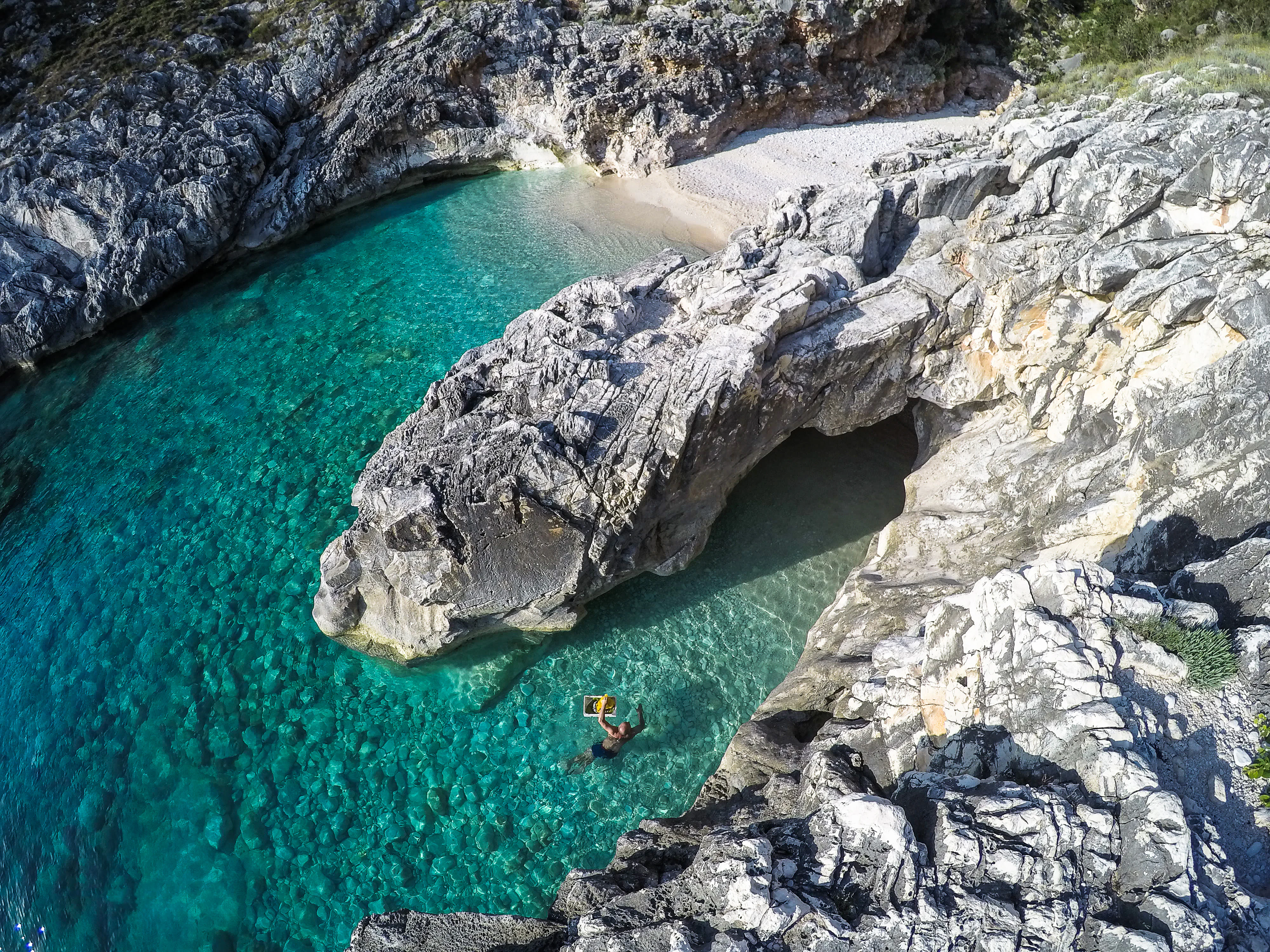
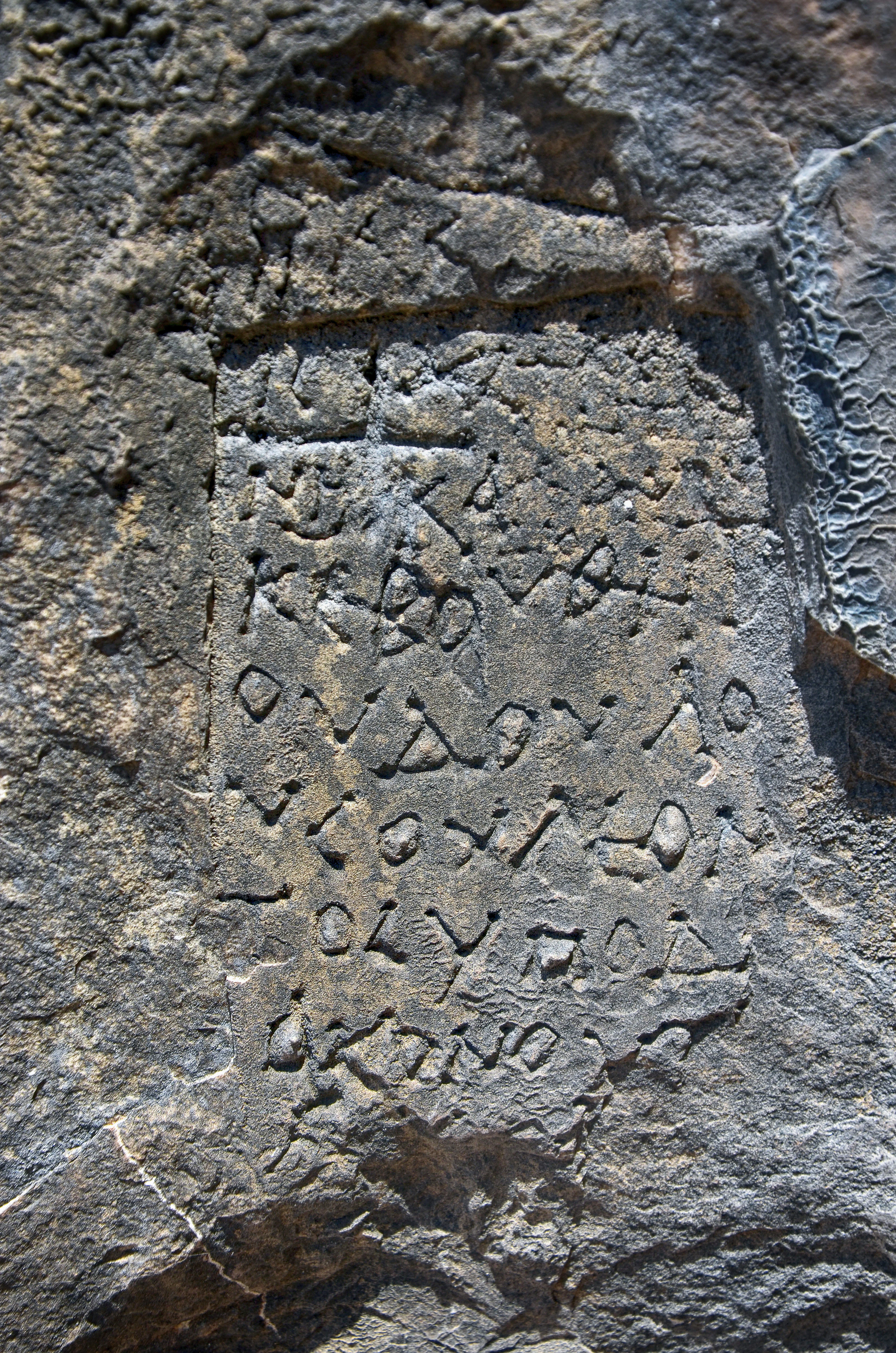
Karaburun-Sazan Marine Park is best known for its remarkable convergence of Mediterranean and subtropical ecosystems within a dramatic cliff-and-island landscape. The park protects Albania's largest island, Sazan, with its unusual subtropical climate and Cretaceous limestone geology, alongside the rugged Karaburun Peninsula featuring vertical limestone cliffs that drop directly into the sea. The marine environment hosts critically endangered species including the Mediterranean monk seal and three species of sea turtles, while the terrestrial habitats support diverse Mediterranean maquis vegetation and significant bird populations. The park also contains historical attractions including ancient Greek and Roman shipwrecks, the rock inscriptions of Grama Bay carved by sailors over centuries, and underwater caves and canyons that provide refuge for marine life.
Karaburun-Sazan Marine Park history and protected-area timeline
Karaburun-Sazan Marine Park was officially designated on April 28, 2010, establishing Albania's first and only national marine park. The creation of the protected area reflected growing recognition of the ecological and geological significance of the Karaburun Peninsula and Sazan Island along Albania's southwestern coast. The peninsula had previously been designated as a Natural Reserve, while Sazan Island operated as a military zone under government control for decades.
A significant development occurred in July 2015 when Sazan Island was opened to the public by the National Coastline Agency, marking the first time civilians could access the island in the post-communist era. This opening created new opportunities for tourism and scientific research while maintaining appropriate protections for the island's sensitive ecosystems. The park is governed by Albania's National Agency of Protected Areas, which oversees management and conservation activities across the marine park's terrestrial and maritime territories.
Karaburun-Sazan Marine Park landscape and geographic character
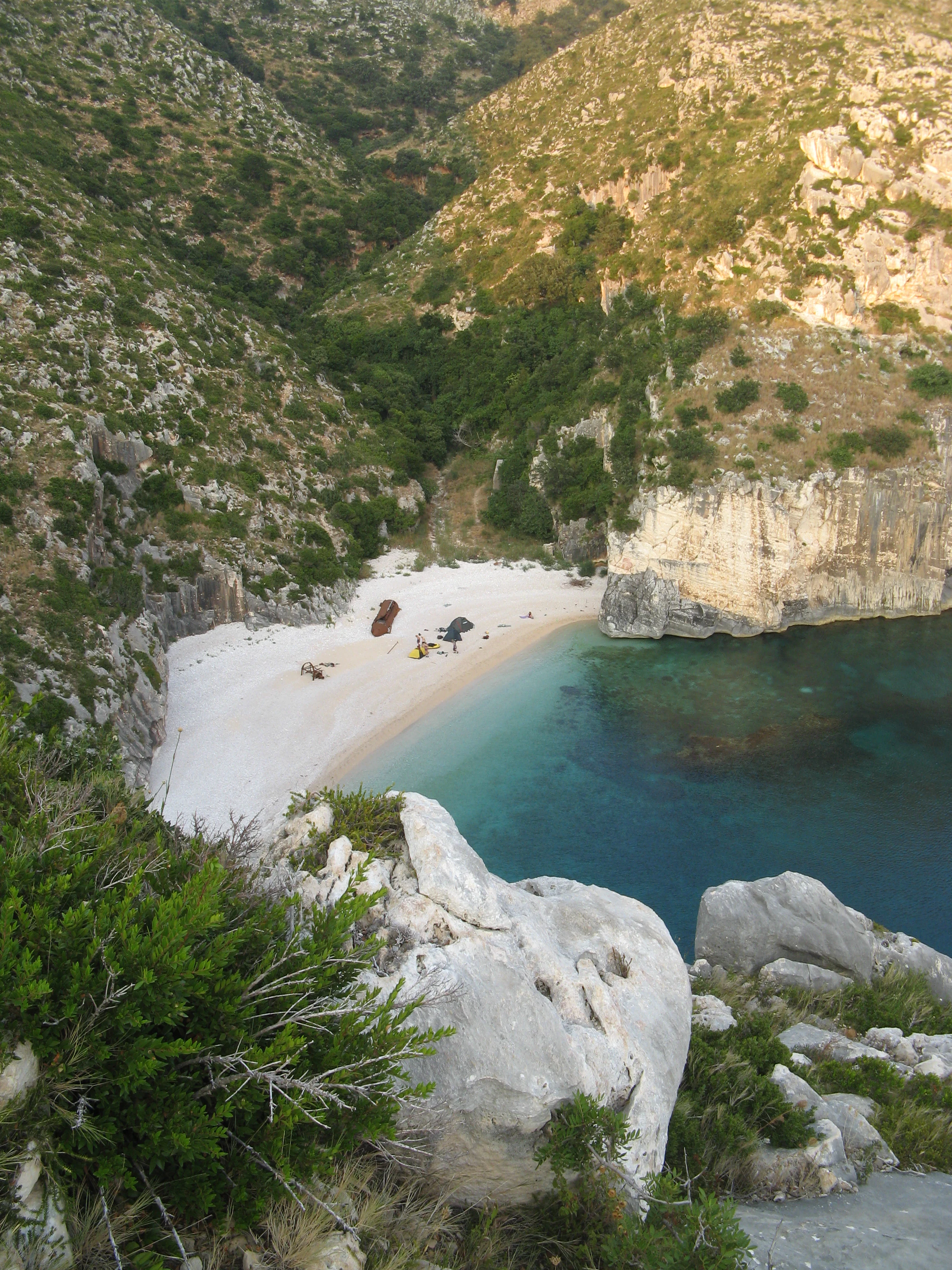
The Karaburun-Sazan Marine Park encompasses an exceptional diversity of landforms shaped by geological processes spanning multiple eras. The Karaburun Peninsula forms a mountainous terrain extending approximately 24 kilometers in length and 4 to 7 kilometers in width, with elevations reaching nearly 1,500 meters above sea level at Maja e Shendelliut, the park's highest peak. Other notable summits include Maja Ali Hila at 1,318 meters, Maja Çadëri at 839 meters, Maja Flamurit at 826 meters, and Maja e Ilqes at 733 meters.
The peninsula belongs to the Ceraunian Mountains, a range rising steeply along the Albanian Ionian Sea Coast. The western slopes descend sharply into the Ionian Sea, creating a dramatic coastal landscape of vertical limestone cliffs. The geological composition includes Paleozoic schist formations, Mesozoic limestone and marble deposits, with carbonic limestone from the Mesozoic period dominating the terrain. The southern portion of the peninsula, known as Reza e Kanalit, features a narrow and steep platform extending toward the Dukat Valley near Orikum.
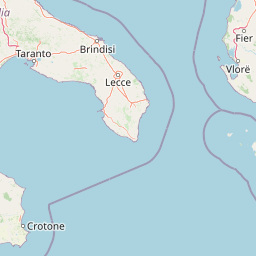
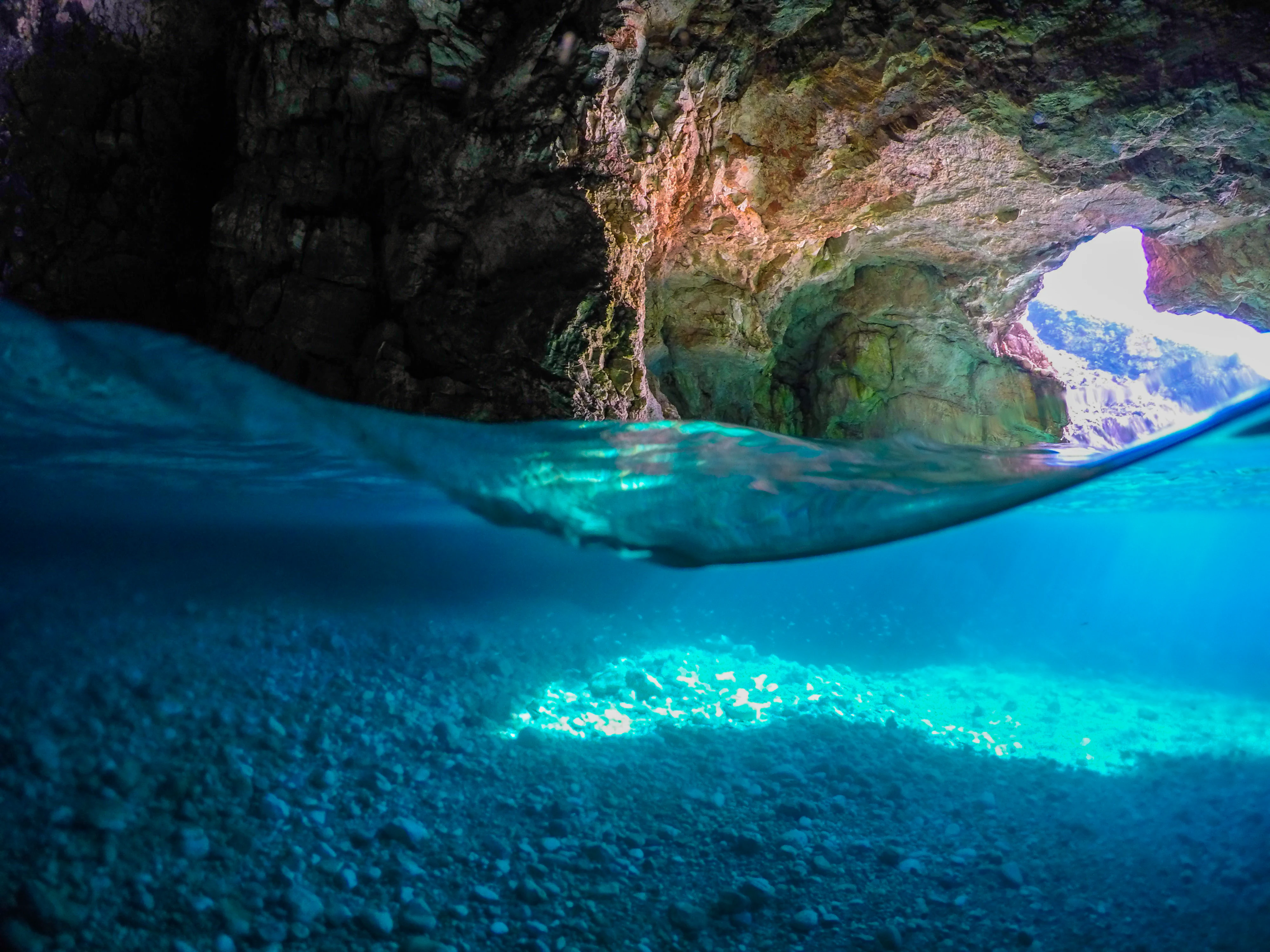
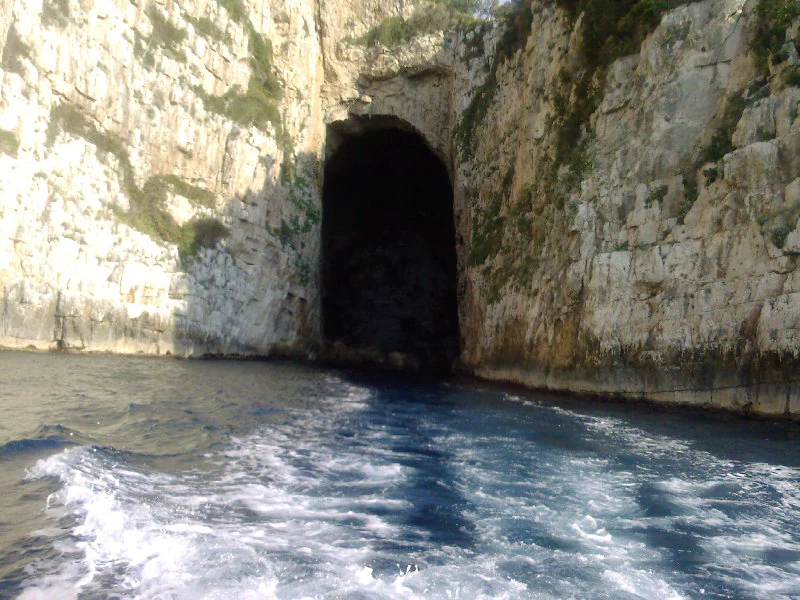
Sazan Island, Albania's largest island, measures 4.8 kilometers in length and 2.7 kilometers in width. The island is surrounded by the Adriatic Sea to the north and the Ionian Sea to the south. The Mezokanal channel provides a narrow natural separation between the island and peninsula. The island's western rocks are primarily Cretaceous in age, while the eastern portion consists of limestone formed during the Burdigalian age. The coastal landscape features numerous bays including the Bay of Grama and Bay of Brisani, as well as underwater caves and canyons that appear at great depths.
Karaburun-Sazan Marine Park ecosystems, habitats, and plant life
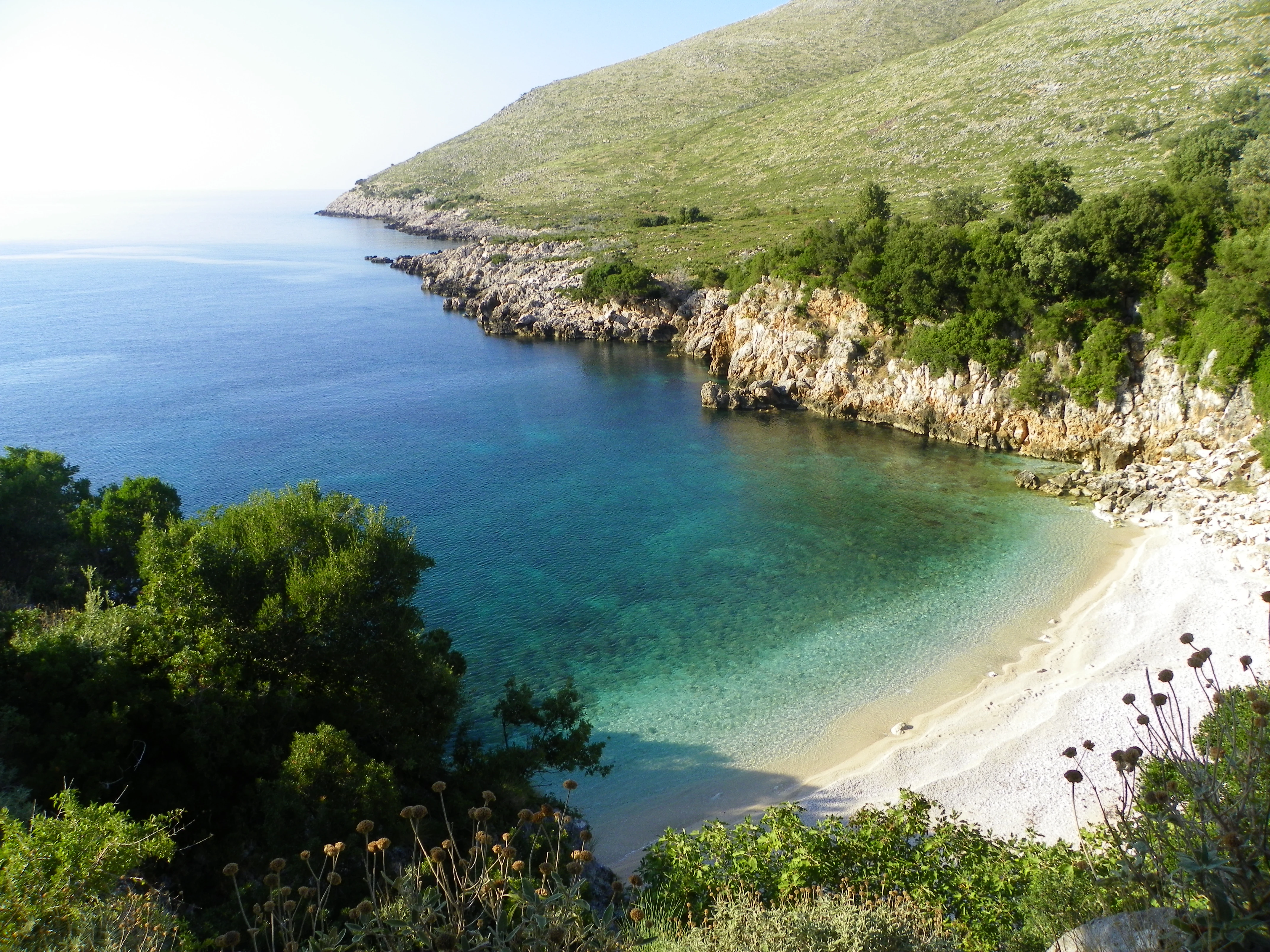
The park falls within the Illyrian deciduous forests terrestrial ecoregion of the Palearctic realm, part of the Mediterranean forests, woodlands, and scrub biome. This positioning creates favorable conditions for diverse Mediterranean vegetation communities. The coastal areas feature rocky shores with significant calcareous limestone cliffs properly covered with Mediterranean maquis vegetation, characterized by dominance of lentisk, kermes oak, and Phoenicean juniper. The western coasts are incised by caves and canyons and characterized by high vertical cliffs that appear underwater at great depths, dotted with specialized plant species including sea fennel, statice, and caper bush.
The marine environment features extensive Posidonia oceanica meadows, a Mediterranean endemic seagrass that hosts macrofauna including sponges, cnidarians, bryozoans, and mollusks. This seagrass ecosystem is critical for marine biodiversity and serves as an important indicator of water quality. The park's phytogeographical position within the Illyrian deciduous forests ecoregion contributes to its significance as a biodiversity hotspot within the broader Mediterranean Basin, supporting plant species representative of both Mediterranean and more temperate forest communities.
Karaburun-Sazan Marine Park wildlife and species highlights
Karaburun-Sazan Marine Park supports exceptional terrestrial and marine biodiversity documented across multiple taxonomic groups. The park is home to at least 70 species of mammals, 144 species of birds, 36 species of reptiles, 11 species of amphibians, and 167 species of invertebrates. The terrestrial mammalian fauna includes golden jackal, wildcat, chamois, roe deer, wild boar, European badger, and Eurasian otter, along with smaller mammals such as red squirrel, hazel dormouse, and Thomas's pine vole. Sazan Island supports eight species of bats, including the widespread Kuhl's pipistrelle and Nathusius's pipistrelle, as well as the relatively rare Mediterranean long-eared bat.
The marine environment hosts significant populations of endangered species. Three species of sea turtles nest along the park's pristine beaches: the loggerhead sea turtle, green sea turtle, and leatherback sea turtle. Dolphins are regularly observed, including the short-beaked common dolphin and common bottlenose dolphin, with the endangered sperm whale also reported in park waters. Most notably, the Mediterranean monk seal, one of the world's most endangered mammals, uses the inaccessible caves and canyons of the park as refuge, making the marine park critical for survival of this species in the Mediterranean.
Karaburun-Sazan Marine Park conservation status and protection priorities
Karaburun-Sazan Marine Park holds significant conservation importance at both national and international levels as Albania's only marine national park. The park has been designated as an Important Bird Area and Important Plant Area, recognizing its exceptional value for biodiversity conservation. Under the Barcelona Convention, the marine park has been classified as a Specially Protected Areas of Mediterranean Importance, providing international framework for protection and management of its unique marine and coastal ecosystems.
The protection of Sazan Island is particularly significant given its role as a refuge for the critically endangered Mediterranean monk seal, one of the rarest marine mammals in the world. The park's diverse habitats, from Mediterranean maquis-covered cliffs to underwater seagrass meadows, support species assemblages specific to the Mediterranean Basin. The convergence of subtropical and Mediterranean climate influences creates unique ecological conditions that support species found nowhere else in Albania. Effective conservation of this marine park contributes to broader regional efforts to protect Mediterranean biodiversity and maintain ecosystem services.
Karaburun-Sazan Marine Park cultural meaning and human context
The Karaburun-Sazan Marine Park contains meaningful historical and cultural elements embedded in its coastal landscape. The Bay of Grama features ancient rock inscriptions carved by sailors over centuries, providing tangible evidence of historical maritime activity along this stretch of coastline. The underwater environment contains ruins of sunken ancient Greek, Roman, and World War II ships, creating an underwater archaeological landscape of significant historical interest.
The park's proximity to military installations has historically limited public access, particularly to Sazan Island, which functioned as a restricted military zone for decades. The 2015 opening of Sazan Island to the public marked a transition from military to civilian use, creating new opportunities for cultural tourism while maintaining conservation protections. The peninsula's rugged terrain and remote character have historically limited human settlement and development, contributing to the preservation of natural landscapes relatively free from intensive human disturbance.
Top sights and standout views in Karaburun-Sazan Marine Park
Karaburun-Sazan Marine Park stands as Albania's premier marine protected area combining dramatic limestone cliffs, a significant island ecosystem, and exceptional biodiversity. The park protects the largest island in Albania, Sazan, with its unique subtropical climate and Cretaceous limestone geology distinct from typical Mediterranean conditions. The convergence of Adriatic and Ionian marine environments supports critical populations of endangered species including the Mediterranean monk seal and multiple sea turtle species. Underwater attractions include ancient shipwrecks, rich marine fauna, and spectacular caves visible beneath the surface. The park's international designations as an Important Bird Area and Specially Protected Area of Mediterranean Importance reflect its ecological significance within the broader Mediterranean Basin.
Best time to visit Karaburun-Sazan Marine Park
The marine park experiences a Mediterranean climate with mean temperatures ranging from 8-10°C in January to 24-26°C in July and annual precipitation between 1,000-1,200 millimeters. The summer months offer the warmest conditions for swimming and marine activities, though spring and autumn provide comfortable temperatures for hiking and wildlife observation. The winter season brings rainfall but offers fewer visitors and the opportunity to observe different aspects of the park's ecology. Given the park's proximity to military installations, visitors should check current access requirements and consider hiring professional local guides, particularly for underwater exploration.