Mori Atlas logo
National parkVikos-Aoös National Park

Map the world's deepest canyon, alpine lakes, and diverse protected terrain in Epirus.

Vikos-Aoös National Park: Greece's Profound Gorge and Protected Alpine Landscape

Vikos-Aoös National Park represents a cornerstone of protected natural heritage in Greece, situated within the rugged Pindus mountain range. This national park, recognized as a UNESCO Geopark, is distinguished by the awe-inspiring Vikos Gorge, internationally acclaimed for its extreme depth-to-width ratio, and the dramatic Aoös Gorge. The park's vast territory spans from lower elevations with dense forests to the alpine zone of Mount Tymphe, reaching its highest point at 2,497 metres. Users can explore the park's mapped boundaries, diverse geological formations, unique ecosystems supporting significant wildlife, and its critical role within the Natura 2000 network.

gorgesbrown bear habitatalpine lakesUNESCO GeoparkNatura 2000Pindus mountains

Vikos-Aoös National Park

National park

Park overview

Structured park overview, official facts, and landscape profile for Vikos-Aoös National Park

Vikos-Aoös National Park park facts, protected area profile, and essential visitor context
Review the core facts for Vikos-Aoös National Park, including designation, size, terrain, visitor scale, habitats, and operating context in one park-focused overview.

About Vikos-Aoös National Park

Vikos-Aoös National Park sits in the heart of the Pindus mountain range in northwestern Greece, protecting an extraordinary landscape where dramatic gorges, towering peaks, ancient forests, and traditional villages coexist within a protected wilderness. The park takes its name from its two defining geographic features—the Vikos Gorge in the west and the Aoös Gorge in the north—both carved by rivers over millions of years. The core of the park centres on the spectacular Vikos Gorge, a 12-kilometre chasm reaching 1,000 metres in depth and recognized as one of the world's most impressive geological formations. Flanking the gorges, Mount Tymphe rises to 2,497 metres at Gamila peak, its slopes adorned with alpine lakes, glacial valleys, and karstic caves including Provatina, one of the deepest caves in the world at 408 metres. The park's villages, particularly those of the Zagori region, retain their traditional architecture of stone houses, cobblestone pathways, and iconic arched bridges that have connected communities for centuries. Beyond its natural significance, the area carries deep historical layers—from prehistoric rock shelters bearing evidence of human presence 17,000 years ago, through the autonomous Zagori communities of the Ottoman period that became centres of folk medicine and learning, to the modern conservation landscape that recognizes both ecological and cultural heritage.

Quick facts and research context for Vikos-Aoös National Park

Vikos-Aoös National Park covers 12,600 hectares in the northern Pindus mountains of Epirus, Greece. Established in 1973, it protects the spectacular Vikos and Aoös gorges along with Mount Tymphe, whose highest peak Gamila reaches 2,497 metres. The park receives approximately 100,000 visitors annually and features a Mediterranean-continental climate with an average annual temperature of 11.9°C and precipitation of 1,100mm. Four villages with a combined population of 1,515 lie within the park boundaries, while nine additional settlements border the peripheral zone. The area has been inhabited since between 17,000 and 10,000 years ago, with the Zagori region gaining autonomous status during the 17th to 19th centuries under Ottoman rule.

Park context

Deeper park guide and search-rich context for Vikos-Aoös National Park

Vikos-Aoös National Park history, landscape, wildlife, and travel context
Explore Vikos-Aoös National Park through its history, landscape character, ecosystems, wildlife, conservation priorities, cultural context, and seasonal travel timing in a structured park guide built for atlas discovery and search intent.

Why Vikos-Aoös National Park stands out

Vikos-Aoös National Park is best known for the Vikos Gorge, one of the world's deepest canyons in proportion to its width, carved by the seasonal Voidomatis river. The park is also renowned as one of the last strongholds of the brown bear in Europe, supporting significant populations of this endangered species alongside lynx, chamois, and wolves. The dramatic alpine landscape features Mount Tymphe with its iconic peaks Gamila and Astraka, the glacial lake Drakolimni (Dragonlake) at 2,000 metres, and an extensive network of traditional stone bridges dating from the 17th to 19th centuries. The area's exceptional botanical diversity includes 1,800 plant species with high endemism, 23% endemic to the Balkans and 5.8% endemic to Greece, alongside traditional herbal medicine heritage from the local 'Vikos doctors.'

Vikos-Aoös National Park history and protected-area timeline

The history of Vikos-Aoös National Park stretches back to the Paleolithic era, with the first human evidence in the area dating between 17,000 and 10,000 years ago. Archaeological findings from a rock shelter on the banks of the Voidomatis river reveal that hunter-gatherers pursued ibex and chamois seasonally through these mountains during favourable climatic periods. Between the 9th and 4th centuries BCE, a small Molossian settlement existed between Monodendri and Vitsa, leaving behind stone houses and cemeteries with significant artifacts. Throughout most of recorded history, the region remained sparsely populated, with land used primarily for pastoralism and firewood collection. During the Ottoman era, particularly from the 17th to the 19th century, the Zagori communities achieved autonomous status within the empire, exempt from the heavy taxation imposed on lowland populations. This period brought prosperity as villagers emigrated to metropolitan centres, achieved professional success, and returned to build luxurious mansions while endowing the region with wealth. It was during this golden age that the famous 'Vikos doctors'—herbal healers using recipes derived from ancient Greek physicians like Hippocrates and Dioscorides—developed and gained renown beyond Greece's borders. Following World War II, urbanization led to widespread depopulation, with many traditional dwellings abandoned and the rural economy in decline. The park was formally designated in 1973 as part of Greek government efforts to conserve the region's natural and cultural heritage, with management shared between district forest offices and with WWF involvement from its Papingo office.

Vikos-Aoös National Park landscape and geographic character

The landscape of Vikos-Aoös National Park is defined by dramatic geological contrasts—from the precipitous depths of the Vikos Gorge to the towering peaks of Mount Tymphe. The Vikos Gorge, carved over millions of years by the Voidomatis river, runs for 20 kilometres through the southern slopes of Tymphe, with its deepest point reaching 900 metres deep and 1,100 metres wide from rim to rim. At its narrowest, the gorge walls converge to just a few metres. The gorge exposes a geological sequence spanning the Eocene limestone in its upper 200 metres, Campanian-era strata between 200 and 700 metres, and Jurassic and Cretaceous limestone below, with grey Jurassic dolomite in the deepest layers. The Aoös Gorge in the northern park stretches 10 kilometres between the mountains Trapezitsa, Tymphe, and Raidovouni, characterized by steep ravines, compact Early Jurassic dolomites—the oldest rocks in the park—and adorned with single-arched stone bridges from the 17th to 19th centuries. Between the gorges, Mount Tymphe's highest peaks—Gamila at 2,497 metres, Astraka at 2,436 metres, Ploskos at 2,400 metres, and Lapatos at 2,251 metres—form an impressive mountain barrier. The Tymphe region bears extensive glacial features from the Late Quaternary period, including lateral and terminal moraines descending to 850 metres, rock glaciers, and limestone pavements. Alpine lakes, most notably Drakolimni at 2,000 metres, dot the high-altitude landscape, while karstic caves and vertical shafts around Papingo—named after Greek mythology as the Hole of Odysseus and Chasm of Epos—attract speleologists from around the world.

Vikos-Aoös National Park ecosystems, habitats, and plant life

The ecological diversity of Vikos-Aoös National Park stems from its dramatic elevation range, varied topography, and complex climate, creating multiple distinct habitat zones within a relatively compact area. Below 1,500 metres, sub-Mediterranean woodland dominates, featuring deciduous broadleaf forests of oak, beech, and hophornbeam mixed with coniferous forests of pine and fir. Along the Voidomatis river, eastern plane trees form an azonal gallery forest, while the Papingo area showcases diverse juniper species including Juniperus communis, foetidissima, oxycedrus, and excelsa—some specimens exceeding 10 metres in height. Above 1,500 metres, subalpine grasslands and rocky cliffs host rare alpine species. The park supports extraordinary botanical richness with over 1,800 plant species documented, remarkable given its relatively modest area. The degree of endemism is exceptionally high—23% of species are endemic to the Balkans and 5.8% endemic to Greece alone. Non-vascular flora includes approximately 150 moss species, including one newly described taxon. The area's traditional herbal medicine heritage is reflected in over 250 medicinal, aromatic, and poisonous plant taxa recorded, many once harvested by the local 'Vikos doctors' using recipes tracing to Hippocrates and Dioscorides.

Vikos-Aoös National Park wildlife and species highlights

Vikos-Aoös National Park harbours one of the richest mountain and forest ecosystems in Greece, with wildlife diversity that ranks among the highest in the country. The Pindus mountain range, of which the park forms a part, represents the southernmost European habitat for two of the continent's most iconic endangered species—the brown bear and the lynx. The park is considered one of the last strongholds of the brown bear in Europe, while wolves, foxes, wild horses, and roe deer maintain year-round populations throughout the area. The Tymphe region supports otters and the rare wild cat, while the chamois inhabits the high rocky cliffs of the gorges, particularly in the Megas Lakos secondary ravine of Vikos Gorge. Bird diversity is exceptional, with 121 species recorded—26 of conservation priority—including fifteen raptor species. The subalpine zone hosts populations of hazel grouse, Tengmalm's owl, wallcreeper, and willow tit, while the bird communities of the subalpine and forest ecosystems are considered among the most complete in Greece. Raptors include griffon vulture, Egyptian vulture, peregrine falcon, and common kestrel. Amphibians thrive in the alpine lakes, particularly the alpine newts of Drakolimni, associated with local dragon folktales, while Vipera ursinii inhabits the subalpine meadows as a threatened species. Fish species in the rivers include brown trout, roach, and barbel, and the complex forest structure supports highly diverse invertebrate communities.

Vikos-Aoös National Park conservation status and protection priorities

Vikos-Aoös National Park holds significant conservation status as part of both the European Natura 2000 network and the UNESCO Geoparks program, recognizing its exceptional ecological and geological value. The park's core zone of 3,400 hectares receives the highest protection, where forestry activities, grazing, hunting, and fishing are prohibited by law, though such restrictions do not apply in the peripheral zone. The protection of the brown bear population is particularly significant—this species is endangered throughout Europe, and the Pindus population represents a critical stronghold at the southern edge of the species' European range. Similarly, the lynx population in the area is of pan-European conservation importance. The park's geological significance is equally remarkable, with the Vikos Gorge representing an exceptional natural laboratory for studying karstic processes, glacial history, and geological time scales spanning Jurassic to Eocene periods. Management challenges include erosion, landslides, wildfires, and the impacts of tourism, while the remoteness and lack of road infrastructure make remote sensing the primary tool for monitoring human activities and ecosystem health. The park's management involves both government forest directorates and the WWF office in Papingo, with efforts focused on balancing ecotourism development with preservation of natural and cultural heritage.

Vikos-Aoös National Park cultural meaning and human context

The cultural heritage of Vikos-Aoös National Park is inseparable from the landscape it inhabits, particularly in the Zagori region that encompasses most of the park's settlements. The villages of Zagori—four within the park and nine near its borders—bear testament to a prosperous historical period when, from the 17th to 19th centuries, the communities achieved autonomous status within the Ottoman Empire. This prosperity, derived from trade and emigration, is reflected in the architectural richness of the villages, where traditional stone mansions, churches, and the characteristic nucleus-like layout with houses surrounding central squares built of slate and cobblestone have been preserved. A law now mandates that all buildings in the area must use traditional materials and comply with local architectural style. Sixteen stone bridges and seven churches in the region are listed as protected historical monuments—these single-arched bridges were the only connections to the outside world until roads were built in the 1950s. The tradition of herbal healing by the 'Vikos doctors' developed during this period, using plants from the gorge area in recipes derived from ancient Greek sources. Human presence extends much further back, with evidence of hunting activities 17,000 to 10,000 years ago and Molossian settlements from the 9th to 4th centuries BCE. Today, the area faces depopulation and economic challenges, though ecotourism offers potential for sustainable development that preserves both natural and cultural heritage.

Top sights and standout views in Vikos-Aoös National Park

Vikos-Aoös National Park offers an exceptional combination of natural wonders and cultural heritage within a compact mountain landscape. The Vikos Gorge stands as the park's centrepiece—one of the world's deepest canyons, with walls reaching 1,000 metres and widths varying from 2,500 metres to mere metres, earning it a place in the Guinness Book of Records. Above the gorge, the alpine lakes of Mount Tymphe, particularly the legendary Drakolimni at 2,000 metres, sit beneath towering peaks offering dramatic hiking opportunities. The traditional stone villages of Zagori, with their preserved architecture and the iconic arched bridges that once connected isolated communities, provide cultural context to the wilderness experience. Wildlife viewing offers chances to encounter brown bears, lynx, and chamois in their natural habitat—one of Europe's most significant conservation areas. The network of caves and vertical shafts around Papingo, including the 408-metre deep Provatina cave discovered by British speleologists in 1965, attracts explorers from worldwide. Hiking the Vikos Gorge trail, typically taking six to seven hours, or climbing to the Tymphe peaks provides access to landscapes of extraordinary beauty and geological significance.

Best time to visit Vikos-Aoös National Park

The best time to visit Vikos-Aoös National Park depends on what visitors seek to experience. Summer months from June to September offer warm, dry conditions ideal for hiking the gorges and peaks, with daytime temperatures in the valleys reaching 22°C in July but remaining cool at higher altitudes. This period sees the highest visitor numbers, and the Voidomatis river flows year-round only in its lower sections, making some gorge sections challenging. Spring and autumn bring fewer visitors and the landscape transforms with seasonal colours, though weather becomes less predictable and some trails may be affected by seasonal conditions. Winter transforms the park dramatically, with heavy snowfall in the mountains creating a completely different landscape, though access to higher elevations becomes limited and some facilities may close. The park experiences a Mediterranean-continental climate with significant temperature variation—exceeding 40°C between mean maximum and minimum annual temperatures—with precipitation concentrated in winter months and a two to three month summer drought period. For wildlife viewing, the brown bears are most active in spring and autumn, while the alpine lakes support amphibian activity during the warmer months.
Park location guide

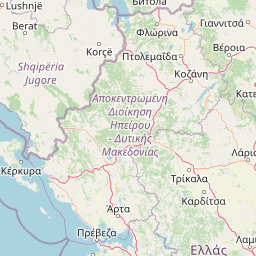
Geography guide, regional context, and park location map for Vikos-Aoös National Park

Vikos-Aoös National Park park geography, regions, and map view in Greece
Understand where Vikos-Aoös National Park sits in Greece through a broader geographic reading of the surrounding landscape, nearby location context, and its mapped position within the national park landscape.

How Vikos-Aoös National Park fits into Greece

Greece, officially the Hellenic Republic, is a country in Southeast Europe occupying the southern Balkans. It borders Albania, North Macedonia, Bulgaria, and Turkey, with coastlines on the Aegean, Ionian, and Mediterranean seas. The country has over 10 million people and is renowned for its ancient Greek heritage, philosophy, democracy, and the Olympic Games.

Wider geography shaping Vikos-Aoös National Park in Greece

Greece occupies the southern tip of the Balkan peninsula in Southeast Europe. It shares land borders with Albania to the northwest, North Macedonia and Bulgaria to the north, and Turkey to the east. The Aegean Sea lies to the east of the mainland, the Ionian Sea to the west, and the Sea of Crete and Mediterranean Sea to the south. The country spans thousands of islands across nine traditional geographic regions and has the longest coastline in the Mediterranean basin.

Map view of Vikos-Aoös National Park

Use this park location map to pinpoint Vikos-Aoös National Park in Greece, understand its exact geographic position, and read its mapped placement within the surrounding landscape more clearly.

Pigeon | © OpenStreetMap contributors

Location context for Vikos-Aoös National Park

EpirusIoannina
Park atlas

Browse connected protected landscapes, tracing mountain parks and gorges across the broader regional geography.

Explore Nearby National Parks and Protected Landscapes Around Vikos-Aoös National Park
Continue your exploration beyond Vikos-Aoös National Park by browsing a focused selection of nearby protected areas and national parks, ideal for comparing similar alpine ecosystems and dramatic gorge landscapes. Examine the regional distribution of these protected sites, tracing geographic connections and understanding the wider conservation context across the Pindus mountains.
Watercolor illustration of a mountainous landscape with a river, forests, and distant hills
National park

Pindus National Park: A Protected Greek Mountain Wilderness with Ancient Forests

Explore its rugged terrain, biodiversity, and alpine landscape.

MoriAtlas presents Pindus National Park, a significant protected area in Greece known for its dramatic mountainous terrain, deep valleys, and ancient old-growth forests. This page details its geographic context, featuring rugged highland landscapes, serpentine soils, and vital habitats for species like the Eurasian brown bear. Understand its place within the Pindus mountain range and its importance as a mapped wilderness area for conservation.

Area
69.27 km²
Established
1966
Relief
Mountain
Climate
Temperate
Watercolor painting of a landscape with green fields, scattered trees, and rolling hills under a light sky
National parkGjirokastër County

Fir of Hotovë-Dangëlli National Park: Ancient Forests & Mountain Wilderness Atlas

Explore a premier protected landscape in Gjirokastër County, Albania.

Fir of Hotovë-Dangëlli National Park stands as a monumental protected area, celebrated for its exceptional old-growth Hotova Fir forests, which are a rare Mediterranean plant relic. This national park in Gjirokastër County offers a detailed look at a vast mountainous terrain, featuring dramatic canyons like Lengarica Canyon, and serving as a critical habitat for diverse wildlife. MoriAtlas provides structured geographic context for this significant landscape, highlighting its mapped boundaries and role as a key component of regional protected area networks.

Area
360.038 km²
Established
2008
IUCN
II
Relief
Mountain
Watercolor landscape painting showing a lake, distant mountains, and vegetation
National parkVlorë County

Butrint National Park: Archaeological Heritage and Mediterranean Wetland Landscape

Explore its unique geography and protected park boundaries.

Butrint National Park presents a singular opportunity for geographic and protected-area discovery, showcasing an unparalleled fusion of ancient history and ecological richness. Located in Albania's Vlorë County, this national park encompasses Lake Butrint, coastal lagoons, and vital wetland habitats, recognized internationally for their biodiversity. Through MoriAtlas, users can explore the mapped extent of this unique landscape, understand its role within regional geography, and uncover the interplay between its preserved archaeological sites and the surrounding Mediterranean environment.

Area
94.244 km²
Established
2000
IUCN
II
Relief
Lowland
Watercolor painting of a river flowing through a valley with mountains and greenery
National parkKorçë County

Prespa National Park: Protected Landscape and High-Altitude Lakes in Korçë County, Albania

Explore the geography and mapped boundaries of this vital national park.

Prespa National Park, located in Korçë County, Albania, is a protected area characterized by its significant high-altitude tectonic lakes, dramatic mountain landscapes, and vital wetland habitats. This entry provides a structured atlas-style overview of the park's geographic identity, its protected landscape features, and its ecological importance, serving as a key point of reference for understanding this unique Balkan region.

Area
276.13 km²
Established
1999
IUCN
II
Watercolor painting showing mountains, a river, and vegetation
National park

Tomorr Mountain National Park: Sacred Peak & Karst Protected Landscape in Albania

Explore Albania's dramatic mountain geography and protected areas.

Tomorr Mountain National Park offers a unique exploration of southern Albania's dramatic limestone anticline. Dominated by the sacred Mount Tomorr and featuring the spectacular Osum Canyon, this national park provides insight into karst terrain, old-growth forests, and significant biodiversity. Discover its mapped boundaries and regional geographic context within the Pindus Mountains for structured atlas exploration.

Area
271.855 km²
Established
1956
IUCN
II
Relief
Mountain
National parkVlorë County

Llogara National Park: Vlorë County's Dramatic Ceraunian Mountain Protected Landscape

Explore Albania's rugged national park geography and mapped terrain.

Llogara National Park stands as a vital protected area within Vlorë County, Albania, renowned for its spectacular Ceraunian Mountain topography. This page provides access to detailed geographic information, highlighting the park's unique landscape characteristics, from alpine peaks to coastal vistas. Discover the mapped extent of this national park and its significance within the regional geography, perfect for structured atlas exploration.

Area
17.69 km²
Established
1966
IUCN
II
Relief
Mountain
Watercolor painting of a landscape with green trees, rolling hills, and distant mountains under a light sky
National parkMunicipality of Bitola

Pelister National Park: North Macedonia's Oldest National Park and Alpine Protected Landscape

Explore unique glacial features and endemic forests within Municipality of Bitola.

Pelister National Park, a pioneering protected area in North Macedonia, offers a rich tapestry of alpine geography and unique geological formations. This page provides detailed information on the park's landscape, including its dramatic mountain massif within Municipality of Bitola, the rare Macedonian pine forests, the striking 'stone rivers' formed by ancient glacial processes, and the serene Pelister Eyes glacial lakes. Discover the park's mapped boundaries and its significance as a conservation heritage site within the Balkan Peninsula.

Area
171.5 km²
Established
1948
IUCN
II
Visitors
30K annual
Watercolor scene featuring a blue lake, green trees, and mountains under a yellow-pink sky
National park

Karaburun-Sazan Marine Park: A National Park with Dramatic Limestone Cliffs and Island Ecosystems

Explore Albania's protected coastline and marine geography.

Karaburun-Sazan Marine Park, Albania's sole national park, offers a profound exploration of a unique protected landscape. This marine protected area combines the rugged Karaburun Peninsula, characterized by high limestone cliffs, with Sazan Island, Albania's largest island, known for its distinct geology and subtropical climate. The park's waters are critical habitats for endangered species, making it a significant site for marine biodiversity and regional geographic study. Discover the mapped boundaries and ecological context of this vital protected area.

Area
124.377 km²
Established
2010
IUCN
II
Relief
Mixed relief

Common questions about visiting, size, designation, and location context for Vikos-Aoös National Park

Vikos-Aoös National Park FAQs for park facts, access, geography, and protected area context
Find quick answers about Vikos-Aoös National Park, including protected-area facts, park geography, trail and visitor context, and how the park fits into its surrounding country and regional landscape.
MoriAtlas Explorer

Continue Your Protected Areas Search Across the Global Atlas

Deepen your exploration by continuing the structured search for national parks and protected areas worldwide. Utilize the comprehensive filtering capabilities to compare different conservation landscapes and refine your understanding of global park geography. Discover more about the distribution and characteristics of protected natural areas.

Global natural geography