The rugged, glacier-carved southernmost arm of the Dinaric Alps on the edge of the Adriatic.
Accursed Mountains
The Accursed Mountains are a dramatic high-mountain range in coastal southeast Europe, hugging the Adriatic and forming the southernmost arm of the 1,000-kilometre-long Dinaric Alps. They sweep across northern Albania, western Kosovo, and a slice of northeastern Montenegro, with Maja Jezercë rising to 2,694 metres as the highest summit and the loftiest peak anywhere in the Dinaric system.
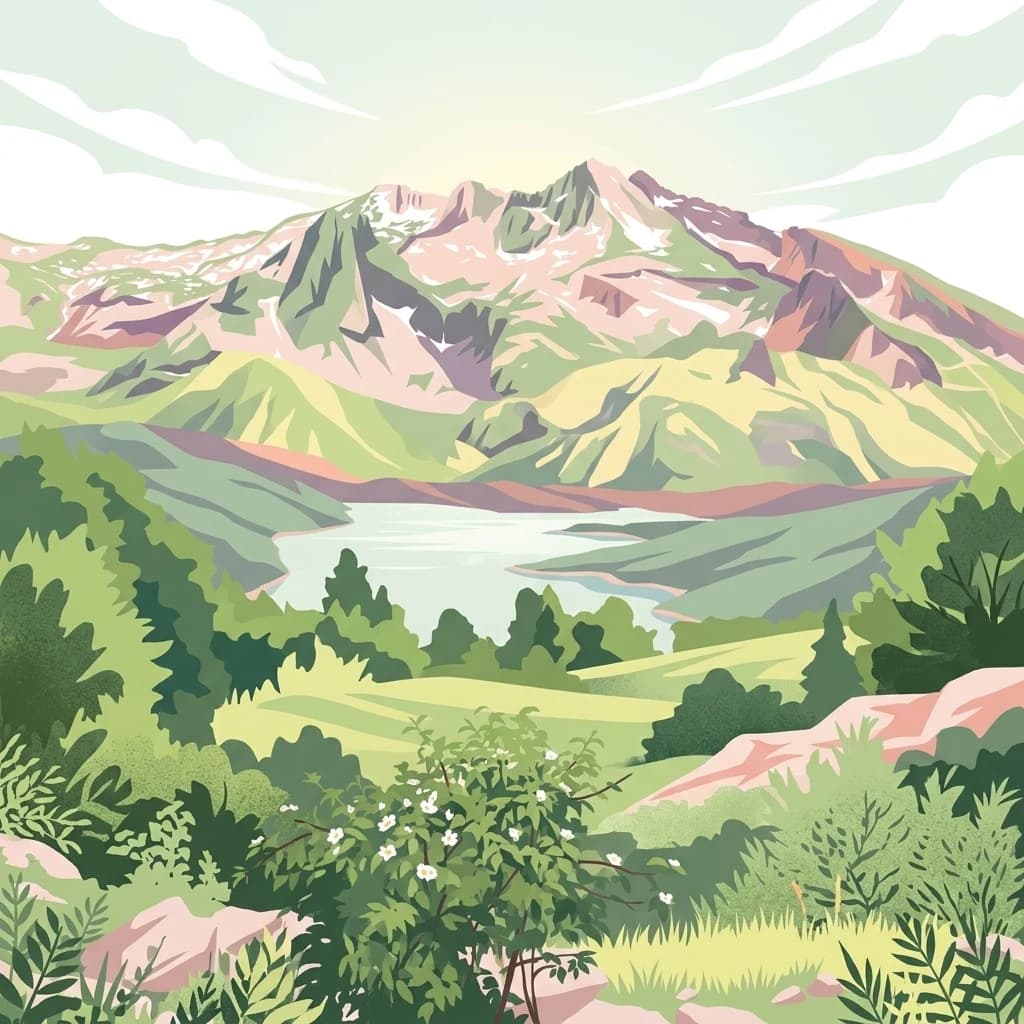
The range is famed for some of the most intense glacial sculpting and karst relief in the Balkans: sheer limestone walls, deep canyons, hanging valleys, and roughly twenty small cirque lakes, including the celebrated cluster of Buni Jezerce on the Albanian side of Jezerca Peak. A 2009 discovery even confirmed active glaciers here, making them among the southernmost glacial masses in all of Europe, and the climate feeds the wettest corner of the continent, with annual precipitation in places exceeding 3,000 millimetres. Together, these dramatic landforms support a Balkan stronghold of large mammals and an extraordinarily rich flora, including dozens of endemic and relict plant species and the rare Balkan subspecies of the Eurasian lynx. Their cultural identity is no less striking: a sparsely populated highland landscape historically shaped by transhumant herding, with numerous Albanian tribal communities and Montenegrin highland villages that gave the range both of its evocative names, the Albanian 'Bjeshkët e Nemuna' and the South Slavic 'Prokletije', each translating as 'the accursed' or 'the cursed' mountains.