Why Kodar National Park stands out
Kodar National Park is best known for its extraordinary landscape diversity, representing one of the most varied protected areas in Siberia. The park contains the Chara Sands, one of the northernmost deserts in the world, a unique sand massif surrounded by taiga forest in a mountain valley setting. Its over 570 alpine lakes, low-altitude glaciers, volcanic fields of the Udokan Plateau, and the steep alpine peaks of the Kodar range create a dramatic mountain landscape. The park also protects significant populations of black-capped marmot and Siberian bighorn sheep in a region where ecological surveys remain in early stages.
Kodar National Park history and protected-area timeline
Kodar National Park was officially established in 2016, making it one of the more recent additions to Russia's national park system. The creation of the park was driven by recognition of the region's exceptional geographic and ecological diversity, which includes glacial, alpine, volcanic, and even desert environments within a single protected area. Prior to designation, the Kodar Mountains and surrounding landscapes were part of a broader regional conservation framework, but the establishment of the park provided formal national protection status. The park is governed by FGBU Kodar, the federal budget institution responsible for managing protected areas in the region. As a relatively new protected area, the park is still developing its infrastructure and management programs, and scientific surveys of its biodiversity remain in preliminary stages.
Kodar National Park landscape and geographic character
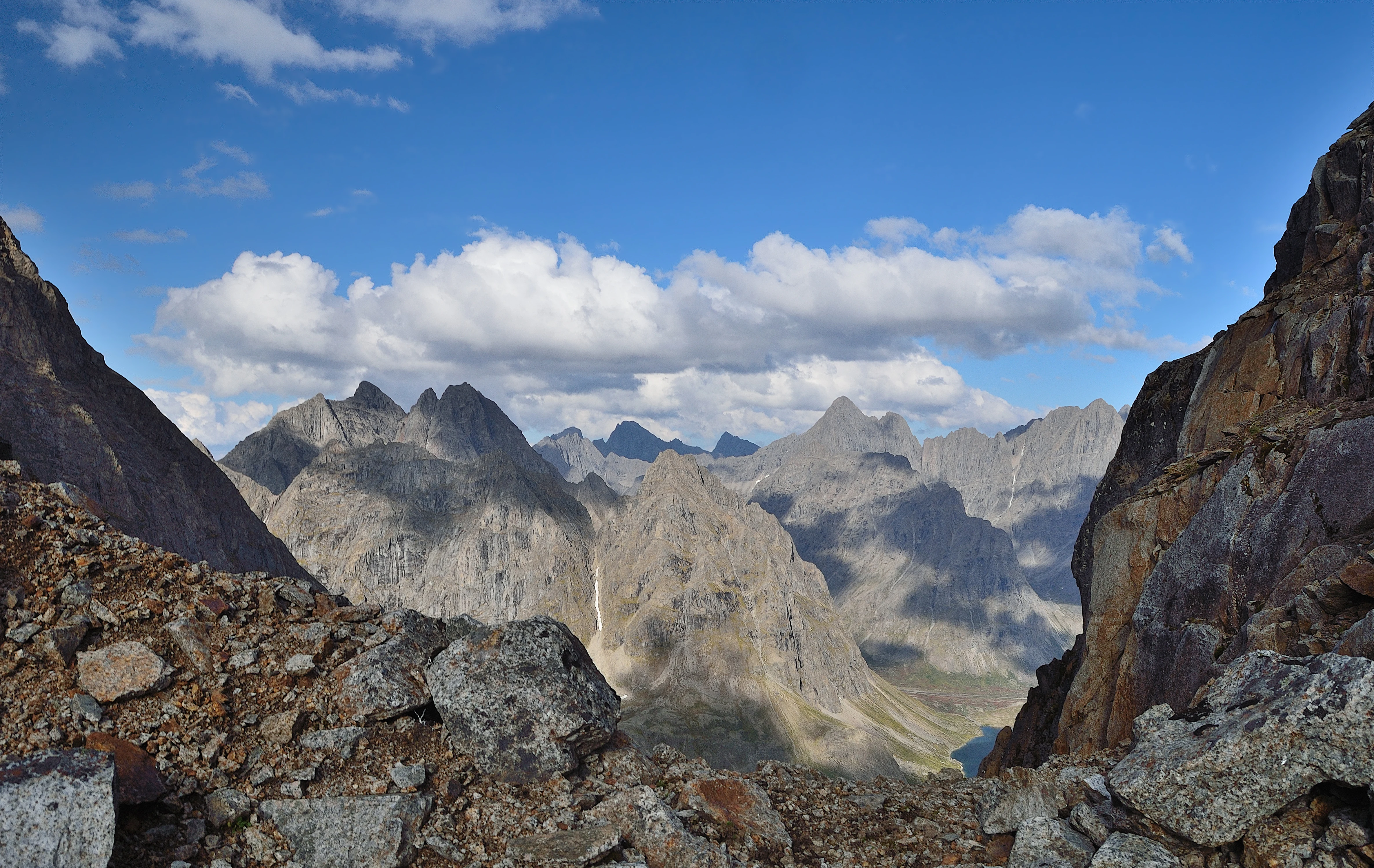
The landscape of Kodar National Park is defined by extraordinary topographic diversity. The park is centered on the Kodar Mountains, a range whose name means steep in the Evenks language, reflecting the precipitous alpine slopes that dominate the terrain. The highest peak in the range and park is Pik BAM at 3,072 meters. The park is divided into two distinct sectors: the northern sector covers approximately 3,383 km² and runs north-south along the Kodar range, while the southern sector covers 1,953 km² and encompasses the volcanic Udokan Plateau and the Chara River valley. One of the park's most distinctive features is the Chara Sands, a dune-covered sand massif measuring 10 kilometers by 5 kilometers that forms an isolated desert surrounded by taiga forest. This desert, located in the Chara River valley, represents one of the northernmost desert environments in the world. The park also contains over 570 alpine lakes distributed across the mountain landscape, as well as low-altitude glaciers and volcanic terrain.
Kodar National Park ecosystems, habitats, and plant life
The ecological character of Kodar National Park is defined by its position at the intersection of two distinct ecoregions, creating remarkable biodiversity within a relatively compact protected area. At higher elevations, the park falls within the Trans-Baikal Bald Mountain tundra ecoregion, characterized by alpine tundra vegetation on exposed mountain slopes. At lower elevations, the East Siberian taiga dominates, with coniferous forests covering the valley floors and lower slopes. The sharp elevation drops over short distances create multiple ecological zones within the park, supporting species adapted to both alpine and boreal environments. The climate is sharply continental subarctic, with very brief summers lasting only one to three months above 10°C and long, cold winters with minimal precipitation. Preliminary scientific surveys have recorded approximately 350 species of plants within the park boundaries, though comprehensive biological inventories are still in early stages.
Kodar National Park wildlife and species highlights
The wildlife of Kodar National Park demonstrates remarkable diversity for its latitude, a consequence of the high-altitude zonation and the park's position in the transition between alpine and taiga ecosystems. Preliminary surveys have documented 47 species of mammals, 150 species of birds, 23 species of fish, 2 amphibian species, and over 350 species of insects. Among the most notable mammalian species are the black-capped marmot and the Siberian bighorn sheep, both species adapted to the harsh subarctic conditions of the region. The Siberian bighorn sheep inhabits the rocky alpine terrain, while the black-capped marmot is found in mountain meadows and tundra areas. The bird fauna includes numerous species associated with both alpine habitats and the taiga forest zones. As a relatively new protected area, ongoing research continues to expand knowledge of the park's full biodiversity.
Kodar National Park conservation status and protection priorities
Kodar National Park holds significant conservation value as one of the most geographically diverse protected areas in Siberia. The park protects a unique combination of environments including alpine tundra, taiga forest, glacial features, volcanic terrain, and an isolated desert environment, representing one of the few places where such diverse landscapes are preserved within a single protected area. The park's position at the boundary between the Trans-Baikal Bald Mountain tundra and East Siberian taiga ecoregions makes it important for conserving the ecological transition between these systems. The Chara Sands, as a northernmost desert environment, holds particular scientific interest for understanding desert formation processes in subarctic latitudes. The park also provides habitat protection for species of conservation concern including the Siberian bighorn sheep, which occupies limited habitat in Russia's mountain regions.
Kodar National Park cultural meaning and human context
The cultural context of Kodar National Park is rooted in the heritage of the Evenks, the indigenous reindeer herding people of southeastern Siberia. The park's name derives from the Evenks language, where Kodar means steep, a direct reference to the dramatic alpine terrain that characterizes the region. The park lies in the Kalarsky District of Zabaykalsky Krai, a vast and sparsely populated region of Russia that has historically been home to Evenk, Buryat, and other Siberian indigenous communities. The Chara area, where the park headquarters are located, is a rural settlement with connections to traditional land use patterns. The region's history is also linked to the construction of the Baikal-Amur Mainline railway, which passes through the broader region and influenced settlement patterns in the latter twentieth century.
Top sights and standout views in Kodar National Park
The standout features of Kodar National Park include the Chara Sands, one of the world's northernmost deserts, which creates a striking contrast of sand dunes amid taiga forest in a mountain valley. The park's over 570 alpine lakes, including many in dramatic glacial cirques, offer exceptional mountain scenery. The volcanic Udokan Plateau adds geological interest to the southern sector, while the highest peak Pik BAM at 3,072 meters provides alpine challenge. The park's exceptional landscape diversity within a single protected area, encompassing tundra, taiga, glaciers, volcanoes, and desert, makes it a unique conservation area in Siberia. The opportunity to experience a relatively untouched wilderness area, among Russia's newest national parks, represents a distinctive draw for visitors seeking remote adventure.
Best time to visit Kodar National Park
The best time to visit Kodar National Park is during the brief Siberian summer, typically from June through August, when temperatures are mildest and the park is most accessible. During these months, temperatures may reach comfortable levels in the valleys, though alpine areas remain cool. The short summer season of only one to three months above 10°C defines the visiting window. Winter visits are extremely challenging due to the harsh continental climate, with very cold temperatures and significant snow cover. As a new park with limited infrastructure, visitors should expect basic facilities and the need for advance planning, including obtaining the required visitor permits from the park administration. The park's remote location in Zabaykalsky Krai requires careful travel coordination, typically through the nearest settlement of Novaya Chara or Chara.