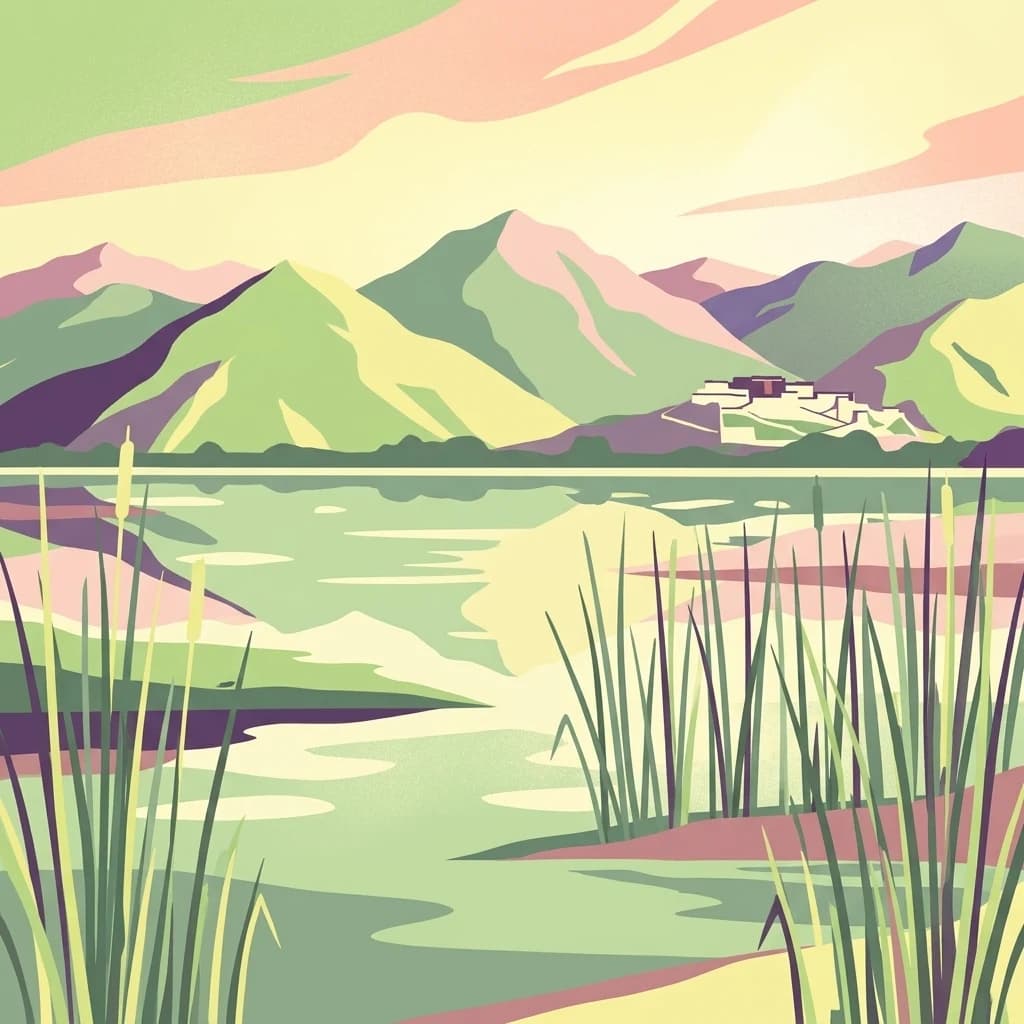
The highest-elevation urban natural wetland in the world, on the outskirts of Lhasa.
Laru Wetland National Nature Reserve
Laru Wetland National Nature Reserve is a nationally protected natural area in the Tibet Autonomous Region of China, situated in the northern part of Lhasa city. Covering roughly 6.2 square kilometers at an average elevation of 3,645 meters, it is recognized as the highest-elevation and largest natural wetland within a city anywhere in the world, and the only inland natural wetland located within a Chinese urban area. The reserve protects a typical high-altitude Qinghai-Tibet Plateau wetland ecosystem, dominated by reed and peat-forming marsh vegetation, and it is ecologically important for migratory waterbirds and other plateau birdlife.
The wetland sits within a broad, flat basin in the northern reaches of the Lhasa valley, where the seasonal Liusha River brings water from the Duodi and Niangre valleys into the reserve between May and October. This seasonal hydrology, combined with the cool, moist plateau climate, sustains open water, floating mats, and rich reed habitat that support both resident and visiting species.
Beyond its ecological value, the reserve carries significant local cultural meaning. The land historically belonged to the Lha-lu aristocratic family, and today it remains one of the defining natural landscapes at the edge of Tibet's capital. It has been formally protected at the municipal and autonomous region level since 1999, and was elevated to national nature reserve status in 2005, placing it among the most important wetland conservation sites in China.