Mori Atlas logo
National parkNarew National Park

Explore the mapped boundaries and dynamic hydrology of this vital protected landscape.

Narew National Park: Poland's Exceptional Anastomosing River Wetland National Park

(Narwiański Park Narodowy)

Narew National Park, situated in Poland's Podlaskie Voivodeship, protects a truly unique natural landscape defined by the Narew River's rare anastomosing channel pattern. This national park offers an unparalleled opportunity to explore a complex mosaic of waterways, flooded lands, and wetlands, making it a premier destination for understanding intricate riverine geography and protected wetland ecosystems. Discover the detailed mapped context and landscape characteristics that establish Narew National Park as a significant natural area within the Polish atlas.

wetlandriver valley Ramsar sitebirdwatchingProtected AreaEastern Poland
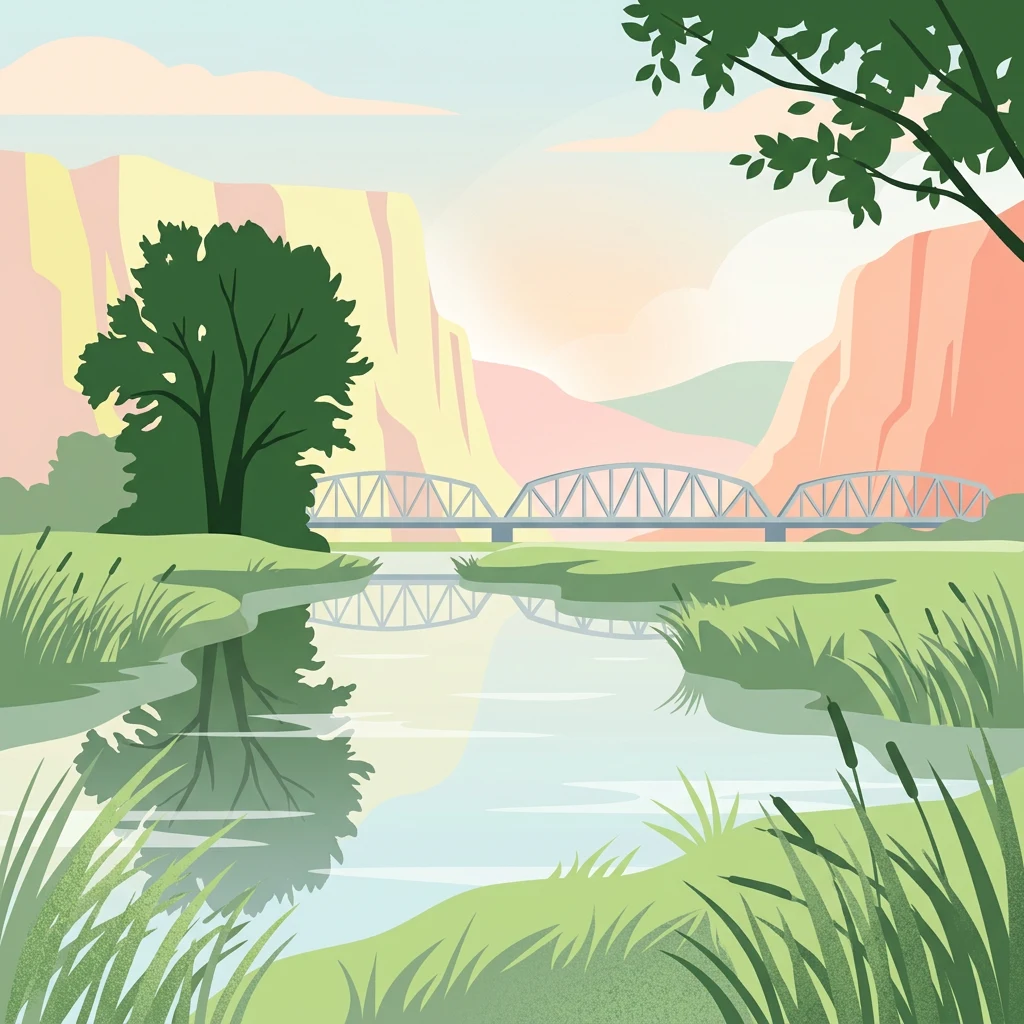
Illustration showing a river with a bridge, green vegetation, and colorful cliffs in the background

Narew National Park

National park

Park overview

Structured park overview, official facts, and landscape profile for Narew National Park

Narew National Park park facts, protected area profile, and essential visitor context
Review the core facts for Narew National Park, including designation, size, terrain, visitor scale, habitats, and operating context in one park-focused overview.

About Narew National Park

Narew National Park protects one of Poland's most ecologically significant wetland landscapes, situated in the lowland valley of the Narew River in the Podlaskie Voivodeship. The park occupies a 35-kilometer stretch of the Upper Narew Valley between the towns of Suraż and Rzędziany, with the valley floor ranging from 2 to 4 kilometers in width. The defining characteristic of this landscape is the Narew River's anastomosing nature—rather than flowing in a single channel, the river repeatedly divides and rejoins, creating a complex network of active channels, abandoned riverbeds, and temporary waterways that shift over time. This hydrological pattern produces an exceptional diversity of habitats within a relatively compact area, ranging from open water and submerged channels to reed beds, marshy meadows, and riparian forests of black alder and white willow. The park's ecological significance extends beyond its immediate boundaries, forming part of a broader wetland complex that serves as a critical habitat for migratory birds and supports numerous protected species. The presence of mineral rises known as "grądziki" within the marshy matrix adds topographic diversity, hosting drier grassland and forest communities that contrast sharply with the surrounding wetlands.

Quick facts and research context for Narew National Park

Narew National Park covers approximately 73.5 square kilometers along a 35-kilometer stretch of the Narew River in northeastern Poland's Podlaskie Voivodeship. The park protects a distinctive anastomosing river system—a rare braided channel pattern that creates a diverse mosaic of water bodies, marshes, and riparian forests. The park has no strict protection zone, making it unique among Polish national parks. It was designated a Ramsar Wetland in 2002 and recognized as an Important Bird Area by BirdLife International in 2010. The protected area is bordered by privately held agricultural land, with only about 20.5 square kilometers in state ownership.

Park context

Deeper park guide and search-rich context for Narew National Park

Narew National Park history, landscape, wildlife, and travel context
Explore Narew National Park through its history, landscape character, ecosystems, wildlife, conservation priorities, cultural context, and seasonal travel timing in a structured park guide built for atlas discovery and search intent.

Why Narew National Park stands out

Narew National Park is best known for its exceptional wetland ecosystem and its unique status as Poland's only national park without a designated strict protection zone. The park protects a remarkable anastomosing river system where the Narew splits into numerous channels, creating a constantly shifting landscape of waterways, islands, oxbow lakes, and marshlands. The park hosts Poland's highest concentration of wetland bird species, with over 200 recorded species including globally threatened species such as the aquatic warbler. The park also stands out for its extraordinary invertebrate diversity, particularly butterflies, 66 species are found here, representing approximately 40 percent of all butterfly species in Poland. The European beaver population of around 260 individuals is another notable feature, thriving in the river's dynamic wetland environment.
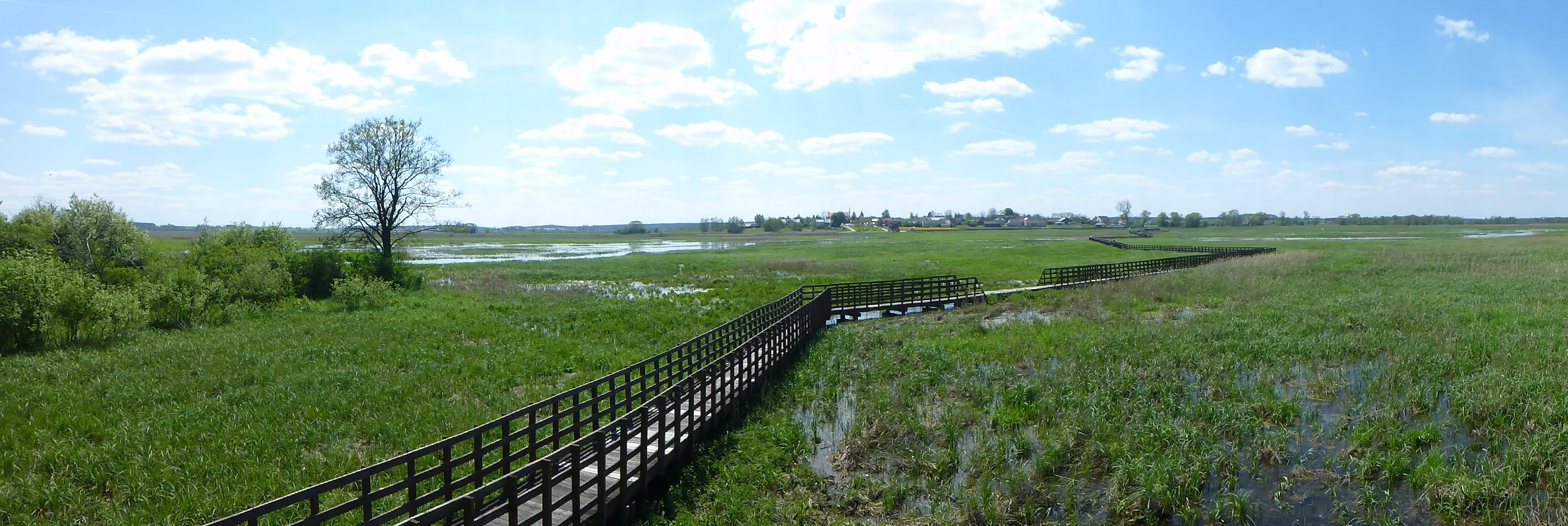
Wooden boardwalk extending through marshy wetlands with water channels, green vegetation, and distant trees under a partly cloudy sky
Panoramic view of a boardwalk through Narew National Park's wetlands

Narew National Park history and protected-area timeline

Narew National Park was officially established on July 1, 1996, though the area had been protected at a lower level since 1985 as part of the Narew Landscape Park. The creation of the national park reflected growing recognition of the Upper Narew Valley's exceptional ecological value and the need for stronger conservation measures to protect its unique wetland ecosystems. Prior to national park status, the area had been managed as a landscape park for over a decade, during which time baseline scientific documentation was developed and awareness of the region's biodiversity significance increased. The park's administrative headquarters were initially located in a 19th-century manor house in Kurowo, later moved to Młynarzówka. The 1996 establishment came with some administrative challenges—the original legal documentation mistakenly listed the area as 73.5 hectares based on imprecise surveys, while more accurate measurements later established the area at approximately 68.1 square kilometers. In 2002, the park received international recognition through its designation as a Ramsar Wetland, formalizing its status as a site of international importance under the Ramsar Convention. The park achieved additional recognition in 2010 when it was designated as an Important Bird Area by BirdLife International.

Narew National Park landscape and geographic character

The landscape of Narew National Park is dominated by the dynamic floodplain of the Narew River, characterized by its anastomosing channel system—a rare pattern in European rivers where multiple interconnected channels flow side by side, separated by islands and marshy zones. The valley is flanked by gently undulating moraine hills typical of the North Podlasie Lowland, but the valley floor itself is remarkably flat and marshy. The river's behavior changes dramatically with seasons and water levels, transforming the landscape from an extensive network of flowing channels during high water to a scattered collection of ponds, oxbows, and marshy depressions during dry periods. The park contains not only the main Narew channel but also numerous smaller rivers including Liza, Szeroka Struga, Awissa, Kurówka, Kowalówka, Turośnianka, and Czaplinianka. These waterways, combined with the ever-changing pattern of active and abandoned channels, create a landscape of exceptional complexity and visual diversity. Within this water-dominated matrix, patches of drier ground appear as elevated "grądziki"—mineral rises that support grassland and forest communities distinct from the surrounding wetlands.
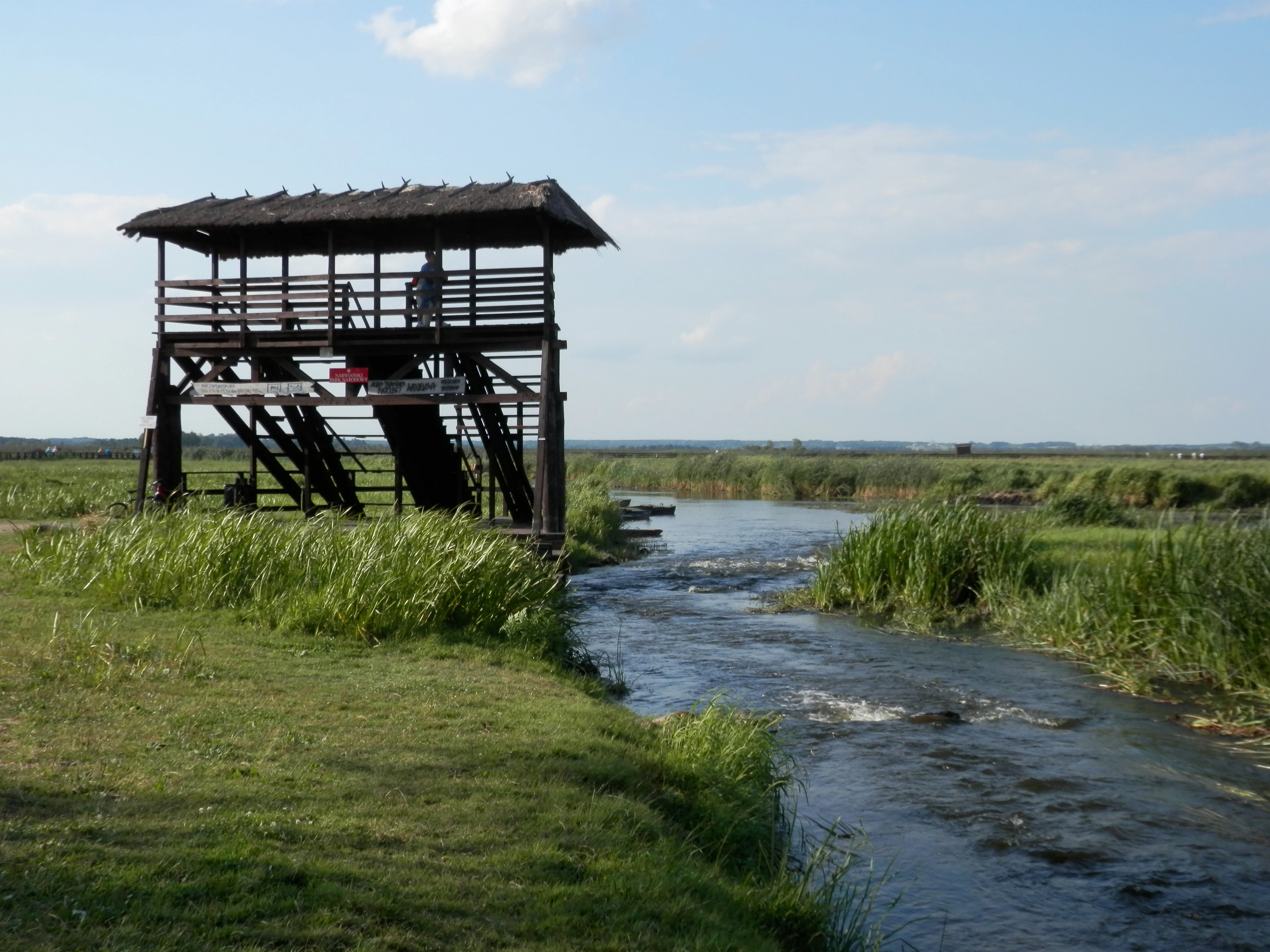
Wooden observation tower with stairs and railing beside a river, surrounded by tall grass and green meadows under a clear sky
Wooden observation tower overlooking the Narew River in Narew National Park

Narew National Park ecosystems, habitats, and plant life

The vegetation of Narew National Park reflects its hydrological complexity, with plant communities arranged in a mosaic that corresponds to moisture gradients, flood frequency, and elevation within the river valley. Wetland vegetation dominates, with large sedge communities and reed beds forming the most extensive habitats. Black alder and white willow forests occupy the riparian zones along channel margins, while meadow communities thrive on the higher ground that experiences less frequent flooding. The park supports 58 distinct plant communities and approximately 500 species of vascular plants. The protected flora includes notable species such as white water lilies, Siberian iris, gladiolus, narrow-leaved gentian, carnivorous round-leaved sundew, purple viper's grass, and several orchid species including spotted orchid, crimson orchid, and broad-leaved orchid. The park's vegetation patterns developed over centuries through traditional meadow management practices, and this historical land-use pattern continues to influence the contemporary ecological character of the valley.
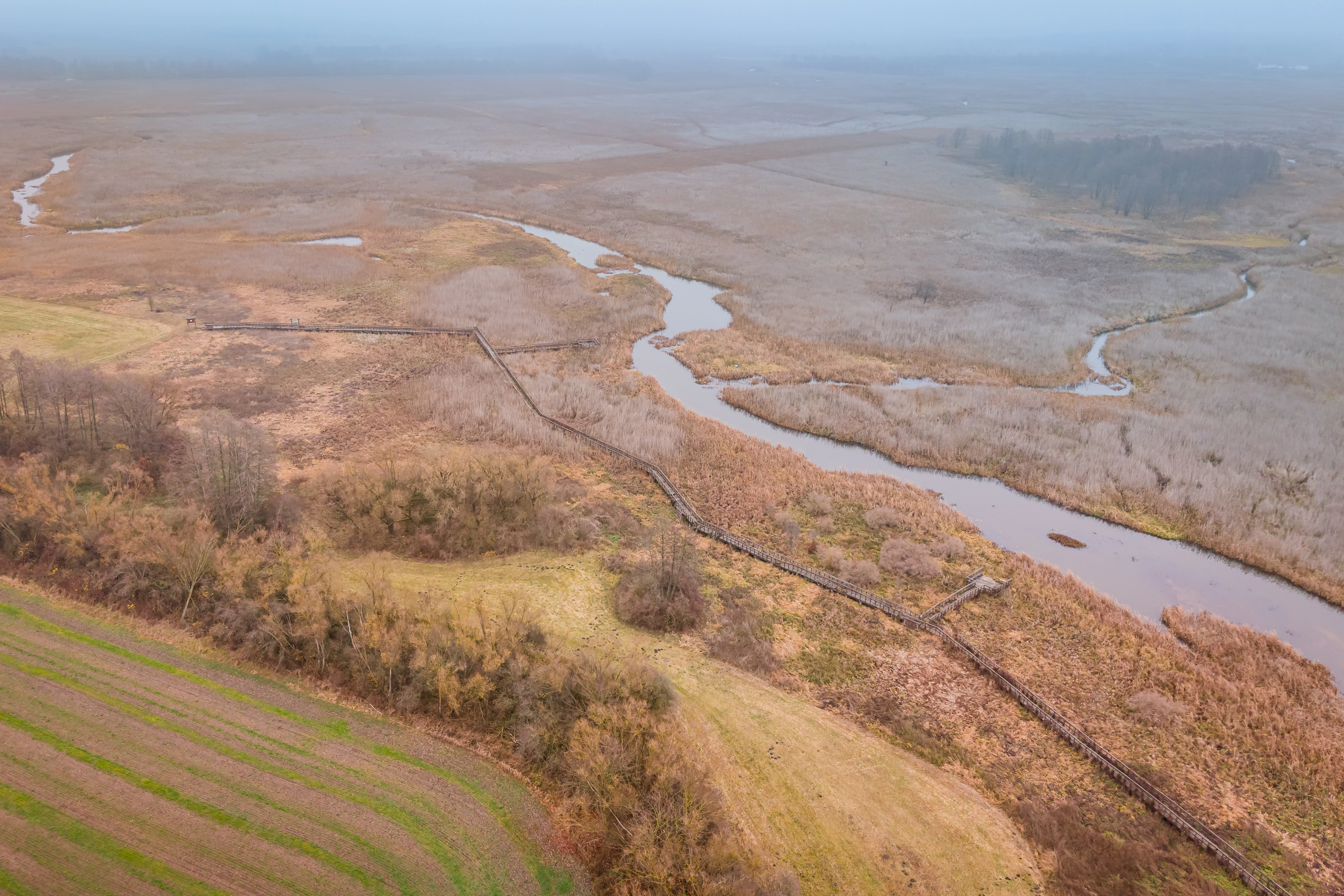
Aerial view of a winding river through a marshy landscape with adjacent agricultural fields and sparse trees
Aerial view of the Narew River winding through marshy wetlands and agricultural fields in Narew National Park

Narew National Park wildlife and species highlights

Narew National Park supports an exceptionally rich fauna, particularly notable for its bird diversity—the park hosts 213 bird species, with 154 confirmed as breeding species within its boundaries. The wetland habitats are critical for numerous threatened bird species, including the globally vulnerable aquatic warbler, as well as bittern, corncrake, great snipe, spotted crake, little crake, marsh harrier, and configurable owl species. The park has been designated an Important Bird Area specifically for its population of aquatic warbler and its importance for migratory waterbirds. Mammal diversity includes around 36 species, with European beaver being particularly prominent—approximately 260 individuals inhabit the park, making it one of the highest concentrations in Poland. Other mammals include elk, otter, European polecat, weasel, European hedgehog, and larger species such as red deer, roe deer, and wild boar. The park's waters support 27 fish species, with three protected: bitterling, spined loach, and Ukrainian brook lamprey. Thirteen amphibian species occur here, representing a significant portion of Poland's amphibian diversity, while invertebrate life is extraordinarily rich, with over 200 rotifer species, 70 plankton species, and 66 butterfly species—approximately 40 percent of all butterfly species found in Poland.

Narew National Park conservation status and protection priorities

Narew National Park represents one of Poland's most important conservation assets, designated both as a Ramsar Wetland of international importance and an Important Bird Area by BirdLife International. The park protects a rare anastomosing river system that has largely retained its natural hydrological character—a increasingly uncommon feature in European lowland rivers that have been heavily modified for navigation, agriculture, and flood control. The wetland ecosystem supports significant populations of globally and European threatened bird species, with the aquatic warbler being particularly notable as one of Europe's rarest breeding birds. The park's conservation value is enhanced by the presence of 66 butterfly species, representing approximately 40 percent of Poland's total—a remarkable concentration that reflects the ecological diversity of the wetland mosaic. Notably, Narew National Park is unique among Polish national parks in having no designated strict protection zone, with management focused on sustainable use and conservation through active stewardship of the dynamic river system. The park's conservation challenges include the fragmented land ownership pattern, with only about 20.5 square kilometers of the 73.5 square kilometers in state ownership and the remainder distributed across approximately 12,000 private parcels.

Narew National Park cultural meaning and human context

The cultural landscape of Narew National Park reflects centuries of human settlement and traditional land use in the Upper Narew Valley. The surrounding villages contain traditional wooden huts, ancient roadside crosses, and historic windmills that embody the region's rural heritage. The park includes a notable manor house in Kurowo, which houses an exhibition on the cultural and natural values of the Narew Valley. A private archaeological museum owned by Władysław Litwinczuk provides additional cultural context, while remnants of a pre-war bridge across the old Białystok-Warsaw road near Kurowo offer historical interest. The traditional economic use of the wetlands through meadow farming and hay production shaped the contemporary vegetation patterns and continues to influence the park's ecological character. The area remains culturally connected to local communities who practice traditional activities such as boat transport using traditional wooden pychówka boats along the "obwodnica narwiańska"—a roughly 90-kilometer water route that circumnavigates the park.

Top sights and standout views in Narew National Park

Narew National Park stands out as Poland's premier wetland protection area, protecting the country's only anastomosing river system and one of the most biodiverse wetland complexes in Central Europe. The park's exceptional bird diversity—over 200 species including globally threatened species like the aquatic warbler—makes it a destination of international significance for ornithologists and birdwatchers. The extraordinary concentration of butterflies, representing 40 percent of Poland's species, highlights the ecological richness of this wetland ecosystem. The park's unique status as the only Polish national park without a strict protection zone reflects its management philosophy focused on sustainable interaction between humans and the dynamic river environment. The "obwodnica narwiańska" boat route and the scenic footbridge connecting Śliwno and Waniewo offer distinctive visitor experiences of this remarkable wetland landscape.

Best time to visit Narew National Park

The Narew National Park offers distinct seasonal experiences throughout the year. Spring brings rising water levels that transform the valley into an extensive flooded landscape, creating optimal conditions for observing waterfowl migration and the awakening of wetland vegetation. This season also offers excellent opportunities for witnessing the park's birdlife during the breeding season. Summer provides the most accessible conditions for exploration, with lower water levels exposing marshy areas and creating opportunities to observe beavers and other wildlife along the riverbanks. The butterfly diversity reaches its peak during warm summer months. Autumn offers a different character as water levels rise again and the landscape takes on atmospheric qualities suitable for photography and wildlife observation. Winter, while challenging for access, reveals the frozen wetland in a starkly beautiful state. Visitors should note that the park prohibits motorized boats, maintaining a tranquil environment where traditional wooden pychówka boats provide the primary means of water-based exploration.

Park location guide

Geography guide, regional context, and park location map for Narew National Park

Narew National Park park geography, regions, and map view in Poland
Understand where Narew National Park sits in Poland through a broader geographic reading of the surrounding landscape, nearby location context, and its mapped position within the national park landscape.

How Narew National Park fits into Poland

Poland, officially the Republic of Poland, is a Central European country spanning from the Baltic Sea in the north to the Carpathian Mountains in the south. It borders Germany, Czech Republic, Slovakia, Ukraine, Belarus, Lithuania, and Kaliningrad Oblast. The country has a temperate climate, diverse landscapes, and is known for its rich history, cultural heritage, and strong economic position within the EU.

Wider geography shaping Narew National Park in Poland

Poland occupies 312,696 km2 in Central Europe, extending from the Baltic Sea coast in the north to the Sudetes and Carpathian Mountains in the south. It borders Germany to the west, Czech Republic and Slovakia to the south, Ukraine and Belarus to the east, and Lithuania and Kaliningrad Oblast to the northeast. The landscape includes lowland plains, uplands, and mountain ranges.

Map view of Narew National Park

Use this park location map to pinpoint Narew National Park in Poland, understand its exact geographic position, and read its mapped placement within the surrounding landscape more clearly.

Pigeon | © OpenStreetMap contributors

Location context for Narew National Park

Podlaskie Voivodeship

Visualizing Narew's Dynamic Riverine Ecosystem, Marsh Habitats, and Distinctive Floodplain Terrain Through Detailed Park Imagery

Narew National Park Photos: Explore the Unique Anastomosing River Landscape and Wetland Scenery of Poland's Protected Area
Browse comprehensive imagery of Narew National Park to visually grasp its rare anastomosing river system, extensive marshlands, and unique wetland habitats in Poland's Podlaskie Voivodeship. These detailed park views offer crucial insights into the dynamic water-dominated landscape, helping to contextualize its ecological significance and protected-area character for deeper atlas-style discovery.

Wooden boardwalk extending through marshy wetlands with water channels, green vegetation, and distant trees under a partly cloudy sky

Wide shot of calm river reflecting a metal bridge and large tree under clear blue sky

Wooden observation tower with stairs and railing beside a river, surrounded by tall grass and green meadows under a clear sky

Aerial view of a winding river through a marshy landscape with adjacent agricultural fields and sparse trees

Park atlas

Trace the protected landscapes and national parks across the wider region surrounding Narew National Park, mapping wetland and river valley ecosystems.

Compare National Parks and Protected Areas Near Narew National Park, Tracing Regional Wetland Geography
Browse other national parks and protected areas situated near Narew National Park, exploring a diverse atlas of wetland, river valley, and lowland ecosystems across the region. This geographic overview helps you compare conservation landscapes, trace the regional spread of protected areas, and discover adjacent natural habitats beyond the Narew River.
Watercolor painting showing a wetland scene with reeds, patches of water, and trees under a light sky
National parkPodlaskie Voivodeship

Biebrza National Park: Poland's Largest National Park and European Wetland Atlas

Explore the mapped geography of its vast protected fenlands.

Biebrza National Park represents a critical protected landscape in northeastern Poland, famed for its vast, intact Biebrza Marshes, the largest lowland peat bog complex in Europe. This national park page offers detailed geographic context, highlighting the unique fenland terrain, marshland ecosystems, and protected area boundaries. Discover why this region is internationally recognized for its biodiversity and its significance within the broader atlas of European protected lands.

Area
592.23 km²
Established
1993
IUCN
II
Watercolor illustration of a river flowing through grassy terrain with rolling hills in the background
National parkPodlaskie Voivodeship

Białowieża National Park: Europe's Last Unmodified Primeval Forest and Bison Habitat

Mapped protected landscape and regional geography in Podlaskie Voivodeship.

As Poland's most vital natural heritage site, Białowieża National Park protects an exceptionally rare example of an ancient temperate primeval forest. This national park, located within the Podlaskie Voivodeship, serves as a living ecological laboratory, showcasing natural processes in unmodified woodland habitats. Its significance extends to being a critical sanctuary for the European bison, housing the world's largest free-ranging population. MoriAtlas provides detailed map context and geographic insights into this globally important protected area and its unique landscape.

Area
105.17 km²
Established
1932
IUCN
II
Visitors
140K annual
Watercolor painting showing a river flowing through a forested landscape with green hills, distant mountains, and a pink and yellow sky
National park

Belavezhskaya Pushcha National Park: Ancient Primeval Forest & European Bison Sanctuary

Explore mapped protected areas and regional geography.

Belavezhskaya Pushcha National Park stands as a testament to Europe's ancient woodland heritage, a protected landscape of immense ecological value. This primeval forest, a sanctuary for the European bison, offers a unique glimpse into an ecosystem preserved for millennia. The park's mapped boundaries and geographic context provide essential detail for understanding its role as a critical natural monument and a cornerstone of regional protected areas.

Area
1,500.69 km²
Established
1932
IUCN
II
Visitors
300K annual
Watercolor illustration showing lakes, green vegetation, and hills in the background
National parkPodlaskie Voivodeship

Wigry National Park: Protected Area Atlas of Poland's Glacial Lake District

Explore mapped landscapes and wetland ecosystems in Podlaskie Voivodeship

Delve into the geography of Wigry National Park, a national park situated in the Podlaskie Voivodeship of northeastern Poland. This protected area is defined by its glacial landscape, featuring 42 lakes including the expansive Lake Wigry, alongside critical wetland habitats and significant peat bogs. Discover the mapped boundaries and ecological importance of Wigry National Park, renowned as a prime location for beaver populations and a vital component of Poland's protected lands atlas.

Area
150.86 km²
Established
1989
IUCN
II
Visitors
110K annual
National parkMasovian Voivodeship

Kampinos National Park: Mapped Protected Landscape of Inland Sand Dunes

Discover Masovian Voivodeship's unique geography and park boundaries.

Kampinos National Park is a nationally significant protected area within the Masovian Voivodeship, celebrated for its extensive and well-preserved inland sand dune formations, a rarity in European geography. This park offers a distinct mapped landscape where pine-covered dunes intermingle with wetland ecosystems, supporting a unique biodiversity that includes a notable moose population. Explore the park's protected boundaries and understand its position as a vital natural and historical asset with detailed geographic context.

Area
385.44 km²
Established
1959
IUCN
II
Relief
Lowland
National park

Dzūkija National Park: Explore Lithuania's Largest Protected Forest and Inland Dune Landscapes

Mapped protected area geography and natural terrain of the Dainava region.

Delve into the protected landscape of Dzūkija National Park, Lithuania's expansive national park renowned for its vast primeval pine forests and extraordinary inland dune formations. This page provides a detailed atlas-style view of the park's mapped boundaries, diverse terrain, and significant natural features, offering insight into its protected territory and regional geographic importance. Examine the unique wetland systems and forest ecosystems that make this a crucial area for protected land discovery.

Area
584.53 km²
Established
1991
IUCN
II
Visitors
30K annual
National park

Polesie National Park: Protected National Park in Poland's Eastern Lowlands

Explore its mapped wetland geography and unique glacial terrain.

Polesie National Park represents a key protected landscape within eastern Poland, notable for its vast wetland complexes, including extensive peat bogs and marshes interspersed with pine forests on sandy dunes. This national park showcases a distinct geography shaped by glacial processes, offering a unique perspective on lowland ecosystems and their conservation. MoriAtlas allows for a structured discovery of its protected boundaries and the surrounding regional context, providing an atlas-driven understanding of this vital natural territory.

Area
97.52 km²
Established
1979
IUCN
II
Watercolor depiction of a lake with reeds, forested shoreline, and distant mountains
National parkUkraine

Shatsk National Natural Park: Ukraine's Deepest Lake and Wetland Protected Area Atlas

Mapped landscape and protected geography of a premier Ukrainian national park.

Shatsk National Natural Park in Ukraine is a significant protected area featuring a remarkable cluster of over thirty lakes, most notably Svitiaz Lake, the nation's deepest. This park protects vital wetland and forest ecosystems within the Polissia region, offering a rich geographic context for atlas exploration. Understanding its mapped boundaries and terrain provides insight into its importance as a Ramsar site and a key corridor for migratory birds, making it a cornerstone of conservation geography in Eastern Europe.

Area
489.77 km²
Established
1983
Relief
Lowland
Climate
Temperate

Common questions about visiting, size, designation, and location context for Narew National Park

Narew National Park FAQs for park facts, access, geography, and protected area context
Find quick answers about Narew National Park, including protected-area facts, park geography, trail and visitor context, and how the park fits into its surrounding country and regional landscape.
MoriAtlas Explorer

Continue Your Protected Areas Search Across the Global Atlas

Deepen your exploration by continuing the structured search for national parks and protected areas worldwide. Utilize the comprehensive filtering capabilities to compare different conservation landscapes and refine your understanding of global park geography. Discover more about the distribution and characteristics of protected natural areas.

Global natural geography