Why Nechkinsky National Park stands out
Nechkinsky National Park is best known for its combination of rich biodiversity and significant archaeological heritage within a diverse river valley landscape. The park protects important populations of rare species including the vulnerable Russian desman, an unusual semi-aquatic mammal historically trapped for its fur, as well as endangered waterfowl such as the red-breasted goose. The landscape features a distinctive asymmetrical valley with flat and steep banks, extensive floodplain wetlands including the Kemulskoye bog, and a transition zone between taiga, mixed forests, and steppe-forest ecosystems. The park also preserves ancient archaeological sites spanning from the 3rd millennium BCE through the Iron Age, associated with the Ananyino culture.
Nechkinsky National Park history and protected-area timeline
The history of human occupation in the Nechkinsky area stretches back to ancient times, with archaeological evidence of settlement by hunters and fishers dating to the 3rd and 2nd millennia BCE. The earliest clearly identifiable archaeological sites within the park are fortified Iron Age settlements from the first millennium BCE, associated with the Ananyino culture. This cultural group represented an early Finno-Ugric population that inhabited the river valleys of the eastern Volga region. Nechkinsky National Park was officially established on October 16, 1997, as a protected area combining natural and cultural heritage conservation objectives. The park was created to preserve the unique combination of biological diversity, landscape features, and archaeological heritage found in this section of the Kama River valley.
Nechkinsky National Park landscape and geographic character
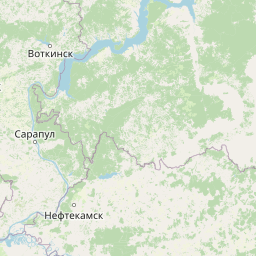
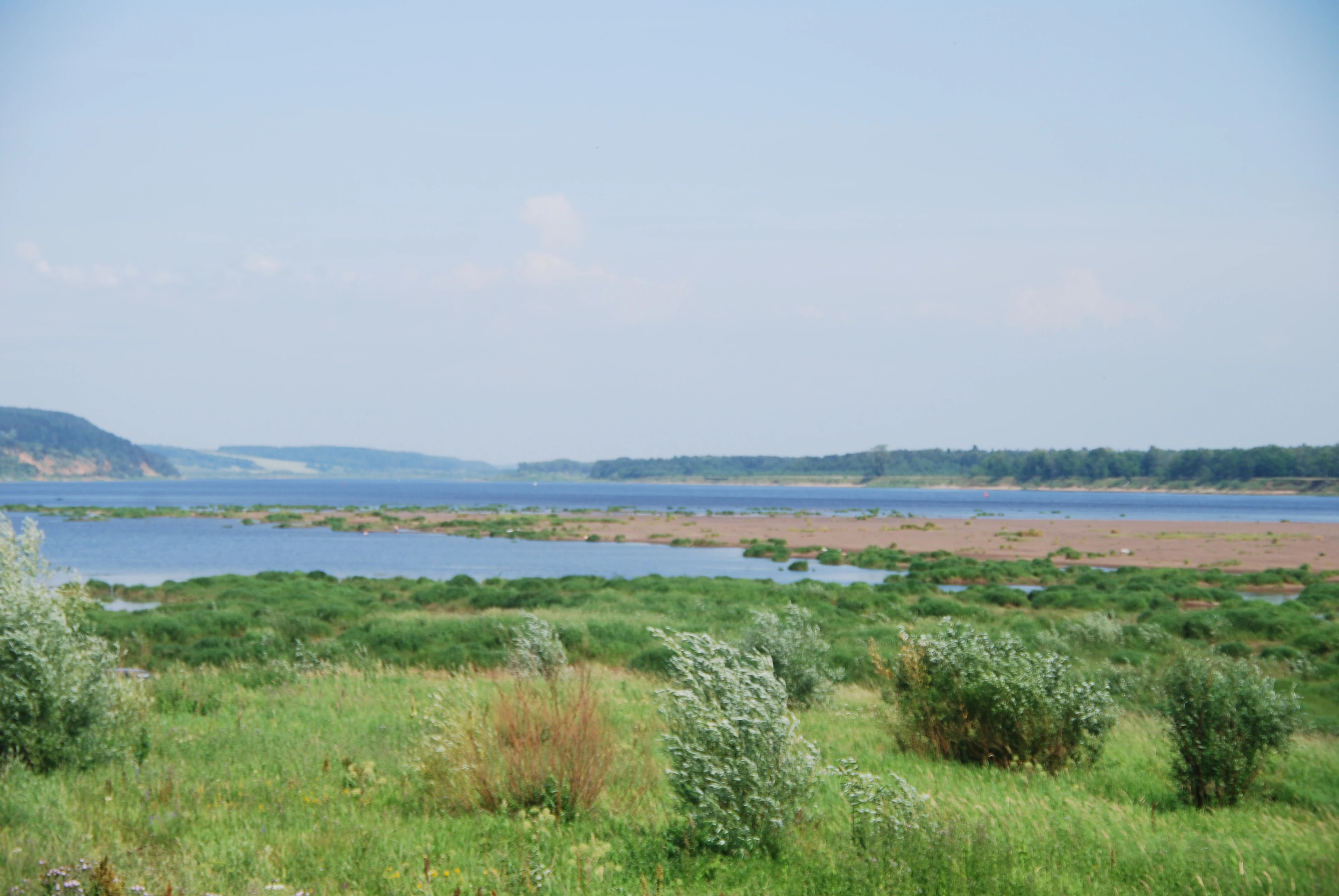
The physical landscape of Nechkinsky National Park centers on the forested valley of the Siva River watershed, a tributary of the Kama River. The valley is distinctly asymmetrical, with the left bank presenting a relatively flat terrain and the right bank forming a steep hillside that rises prominently above the river corridor. The valley floor ranges from 3 to 20 kilometers in width and cuts 110 to 160 meters into the surrounding landscape. The Kama River within the park boundaries features a wide floodplain with several distinct fluvial terraces visible at higher elevations, indicating the river's historical meandering and avulsion patterns. The coastal area along the Votkinsk reservoir adds a large impounded water body to the park's hydrological character, creating additional habitat diversity along its shores.
Nechkinsky National Park ecosystems, habitats, and plant life
The ecological character of Nechkinsky reflects its position within the Sarmatic mixed forests ecoregion, a corridor of mixed coniferous and deciduous forest extending from the Baltic Sea eastward to the Ural Mountains. The park's forest communities represent a transition between taiga, mixed forest, and steppe-forest environments, creating a mosaic of habitat types. The lower elevations and depressions support oligotrophic and mesotrophic bogs, with the Kemulskoye bog covering approximately 2,000 hectares representing one of the most significant wetland complexes. Gully and depression environments contain Siberian spruce communities, while the valley slopes host pine forests with occurrences of silver fir and Siberian larch. The lower forest layers transition to broadleaf communities dominated by oak, with secondary growth of birch and aspen. The park records 712 species of vascular plants, representing approximately 70% of the entire flora documented in Udmurtia, indicating the region's ecological significance.
Nechkinsky National Park wildlife and species highlights
Nechkinsky National Park supports diverse animal communities across its terrestrial and aquatic habitats. Mammal populations include 50 species, with particular conservation significance attached to the Russian desman, a semi-aquatic insectivore that resembles a large mole or muskrat. This species was historically targeted by trapping for its valuable fur and now receives protected status due to its vulnerable population status. The park's avian fauna numbers 191 bird species, including the red-breasted goose, an endangered waterfowl species that uses the park's wetlands. Fish diversity includes 37 species, among them the sterlet, a type of Eurasian sturgeon classified as vulnerable. Additional invertebrate surveys have documented 33 mollusk species, 120 spider species, 600 beetle species, 500 butterfly species, and 25 dragonfly species, indicating rich invertebrate biodiversity.
Nechkinsky National Park conservation status and protection priorities
Nechkinsky National Park functions as an Important Bird Area and protects key habitat for several species of conservation concern. The park provides critical refuge for the vulnerable Russian desman, a species whose populations have declined due to historical fur trade pressure and habitat loss across its range. The wetlands and floodplains support endangered waterfowl including the red-breasted goose, while the riverine environments protect vulnerable fish species such as the sterlet. The park's vegetation communities represent a significant portion of Udmurtia's botanical diversity, with 712 vascular plant species documented, accounting for 70% of the republic's flora. The combination of old-growth forest, wetland complexes, and the Kama River floodplain creates a conservation landscape of regional importance within the broader Sarmatic mixed forests ecoregion.
Nechkinsky National Park cultural meaning and human context
The cultural heritage of Nechkinsky National Park is closely tied to the river valley setting that has supported human communities for millennia. Archaeological investigations have revealed evidence of settlement by ancient hunters and fishers dating to the 3rd and 2nd millennia BCE, representing some of the earliest documented human occupation in the region. The most significant archaeological sites within the park are fortified settlements from the Iron Age, associated with the Ananyino culture of the first millennium BCE. This cultural group was part of the Finno-Ugric peoples who inhabited the river valleys of the eastern Volga region, and their material culture represents an important component of the regional ethnographic landscape. The park preserves traces of these ancient communities alongside its natural values, creating a combined natural and cultural protected area.
Top sights and standout views in Nechkinsky National Park
Nechkinsky National Park offers visitors a combination of natural landscapes and cultural heritage within a compact protected area near Izhevsk. The valley landscape provides opportunities to observe the distinctive asymmetrical topography with flat and steep banks, while the Kama River floodplain and associated wetlands create diverse habitats. The park maintains educational ecological trails with guided interpretation, and a developed 25-kilometer hiking route called «Dear Ancestors» with rest areas and observation decks overlooking the reservoir. The archaeological heritage adds historical depth, with ancient settlement sites offering connection to prehistoric and Iron Age cultures of the Volga-Ural region.
Best time to visit Nechkinsky National Park
The optimal time to visit Nechkinsky National Park depends on seasonal conditions and visitor interests. Summer months offer warm temperatures averaging around 25°C in July, comfortable for hiking the park's trails and exploring the river valleys. The summer season allows full access to the educational trails and the 25-kilometer tourist route. Winter provides a different experience with cold, snowy conditions and the opportunity to use the park's two ski trails, though temperatures can drop significantly below freezing. Spring and autumn offer transitional periods with varying conditions. The park's humid continental climate means each season presents distinctly different landscape character, from snow-covered winter scenes to the lush green of summer and the color changes of autumn.