Mori Atlas logo
National parkTimanfaya National Park

Discover the raw geothermal power and unique protected terrain of this Canary Islands national park.

Timanfaya National Park: Europe's Premier Volcanic Landscape and Geological Protected Area

(Parque Nacional de Timanfaya)

Timanfaya National Park represents a singular testament to volcanic forces, preserving over 51 square kilometers of dramatic, geologically unique terrain in the southwestern Canary Islands. Established as Spain's only national park dedicated exclusively to geology, it showcases one of the Macaronesian region's most significant recent volcanic formations. Explore the park's stark lava fields, volcanic cones, and active geothermal demonstrations, offering an unparalleled window into Earth's powerful geological processes and their lasting impact on the natural landscape.

volcanic landscapeUNESCO biosphere reservegeothermal activityCanary IslandsLanzaroteIUCN category II
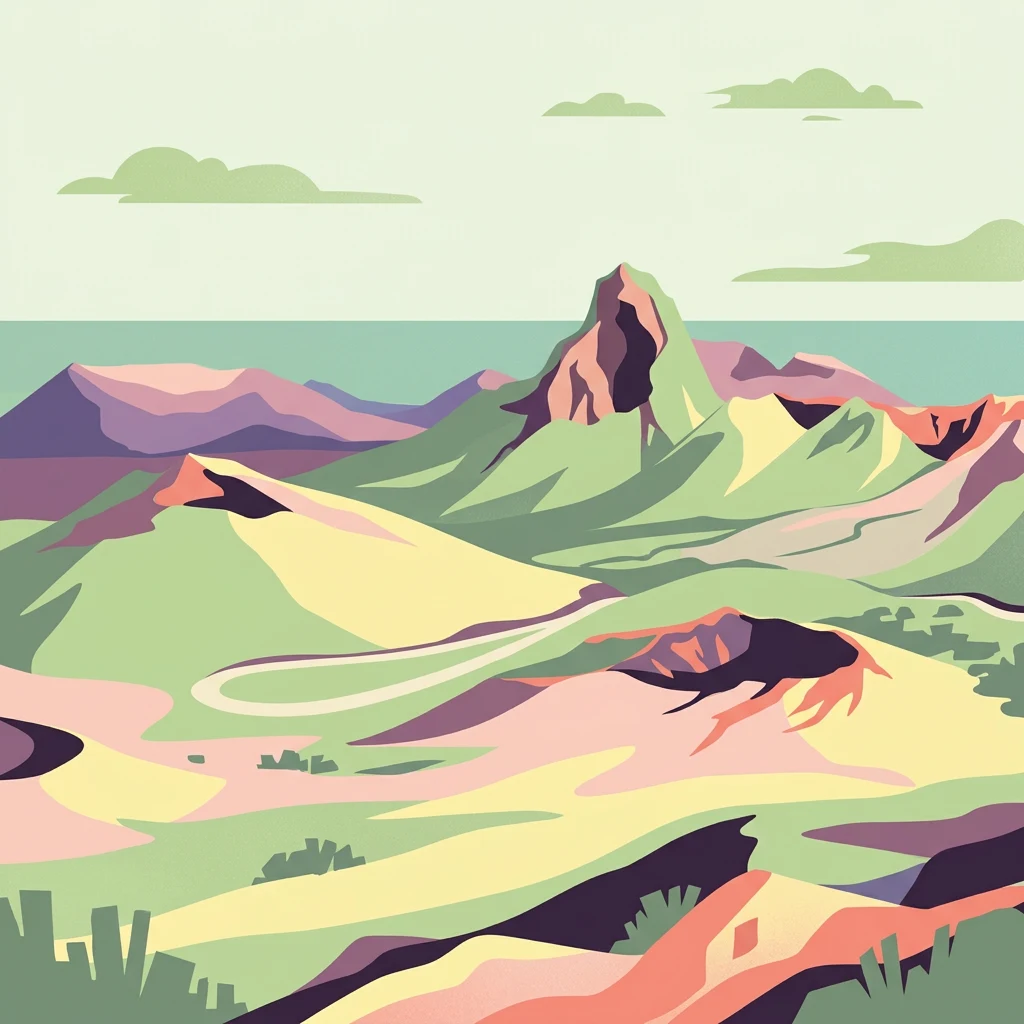
Illustration showing volcanic mountains, valleys, winding road, and ocean

Timanfaya National Park

National park

Park overview

Structured park overview, official facts, and landscape profile for Timanfaya National Park

Timanfaya National Park park facts, protected area profile, and essential visitor context
Review the core facts for Timanfaya National Park, including designation, size, terrain, visitor scale, habitats, and operating context in one park-focused overview.

About Timanfaya National Park

Timanfaya National Park represents a rare opportunity to experience a volcanic landscape in its raw, almost primordial state. The park occupies the heart of the volcanic zone that dominates southwestern Lanzarote, an island formed through millions of years of volcanic activity in the Atlantic Ocean. Unlike most national parks that protect biological ecosystems, Timanfaya's primary significance lies in its geological importance—it is uniquely the only national park in Spain designated entirely for its geological values. The landscape tells a powerful story of destruction and transformation. Between 1730 and 1736, a catastrophic series of eruptions forever changed the face of this part of Lanzarote, burying entire villages beneath layers of lava and volcanic ash. The volcanic activity continued periodically until 1824, leaving behind a terrain that remains geologically active today. The park protects not only the visible volcanic formations but also the geothermal phenomena that continue beneath the surface, where temperatures at depths of just 13 meters can reach 600 degrees Celsius. This combination of recent volcanic history, ongoing geothermal activity, and dramatic scenery makes Timanfaya one of the most distinctive protected areas in Europe.

Quick facts and research context for Timanfaya National Park

Timanfaya National Park is located on the island of Lanzarote in the Atlantic Ocean, forming part of the Canary Islands archipelago off the west coast of Africa but administered by Spain. The park covers 51.07 square kilometers across the municipalities of Tinajo and Yaiza in the island's southwestern interior. It was established on August 9, 1974, as the third national park in the Canary Islands and the first in the province of Las Palmas. The park features over 25 volcanic cones, with Montañas del Fuego (Mountains of Fire) being the most emblematic, reaching a maximum elevation of 540 meters. The park is designated as a UNESCO Biosphere Reserve core area and holds additional protection as a ZEPA (Special Protection Area for Birds) and ZEC (Special Area of Conservation). The iconic El Diablo sculpture by artist César Manrique serves as the park's official symbol.

Park context

Deeper park guide and search-rich context for Timanfaya National Park

Timanfaya National Park history, landscape, wildlife, and travel context
Explore Timanfaya National Park through its history, landscape character, ecosystems, wildlife, conservation priorities, cultural context, and seasonal travel timing in a structured park guide built for atlas discovery and search intent.

Why Timanfaya National Park stands out

Timanfaya is best known for its extraordinary volcanic landscape, a vast expanse of craters, lava fields, volcanic cones, and solidified lava flows that create one of Europe's most visually striking protected areas. The park preserves the Montañas del Fuego, a dramatic volcanic complex where the earth's heat remains so intense that visitors can witness steam geysers created by pouring water into shallow boreholes. This living volcanic environment, where eruptions occurred as recently as 1824, provides an unparalleled natural laboratory for understanding volcanic processes. The contrast between the stark black and red volcanic terrain and the surrounding Lanzarote landscape creates a visually dramatic scene that has become iconic to the Canary Islands.
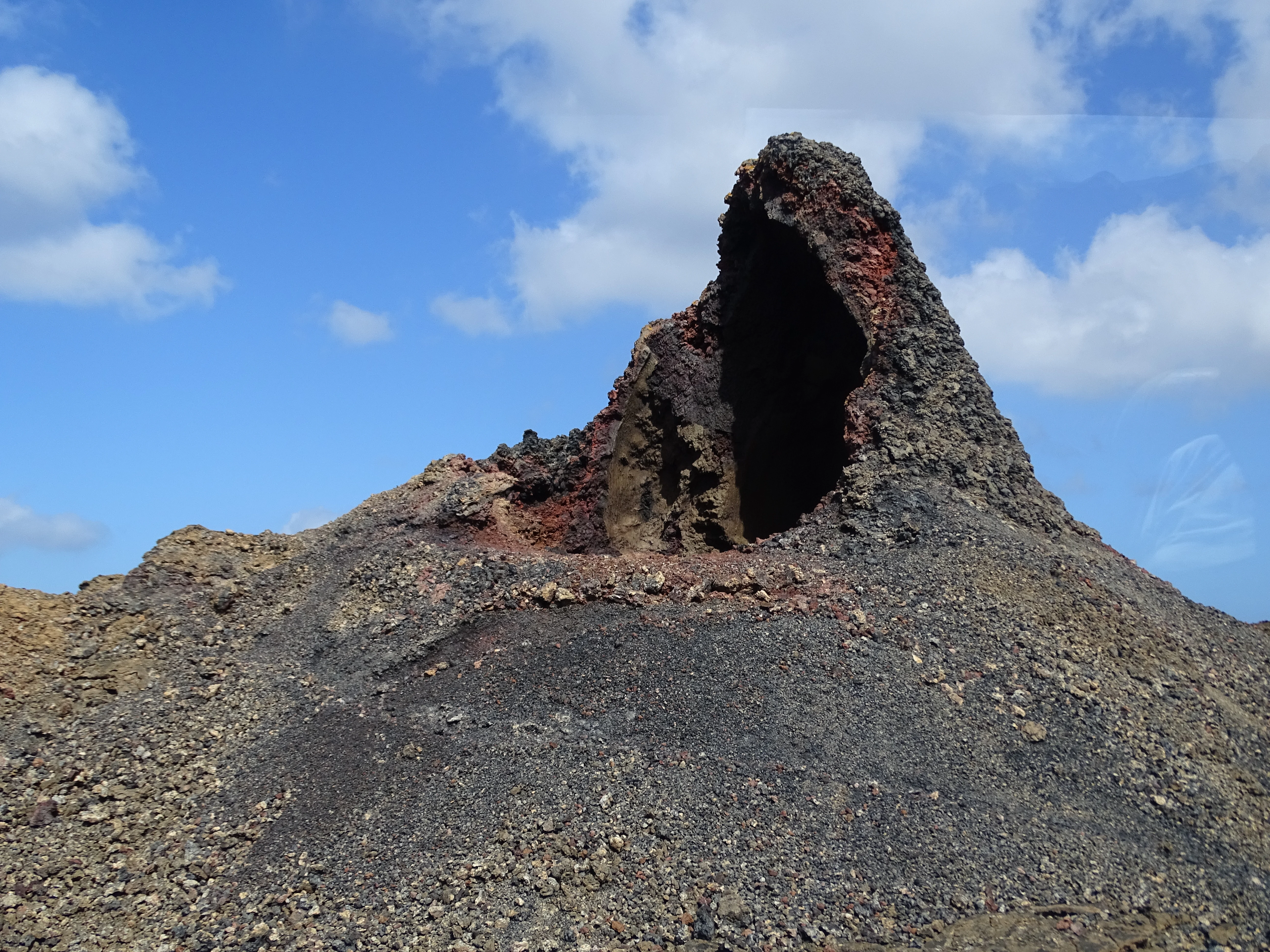
A rocky volcanic cone with a dark crater opening under a blue sky with scattered clouds
Volcanic cone with dark crater opening under clear blue sky in Timanfaya National Park

Timanfaya National Park history and protected-area timeline

Timanfaya's history is fundamentally the story of volcanic destruction and eventual preservation. The most transformative period began on September 1, 1730, when the earth erupted near the village of Yaiza, initiating what would become one of the longest documented volcanic eruptions in European history. Over the next six years, until April 16, 1736, volcanic activity continuously reshaped the southwestern landscape of Lanzarote. Nine villages—Tingafa, Mancha Blanca, Las Maretas, Santa Catalina, Jaretas, San Juan, Peña de Plomos, Testeina, and Rodeos—were entirely buried beneath volcanic flows. A quarter of the island became covered in lava, and ashfall devastated agricultural lands throughout the region. The human cost was catastrophic, with famines forcing mass emigration from the island. Volcanic activity returned briefly in 1824 with eruptions at Tinguatón, Tao, and Montaña del Fuego. Following these events, the landscape was left largely untouched, gradually gaining recognition for its extraordinary geological value. The park was officially established on August 9, 1974, through decree, making it the third national park in the Canary Islands and the first in what is now Las Palmas province. The designation recognized not just the geological significance but also the need to protect the delicate plant and animal life that had begun to colonize this harsh volcanic substrate.

Timanfaya National Park landscape and geographic character

The landscape of Timanfaya National Park is a dramatic tableau of volcanic destruction frozen in time. The terrain is dominated by extensive lava fields, some appearing almost black while others display distinctive red and brown hues from iron oxidation. More than 25 volcanic cones rise from this lunar-like expanse, including the iconic Montañas del Fuego, Montaña Rajada with its split crater, and the Caldera del Corazoncillo. The volcanic formations exhibit remarkable variety—from steep-sided pyroclastic cones to gentle slopes of solidified lava flows, from crater rims to the unusual geological phenomenon of the Islote de Halcones, an older volcanic vent that predates the historical eruptions and stands as an island of older rock surrounded by younger lava flows. The maximum elevation reaches 530-540 meters, providing subtle but perceptible topographic variation across the park. The absence of permanent water bodies or significant vegetation in most areas emphasizes the raw geological character, though the volcanic colors—ranging from near-black through browns, oranges, and deep reds—create a visually stunning landscape particularly striking at sunrise and sunset when the low sun angles accentuate the relief and color variations.
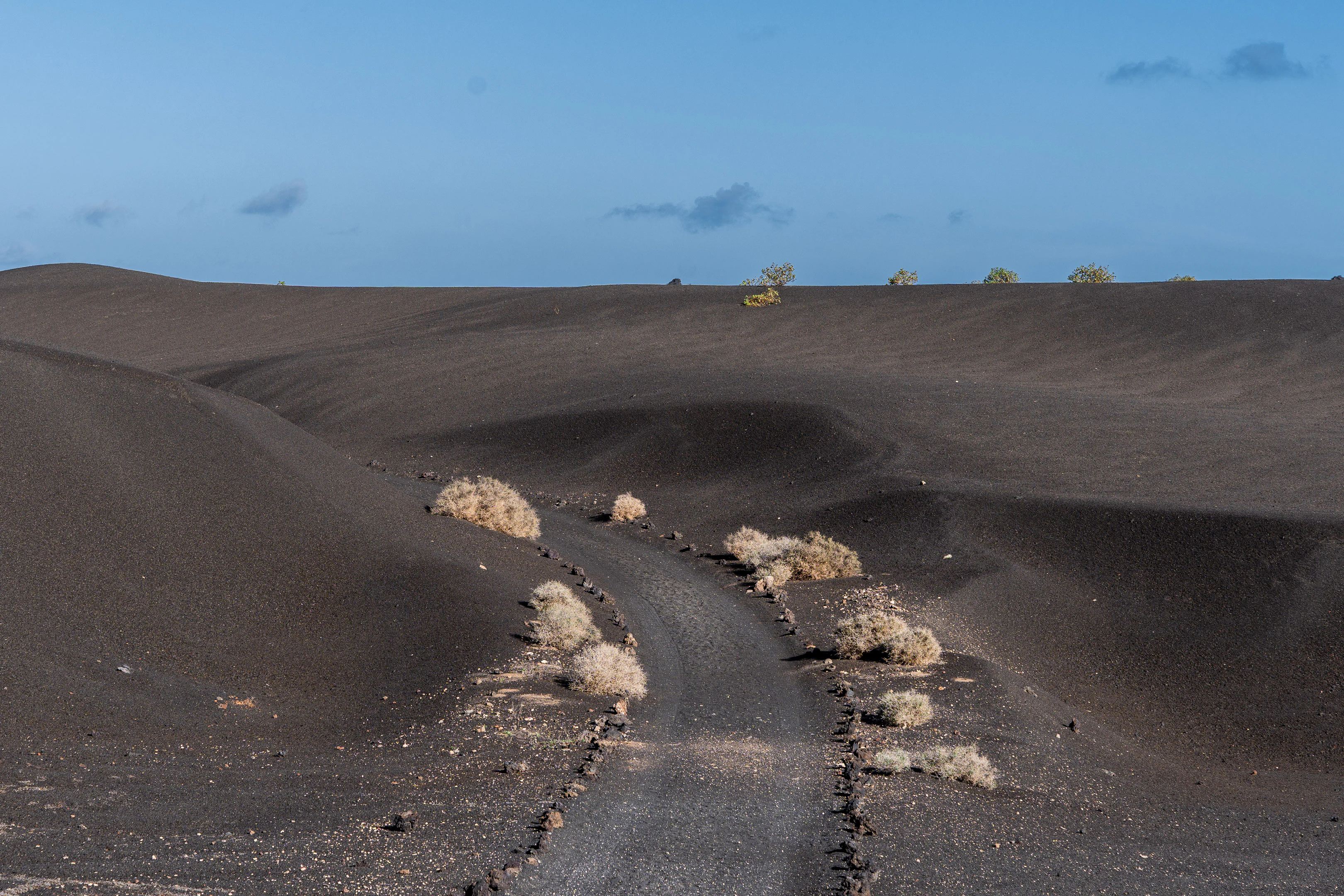
A dirt trail winding through a volcanic desert landscape with sparse vegetation under a clear blue sky
Tremesana trail in Timanfaya National Park

Timanfaya National Park ecosystems, habitats, and plant life

Despite the harsh volcanic environment, Timanfaya supports a remarkable array of life that has colonized this apparently barren landscape. The park lies within the broader Canary Islands dry subtropical forest ecosystem, though the specific volcanic substrate creates unique conditions for specialized species. The vegetation that does manage to establish itself on the volcanic soils is predominantly xerophytic—drought-adapted plants that can survive with minimal moisture. The lapilli (volcanic lapilli—small porous rock fragments) that covers much of the landscape plays a crucial ecological role by capturing moisture from the prevailing trade winds (alisios winds), allowing plants to survive the otherwise arid conditions. Native plant species have developed specialized adaptations to thrive in this environment, with some areas showing surprisingly dense plant cover given the conditions. The park forms part of a larger network of protected areas in Lanzarote, recognized as a UNESCO Biosphere Reserve since 1993, where the national park serves as one of the core conservation areas.
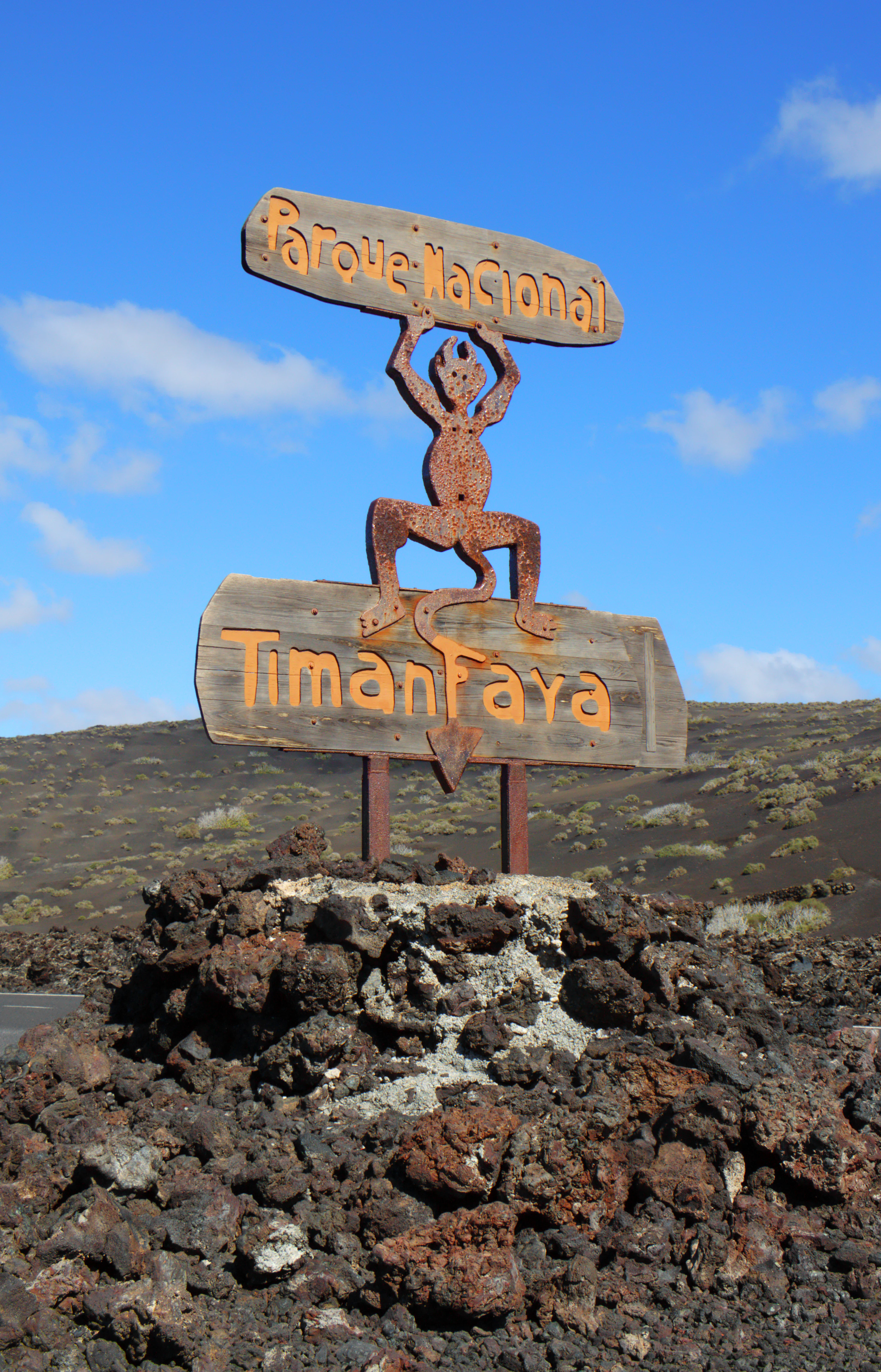
Wooden entrance sign for Timanfaya National Park with 'Parque Nacional' and 'Timanfaya' text, supported by a rusted metal sculpture of a figure holding the top sign, set against rocky volcanic terrain under a clear blue sky.
Timanfaya National Park entrance sign featuring the 'El Diablo' sculpture by César Manrique against a volcanic landscape.

Timanfaya National Park wildlife and species highlights

The wildlife of Timanfaya reflects the harsh but strategically important position of this volcanic landscape within the Canary Islands. The park provides critical habitat for bird species, particularly birds of prey that use the volcanic cones for nesting and hunting. The open lava fields and volcanic slopes support a specialized avifauna adapted to arid environments. The designation as a ZEPA (Special Protection Area for Birds) reflects the importance of the area for species conservation at the European level. Among the notable bird species present are various raptors that nest in the cliff faces and volcanic craters, as well as smaller bird species that have adapted to the scrub and open terrain. Invertebrates, particularly insects, represent the most diverse group of animals in the park, having colonized the volcanic terrain and adapted to the extreme conditions. The isolated nature of Lanzarote within the Atlantic also means that the park contributes to the conservation of species found nowhere else on Earth.
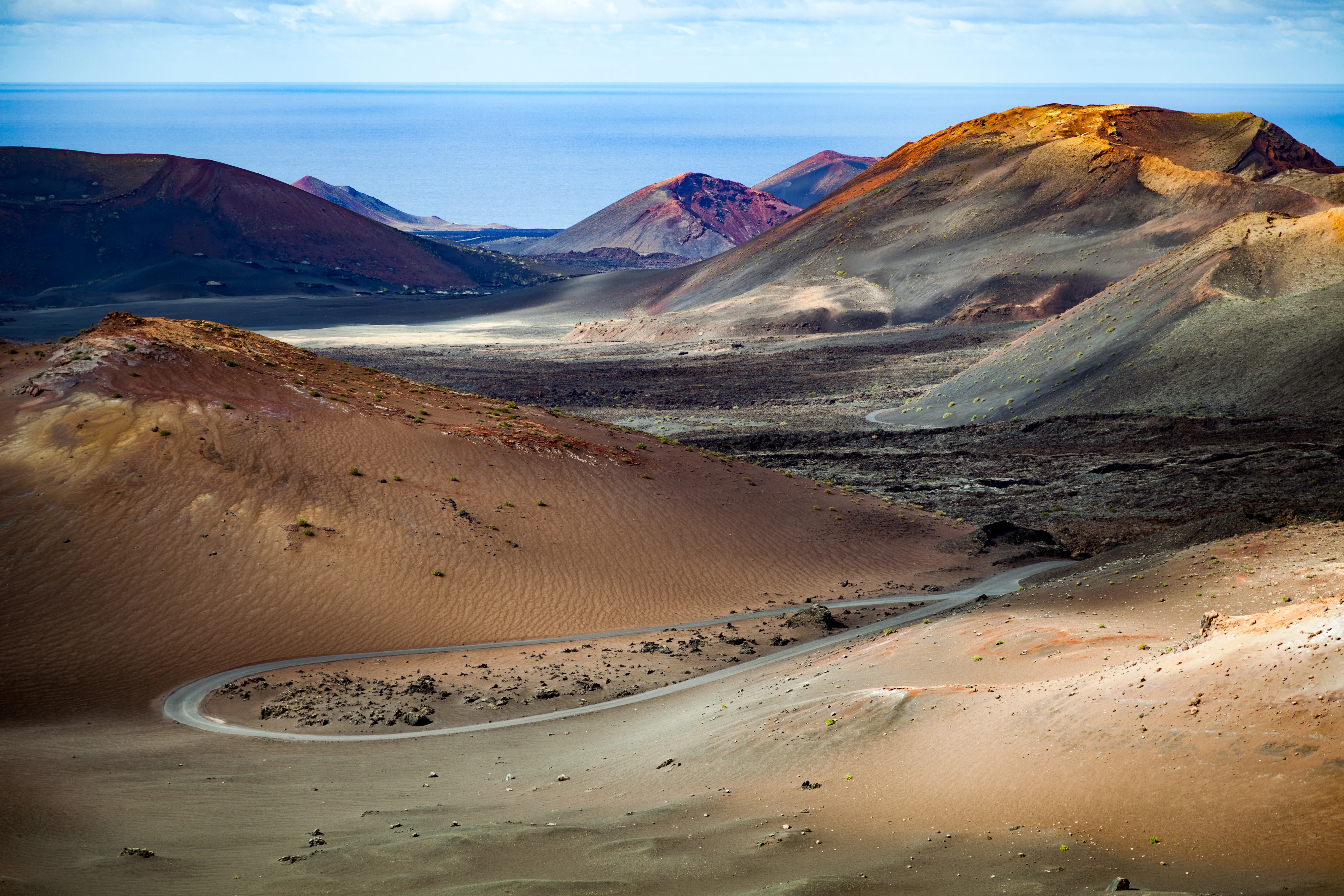
Wide scenic view of Timanfaya National Park showing volcanic hills with earth-toned slopes, a winding road through barren terrain, and distant mountains under a clear sky
Volcanic hills and winding road in Timanfaya National Park, Lanzarote, Spain

Timanfaya National Park conservation status and protection priorities

Timanfaya National Park represents a unique conservation model in Spain, being the only national park designated entirely for geological values. This distinction reflects both the extraordinary volcanic landscape and the ongoing geothermal activity that makes the area significant for scientific understanding. The park is nested within the larger UNESCO Biosphere Reserve that encompasses all of Lanzarote, designated in 1993, creating a layered approach to conservation that protects both the core volcanic area and the surrounding landscape. Beyond national park status, Timanfaya holds additional protection as a ZEPA (Special Protection Area for Birds) and ZEC (Special Area of Conservation), fulfilling the European Union's Natura 2000 requirements. Within the park, specific zones receive additional protection as natural monuments—the Islote de Halcones and the Montañas del Fuego—both recognized for their exceptional geological values. Access is strictly regulated to protect the delicate volcanic environment and the species that have colonized it, with visitors confined to designated viewing areas and only two walking trails available by special authorization with a guide.

Timanfaya National Park cultural meaning and human context

Timanfaya holds deep significance in the cultural memory of Lanzarote, representing both destruction and resilience. The volcanic eruptions of 1730-1736 buried nine villages and fundamentally altered the island's economy and population distribution. The memory of this catastrophe remains embedded in local oral traditions and historical accounts, including the detailed testimony of parish priest Lorenzo Curbelo who documented the initial eruption. Following the destruction, Lanzarote's population developed remarkable agricultural adaptations to survive in the volcanic landscape, including sophisticated techniques for cultivating crops on volcanic lapilli that capture moisture from the air. These techniques allowed agricultural recovery and remain visible in the landscape surrounding the park. The park also represents the intersection between natural phenomena and artistic interpretation—César Manrique, the celebrated Canarian artist and architect, created the iconic El Diablo sculpture that serves as the park's symbol, capturing the dramatic spirit of volcanic forces in a form that has become instantly recognizable across the islands.
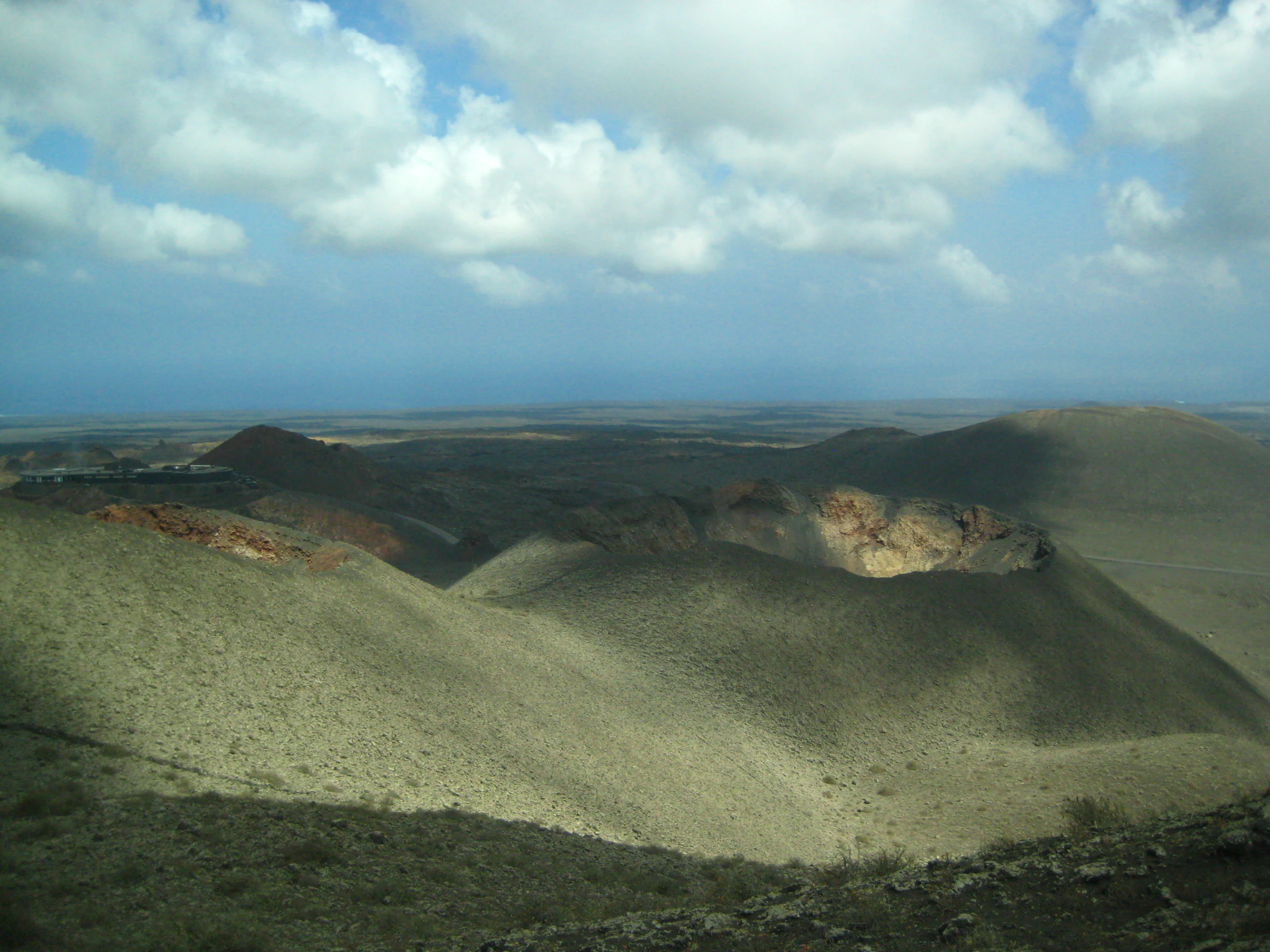
A wide landscape view of Timanfaya National Park showing volcanic hills, a crater, and open terrain under a partly cloudy sky
Volcanic landscape of Timanfaya National Park with crater and rolling hills

Top sights and standout views in Timanfaya National Park

Timanfaya offers visitors one of Europe's most visually dramatic volcanic landscapes, where the raw power of geological forces remains tangibly present. The Montañas del Fuego area provides the park's most iconic scenery, with its cluster of volcanic cones and ongoing geothermal activity. Visitors can witness the unique demonstration of volcanic heat where water poured into ground holes creates dramatic steam eruptions—a living illustration of the geothermal energy still present beneath the surface. The El Diablo sculpture by César Manrique stands as both an artistic landmark and a symbol representing the park's identity. The park's status as Spain's only entirely geological national park makes it a unique conservation achievement, protecting not just scenery but an entire volcanic system. The dramatic contrast between the black and red volcanic terrain and the surrounding island landscape creates photographic opportunities that have made this one of the most photographed locations in the Canary Islands.
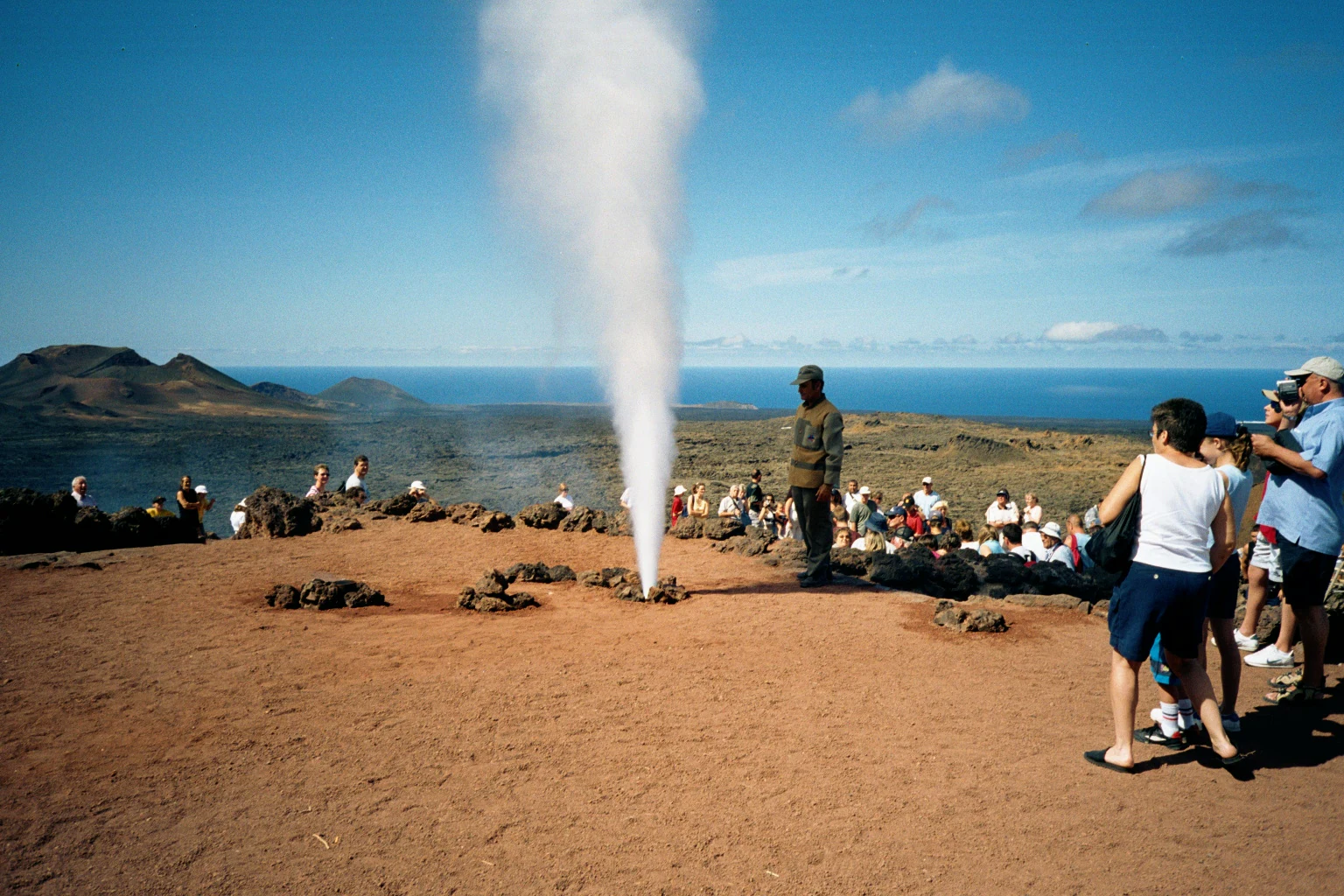
Group of tourists watching steam erupt from the ground in a volcanic landscape with ocean view
Tourists observe a steam geyser eruption at Timanfaya National Park

Best time to visit Timanfaya National Park

Timanfaya can be visited year-round, with each season offering a different perspective on this volcanic landscape. The summer months (June through September) bring the highest temperatures and strongest sunlight, which can make the volcanic colors particularly vivid but also make extended outdoor activities uncomfortable. Winter months (December through March) offer milder temperatures and often clearer atmospheric conditions, making it ideal for photography and walking. The shoulder seasons of spring and autumn provide a balance between comfortable temperatures and good light. Because the park's appeal is primarily geological and visual rather than biological, seasonal changes in vegetation are minimal, maintaining the stark volcanic character throughout the year. Early morning visits offer the best light for photography and the most comfortable conditions for viewing, while later in the day the interpretative center and facilities provide shade and information. The park's strict access controls and limited public areas mean that visits are consistently managed regardless of when you arrive.
Park location guide

Geography guide, regional context, and park location map for Timanfaya National Park

Timanfaya National Park park geography, regions, and map view in Spain
Understand where Timanfaya National Park sits in Spain through a broader geographic reading of the surrounding landscape, nearby location context, and its mapped position within the national park landscape.

How Timanfaya National Park fits into Spain

Spain, officially the Kingdom of Spain, is a unitary parliamentary constitutional monarchy located in Southern and Western Europe. The country occupies most of the Iberian Peninsula and includes territories in the Mediterranean and Atlantic. With a population of approximately 49.6 million and an area of 506,030 km², Spain is a major European economy and cultural force. Its capital is Madrid, and the country is known for its diverse landscapes ranging from mountainous regions to coastal areas.

Wider geography shaping Timanfaya National Park in Spain

Spain occupies the Iberian Peninsula in Southern and Western Europe. Peninsular Spain is bordered to the north by France, Andorra, and the Bay of Biscay; to the east and south by the Mediterranean Sea and Gibraltar; and to the west by Portugal and the Atlantic Ocean. The territory includes the Canary Islands in the Atlantic Ocean, the Balearic Islands in the Mediterranean Sea, and the autonomous cities of Ceuta and Melilla in mainland Africa. Spain features diverse terrain including the Pyrenees in the northeast, the Sierra Nevada in the south, and the Meseta Central plateau.

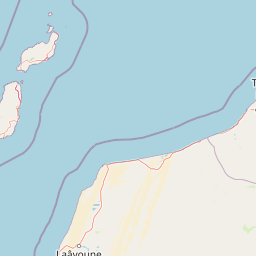
Map view of Timanfaya National Park

Use this park location map to pinpoint Timanfaya National Park in Spain, understand its exact geographic position, and read its mapped placement within the surrounding landscape more clearly.

Pigeon | © OpenStreetMap contributors

Location context for Timanfaya National Park

Canary Islands

Visualize the dramatic volcanic terrain, unique protected-area features, and stark beauty of Lanzarote's iconic national park.

Discover Timanfaya National Park Through Photos: Volcanic Landscapes and Striking Geological Scenery
Explore an extensive collection of imagery showcasing Timanfaya National Park's unique volcanic landscape, featuring vast lava fields, dramatic cones, and geothermally active terrain. These visual resources offer crucial insights into the park's geological character and its protected environment, enhancing a user's understanding of its unparalleled conservation value.

A rocky volcanic cone with a dark crater opening under a blue sky with scattered clouds

Wide landscape view of Timanfaya National Park showing red and brown volcanic hills, a winding road, and the ocean under a clear blue sky

A dirt trail winding through a volcanic desert landscape with sparse vegetation under a clear blue sky

Wooden entrance sign for Timanfaya National Park with 'Parque Nacional' and 'Timanfaya' text, supported by a rusted metal sculpture of a figure holding the top sign, set against rocky volcanic terrain under a clear blue sky.

Wide scenic view of Timanfaya National Park showing volcanic hills with earth-toned slopes, a winding road through barren terrain, and distant mountains under a clear sky

A volcanic landscape with rocky terrain, rolling hills, and mountains under a cloudy sky

A wide landscape view of Timanfaya National Park showing volcanic hills, a crater, and open terrain under a partly cloudy sky

Group of tourists watching steam erupt from the ground in a volcanic landscape with ocean view

Volcanic cone with crater-like depression surrounded by rocky terrain in varying shades of brown and gray.

Park atlas

Compare unique volcanic landscapes and Atlantic island protected areas across the Canary archipelago

Explore Nearby National Parks and Protected Areas Beyond Timanfaya National Park, Lanzarote
Browse an atlas of national parks and other protected areas found across the Canary Islands, including volcanic terrain, coastal reserves, and diverse island ecosystems, extending beyond Timanfaya National Park. Trace the geographic spread of distinct protected landscapes and compare their conservation focus within the broader Macaronesian region, gaining valuable regional context for your park discovery.
Watercolor illustration of a mountainous landscape with green and purple hues, featuring rolling hills, distant mountains, and a light sky.
National parkTenerife

Teide National Park: Spain's Highest Peak and Distinctive Volcanic Landscape

Explore protected volcanic terrain and mapped geography on Tenerife.

Teide National Park protects the highest point in Spain, Mount Teide, within a spectacular caldera and surrounding volcanic terrain on Tenerife. This national park offers a unique landscape for geographic discovery, showcasing dramatic lava flows, volcanic cones, and endemic flora. Its protected boundaries define a significant area of natural interest, making it a key landmark for atlas exploration of island geography and protected lands.

Area
189.9 km²
Established
1954
IUCN
II
Visitors
4.5M annual
National park

Garajonay National Park: Ancient Laurisilva Forest and Volcanic Landscapes

Explore Spain's unique protected area with rich geographic context.

Garajonay National Park, a treasure of La Gomera, preserves one of the last stands of Europe's ancient laurisilva forest atop dramatic volcanic terrain. This national park offers a rare opportunity to explore a landscape shaped by persistent cloud cover and unique island evolution. Examine the park's mapped boundaries and distinctive natural features through its detailed geographic profile.

Area
40 km²
Established
1981
IUCN
II
Visitors
450K annual
Watercolor illustration showing a mountainous landscape with green forests, a winding river, and distant hills
National parkLa Palma

Caldera de Taburiente National Park: A Volcanic Caldera Landscape on La Palma

Explore protected boundaries and unique mapped terrain.

Delve into Caldera de Taburiente National Park, a protected area defined by its immense volcanic caldera on the island of La Palma. This page serves as a geographic anchor for understanding the park's dramatic cliffs, ravine systems, and endemic forests. Utilize MoriAtlas to explore its mapped landscape, analyze its protected boundaries, and grasp its significance within the broader atlas of Spain's natural territories, focusing on its extraordinary geological formations and volcanic terrain.

Area
46.9 km²
Established
1954
IUCN
II
Visitors
389K annual
Protected landscapeAlgarve

Ria Formosa Natural Park Protected Landscape: Algarve Regional Geography

Explore mapped protected landscapes and regional geographic context.

Examine Ria Formosa Natural Park, a protected landscape that defines a significant portion of the Algarve's natural heritage. This atlas-focused exploration details the park's geographic features, its protected status, and its position within the wider regional geography. Understand the mapped extent of this protected landscape and its contribution to the natural context of southern Portugal.

Area
179.01 km²
Established
1978
IUCN
V
Relief
Lowland
Protected landscapeAlentejo Litoral

Southwest Alentejo and Vicentine Coast Natural Park: A Protected Landscape in Alentejo Litoral

Explore its mapped boundaries and regional geographic context.

This detail page offers a deep dive into the Southwest Alentejo and Vicentine Coast Natural Park, a protected landscape situated in Portugal's Alentejo Litoral region. Understand the park's identity as a protected area through its geographic features and mapped extent. MoriAtlas facilitates a structured understanding of this natural landscape, enabling focused discovery of its protected boundaries and regional geographical significance.

Area
895.7 km²
Established
1988
IUCN
V
Visitors
12.7K annual
Watercolor illustration showing a river flowing through a valley with hills and vegetation
Protected landscapeBeja District

Guadiana Valley Natural Park: Protected Landscape Discovery in Beja District

Explore its mapped geography and protected land context.

Guadiana Valley Natural Park is identified as a protected landscape, providing a specific focus for geographic study and map-based exploration. This entry details the park's unique protected-area status and its contextual placement within the expansive Beja District of southern Portugal. Understand the mapped boundaries and landscape features that define this area, serving as a key point for regional geographic understanding on MoriAtlas.

Area
697 km²
Established
1995
IUCN
V
Visitors
749 annual
National parkHuelva

Doñana National Park National Park: Mapped Geography and Protected Landscape Context

Explore Huelva's key protected area and its regional geographic setting.

Delve into the structured geographic data and mapped boundaries of Doñana National Park. This entry highlights its identity as a national park within the Huelva region, providing essential context for understanding its protected landscape. MoriAtlas offers this detail to facilitate a clear, atlas-driven exploration of its natural terrain and its place in the broader geographic framework of Spain.

Area
543 km²
Established
1969
IUCN
II
Visitors
376.3K annual
Protected landscapePortugal

Arrábida Natural Park: Protected Landscape Atlas and Geographic Context in Portugal

Mapped boundaries of this key Portuguese protected area.

Arrábida Natural Park is presented here as a significant protected landscape, offering rich details for geographic exploration and atlas-based research. Users can investigate its specific mapped boundaries, understand its environmental setting within Portugal, and utilize this data for comparative analysis of protected areas. This resource focuses on the park's inherent geographic identity and its role as a defined natural landscape.

Area
176.41 km²
Established
1976
IUCN
V
Visitors
23.1K annual

Common questions about visiting, size, designation, and location context for Timanfaya National Park

Timanfaya National Park FAQs for park facts, access, geography, and protected area context
Find quick answers about Timanfaya National Park, including protected-area facts, park geography, trail and visitor context, and how the park fits into its surrounding country and regional landscape.
MoriAtlas Explorer

Continue Your Protected Areas Search Across the Global Atlas

Deepen your exploration by continuing the structured search for national parks and protected areas worldwide. Utilize the comprehensive filtering capabilities to compare different conservation landscapes and refine your understanding of global park geography. Discover more about the distribution and characteristics of protected natural areas.

Global natural geography