Why Wadden Sea National Park stands out
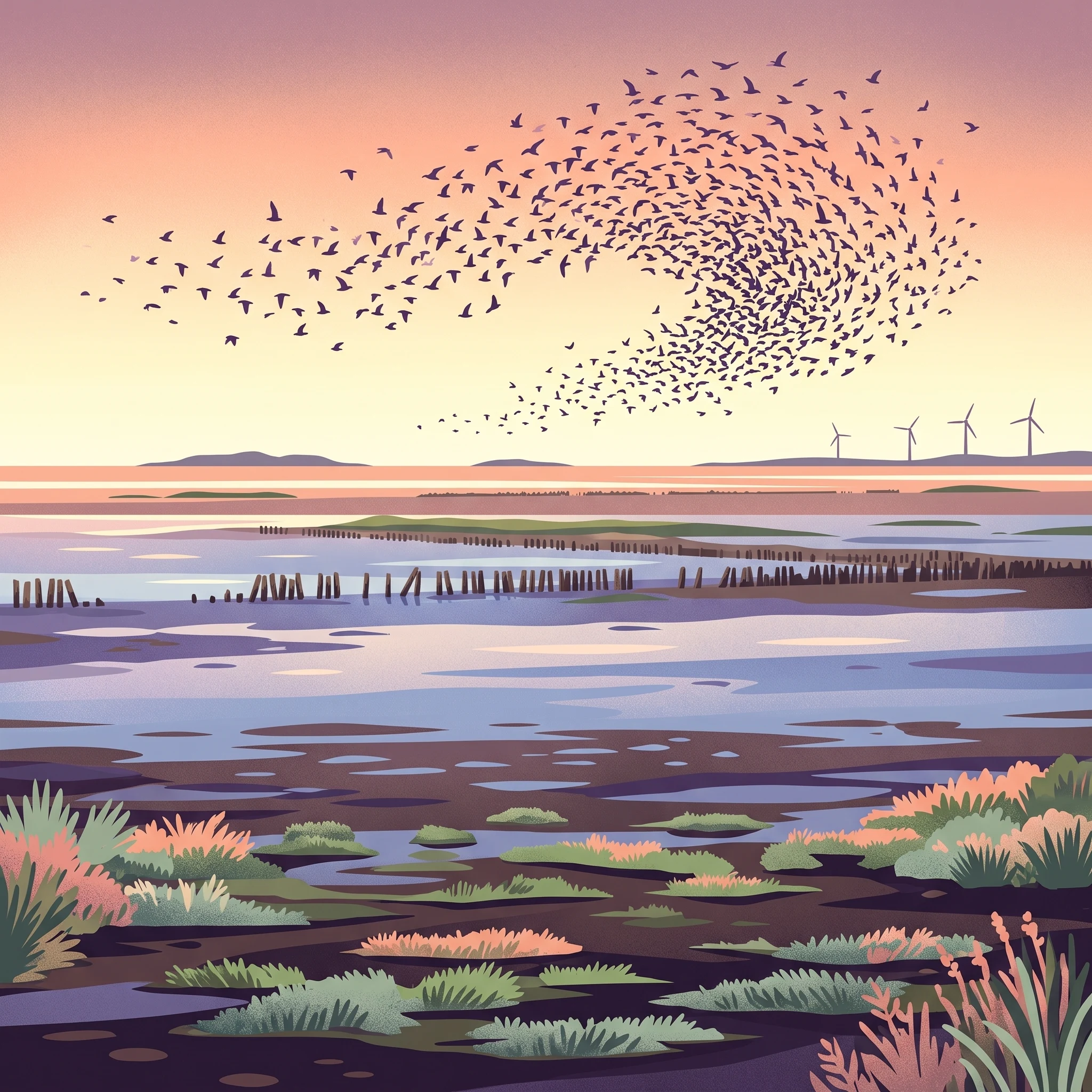
Wadden Sea National Park is most renowned for its extraordinary significance as a migratory bird sanctuary. Each year, more than ten million birds pass through the Wadden Sea twice annually, using it as a crucial resting and feeding ground during their journeys between breeding and wintering areas. The park is famous for the spectacular 'sort sol' phenomenon, where massive flocks of European starlings gather in formation during autumn evenings, creating swirling aerial displays as they settle for the night in the marshlands. The ecosystem supports an exceptional diversity of life, with more than 500 species of plants and animals, including significant populations of breeding birds, fish, marine invertebrates such as starfish and blue mussels, and marine mammals.
Wadden Sea National Park history and protected-area timeline
The formal establishment of Wadden Sea National Park represents the culmination of decades of conservation effort and growing recognition of the Wadden Sea's international importance. The Danish government designated the area as a national park on 17 January 2008, with the official inauguration taking place on 16 October 2010 in the historic town of Ribe, attended by Prince Joachim of Denmark and Environment Minister Karen Ellemann. However, the protection of this area has deeper roots in Denmark's environmental policy. The Wadden Sea had already achieved international recognition as a Ramsar wetland site in 1987, establishing it as a wetland of international importance under the Ramsar Convention. The process of pursuing World Heritage status began in 2012 when then-Environment Minister Ida Auken and the municipalities of Varde, Fanø, and Esbjerg submitted a request to the Ministry of Culture for the Danish Wadden Sea to be nominated for UNESCO recognition. The formal application was submitted by Culture Minister Marianne Jelved in February 2013, and in June 2014, the Danish portion of the Wadden Sea was inscribed on the UNESCO World Heritage List as an extension of the existing German and Dutch Wadden Sea World Heritage site, creating a transboundary protected area spanning three nations.
Wadden Sea National Park landscape and geographic character
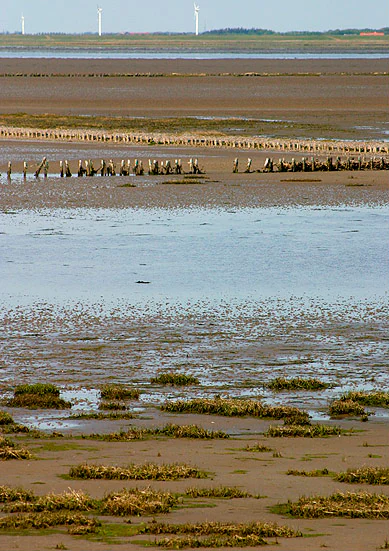
The landscape of Wadden Sea National Park is defined by the interplay of tidal forces, river systems, and coastal processes that have shaped this low-lying coastal region over millennia. The park encompasses a complex mosaic of habitats including expansive tidal flats that are exposed twice daily as the North Sea withdraws, leaving behind vast stretches of mud and sand interspersed with intricate networks of tidal channels that drain the exposed seabed. The coastline features a distinctive chain of barrier islands that act as natural barriers against North Sea storms, with the islands of Fanø, Mandø, and Rømø each presenting their own characteristic landscapes of dunes, beach meadows, and heath. The mainland coast is characterized by extensive salt marshes and reclaimed marshlands, with the Tjæreborgmarsken, Ribemarsken, Margrethekogen, and the outer dikes of Tøndermarsken representing areas where human engineering has worked alongside natural processes to create productive agricultural land while maintaining ecological connections to the surrounding tidal systems. The Skallingen peninsula and Varde Å valley add topographical variety to the otherwise flat coastal plain, while scattered dunes and sandplains provide microhabitats for specialized plant communities adapted to this harsh coastal environment.
Wadden Sea National Park ecosystems, habitats, and plant life
The ecological character of Wadden Sea National Park is defined by its position as a dynamic intertidal ecosystem where marine and terrestrial habitats meet and overlap in a complex zonation pattern driven by tidal exposure and salinity gradients. The tidal flats support dense populations of invertebrates including worms, clams, and crustaceans that form the base of a food web supporting enormous concentrations of birds and fish. The salt marshes and beach meadows provide specialized habitat for plants adapted to regular flooding and high soil salinity, while the dune systems host distinct communities of sand-tolerant species. The park's significance extends far beyond its immediate boundaries as a critical node in the East Atlantic Flyway, the major migratory route used by wading birds, waterfowl, and seabirds traveling between Arctic breeding grounds and African wintering areas. The sheltered tidal waters and extensive mudflats provide ideal feeding conditions for staging birds, allowing them to build the fat reserves needed to complete their often remarkable transcontinental journeys.
Wadden Sea National Park wildlife and species highlights
Wadden Sea National Park supports an extraordinary diversity of wildlife, with more than 500 species of plants and animals documented within its boundaries. The park's international reputation rests primarily on its significance as a migratory bird sanctuary, hosting millions of birds during the spring and autumn passage periods. The spectacular 'sort sol' phenomenon draws particular attention, with large flocks of European starlings gathering in autumn to perform their characteristic swirling aerial displays before settling into the marsh vegetation for the night. Beyond the starlings, the park supports important populations of breeding birds including numerous species of waders, terns, and waterfowl that nest in the salt marshes and on the islands. The tidal waters and channels support diverse fish communities, while the mudflats and rocky substrates provide habitat for invertebrates including starfish and the commercially important blue mussel. The ecosystem also supports marine mammals including seals that haul out on sandbanks and islands throughout the area.
Wadden Sea National Park conservation status and protection priorities
The conservation significance of Wadden Sea National Park is recognized at multiple levels, from national Danish environmental policy to international agreements and designations. Approximately 97 percent of the national park is included within the Natura 2000 network, Europe's ecological network of protected sites, divided among multiple designated areas including bird sanctuaries, wildlife sanctuaries, and Ramsar wetlands of international importance. The Ramsar designation, established in 1987, recognizes the Wadden Sea as a wetland of international importance particularly for waterbird habitat. The 2014 inscription on the UNESCO World Heritage List as part of the transboundary Wadden Sea World Heritage Site represents the highest level of international recognition, acknowledging the area's outstanding universal value as a dynamic coastal ecosystem that demonstrates ongoing natural processes and supports exceptional biodiversity. The park's management balances conservation objectives with sustainable use, with the official motivations emphasizing nature protection, cultural history preservation, outdoor activities, education and research, and international cooperation.
Wadden Sea National Park cultural meaning and human context
The Wadden Sea landscape has been shaped by centuries of human interaction, with the marshlands of southwestern Denmark representing areas where communities have developed specialized relationships with this challenging coastal environment. The islands of Fanø, Mandø, and Rømø each maintain distinct cultural identities connected to their maritime traditions and island isolation. The extensive system of dikes and drainage works that characterize the mainland marshlands represents generations of engineering effort to reclaim productive agricultural land from the tidal wetlands, creating the cultural landscape known as 'marsk' that remains a defining feature of the region. The historic town of Ribe, Denmark's oldest town, lies near the northern boundary of the park and has historical connections to the coastal environment that now falls within the protected area. This blend of natural and cultural landscape elements informed the national park's establishment, which explicitly includes cultural history preservation among its core objectives.
Top sights and standout views in Wadden Sea National Park
Wadden Sea National Park stands as Denmark's premier protected coastal wetland and one of Europe's most significant tidal ecosystems, earning international recognition through both Ramsar designation and UNESCO World Heritage status. The park's exceptional significance as a migratory bird sanctuary, hosting more than ten million birds during their seasonal passages, is unmatched in Denmark and ranks among the most important in the Wadden Sea region. The spectacular 'sort sol' starling murmuration represents one of nature's most impressive visual displays, drawing visitors from across Europe to witness the autumn aerial performances. The transboundary World Heritage status shared with Germany and the Netherlands underscores the need for international cooperation in managing this dynamic coastal system that respects no national boundaries.
Best time to visit Wadden Sea National Park
The Wadden Sea National Park offers distinctive experiences across seasons, though certain times of year offer particularly compelling reasons to visit. Autumn brings the famous 'sort sol' phenomenon as European starlings gather in vast flocks, creating spectacular aerial displays that are best observed during September and October when the birds are preparing for their southward migration. Spring migration, typically from March through May, offers excellent birdwatching opportunities as millions of birds pause to feed and rest in the mudflats during their journey northward to breeding grounds. The summer months provide opportunities to observe breeding seabirds and waders on the islands and salt marshes, though the experience is gentler than the dramatic seasonal concentrations. Winter offers a different character, with stark landscapes and the possibility of seeing seals hauled out on exposed sandbanks, though fewer visitors and shorter days limit exploration time. Regardless of season, the twice-daily tidal cycle fundamentally shapes the experience, with the exposed mudflats during low tide and the flooded channels at high tide presenting entirely different landscapes.