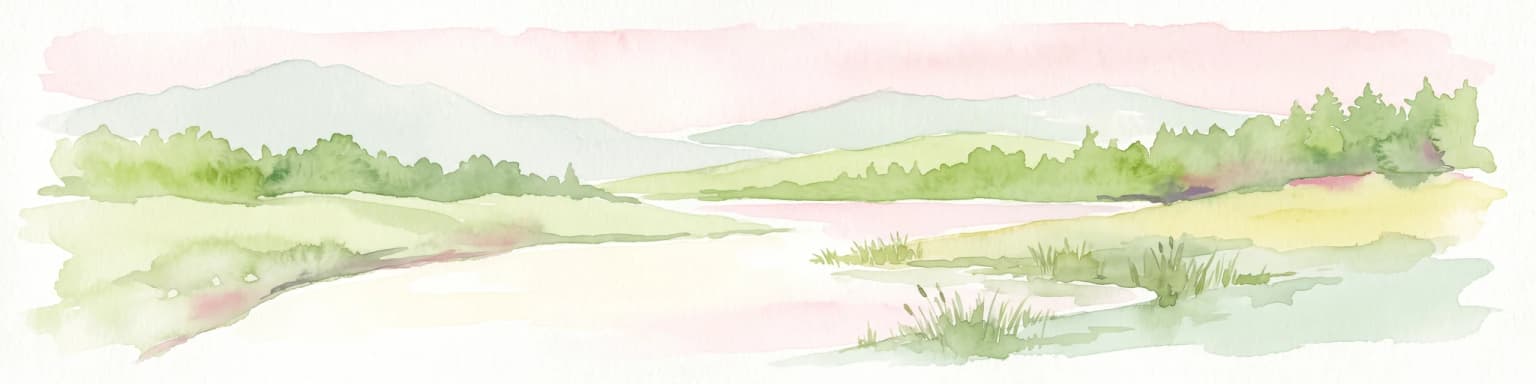
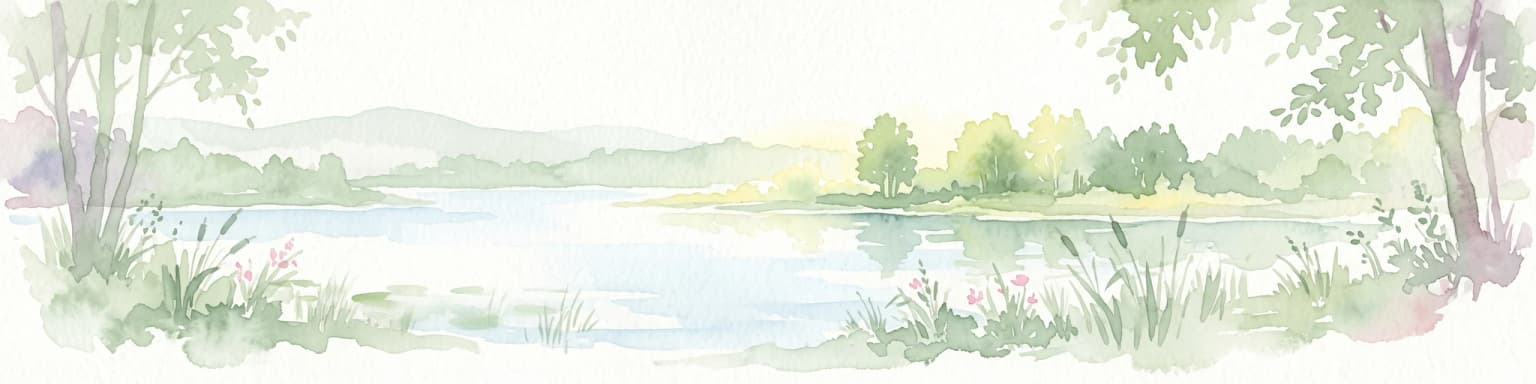
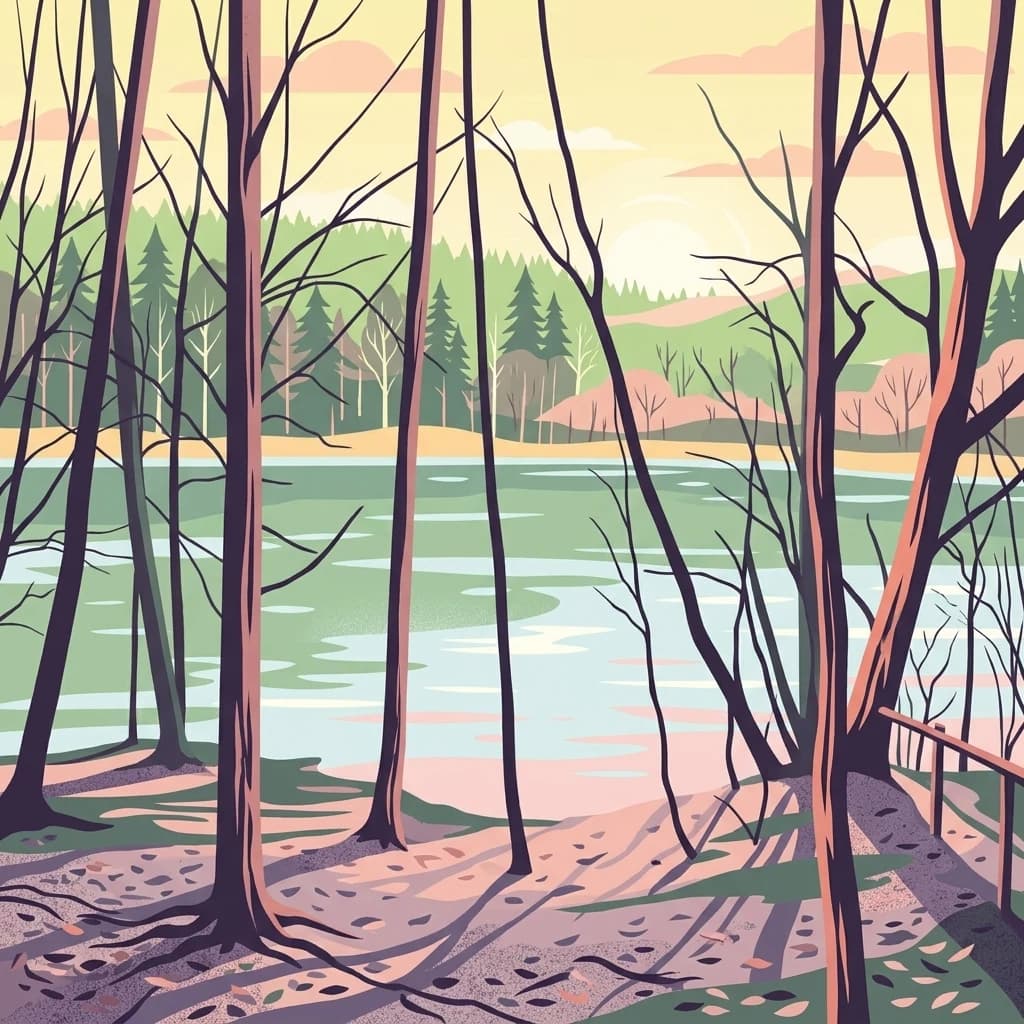
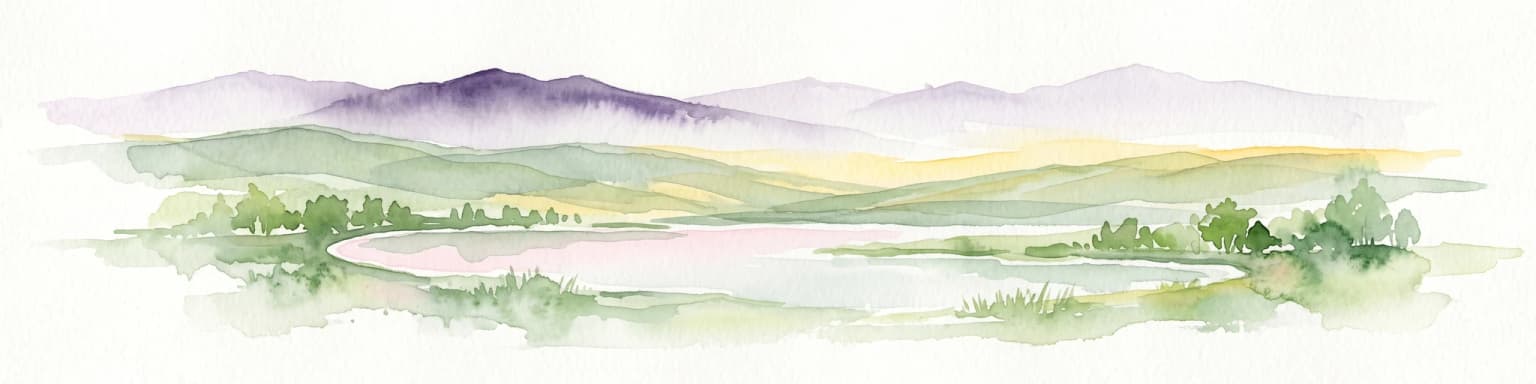
A protected lowland landscape of the Warta floodplain, ancient riparian forests, and rolling moraine hills in Wielkopolska.
Żerkowsko-Czeszewski Landscape Park
Żerkowsko-Czeszewski Landscape Park is a protected area in the Wielkopolska region of west-central Poland, established in 1994 along the flood-prone glacial valley of the Warta River and its tributary, the Lutynia. The park guards a striking combination of landforms: broad riverine flats dotted with old oxbows, steep moraine edges, and two prominent hills, Łysa Góra and Góra Żerkowska, that rise above the otherwise gentle lowland terrain.
The primary conservation focus is on exceptionally well-preserved deciduous forest communities, particularly ripian ash-elm floodplain forests and oak-hornbeam forests that in places take on an almost primeval character. Beyond its forests, the park shelters species-rich meadows, rare oxbow-lake plants, and a rich fauna dominated by birds, with the black stork as a recognized emblem of the protected landscape.
Cultural heritage is intimately woven into the protected area. The park contains the late 18th-century palace at Śmiełów, where Adam Mickiewicz stayed in 1831, the Gothic church of Dębno, and the neoclassical palace and park complex of the Miłłyński family in Miłosław, anchoring the landscape in a long history of human settlement, aristocratic estates, and pilgrimage routes.