Mori Atlas logo
Countries

Explore the mapped distribution and natural landscapes of Cambodia's protected lands.

Cambodia National Parks and Protected Areas: A Geographic Atlas Exploration

Explore the protected natural areas of Cambodia, from the central plains around the Mekong River and Tonlé Sap to the diverse terrain of the Cardamom Mountains. This atlas provides a structured view of Cambodia's national parks and protected landscapes, highlighting their geographic spread and relationship to the broader regional context of Southeast Asia.

Related tags

southeast asiacountrykhmer empireconstitutional monarchytropical climate
About

Explore Cambodia's diverse protected landscapes, mapping conservation efforts across the Mekong region.

Discover Cambodia's National Parks and Protected Areas on a Detailed Geographic Atlas
Browse Cambodia's national parks and designated protected areas, tracing their geographic distribution across the low-lying plains and Cardamom Mountains. A country-level view provides essential context for understanding the regional spread of conservation landscapes and navigating individual park details.

Cambodia is a unitary parliamentary constitutional elective monarchy in Southeast Asia. The country spans 181,035 km² and is characterized by a low-lying plain centered around the Mekong River and Tonlé Sap, Southeast Asia's largest lake. Its capital and largest city is Phnom Penh. The nation has a tropical climate and is home to a predominantly Khmer ethnic population. Cambodia has a history dating back to the Khmer Empire established in 802 AD.

Cambodia, officially the Kingdom of Cambodia, is a nation in Mainland Southeast Asia with a rich historical legacy spanning the powerful Khmer Empire, French colonial rule, and modern governance. The country is bordered by Thailand to the northwest, Laos to the north, Vietnam to the east, and has a southwestern coastline along the Gulf of Thailand. Cambodia's landscape is dominated by the Mekong River and Tonlé Sap lake, which form the heart of its agricultural and ecological systems. The nation transitioned through various political regimes in the late 20th century before restoring its monarchy in 1993. Today it operates as a constitutional monarchy with elected parliamentary institutions.

Largest city:Phnom Penh
Currency code:KHR
ISO code:KH
Parks count
13
Capital
Phnom Penh
Area
181,035 km²
Population
17,638,801 (2,024)

Coastal
Island
Mountainous
Landlocked
Park atlas13 parks

Trace the geographic spread of Cambodia's national parks, from tropical forests to coastal zones.

Cambodia National Parks: Explore Protected Areas and Conservation Landscapes
Browse an atlas of Cambodia's national parks and key protected areas, covering diverse landscapes from the Cardamom Mountains to coastal regions. Explore individual park details, understand the country's conservation efforts, and trace the geographic distribution of protected tropical forests and wetlands.
National parkSiem Reap Province

Phnom Kulen National Park: Protected Highland Landscape and Khmer Empire Origins in Siem Reap

Explore ancient Khmer sites and natural terrain within this Cambodian national park.

Phnom Kulen National Park offers a unique glimpse into Cambodia's geographic and historical richness. As a protected national park in Siem Reap Province, it preserves a distinct highland landscape characterized by sandstone formations, evergreen forests, and sacred sites. Discover the mapped boundaries of this important conservation area, trace the historical significance of the Khmer Empire's origins, and explore the natural terrain that defines this culturally significant region.

Area
373.76 km²
Established
1993
IUCN
II
Relief
Mountain
National parkKoh Kong province

Southern Cardamom National Park: A Vital Protected Landscape in Koh Kong Province

Explore its mapped boundaries and conservation significance.

Southern Cardamom National Park is a crucial protected area in southwestern Cambodia, encompassing a significant portion of the Cardamom Mountains. This national park serves as a vital atlas point for understanding the regional geography and conservation efforts in Southeast Asia. Its expansive territory is dedicated to safeguarding critical habitats and supporting ambitious wildlife programs, making it a cornerstone of landscape-level conservation and a key element in mapping the protected areas of the region.

Area
4,103.92 km²
Established
2016
IUCN
II
National parkRatanakiri province

Virachey National Park: Cambodia's Vast Highland Protected Landscape in Ratanakiri

Explore its remote montane forest ecosystems and diverse terrain.

Virachey National Park, Cambodia's largest national park, offers a profound glimpse into one of mainland Southeast Asia's last great wildernesses. Spanning remote highland terrain in Ratanakiri province, it features dramatic elevation changes from 400 to 1,500 meters, supporting diverse ecosystems including dense lowland forests, unique montane cloud forests, and upland savannahs. Its recognition as an ASEAN Heritage Park underscores its critical regional conservation value, making it a significant destination for understanding protected landscapes and their geographic context.

Area
3,380.57 km²
Established
1993
IUCN
II
National parkKampong Speu Province
Kirirom National Park: Cambodia's Pioneering Protected Mountain Landscape

Explore its mapped terrain and regional geography in Kampong Speu Province

Kirirom National Park stands as Cambodia's foundational national park, safeguarding a significant portion of the eastern Cardamom Mountains. This protected landscape is defined by its elevated terrain and mountain forest ecosystems, offering a distinct geographic character within Kampong Speu Province. Its atlas-style exploration reveals the mapped boundaries and regional context of this pioneering conservation area, providing insight into Cambodia's commitment to preserving its natural heritage.

Area
283.75 km²
Established
1993
IUCN
II
Relief
Mixed relief
National parkCambodia

Botum Sakor National Park: Cambodia's Largest National Park and Coastal Wilderness

Explore its mapped geography and protected landscape features.

Botum Sakor National Park represents Cambodia's largest national park, offering a unique protected landscape where the Cardamom Mountains meet the Gulf of Thailand. The park's diverse geography includes extensive evergreen forests, grasslands, and significant coastal wetland ecosystems, such as mangrove and freshwater swamp forests. Examining its mapped boundaries reveals a critical area for biodiversity and regional ecological context within Southeast Asia's protected lands.

Area
1,825.85 km²
Established
1993
IUCN
II
National parkRatanakiri province

Veun Sai, Siem Pang National Park: Northeastern Cambodia's Protected Lowland Forest Landscape

Mapped Boundaries and Primate Conservation Habitat

Veun Sai, Siem Pang National Park in Cambodia's Ratanakiri province is a vital protected area featuring expansive lowland evergreen and semi-evergreen forests. Its designation as a national park underscores its role in safeguarding critical habitat for diverse primate populations, notably the endangered Northern buffed-cheeked gibbon. The park's geography, characterized by gentle terrain and extensive forest cover, makes it a significant component of the region's biodiversity corridor and a key site for understanding Cambodia's natural landscapes.

Area
574.69 km²
Established
2016
IUCN
II
Relief
Lowland
National parkKampot Province

Preah Monivong Bokor National Park: An ASEAN Heritage Mountain Park in Kampot Province

Explore diverse forests and colonial history within its mapped terrain.

Preah Monivong Bokor National Park is a protected national park in Kampot Province, Cambodia, distinguished by its mountainous geography within the Dâmrei Mountains. Covering over 1,500 square kilometers, it showcases varied forest ecosystems and is recognized as an ASEAN Heritage Park. The park's landscape combines significant natural biodiversity with remnants of French colonial history, offering a rich context for atlas-based geographic exploration and protected-area understanding.

Area
1,544.58 km²
Established
1993
IUCN
II
National parkCambodia

Central Cardamom Mountains National Park: Cambodia's Premier Protected Rainforest Landscape

Explore Extensive Rainforest, Diverse Habitats, and Mountain Terrain

Central Cardamom Mountains National Park is Cambodia's largest protected area, a testament to significant rainforest conservation efforts. This national park spans approximately 4,010 square kilometers, showcasing a dynamic mountainous landscape with diverse ecological zones from coastal areas to peaks over 1,500 meters. Discover the geographic distribution of its protected boundaries and the rich tapestry of habitats that define this vital Southeast Asian natural reserve, offering deep context for atlas-based exploration.

Area
4,010.65 km²
Established
1999
IUCN
II
Relief
Mountain
National parkSihanoukville Province

Ream National Park: Protected Coastal Landscape and Marine Biodiversity in Sihanoukville Province

Explore unique mangrove ecosystems and mapped terrain within Cambodia.

Ream National Park is a significant protected area in Cambodia, celebrated for its intricate coastal and terrestrial ecosystems. This national park offers a detailed view of mangrove wetlands, evergreen forests, rolling hills, and marine habitats like coral reefs and sea grass beds. Situated in Sihanoukville Province, its landscape is characterized by rivers flowing through the terrain into the sea, providing vital habitats for diverse species and contributing to its atlas significance for regional geography and protected-area study.

Area
146.76 km²
Established
1993
IUCN
II
Protected areaBrunei-Muara District

Bukit Shahbandar Forest Recreation Park: Protected Area with Ridge Landscape & Hiking Trails

Explore Brunei's unique recreational forest terrain and mapped natural features.

Bukit Shahbandar Forest Recreation Park is a notable protected area within the Brunei-Muara District, distinguished by its prominent grassy ridge and a network of challenging hiking trails that traverse its varied terrain. The park's landscape is characterized by rolling hills, including peaks that reach nearly 470 feet, offering strategic vantage points. As a recreational forest, it provides a distinct example of protected land use, blending modified natural vegetation with opportunities for outdoor activity and geographic discovery. Its unique topography and trail system offer a clear focus for atlas-based exploration.

Area
2.34 km²
Established
1998
IUCN
II
Marine protected areaCambodia

Koh Rong National Park: Cambodia's Marine Protected Area in the Gulf of Thailand

Mapped island archipelago and protected landscape geography.

Koh Rong National Park stands as Cambodia's foundational marine protected area, safeguarding seven tropical islands and their surrounding marine environments in the Gulf of Thailand. This designation underscores its importance for coastal and island ecosystem conservation, characterized by lush island interiors, extensive beaches, and vital coral reef formations. Understanding the park's mapped boundaries and its place within the regional geography reveals a significant natural landscape for atlas exploration.

Area
524 km²
Established
2018
IUCN
II
Relief
Lowland
National parkRatanakiri province

O'Yadav National Park: Protected Forest Conservation in Ratanakiri Province

Explore mapped boundaries and regional landscape context.

O'Yadav National Park is a national park located in northeastern Cambodia's Ratanakiri province, designated to protect significant forest ecosystems and serve as a vital link in the nation's biodiversity corridor system. Spanning 105,019 hectares, the park encompasses forested terrain and includes the historically significant Yak Nang temple site. Its conservation efforts contribute to the ecological integrity of the broader Indochinese region, making it a key protected landscape for atlas-based geographic study.

Area
1,050.19 km²
Established
2016
IUCN
II
Scope
Terrestrial
Landscape and environment

Understand how Cambodia is shaped by terrain, ecosystems, and seasonal conditions

Cambodia geography, nature, climate, and landscape context for park-focused travel research
Explore the physical geography, natural setting, and climate patterns of Cambodia through a location-first overview built for travel research, national park discovery, and broader regional context. This section helps explain how landscapes, habitats, and environmental conditions shape what people search for, where they travel, and how they experience protected areas in Cambodia.

Cambodia geography and landscape

Cambodia occupies 181,035 km² in Mainland Southeast Asia. It is bordered by Thailand to the northwest, Laos to the north, and Vietnam to the east, with a coastline along the Gulf of Thailand in the southwest. The terrain is dominated by a low-lying central plain centered around the confluence of the Mekong River and Tonlé Sap, Southeast Asia's largest lake. The country has a tropical climate.

Cambodia nature and environment

Cambodia's landscape features extensive lowland plains, wetlands, and the Mekong River basin. Tonlé Sap, the largest lake in Southeast Asia, serves as a critical ecological and fishing resource. The country contains forested areas in the northeast and along mountain ranges near the borders.

Cambodia climate and seasonal conditions

Cambodia has a tropical climate with distinct wet and dry seasons. The wet season typically runs from May to October, while the dry season occurs from November to April.

Explore this place

Related topics and popular queries

Ways to explore Cambodia
Useful phrases, related topics, and discovery prompts connected to Cambodia.
where is cambodia locatedcambodia country factscambodia population and areacambodia capital citykingdom of cambodia governmentcambodia geography and climatecambodia countrysoutheast asia nationkingdom of cambodiakhmer peoplephnom penh capitalmekong rivertonle sap lakeangkor wataseanmainland southeast asia
Park map

Trace the Geographic Spread and Distribution of Cambodia's Protected Areas Across Its Diverse Terrain

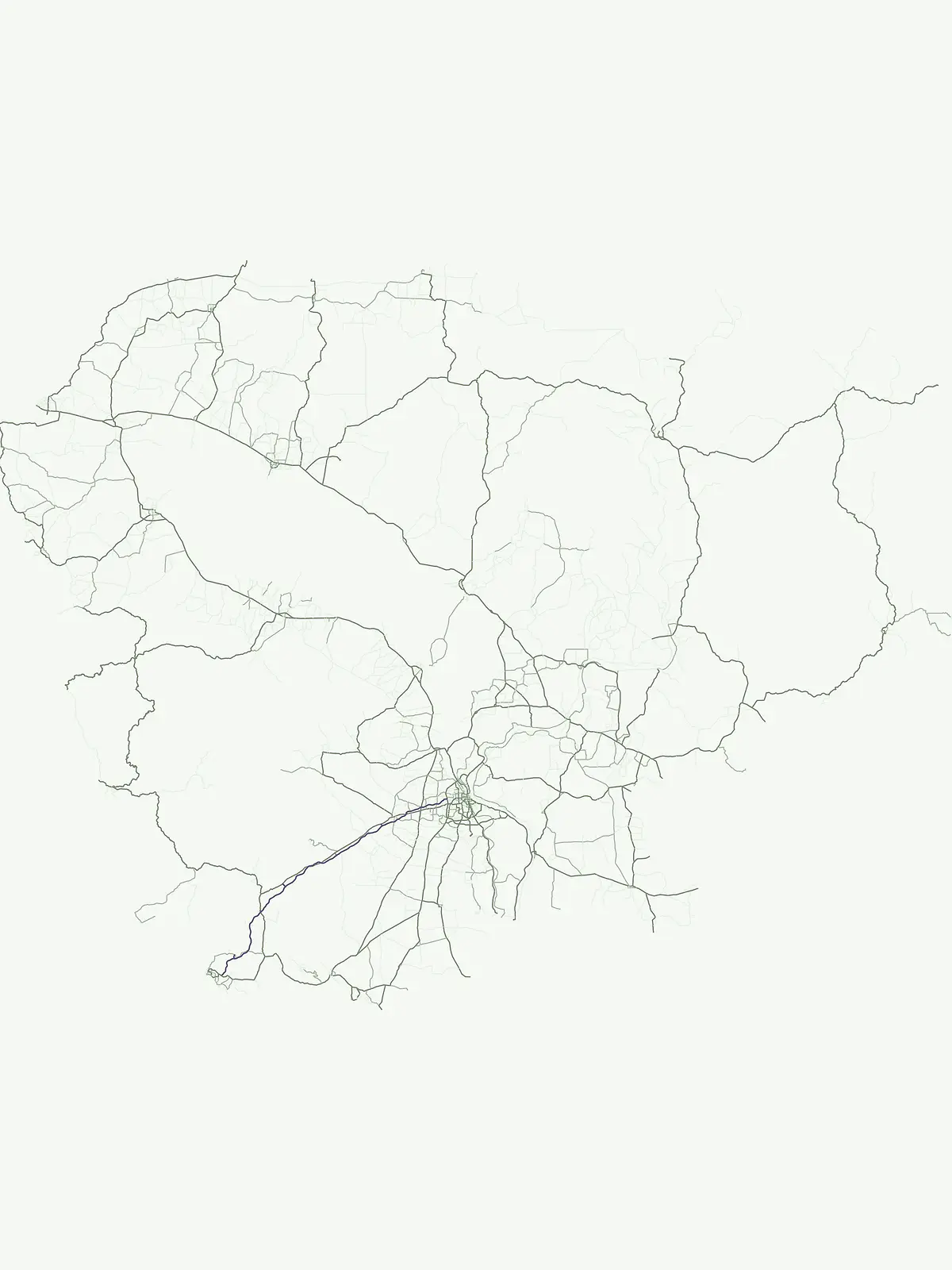
Mapped National Parks of Cambodia: Explore Protected Areas and Conservation Landscapes
Locate the national parks and protected areas of Cambodia, visualizing their positions across the country's diverse terrain. This map preview helps understand the spatial distribution of conservation landscapes, inviting you to explore the dedicated full country map for a comprehensive geographic overview.

Explore the geographic spread of Cambodia's key conservation landscapes and park distribution

Common Questions on Cambodia's National Parks, Protected Areas, and Regional Geography
Gain comprehensive insights into Cambodia's national parks, wildlife sanctuaries, and other significant protected areas, including key features and conservation efforts. These questions clarify their geographic distribution, conservation priorities, and the diverse natural environments across the country's Mekong region and Cardamom Mountains.
Other countries

Compare Southeast Asian Protected Areas and Trace Regional Conservation Geography

Countries with National Parks Near Cambodia, Expanding Southeast Asia Park Exploration
Continue your national park discovery by exploring countries that share geographic proximity or related conservation landscapes with Cambodia. This atlas view allows you to compare diverse protected areas, understand regional park distribution, and trace broader environmental patterns across Southeast Asia.

Explore Thailand's National Parks and Protected Areas: A Geographic Atlas Overview

Navigate the diverse protected areas of Thailand, from mountainous northern regions to coastal parks. This atlas view offers insights into the geographic distribution of national parks and conservation landscapes, enabling a structured exploration of the country's natural terrain and mapped boundaries. Understand the scope of protected lands and their place within Thailand's broader geography.

36 parks

Explore Vietnam's National Parks and Protected Landscapes on the Atlas

Access a structured view of Vietnam's national parks and protected areas, providing essential geographic context for each mapped region. This atlas resource details the distribution of protected lands across the country, from the northern highlands to the Mekong Delta, highlighting their significance within Vietnam's natural terrain and broader Southeast Asian geography. Understand the scope of conservation efforts through detailed landscape maps.

18 parks

Philippines National Parks and Protected Areas: Geographic Discovery Atlas

Navigate the diverse geography of the Philippines with this atlas focused on national parks and protected areas. Understand the distribution of protected lands across the Philippine archipelago, from Luzon to Mindanao. This resource facilitates a deeper appreciation of the country's natural terrain and mapped conservation areas, offering a structured way to explore its significant protected landscapes.

15 parks

Malaysia National Parks and Protected Areas: Mapped Landscapes & Geographic Discovery

MoriAtlas provides a structured geographic overview of Malaysia's national parks and protected areas. Navigate the country's diverse natural landscapes, from marine protected areas to terrestrial parks, gaining insight into their distribution and mapped boundaries. This atlas-style explorer is designed for understanding regional geography and the scope of conservation efforts within Malaysia.

7 parks

Jordan's National Parks and Protected Landscapes: A Geographic Atlas

Access a comprehensive atlas view of Jordan's national parks and protected areas. This resource details the geographic spread and boundaries of conservation lands, providing context for regional exploration and understanding the natural terrain. It is an ideal starting point for anyone interested in the mapped distribution of protected landscapes within Jordan.

4 parks

Singapore National Parks and Protected Areas: Geographic Discovery and Map Exploration

Navigate Singapore's protected natural areas through a structured geographic lens. MoriAtlas offers tools to explore the mapped boundaries and regional distribution of the country's national parks and conservation landscapes. Understand how these protected areas contribute to the natural terrain and geographic diversity of this unique island city-state, providing a comprehensive atlas-like view for discovery.

3 parks

Brunei's National Parks and Protected Areas: Geographic Atlas and Map Exploration

As a gateway to Brunei's natural heritage, this geography-focused atlas provides an overview of the nation's protected areas. Explore the mapped boundaries and geographic spread of national parks and other conservation lands situated on Borneo. Understand the regional context and the natural terrain that defines these vital protected landscapes for structured discovery.

3 parks

Myanmar National Parks and Protected Areas: Browse Mapped Landscapes and Regional Geography

This section provides a structured atlas view of Myanmar's national parks and protected lands. Users can explore the geographic distribution and mapped boundaries of these significant natural areas. Understand the regional context and landscape diversity across Myanmar, from mountain parks to conservation areas, facilitating a deeper geographic discovery.

2 parks
MoriAtlas Explorer

Continue Your Global Geographic Exploration with MoriAtlas Park Discovery

Dive deeper into the world's protected landscapes and national parks through MoriAtlas's structured atlas interface. Discover how continents and countries are organized, and how individual park geography fits into the broader map. Our platform is built for understanding the distribution and context of protected areas worldwide, facilitating your journey through global natural geography.

Global natural geography